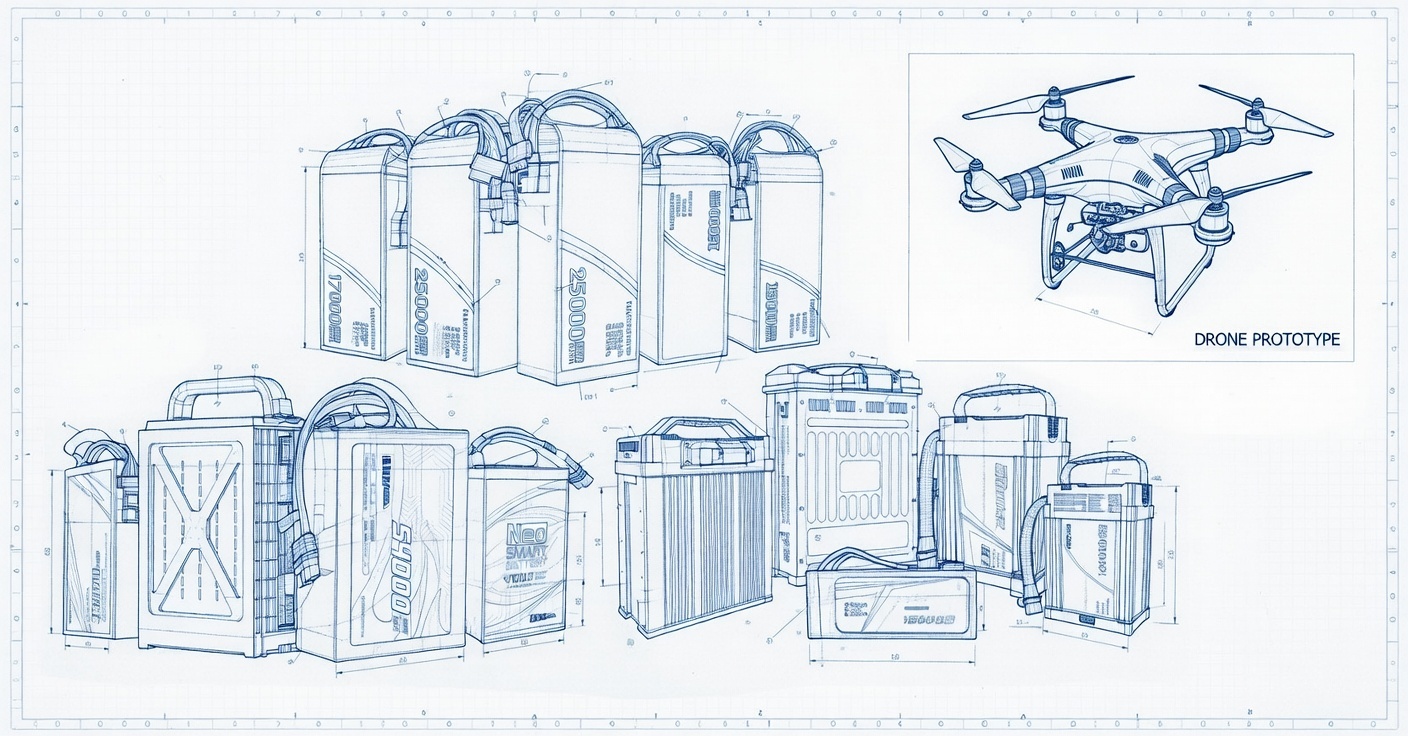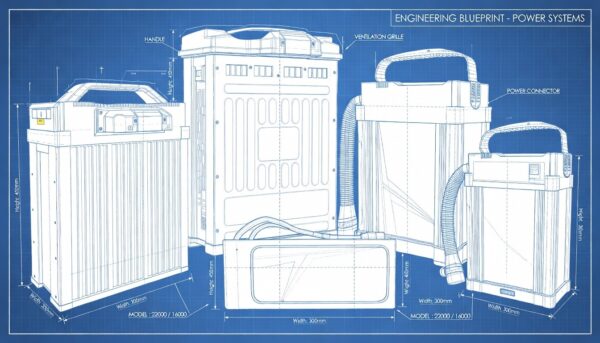
In the high-stakes world of emergency rescue operations, every second counts. When lives hang in the balance during natural disasters, search-and-rescue missions, or medical emergencies, rescue teams cannot afford equipment failures. Among all critical components, drone batteries stand out as the most vulnerable link in the operational chain. A depleted or failed battery mid-mission can mean the difference between locating a survivor and losing precious time.
Emergency rescue teams face unique challenges that civilian drone operators rarely encounter. Harsh environmental conditions, extended deployment periods, unpredictable weather, and the need for rapid response all place extraordinary demands on battery performance. According to industry data from leading UAV manufacturers, standard consumer-grade drone batteries typically deliver only 300-500 charge cycles before capacity drops below 80%, making them unsuitable for professional rescue operations where reliability is paramount.
Understanding Battery Life Cycles in Rescue Operations
Battery life cycle refers to the number of complete charge and discharge cycles a battery can undergo before its capacity significantly degrades. For emergency rescue teams, this metric directly impacts operational readiness and long-term budget planning.
Key Cycle Life Benchmarks:
- Standard LiPo Batteries: 300-500 cycles (capacity retention to 80%)
- High-Grade LiPo Batteries: 500-800 cycles
- Professional LiFePO4 Systems: 3,500-6,000+ cycles
- Smart Battery Systems with BMS: 800-1,200 cycles
According to specifications from leading battery manufacturers, agricultural drone batteries like the Herewin Jarwin 14S LiPo offer approximately 800 cycles, while emerging LiFePO4 technologies promise significantly extended lifespans exceeding 6,000 cycles at 95% depth of discharge, supported by third-party test reports.
Critical Battery Specifications for Emergency Rescue Drones
Selecting the right battery requires understanding several technical parameters that directly affect mission success:
Capacity (mAh)
Battery capacity determines flight time. A 22,000mAh battery can theoretically provide 22 amps for one hour. For rescue operations, higher capacity translates to longer search patterns and reduced battery swap frequency. However, increased capacity also means added weight, which affects drone agility and payload capacity.
Voltage and Cell Configuration
Drone batteries are configured in series (S) and parallel (P) arrangements. Common configurations include:
- 4S (14.8V): Suitable for smaller reconnaissance drones
- 6S (22.2V): Standard for mid-size rescue UAVs
- 14S (53.2V): Heavy-lift drones for equipment delivery
Discharge Rate (C-Rating)
The C-rating indicates how quickly a battery can discharge its energy. Emergency rescue drones often require high C-ratings (20C-50C) for rapid ascent, hovering in strong winds, and carrying thermal imaging or communication payloads.
Battery Management System (BMS)
Professional-grade batteries include integrated BMS with comprehensive protection features:
- Voltage monitoring
- Current regulation
- Temperature control
- State of Charge (SoC) tracking
- State of Health (SoH) diagnostics
Comparing Battery Technologies for Rescue Applications
Lithium Polymer (LiPo) Batteries
Advantages:
- High energy-to-weight ratio
- Flexible form factors
- High discharge rates (20C-50C+)
- Widely available and cost-effective
Limitations:
- Shorter cycle life (300-800 cycles)
- Sensitive to overcharging and physical damage
- Requires careful storage and maintenance
Lithium-Ion (Li-ion) Batteries
Advantages:
- Longer cycle life (500-1,200 cycles)
- Better stability and safety
- Higher capacity density
Limitations:
- Lower discharge rates
- Heavier than LiPo equivalents
- Less suitable for high-performance maneuvers
Lithium Iron Phosphate (LiFePO4) Batteries
Advantages:
- Exceptional cycle life (3,500-6,000+ cycles)
- Superior thermal stability
- Enhanced safety profile
- Lower long-term cost per cycle
Limitations:
- Higher initial investment
- Heavier than LiPo
- Lower energy density
Real-World Performance in Emergency Scenarios
Emergency rescue operations present unique challenges that test battery performance beyond standard specifications:
Temperature Extremes: Rescue missions often occur in extreme conditions, from wildfire zones exceeding 40°C to avalanche sites below -20°C. Quality batteries maintain performance across wide temperature ranges, while inferior options may experience significant capacity loss or complete failure.
Rapid Deployment: Emergency teams need batteries ready for immediate use. Smart batteries with storage mode and quick-charge capabilities reduce preparation time from hours to minutes.
Multiple Daily Cycles: During extended disaster response operations, batteries may undergo 5-10 charge cycles per day. High-cycle-life batteries reduce the total number of batteries needed in the fleet, lowering overall costs.
Cost Considerations and Long-Term Value
While initial purchase price matters, emergency rescue teams should calculate cost per cycle rather than upfront cost alone:
| Battery Type | Initial Cost | Cycle Life | Cost Per Cycle |
|---|---|---|---|
| Standard LiPo | $300-500 | 300-500 | $1.00-1.67 |
| Professional LiPo | $800-1,200 | 800-1,000 | $1.00-1.50 |
| LiFePO4 System | $1,500-2,500 | 3,500-6,000 | $0.42-0.71 |
According to industry analysis, standard LiPo batteries reach 80% capacity after approximately 300 cycles, resulting in a single-cycle cost of roughly $1.67 (based on $500 purchase price). Professional-grade options, while more expensive initially, deliver significantly better long-term value.
Regulatory Compliance and Transportation Requirements
Emergency rescue teams must also consider transportation regulations. The International Air Transport Association (IATA) updated its Dangerous Goods Regulations (DGR) for 2025-2026, implementing stricter requirements for lithium battery transportation:
- State of Charge (SoC) Limits: Lithium batteries must not exceed 30% state of charge during air transport (mandatory from January 1, 2026)
- UN Certification: All batteries require UN 38.3 testing certification
- Proper Packaging: Specific packaging requirements for different battery types and capacities
Compliance with these regulations ensures rescue teams can deploy equipment across jurisdictions without delays or legal complications.
Best Practices for Battery Maintenance and Longevity
Maximizing battery life requires disciplined maintenance protocols:
Storage Guidelines:
- Store at 40-60% state of charge for extended periods
- Maintain storage temperature between 15-25°C
- Avoid storing fully charged or fully depleted
Charging Best Practices:
- Use manufacturer-approved chargers only
- Follow recommended C-rate charging (typically 0.5C-1C)
- Allow batteries to cool before recharging after intensive use
Inspection Routines:
- Check for physical damage before each mission
- Monitor voltage balance across cells
- Track cycle count and capacity degradation
- Remove from service if swelling or abnormal heating occurs
Making the Right Choice for Your Rescue Team
Selecting optimal drone batteries requires balancing multiple factors:
For Small Teams with Limited Budgets:
High-grade LiPo batteries (500-800 cycles) offer the best balance of performance and affordability. Brands like Tattu and DJI provide reliable options with established support networks.
For Large-Scale Operations:
Investing in LiFePO4 systems or professional smart battery ecosystems delivers superior long-term value despite higher initial costs. The extended cycle life reduces replacement frequency and operational downtime.
For Specialized Applications:
Cold-weather rescue operations benefit from batteries with enhanced low-temperature performance. Heavy-lift delivery drones require high-capacity, high-voltage configurations with robust BMS protection.
Taking Action: Securing Your Rescue Operations Today
The reliability of your emergency rescue drone fleet depends fundamentally on battery quality and management. Don’t wait for a critical mission failure to evaluate your power systems.
Immediate Steps:
- Audit Current Inventory: Document battery age, cycle count, and performance history
- Establish Replacement Schedule: Plan battery rotation based on cycle life expectations
- Invest in Quality Chargers: Proper charging equipment extends battery lifespan significantly
- Train Personnel: Ensure all team members understand battery safety and maintenance protocols
- Partner with Reliable Suppliers: Work with manufacturers who provide technical support and warranty coverage
For emergency rescue teams seeking professional-grade drone battery solutions with comprehensive technical support, explore specialized manufacturers who understand the unique demands of life-saving operations. Quality batteries aren’t just equipment—they’re mission-critical assets that deserve careful selection and maintenance.
Ready to upgrade your rescue drone battery fleet? Contact professional battery specialists who understand emergency response requirements. Visit https://cnsbattery.com/drone-battery-home/drone-battery-contact to discuss customized solutions for your team’s specific operational needs. Your next mission’s success may depend on the power choices you make today.
Remember: In emergency rescue, there’s no room for equipment failure. Invest in batteries that match the critical nature of your life-saving work.