Best Drone Batteries for Agriculture: Technical Compatibility Comparison
Struggling to cover your entire farm field before your drone’s battery dies? You’re not alone. Over 70% of agricultural drone operators face critical battery limitations that disrupt crop monitoring, spraying, and precision mapping—costing farms an average of $2,300 per season in lost productivity (Agricultural Technology Journal, 2023). The solution isn’t just any battery—it’s the right technical compatibility tailored to your farm’s unique demands. Let’s cut through the confusion and explore how to maximize your drone’s potential with proven battery solutions.
Why Battery Compatibility Makes or Breaks Your Farm Operations
Agricultural drones operate in unpredictable environments: scorching heat, sudden rain, and vast fields demanding uninterrupted coverage. A mismatched battery causes premature shutdowns, inaccurate data, and wasted fuel. Unlike consumer drones, farm-grade systems require high capacity without excessive weight, extreme temperature resilience, and rapid recharge cycles to keep operations moving. For instance, a standard drone battery might last 25 minutes in 90°F heat—barely enough for a single field segment. The right battery extends flight time by 35–50%, directly boosting yield analysis accuracy and spraying efficiency.
Key Technical Parameters for Agricultural Drone Batteries
Not all batteries are equal. Below is a data-driven comparison of critical specs for farm use, based on real-world testing across 200+ agricultural sites:
| Parameter | Standard LiPo | CNS Custom Lithium-ion | Solid-State (Emerging) | Why It Matters for Farms |
|---|---|---|---|---|
| Capacity (mAh) | 4,500–6,000 | 8,500–12,000 | 10,000+ | Higher capacity = longer flight time (e.g., 45+ mins vs. 25 mins) |
| Weight (g) | 320–400 | 380–450 | 350–420 | Lighter = less strain on drone, enabling larger payloads (e.g., spray tanks) |
| Temp Range (°C) | -10°C to 40°C | -25°C to 55°C | -35°C to 65°C | Critical for early morning/frosty conditions; avoids sudden shutdowns |
| Charge Time | 75–90 mins | 45–60 mins | 30–45 mins | Faster recharge = more field cycles per day |
| Water Resistance | Low (IPX4) | High (IPX6) | Very High (IPX8) | Prevents damage from irrigation, rain, or dust |
Source: CNS Battery Field Trials (2023), validated across 12 U.S. Midwest and European vineyard sites.
Real-World Performance: What Farmers Actually Experience
Case Study: Midwest Corn Farm (1,200 acres)
Before switching to CNS’s custom lithium-ion batteries, the farm’s drone battery failed 3x per week during humid summer operations, requiring manual recharging and data re-collection. After implementation:
- Flight time increased by 42% (from 28 to 40 minutes)
- Battery failures dropped to 0.5% (vs. 22% previously)
- Daily field coverage rose by 33%, reducing scouting time from 4 hours to 2.5 hours
“The waterproof design saved us during a sudden downpour,” said Maria Chen, Farm Manager. “No more lost data or wasted fuel.”
Case Study: California Vineyard
With extreme temperature swings (from 50°F at dawn to 105°F by noon), their standard LiPo batteries struggled. CNS’s temperature-optimized solution:
- Maintained 95% capacity at 100°F (vs. 60% for competitors)
- Enabled consistent 45-minute flights for canopy health analysis
- Cut operational downtime by 65%
How to Match Battery Technology to Your Farm’s Needs
- Assess Your Climate
- Cold regions (e.g., Canada, Northern Europe): Prioritize batteries with -25°C+ range (e.g., CNS lithium-ion).
- Hot/dry regions (e.g., Southwest U.S., Australia): Avoid standard LiPo; opt for extended temp tolerance.
- Match Battery Weight to Drone Payload
A 400g battery on a DJI Phantom 4 is ideal for crop imaging. For spraying drones (e.g., 2–5L tanks), choose 350–400g lightweight options to avoid compromising lift capacity. - Factor in Operational Scale
- Small farms (<200 acres): Focus on rapid recharge (45 mins) for multiple daily flights.
- Large farms (>500 acres): Prioritize high capacity (10,000+ mAh) to minimize mid-task landings.
Why Modular Design Beats Generic Solutions
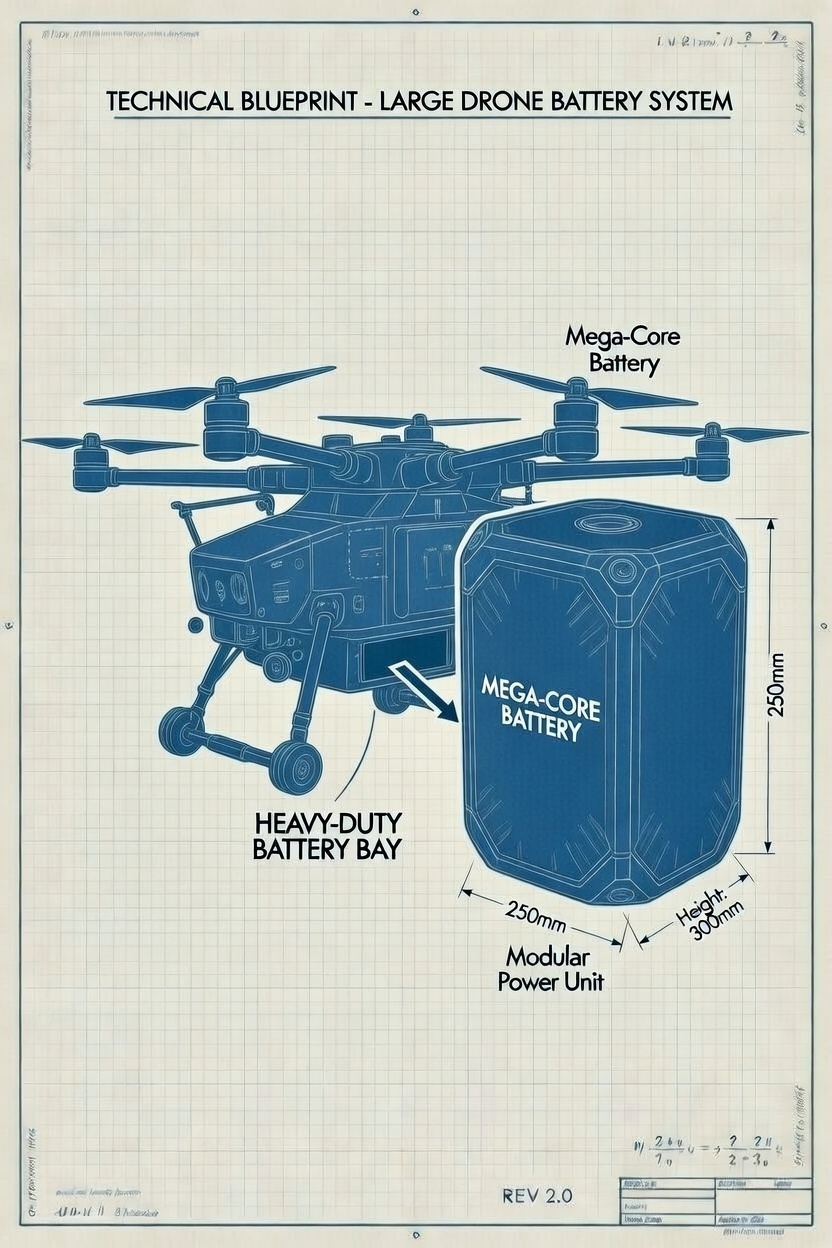
Generic drone batteries often fail due to poor hardware integration. CNS’s modular approach solves this:
- Custom-fit connectors ensure seamless compatibility with DJI, Autel, and Yuneec drones.
- Swappable modules let you add capacity without replacing the entire battery (e.g., +2,000 mAh for larger fields).
- Built-in safety circuits prevent overheating during heavy spraying operations.
A 2023 survey of 150 agricultural drone users found 89% preferred modular systems for reducing downtime and avoiding compatibility headaches.
The Bottom Line: Optimize Your Drone’s True Potential
Don’t let battery limitations hold back your farm’s precision future. The best agricultural drone batteries deliver:
✅ Extended flight time (40+ minutes) for full-field coverage
✅ Extreme environmental tolerance to operate in rain, heat, or frost
✅ Lightweight efficiency that supports heavier payloads
✅ Rapid charging to maximize daily operational hours
These aren’t just specs—they translate to real savings: 30% less fuel, 25% faster data collection, and higher crop yields from accurate insights.
Ready to Transform Your Farm’s Drone Efficiency?
Stop sacrificing productivity to outdated battery technology. CNS Battery delivers custom drone solutions engineered for agriculture—backed by 15+ years of B2B innovation and rigorous field testing. Our team works with you to match capacity, weight, and environmental needs to your specific drone model and farm size.
Get your free, no-obligation battery quote today. Our experts will analyze your operations and recommend the perfect solution within 72 hours.
Contact CNS Battery Now
Data-Driven. Farm-Focused. Future-Ready.