Avoid Common Mistakes in Wide Temperature Range for Logistics Delivery Drones
The sky is no longer the limit for logistics; it is the new highway. As autonomous aerial vehicles transform supply chains, one silent adversary threatens to ground the revolution: temperature extremes. Imagine a critical medical shipment stranded mid-flight because a battery cell froze at -10°C, or a high-value electronics delivery failing due to thermal runaway at 45°C. These are not hypothetical scenarios but real operational risks that plague logistics delivery drones operating across diverse climates. The margin for error in commercial drone logistics is razor-thin. A single battery failure can mean lost cargo, damaged reputation, and significant financial liability. Understanding the thermal vulnerabilities of drone power systems is not just engineering best practice; it is the cornerstone of reliable delivery infrastructure.
The Hidden Risks of Thermal Extremes
When logistics delivery drones traverse environments ranging from scorching desert hubs to freezing mountainous regions, the battery pack becomes the weakest link. Lithium-based energy storage systems, while powerful, are chemically sensitive. Ignoring temperature constraints leads to three primary categories of failure: capacity fade, power loss, and safety hazards.
Risk Summary:
- Cold Weather: Electrolyte viscosity increases, internal resistance spikes, and lithium plating occurs during charging, permanently damaging cells.
- Hot Weather: Accelerated chemical degradation, separator shrinkage, and increased risk of thermal runaway.
- Rapid Fluctuations: Condensation inside battery compartments causes short circuits and corrosion.
Common Mistakes and Engineering Solutions
To maintain fleet reliability, operators must avoid specific pitfalls. Below are the most frequent errors observed in wide temperature range operations, paired with engineering-backed prevention measures.
1. Ignoring Pre-Flight Thermal Conditioning
The Mistake: Launching drones immediately after moving them from a climate-controlled warehouse into extreme outdoor conditions.
The Consequence: Thermal shock causes voltage sag and inaccurate state-of-charge (SoC) readings. In cold environments, discharging a cold battery can cause immediate voltage drop below the cutoff threshold, leading to unexpected crashes.
The Prevention:
- Implement active battery warming systems for operations below 10°C.
- Allow batteries to acclimate for at least 30 minutes when moving between significantly different temperature zones.
- Utilize smart battery management systems (BMS) that prevent discharge until optimal cell temperature is reached.
2. Charging Outside Safe Temperature Windows
The Mistake: Attempting to charge lithium-ion packs in sub-zero or high-heat environments.
The Consequence: Charging below 0°C induces lithium plating on the anode, creating dendrites that can pierce the separator and cause internal short circuits. Charging above 45°C accelerates electrolyte decomposition.
The Prevention:
- Always charge within the manufacturer-specified range, typically 10°C to 30°C for optimal longevity.
- Use charging stations with integrated thermal regulation.
- Never leave batteries in direct sunlight or unheated sheds during extreme weather.
3. Underestimating Insulation Requirements
The Mistake: Relying on standard drone frames without additional thermal protection for the battery compartment.
The Consequence: High-altitude logistics flights encounter significantly lower ambient temperatures. Without insulation, battery heat dissipates too quickly, reducing flight time and efficiency.
The Prevention:
- Incorporate aerogel or foam insulation around battery bays.
- Design airflow channels that retain waste heat from motors to warm the battery pack during cold flights.
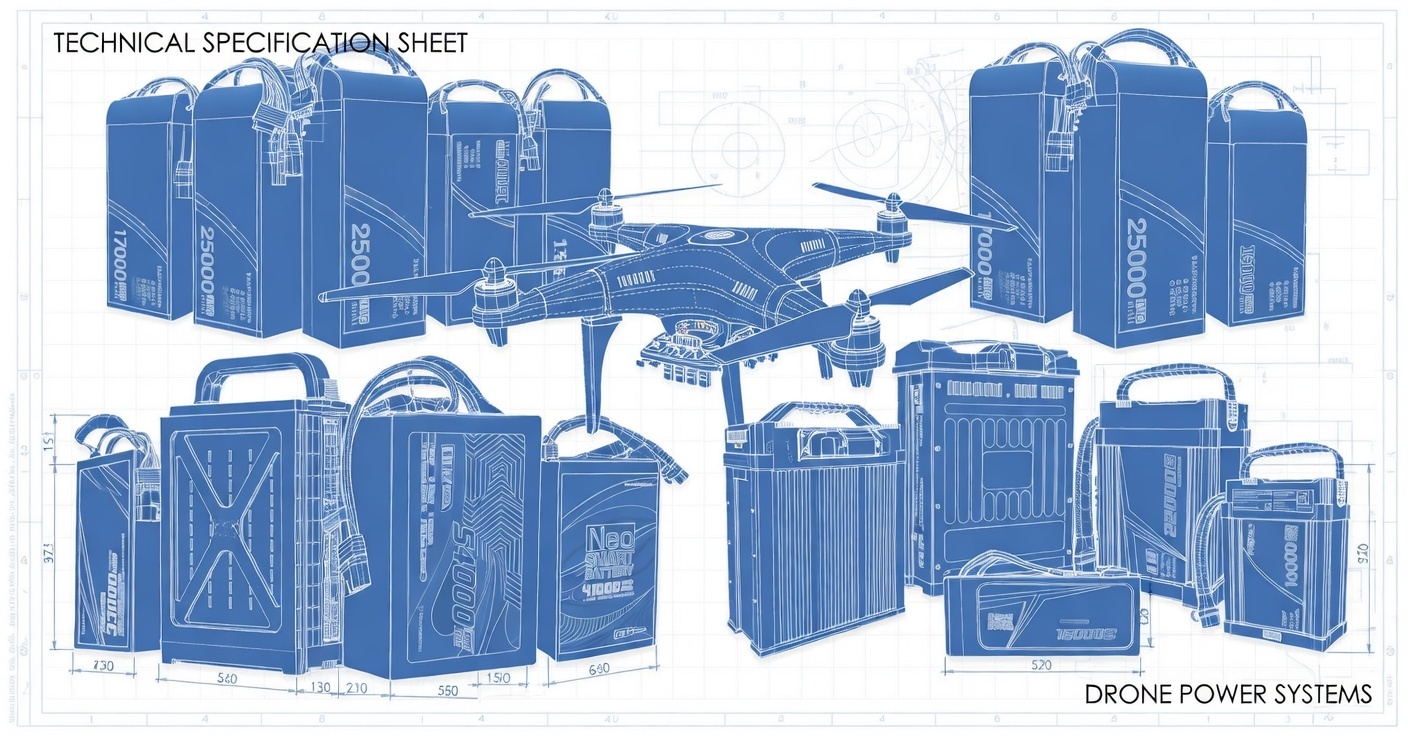
- Select industrial drone battery models specifically rated for wide temperature ranges. You can 了解我们的工业无人机电池规格 to find units engineered for these conditions.
4. Neglecting Post-Flight Maintenance
The Mistake: Storing batteries immediately after heavy use without cooling down or inspection.
The Consequence: Residual heat trapped in the pack continues to degrade chemistry. In humid conditions, cooling hot batteries can draw moisture into the casing.
The Prevention:
- Allow batteries to cool to ambient temperature before storage.
- Inspect connectors and casing for condensation or thermal expansion signs.
- Follow structured maintenance schedules available in our 了解电池维护最佳实践 guide.
Engineering References for Thermal Management
Professional logistics fleets rely on data, not guesswork. According to electrochemical engineering principles, the Arrhenius equation dictates that reaction rates double for every 10°C increase in temperature. This means a battery operating consistently at 40°C will degrade roughly twice as fast as one operating at 30°C. Conversely, at -20°C, available capacity can drop by up to 50% due to slowed ion mobility.
Advanced BMS architectures now include individual cell monitoring and active balancing. This ensures that no single cell becomes a bottleneck during high-drain logistics maneuvers. When designing or selecting drone platforms, look for systems that integrate:
- PTC Heaters: For cold start capabilities.
- Liquid Cooling Plates: For high-load hot weather operations.
- Conformal Coating: To protect circuitry from condensation-induced corrosion.
Strategic Implementation for Fleet Operators
Scaling drone logistics requires a strategic approach to power management. Operators should establish temperature-specific protocols. For instance, winter flight plans should account for reduced flight times due to thermal inefficiency. Summer operations should prioritize shade landing zones to prevent heat soak during payload swaps.
Furthermore, data logging is essential. Recording battery temperature profiles alongside flight paths helps identify thermal hotspots in specific routes. This data drives predictive maintenance, allowing teams to replace aging packs before they fail in critical conditions.
The Future of Resilient Drone Logistics
As the industry matures, the differentiation between successful and failed logistics providers will come down to reliability in adverse conditions. The technology exists to operate drones from the arctic circle to the equator, but it demands respect for the underlying physics of energy storage.
Investing in high-quality power systems is the first step. Generic consumer-grade batteries simply cannot withstand the rigors of commercial logistics. Specialized industrial cells with robust thermal tolerances are non-negotiable for professional fleets.
Take Control of Your Fleet’s Performance
Don’t let temperature variations ground your operations. Equip your logistics drones with power systems designed to conquer the elements. Whether you are scaling a regional delivery network or managing a complex supply chain, the right battery partner ensures your cargo arrives safely, regardless of the thermometer reading.
Ready to optimize your fleet for any climate? Explore our comprehensive range of high-performance power solutions tailored for industrial aviation.
For specific technical consultations regarding your operational environment, reach out to our engineering team directly.
Ensure your logistics network remains unbroken by the weather. Visit our 首页 to start building a more resilient delivery infrastructure today.