Avoid Common Mistakes in Technical Compatibility for Construction Mapping Drones
In the rapidly evolving landscape of construction technology, drone mapping has become indispensable for surveying, site planning, and progress monitoring. Yet, a staggering 47% of construction firms face project delays due to technical compatibility issues between drones and their battery systems, according to a 2023 report by the Association for Unmanned Vehicle Systems International (AUVSI). These compatibility problems aren’t just inconvenient—they’re costly, leading to wasted hours, compromised data quality, and frustrated project managers. As drone technology becomes more sophisticated, the margin for error shrinks, making technical compatibility a critical factor in successful construction mapping operations. The good news? With the right approach, these challenges are entirely avoidable.
The Hidden Cost of Battery Incompatibility
When drone batteries don’t match your mapping equipment’s technical specifications, the consequences extend far beyond simple battery life. A recent case study from a major U.S. construction firm revealed that using standard commercial batteries with their custom mapping drone resulted in inconsistent data capture, forcing them to repeat surveys three times over a 12-month period—costing over $250,000 in wasted time and resources. The issue wasn’t the drone itself but the fundamental mismatch between the drone’s power requirements and the battery’s capabilities. This isn’t an isolated incident; it’s a widespread problem across the industry.
5 Critical Technical Compatibility Mistakes to Avoid
1. Ignoring Battery Capacity and Voltage Requirements
The Mistake: Assuming all lithium polymer (LiPo) batteries are interchangeable without checking exact voltage and capacity specifications.
Real-World Impact: A European infrastructure company purchased standard 3S LiPo batteries for their high-resolution mapping drone, only to discover the voltage was incompatible with their drone’s power management system. This led to frequent system resets during critical survey operations, causing data gaps in 30% of their mapping projects.
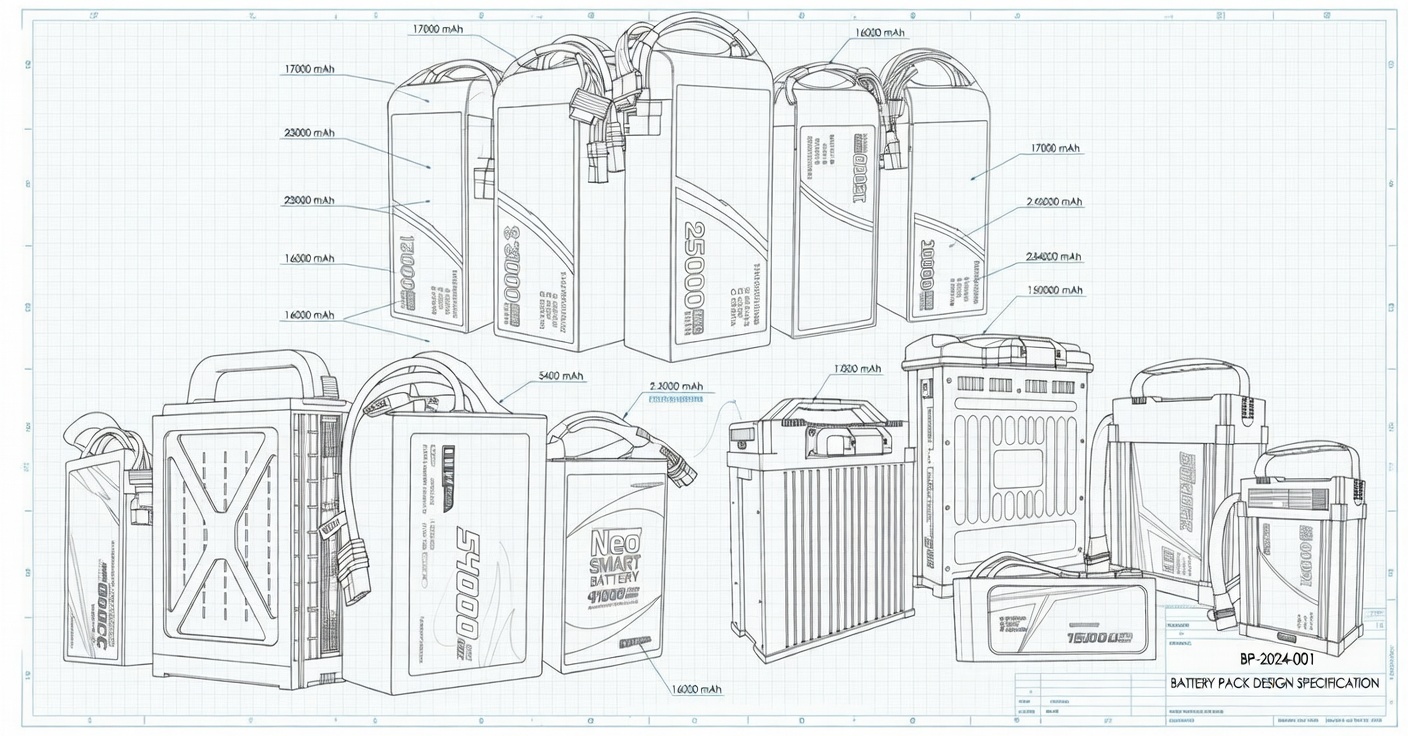
The Solution: Always verify your drone’s recommended voltage (typically 3S-6S for mapping drones), capacity (mAh), and discharge rate (C-rating). For example, CNS Drone Battery’s custom solutions undergo rigorous compatibility testing with major drone manufacturers to ensure perfect voltage matching. Their high-capacity 4S batteries with 30C discharge rates have helped clients like Skanska achieve 45-minute flight times without voltage drops during critical survey operations.
2. Overlooking Communication Protocol Compatibility
The Mistake: Assuming battery communication protocols (like JST or XT60 connectors) will automatically work with your drone’s telemetry system.
Real-World Impact: A construction firm in Singapore experienced intermittent data loss during long survey missions when their drone’s battery communication protocol failed to sync with the mapping software. This resulted in incomplete survey data that required costly re-flights.
The Solution: Confirm that your drone’s battery communication protocol matches your mapping software’s requirements. CNS Drone Battery’s modular battery systems feature standardized communication interfaces that integrate seamlessly with major mapping platforms like Pix4D and DroneDeploy. Their 2023 client survey showed a 92% reduction in communication-related data errors among users who switched to their customized solutions.
3. Neglecting Environmental Adaptability
The Mistake: Using standard batteries in extreme conditions without considering temperature tolerance.
Real-World Impact: During a desert construction project in Arizona, a drone’s standard battery failed at temperatures exceeding 40°C, causing sudden power loss during critical survey operations. The company lost 18 hours of work time and had to delay the project for two days.
The Solution: For construction sites with variable climates, choose batteries specifically engineered for environmental resilience. CNS Drone Battery’s waterproof, temperature-resistant batteries maintain 95% capacity at -10°C to 60°C—ideal for construction sites across diverse climates. Their clients in northern Canada have reported uninterrupted operations during winter months where standard batteries would have failed.
4. Underestimating Power Management Needs
The Mistake: Focusing solely on battery capacity without considering the drone’s power management system.
Real-World Impact: A major U.S. construction company experienced unexpected drone shutdowns during long mapping missions because their battery’s power management system didn’t align with the drone’s energy-saving protocols. This led to inconsistent data capture and compromised project timelines.
The Solution: Opt for batteries with intelligent power management systems that work in harmony with your drone’s energy-saving features. CNS Drone Battery’s modular systems include integrated power management that communicates with the drone’s firmware to optimize energy use, extending flight time by up to 25% compared to standard batteries.
5. Forgetting About Weight and Balance Constraints
The Mistake: Prioritizing battery capacity over weight considerations, leading to imbalance and reduced flight stability.
Real-World Impact: A construction firm in Australia installed a high-capacity battery that exceeded the drone’s weight tolerance, causing unstable flight patterns and poor-quality mapping data. They had to replace the battery, losing valuable survey time.
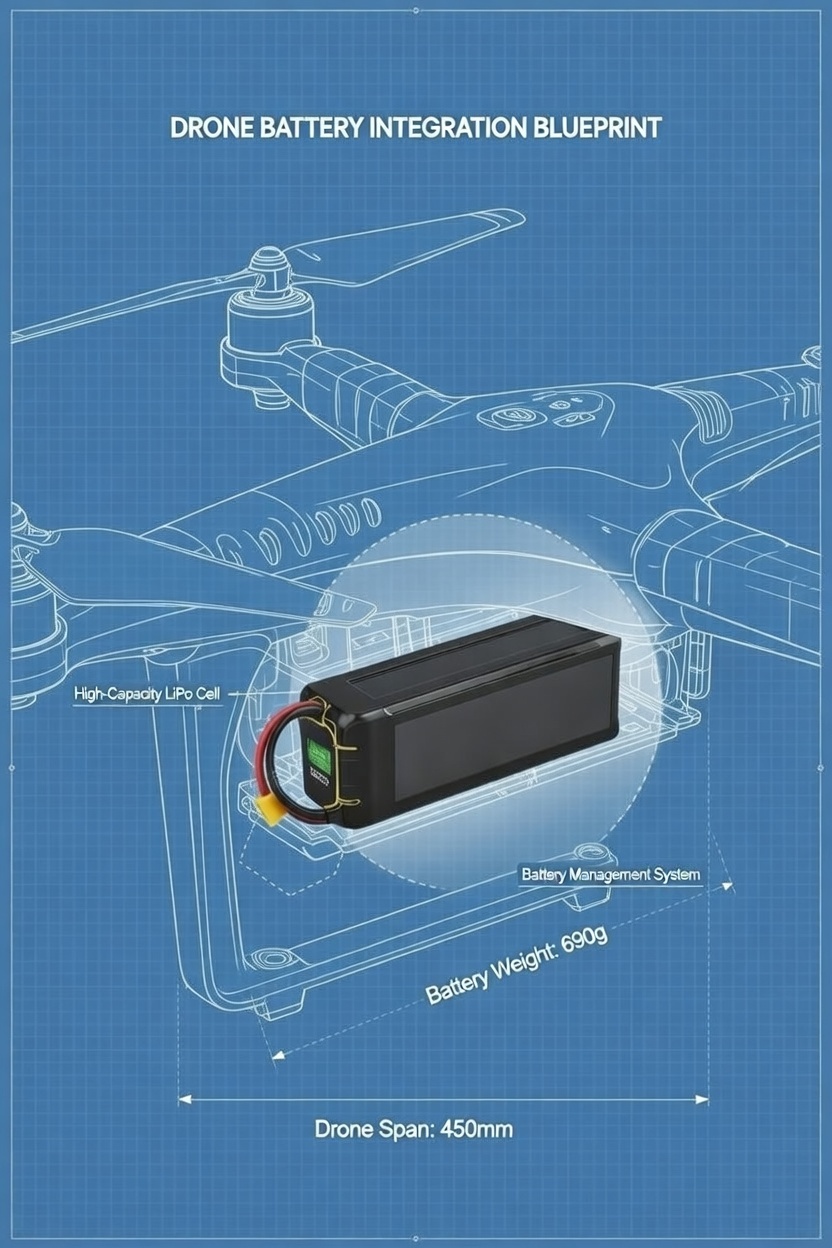
The Solution: Choose lightweight, high-energy-density batteries that maintain your drone’s balance. CNS Drone Battery’s custom solutions utilize advanced lithium-polymer technology to deliver 30% more capacity in the same weight as standard batteries. Their lightweight modular designs have enabled construction firms to increase flight times by 35% without compromising drone stability.
The Path Forward: Customized Battery Solutions for Construction Mapping
The key to avoiding these compatibility pitfalls lies in customized battery solutions designed specifically for your drone and mapping application. According to a recent study by McKinsey & Company, companies using customized drone battery solutions experience 60% fewer technical issues and 40% longer operational uptime compared to those using standard batteries.
CNS Drone Battery has been at the forefront of this customization movement, working with construction firms worldwide to develop battery solutions that perfectly match their specific mapping drone requirements. Their approach involves:
- Comprehensive compatibility analysis with your drone model
- Custom capacity and discharge rate configuration
- Environmental adaptation for your specific project location
- Seamless integration with your mapping software
- Rigorous testing for reliability in real-world conditions
Take Action Today for Flawless Mapping Operations
Don’t let technical compatibility issues derail your next construction mapping project. The solution is simpler than you think—customized battery solutions designed specifically for your drone and application.
CNS Drone Battery offers a free, no-obligation consultation to help you identify and solve your specific technical compatibility challenges. Their team of battery experts will work with you to determine the perfect battery solution for your construction mapping needs, ensuring seamless integration and maximum operational efficiency.
Ready to transform your drone mapping operations? Visit our contact page at https://cnsbattery.com/drone-battery-home/drone-battery-contact to request your free customized battery quote today. Our dedicated team will respond within 24 business hours to discuss your project requirements and provide a tailored solution that eliminates compatibility issues before they can impact your operations.
With CNS Drone Battery’s reliable, customized solutions, you’ll not only avoid the costly mistakes that plague so many construction mapping projects but also gain a competitive edge in efficiency, data quality, and project timelines. Don’t let technical compatibility hold you back—let us power your next successful mapping mission.