Avoid Common Mistakes in Energy Density for Agricultural Operators Drones
In the rapidly evolving landscape of precision agriculture, unmanned aerial vehicles (UAVs) have transitioned from novelty gadgets to essential tools for crop monitoring, spraying, and seeding. At the heart of every successful agricultural drone mission lies a critical component often overlooked until failure occurs: the battery. Specifically, the management of energy density in drone batteries is a pivotal factor that determines operational efficiency, safety, and long-term profitability.
For agricultural operators, the pressure to increase flight time and payload capacity often leads to a singular focus on maximizing energy density. However, this narrow focus can introduce significant risks and operational inefficiencies. This article diagnoses the common pitfalls associated with energy density in agricultural drone applications and provides a structured, technical roadmap to optimize battery performance without compromising safety or longevity.
Diagnosis: The Hidden Costs of Chasing Energy Density
Energy density, measured in watt-hours per kilogram (Wh/kg), indicates how much energy a battery can store relative to its weight. In theory, higher energy density means longer flight times or heavier payloads. In practice, blindly pursuing the highest possible energy density without considering the broader system integration leads to five critical mistakes.
1. Prioritizing Capacity Over Cycle Life
One of the most prevalent errors is selecting battery cells solely based on their initial capacity. High-energy-density cells, often utilizing specific lithium-polymer (LiPo) chemistries, may degrade faster under the rigorous conditions of agricultural work. Agricultural drones operate in cycles of high discharge during spraying and rapid charging in the field. A battery optimized purely for density may suffer from accelerated capacity fade, requiring replacement after only 200 cycles instead of the industry standard 500+. This increases the total cost of ownership (TCO) significantly.
2. Ignoring Discharge Rates (C-Rating)
Energy density does not equate to power delivery. A common misconception is that a high-density battery can handle the same load as a high-power battery. Agricultural drones, particularly spraying models, require massive bursts of current to lift liquid payloads and counteract wind resistance. If the battery’s discharge rate (C-rating) is insufficient for the motor’s demand, voltage sag occurs. This triggers low-voltage alarms prematurely, forcing the drone to return to home even when energy remains in the pack, effectively nullifying the benefit of high energy density.
3. Neglecting Thermal Management
Higher energy density often correlates with higher thermal instability. When packing more energy into a smaller volume, heat dissipation becomes a challenge. In hot agricultural environments, where ambient temperatures can exceed 35°C (95°F), a densely packed battery without adequate thermal management is prone to overheating. This not only reduces efficiency but also increases the risk of thermal runaway, a safety hazard that can ground an entire fleet.
4. Overlooking Weight Distribution and Center of Gravity
Increasing energy density sometimes leads to irregular battery form factors as operators try to fit larger capacity cells into existing frames. If the weight distribution is not balanced, the drone’s flight controller must work harder to maintain stability. This increased motor effort consumes more energy, paradoxically reducing the effective flight time gained from the higher density battery. Furthermore, uneven weight distribution can accelerate mechanical wear on the drone’s arms and motors.
5. Failing to Account for Environmental Factors
Agricultural operations take place in diverse environments, from humid rice paddies to dusty orchards. High-energy-density cells are often more sensitive to environmental stressors. Moisture ingress or dust accumulation on high-density packs can lead to short circuits. Operators who fail to choose batteries with appropriate Ingress Protection (IP) ratings alongside high energy density find themselves facing unexpected failures during critical spraying windows.
List-style Solutions: Optimizing Battery Performance
To mitigate these risks, agricultural operators must adopt a holistic approach to battery selection and management. The following solutions balance energy density with reliability, safety, and operational efficiency.
1. Balance Energy Density with Chemistry Selection
Not all lithium chemistries are created equal. While LiPo batteries offer high energy density, they may lack the cycle life required for commercial agriculture.
- Recommendation: Consider high-quality Lithium-ion (Li-ion) cylindrical cells or advanced LiFePO4 options for applications where cycle life and safety are prioritized over marginal weight savings. For spraying drones where weight is critical, select premium LiPo cells that offer a balanced Wh/kg rating rather than the absolute maximum.
- Benefit: Extends battery lifespan by 30-50%, reducing long-term operational costs.
2. Prioritize High-Current Discharge Capabilities
Ensure the battery’s continuous discharge rating exceeds the maximum current draw of the drone’s power system by at least 20%.
- Recommendation: Calculate the maximum current draw of your motors at full throttle with a full payload. If your system draws 60A, select a battery rated for at least 72A continuous discharge. Look for cells with low internal resistance (IR) to minimize voltage sag.
- Benefit: Prevents mid-flight voltage drops, ensuring consistent power delivery and maximizing the usable capacity of the battery.
3. Implement Active or Passive Cooling Systems
Thermal management is non-negotiable for high-density packs.
- Recommendation: Utilize battery housings designed with airflow channels. For intensive operations, consider active cooling systems or phase-change materials that absorb heat during discharge. Avoid charging batteries immediately after flight; allow them to cool to ambient temperature before recharging.
- Benefit: Maintains optimal cell temperature, preserving chemical integrity and preventing thermal degradation.
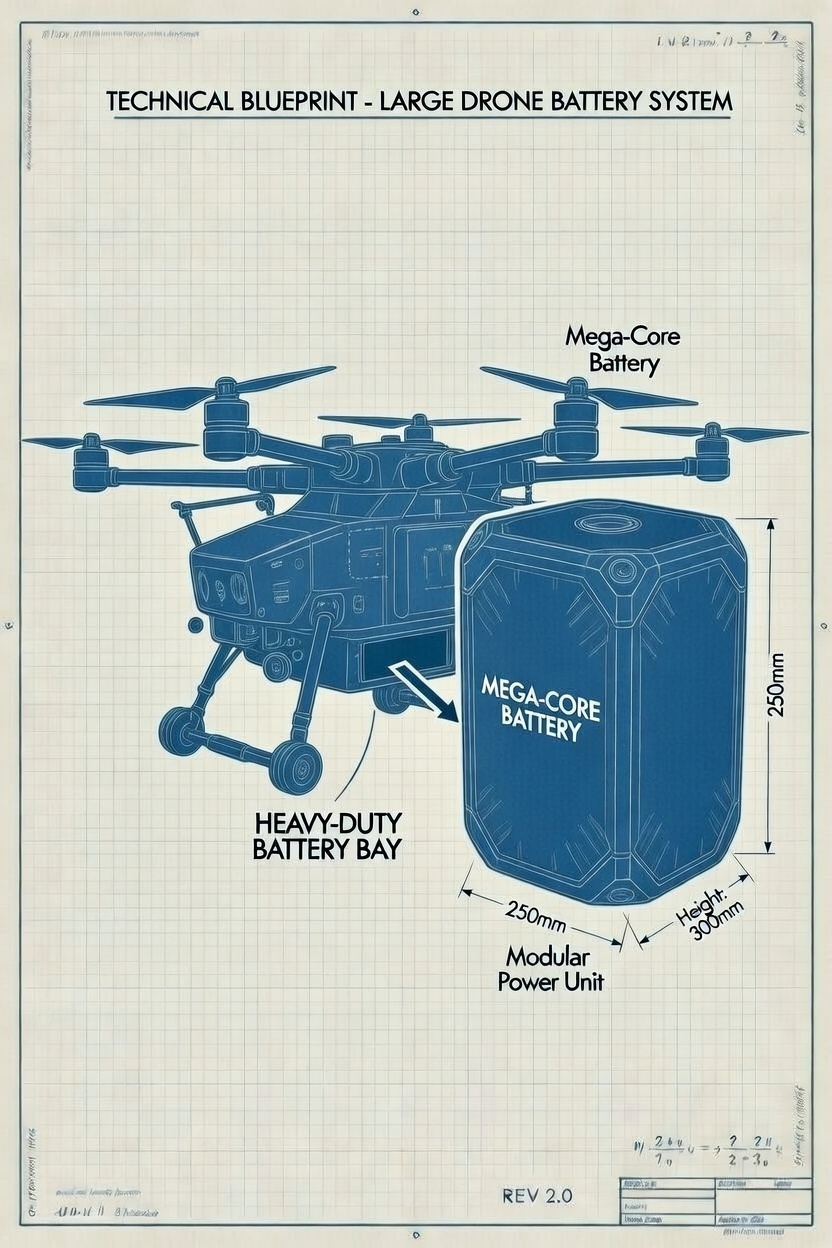
4. Optimize Pack Geometry for Aerodynamics and Balance
The physical shape of the battery should complement the drone’s design.
- Recommendation: Work with manufacturers to customize battery form factors that align with the drone’s center of gravity. Ensure the battery mount allows for secure locking without adding excessive weight. Use lightweight, high-strength materials for the battery casing.
- Benefit: Improves flight stability and reduces the energy required for stabilization, indirectly extending flight time.
5. Use Smart BMS for Real-time Monitoring
A robust Battery Management System (BMS) is the brain of the battery pack.
- Recommendation: Invest in batteries with smart BMS capabilities that monitor individual cell voltage, temperature, and current in real-time. The BMS should communicate data to the ground control station, allowing operators to make informed decisions about mission continuation.
- Benefit: Provides early warning signs of cell imbalance or overheating, preventing catastrophic failures and optimizing charge cycles.
The User Benefit: Efficiency and Safety
By addressing these common mistakes, agricultural operators can achieve a more reliable and profitable operation. The goal is not merely to have the battery with the highest number on the spec sheet, but the battery that delivers consistent performance over hundreds of cycles.
Optimizing energy density correctly leads to:
- Reduced Downtime: Fewer battery failures mean more time in the air during critical spraying windows.
- Lower Costs: Extended cycle life reduces the frequency of battery replacements.
- Enhanced Safety: Proper thermal and electrical management minimizes the risk of fire or in-flight power loss.
- Better Data: Consistent power supply ensures that sensors and spraying mechanisms operate at peak efficiency, leading to better crop outcomes.
Summary
The pursuit of higher energy density in agricultural drones is a double-edged sword. While it promises longer flight times and heavier payloads, it introduces complexities regarding thermal management, discharge rates, and cycle life. Operators who fall into the trap of prioritizing density above all else often face higher long-term costs and increased safety risks.
The solution lies in a balanced approach. By selecting the right chemistry, ensuring adequate discharge capabilities, managing heat effectively, and utilizing smart monitoring systems, operators can harness the benefits of high energy density without the associated pitfalls. The future of agricultural aviation depends not just on how much energy a battery can hold, but on how reliably and safely that energy can be delivered to the propellers.
Making informed decisions about drone battery technology is an investment in the longevity of your agricultural business. Do not let common mistakes ground your operations.
Get Custom Solutions for Your Fleet
Every agricultural operation is unique, with specific payload requirements, environmental conditions, and flight profiles. Off-the-shelf battery solutions may not always align with your specific needs for energy density and safety.
To ensure your fleet is equipped with the optimal power systems designed for your specific agricultural challenges, contact our team of battery experts. We specialize in customizing high-performance battery solutions that balance energy density with durability and safety.
Contact us today to discuss your custom drone battery requirements:
https://cnsbattery.com/drone-battery-home/drone-battery-contact
Let us help you power your harvest with confidence.