5 Tips for Manufacturer Delivery Drone Battery Sourcing in 2026
The drone logistics industry is no longer a futuristic concept; it is the present reality. By 2026, the global delivery drone market is projected to reach unprecedented heights, driven by the urgent need for faster, contactless, and more efficient supply chains. However, for manufacturers and fleet operators, the most significant bottleneck isn’t the drone itself—it is the battery.
While the world focuses on aerodynamics and AI navigation, the true differentiator in 2026 lies in the power source. Sourcing the right delivery drone battery is no longer about plugging a generic LiPo cell into a frame. It is a complex puzzle of energy density, thermal management, and total cost of ownership (TCO). If your delivery drones are grounded due to short flight times or frequent battery replacements, you are losing the race before takeoff.
At CNS Drone Battery, we understand that the stakes are high. A failed battery sourcing decision can lead to delayed deliveries, damaged payloads, and a tarnished brand reputation. This guide is designed to navigate the 2026 landscape, helping you move beyond the “one-size-fits-all” trap and secure a battery solution that powers your logistics revolution.
1. Move Beyond Standard LiPo: The Energy Density Imperative
The most common mistake in 2026 is still using standard Lithium Polymer (LiPo) batteries for heavy-lift delivery drones. Standard packs are great for racing drones or light photography, but they lack the “punch” required to carry 2kg–5kg payloads over commercial distances.
The Pain Point:
You need to maximize flight time without adding weight. Every gram of battery weight subtracted from the payload is a loss in efficiency. Standard batteries often force a compromise: either you carry a massive, heavy battery to go a little further, or you make frequent stops to recharge, crippling your delivery capacity.
The 2026 Solution: High Voltage and Semi-Solid State Technology
To stay competitive, you must adopt High Voltage (LiHV) and Semi-Solid State chemistries.
- High Voltage (LiHV): These batteries operate at a higher cell voltage (up to 4.45V per cell compared to the standard 4.2V). This means you can achieve the same power output with fewer cells or a smaller physical size, significantly reducing weight.
- Semi-Solid State: This is the frontier of drone power. By 2026, semi-solid state technology offers energy densities of up to 380Wh/kg, a 30% increase over traditional batteries. This translates directly to longer ranges and the ability to carry heavier packages without sacrificing flight duration.
CNS Specification Snapshot:
To illustrate the gap between standard and premium, here is a comparison of our standard soft pack versus our advanced semi-solid state solutions.
| Feature | Standard LiPo (Soft Pack) | Advanced Semi-Solid State |
|---|---|---|
| Energy Density | Up to 290 Wh/kg | Up to 380 Wh/kg |
| Best For | Light payloads, short hops | Heavy payloads, long-range mapping |
| Weight Efficiency | Good | Exceptional (15% lighter for same capacity) |
| Cycle Life | Standard | Over 500 cycles (90% initial capacity) |
| Technology | Traditional stacking | High-nickel cathode & silicon-carbon anode |
Table 1: Comparing Standard vs. Advanced Battery Technologies for 2026 Logistics
By shifting to these advanced chemistries, you are not just buying a battery; you are buying extended airtime and increased payload capacity.
2. Mastering Thermal Runaway: Safety as a Feature
In 2026, safety compliance is not just a checkbox; it is a feature that protects your investment and your personnel. Delivery drones often operate in uncontrolled environments, from scorching summers to freezing winters. A battery that overheats or fails due to cold is a liability.
The Pain Point:
Many manufacturers source cheap cells without proper Battery Management Systems (BMS). This leads to “thermal runaway,” where a single cell failure can cause a fire. Furthermore, in cold climates, standard batteries lose up to 30% of their capacity, leading to unexpected crashes.
The 2026 Solution: Intelligent BMS and Rugged Design
The solution lies in Smart Drone Batteries equipped with robust BMS. In 2026, the expectation is for real-time monitoring and active protection.
- Real-Time Monitoring: The latest BMS systems allow you to monitor the State of Health (SOH) via Bluetooth apps. You can see exactly how many cycles a battery has left and its current temperature.
- Extreme Temperature Adaptation: Look for batteries specifically designed for wide operating temperatures. CNS batteries, for instance, are engineered to support max 3C discharge even at -30℃, ensuring your winter delivery operations run smoothly without power drain issues.
- Anti-Spark Technology: Physical safety features like anti-spark connectors prevent short circuits during hot-swapping, a common occurrence in high-volume delivery hubs.
When sourcing, demand proof of thermal testing. Does the battery have an explosion-proof casing? Does the BMS automatically cut power during a short circuit? These are non-negotiables for a manufacturer in 2026.
3. Calculate the True TCO: It’s Not About the Price Tag
When you are sourcing batteries for a fleet of 50 or 100 drones, the initial purchase price is a fraction of the story. The real cost is in the maintenance, replacement, and downtime.
The Pain Point:
It is tempting to choose the cheapest vendor. However, a low-cost battery might only last 150 charge cycles before its capacity drops below 80%. This means you are buying a new battery set every few months, doubling your long-term costs and creating inventory management nightmares.
The 2026 Solution: Prioritize Cycle Life and Fast Charging
To maximize ROI, focus on two metrics: Cycle Life and Charging Speed.
- Long Cycle Life: Premium batteries, such as those using NMC 811 chemistry (80% Nickel, 10% Manganese, 10% Cobalt), offer cycle lives exceeding 600 cycles while retaining over 80% capacity. This longevity means fewer replacements and a lower cost per flight hour.
- Fast Charging (1C to 5C): In a delivery operation, downtime is lost revenue. Batteries that support 5C fast charging can be turned around in minutes, not hours. This allows you to operate with a smaller number of batteries per drone, reducing your initial capital expenditure.
Pro Tip: When negotiating with suppliers, ask for the “Cost Per Cycle” rather than the “Unit Price.” A battery that costs $200 but lasts 600 cycles is cheaper than a $100 battery that dies after 150 cycles.
4. The Customization Advantage: One Size Does Not Fit All
In the early days of drones, manufacturers had to adapt their frames to fit standard batteries. In 2026, the supply chain is mature enough for the opposite approach: the battery must fit the drone.
The Pain Point:
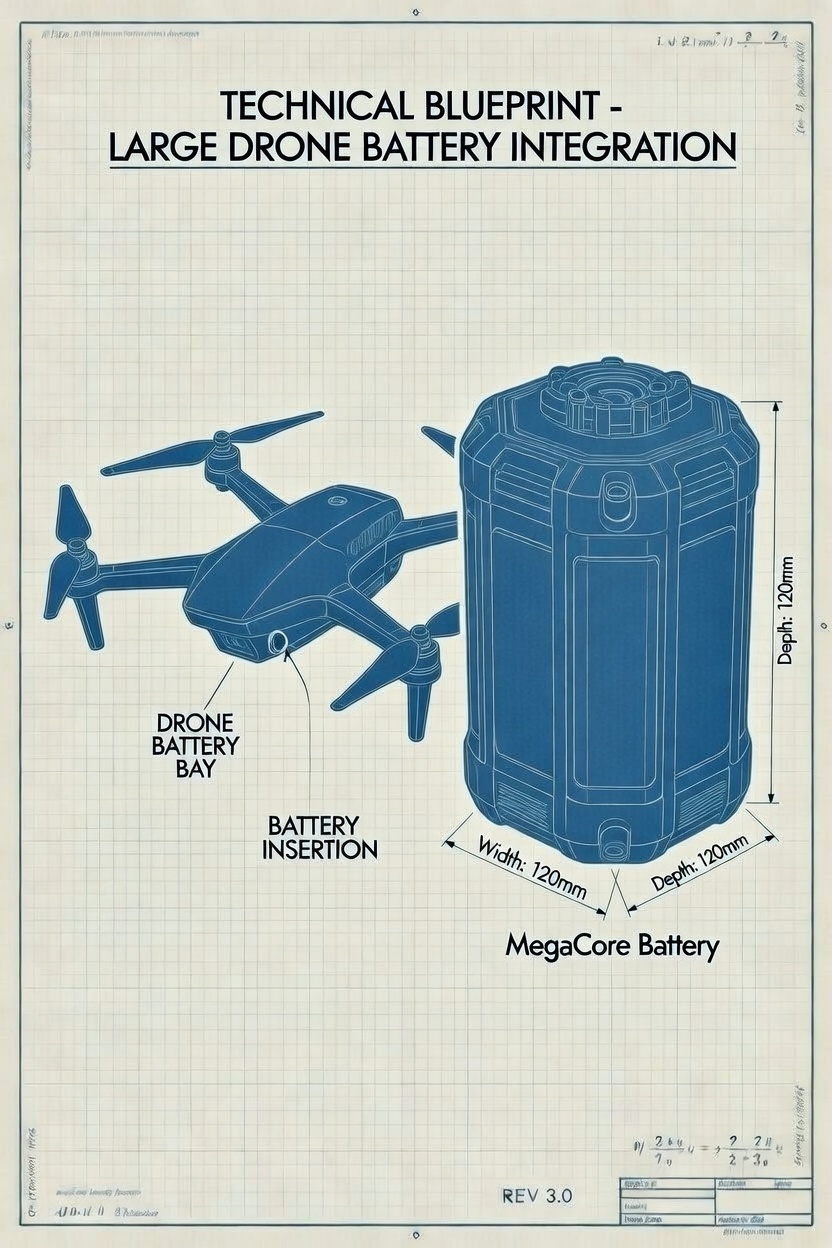
Off-the-shelf batteries rarely fit perfectly into custom delivery drone frames. This leads to bulky, aerodynamically inefficient designs, or worse, loose batteries that vibrate and damage the drone’s internal components.
The 2026 Solution: OEM/ODM Modular Design
Do not settle for what is on the shelf. In 2026, leading manufacturers demand Custom Drone Batteries.
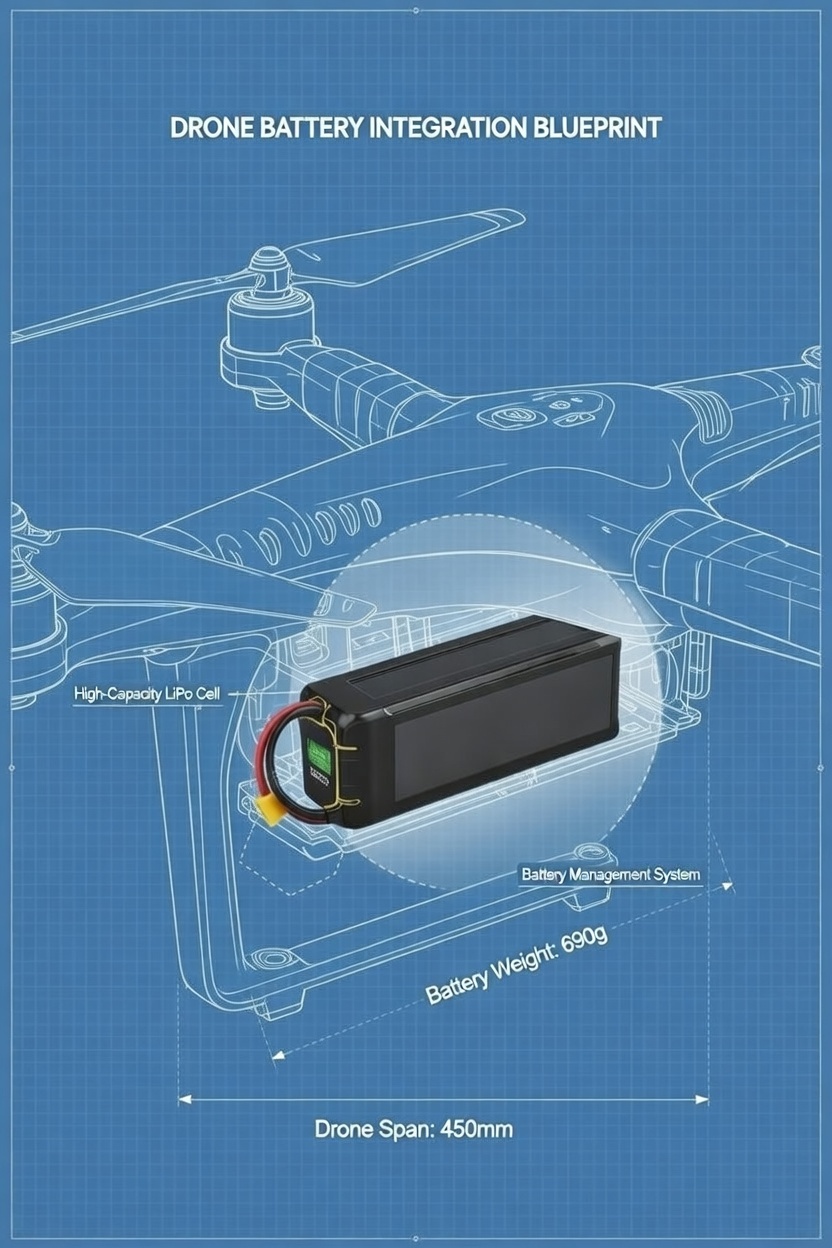
- Shape and Size: Whether you need a flat pack for a sleek delivery pod or a cylindrical shape for a specific center of gravity, modern manufacturers can mold the battery to your mechanical drawings.
- Connectors and Wiring: Standard XT60 connectors might not be safe for your high-current draw. Customization allows for specific connectors (like AS150U or QS8) and wire lengths that integrate seamlessly into your wiring harness, reducing the risk of loose connections.
- Voltage Matching: Your motor system might require a specific voltage curve. Customization allows you to fine-tune the voltage (e.g., 22.2V vs. 22.8V) to match your Electronic Speed Controllers (ESCs) perfectly, maximizing efficiency.
If you are building a drone for a specific niche—like medical delivery or construction site surveying—your battery should be just as specialized.
5. Navigating Logistics: UN38.3 and Global Shipping
Once you have sourced the perfect battery, you have to get it from the factory to your hangar. This is often the most overlooked step in the sourcing process.
The Pain Point:
Lithium batteries are classified as dangerous goods. Without the proper documentation and packaging, your shipment can be held at customs for weeks, or even destroyed. Many new manufacturers learn this the hard way.
The 2026 Solution: Partner with a UN38.3 Compliant Manufacturer
Ensure your supplier handles the compliance burden. Here is what to look for:
- UN38.3 Certification: This is mandatory for air transport. It certifies that the battery has passed specific tests for vibration, pressure, and temperature extremes.
- Robust Packaging: Batteries should be shipped in fumigation-free wooden crates with internal dividers to prevent movement. This isn’t just for shipping; it protects the cells from physical damage during transit.
- Documentation Support: A reliable partner provides the MSDS (Material Safety Data Sheet) and test summaries required by freight forwarders like DHL or FedEx.
By choosing a manufacturer that handles these details, you eliminate the “gray zone” of international trade and ensure your drones are powered on schedule.
Frequently Asked Questions (FAQ)
Q1: What is the most significant advantage of Semi-Solid State batteries in 2026?
The primary advantage is the energy density (up to 380Wh/kg). This allows delivery drones to carry heavier payloads (medicine, groceries, e-commerce) over longer distances without adding bulk. It solves the “weight vs. range” paradox that plagues standard LiPo batteries.
Q2: How do I ensure the battery is compatible with my specific drone model?
Compatibility is about more than just voltage. You must match the Connector Type (e.g., XT60, Anderson), Discharge Rate (C-Rating), and Physical Dimensions. The best way is to provide your manufacturer with your drone’s technical specifications or mechanical drawings for a custom solution.
Q3: What is the typical lead time for custom battery production?
Standard off-the-shelf batteries can ship immediately. However, for custom OEM/ODM projects, the process typically takes 4-6 weeks from design confirmation to shipment. This includes the prototype phase, where the manufacturer builds a sample for you to test in your actual drone before mass production.
Q4: What safety certifications should I look for when sourcing?
Beyond the basic CE and FCC marks, look for UN38.3 (for shipping), RoHS (environmental compliance), and ISO 9001 (quality management). For industrial applications, ensure the battery has a robust BMS with over-charge, over-discharge, and short-circuit protection.
Powering Your 2026 Logistics Future
Sourcing a delivery drone battery in 2026 is a strategic decision, not just a procurement task. It requires looking beyond the spec sheet and understanding how energy density, safety, and customization impact your bottom line.
The market is shifting from generic solutions to specialized power systems. If you are still using standard batteries, you are leaving performance, safety, and money on the table.
Ready to optimize your drone fleet?
Do not let battery limitations hold back your logistics operation. Whether you need a custom design for your unique drone frame or want to upgrade to semi-solid state technology for longer range, the experts at CNS Drone Battery are here to help.
Explore our industrial drone battery specifications to see the performance difference: 了解我们的工业无人机电池规格
For manufacturers ready to discuss a custom solution, contact us today for a free technical assessment and take the first step toward powering your missions with reliability.
Explore more resources on battery maintenance best practices: 了解电池维护最佳实践