Here is the comprehensive SEO guide crafted according to your specifications.
Solving Capacity Challenges in Logistics Drone Batteries: The Ultimate Guide to Maximizing Payload and Efficiency
In the high-stakes world of logistics and delivery, your drone is only as good as its battery. If you are struggling with limited flight times, heavy payloads, or the constant downtime of recharging, you are not alone. The logistics industry is rapidly adopting UAVs for last-mile delivery, inventory management, and supply chain traceability. However, the primary bottleneck remains: energy density.
This guide is designed for B2B operators, fleet managers, and developers facing the harsh reality of physics. We will dissect the technical barriers of standard LiPo batteries and introduce advanced solutions like high-voltage systems and semi-solid state technology. By the end of this article, you will understand how to calculate the perfect energy-to-weight ratio for your logistics operations and where to find reliable, customized drone battery solutions.
The Heavy Burden: Why Standard Batteries Fail Logistics
Logistics drones are workhorses. Unlike photography drones that prioritize agility, delivery drones need to haul heavy packages over long distances. Standard Lithium Polymer (LiPo) batteries, while common, often fall short in this arena.
The core issue is the energy-to-weight ratio. Most standard LiPo batteries offer an energy density of around 180-220 Wh/kg. When your drone is carrying a 5kg package, the battery itself becomes a significant portion of the takeoff weight. This creates a vicious cycle: heavier batteries are needed for longer flights, but the added weight reduces efficiency, negating the benefits of the extra capacity.
Furthermore, standard batteries often suffer from high internal resistance. During heavy discharge (required for lifting payloads), this resistance causes voltage sag and heat buildup. This not only reduces the effective capacity during flight but also degrades the battery faster, increasing the Total Cost of Ownership (TCO) for your logistics fleet.
The Technical Solution: High Voltage and High Discharge
To solve the capacity challenge, we must look beyond standard voltage ratings. The shift from standard series (3.7V per cell) to High Voltage (3.8V) and Ultra-High Voltage (3.95V) systems is a game-changer for logistics.
Why Voltage Matters:
Increasing the nominal voltage of the battery pack allows you to deliver the same power (Watts) with less current (Amps). The formula is simple: $Watts = Volts \times Amps$. By increasing the volts, you decrease the amps required to spin the motors. Lower current means less heat loss due to resistance ($P_{loss} = I^2R$), translating directly into longer flight times and cooler operation.
Discharge Rates:
Logistics drones require high discharge rates to manage the torque needed for heavy takeoffs. Standard “C-Rating” batteries might struggle, leading to puffing and voltage drops. For reliable logistics operations, look for batteries engineered with low internal resistance that support high continuous discharge (e.g., 25C-30C) without significant voltage sag.
Next-Gen Power: Semi-Solid State Technology
If high-voltage LiPo is the “now,” then Semi-Solid State technology is the “future” of logistics batteries. CNS Drone Battery has pioneered solutions utilizing NMC 811 chemistry with semi-solid state electrolytes, pushing the boundaries of energy density.
- Energy Density: Up to 380 Wh/kg.
- Impact: This technology can increase endurance by up to 30% compared to traditional batteries.
- Durability: Cycle life exceeds 500 cycles (maintaining 90% capacity).
For logistics companies operating in extreme conditions—be it Arctic exploration or scorching desert deliveries—semi-solid state batteries offer the stability and density needed. They utilize high-nickel cathodes and silicon-carbon anodes, which are less prone to thermal runaway, making them safer for carrying volatile cargo or operating over populated areas.
Customization: The Key to Payload Optimization
One size does not fit all in logistics. A battery that works for a 2kg medical delivery drone will be overkill (and too heavy) for a 500g document drop.
Modular Design:
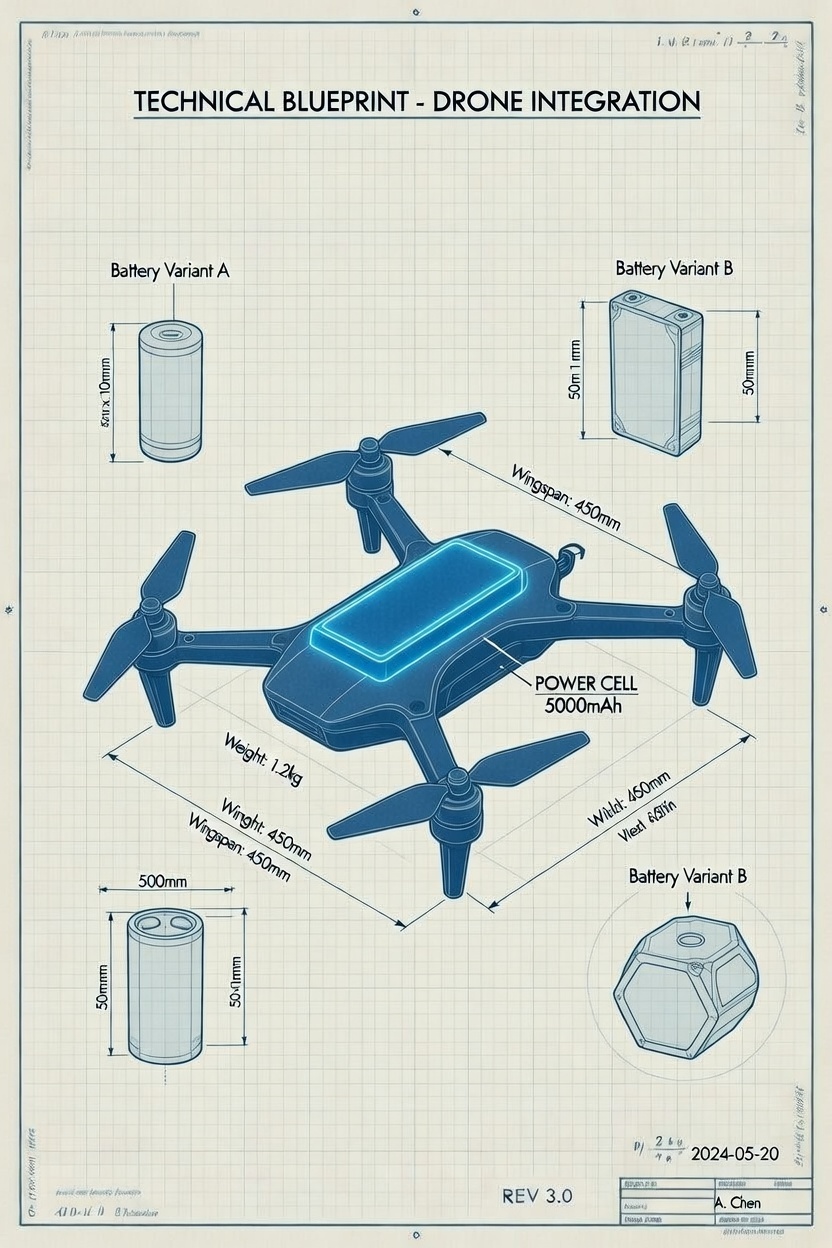
To solve capacity challenges, customization is essential. You need a battery that fits the specific dimensions of your drone’s fuselage to maintain aerodynamics. This includes:
- Voltage Configuration: Tailoring the S-count (e.g., 6S, 12S, 14S) to match your motor KV ratings.
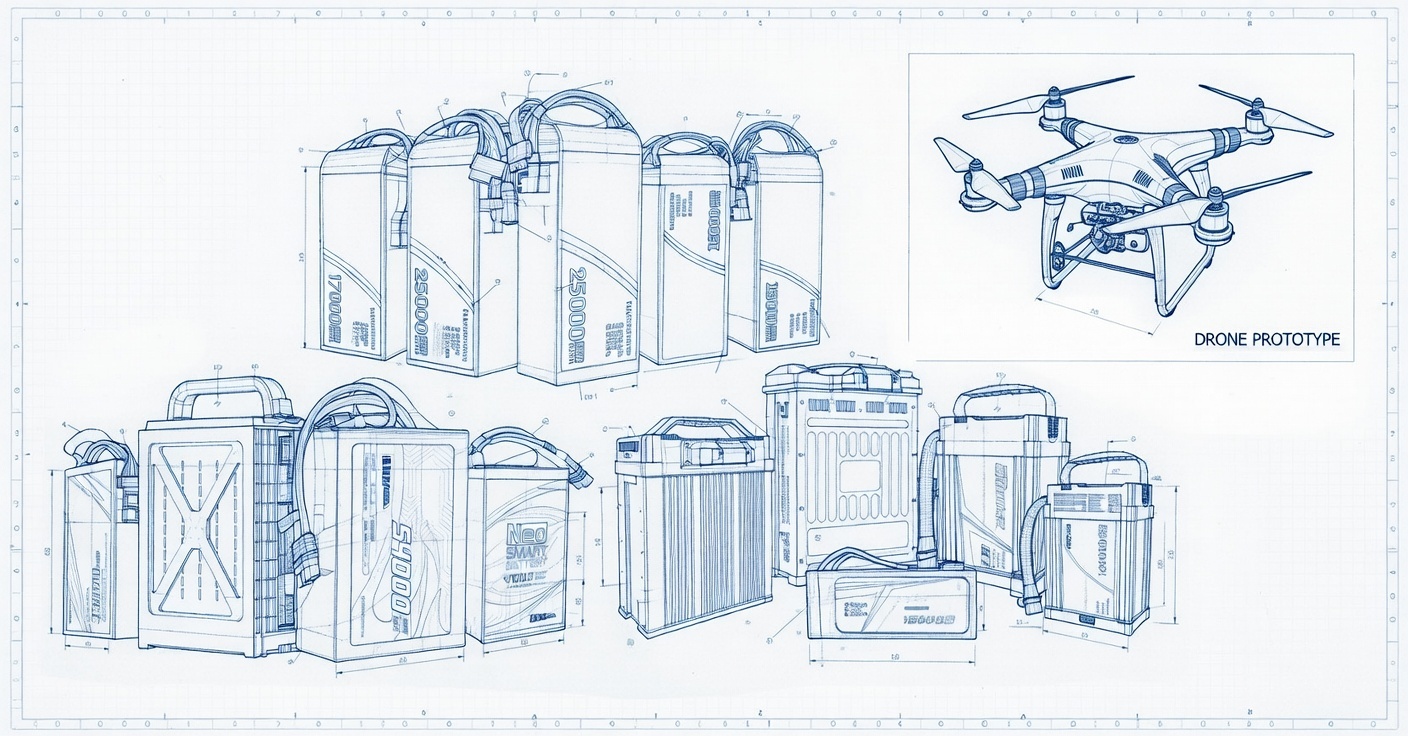
- Shape and Size: Creating prismatic or L-shaped packs that fit snugly into the payload bay.
- Connectors: Using industrial-grade connectors (like XT60, AS150U, or QS series) that won’t vibrate loose during rough landings.
Smart BMS Integration:
A logistics battery isn’t just a power cell; it is a data node. Integrating a robust Battery Management System (BMS) allows for real-time monitoring of State of Health (SOH) and State of Charge (SOC). This is crucial for fleet management, allowing you to predict when a battery needs servicing before it fails mid-mission.
The CNS Advantage: Engineering for the Real World
At CNS Drone Battery, we understand that logistics is not about specs on a datasheet; it is about getting the job done reliably. We are a leading global developer and manufacturer specializing in high-performance, customized battery solutions for B2B clients.
Our Commitment:
We don’t just sell batteries; we solve engineering problems. Whether you need a lightweight modular battery for a new eVTOL design or a rugged, waterproof solution for agricultural logistics, our team provides 1-on-1 technical support. Our products undergo rigorous testing to ensure stable and efficient operation, helping businesses like yours improve operational efficiency.
Key Specifications:
| Feature | Standard LiPo | CNS High-Performance / Semi-Solid |
|---|---|---|
| Energy Density | 180-220 Wh/kg | 280 – 380 Wh/kg |
| Voltage Options | Standard (3.7V) | Standard, High (3.8V), Ultra-High (3.95V) |
| Typical Use Case | Light photography, racing | Heavy-payload logistics, long-range mapping |
Frequently Asked Questions (FAQs)
1. What is the best battery type for long-distance delivery drones?
For long-distance logistics, Semi-Solid State batteries are currently the best option due to their unmatched energy density (up to 380 Wh/kg). If semi-solid state is not within the current budget, High Voltage (LiHV) batteries with a 3.8V nominal rating are the next best choice as they provide more energy per gram than standard LiPo.
2. How do I increase the flight time of my logistics drone?
There are three primary methods:
- Reduce Weight: Use lighter materials in the drone frame.
- Aerodynamics: Streamline the design to reduce drag.
- Upgrade the Battery: Switch to a higher energy density chemistry (like semi-solid state) or a higher voltage system to reduce current draw.
3. What safety features are essential for transporting goods via drone?
When carrying cargo, safety is paramount. Look for batteries with:
- Anti-spark connectors: To prevent ignition during connection/disconnection.
- Robust BMS: To protect against over-current, short-circuit, and extreme temperatures.
- IP67 Rating: If operating in rain or humid environments (common in delivery scenarios).
4. Can I customize a battery for my specific drone model?
Yes. Customization is vital for logistics efficiency. You can adjust the voltage, capacity, size, weight, and even temperature resistance. For specific customization needs, it is recommended to contact a specialist engineering team.
Conclusion: Powering the Future of Delivery
Solving capacity challenges in logistics drone batteries is not just about adding more cells; it is about smarter chemistry and better engineering. By moving towards high-voltage systems and semi-solid state technology, and by embracing the power of customization, logistics companies can finally achieve the flight times and payload capacities needed to make drone delivery a profitable reality.
Don’t let battery limitations ground your operations. The future of logistics is electric, efficient, and customizable.
Ready to optimize your fleet’s performance? Contact our experts today for a free consultation and discover how our customized drone battery solutions can help you extend your range and improve safety.