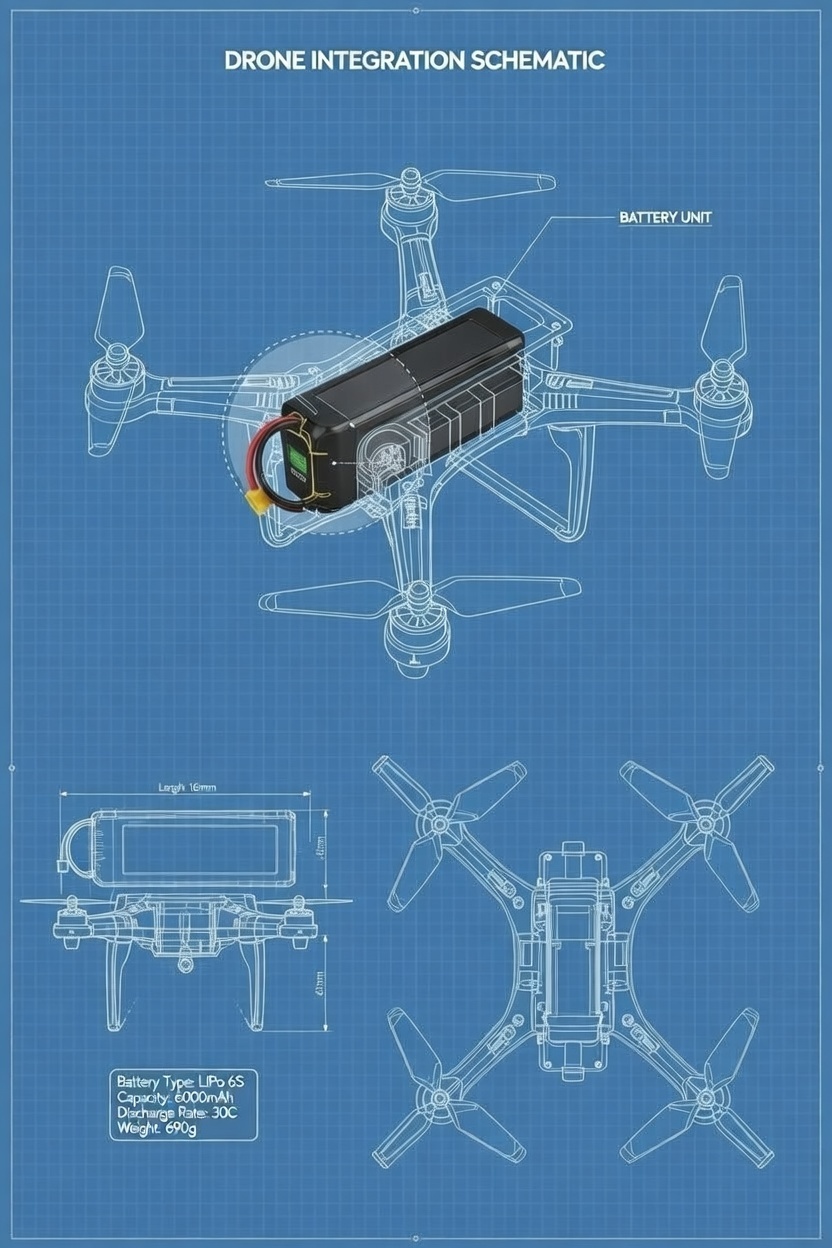
⚡️ The Unseen Shield: Mastering Fireproof Drone Battery Safety & Smart BMS for Public Safety
TL;DR: For public safety and policing teams, the margin between mission success and failure often hinges on equipment reliability. This guide provides a strategic framework for training your unit on Fireproof Drone Battery Safety and Advanced Smart BMS (Battery Management Systems). By integrating CNS Drone Battery’s ruggedized solutions and intelligent monitoring protocols into your standard operating procedures (SOPs), you ensure operational continuity in high-stress environments. Discover how to build a culture of safety that prioritizes rapid response, data integrity, and officer safety.
🚨 The Silent Stakes of Aerial Policing
In the heat of a search-and-rescue operation or the tension of a crowd monitoring scenario, the last thing a tactical drone operator needs is a battery failure. Public safety drones are not hobbyist toys; they are force multipliers. When we discuss Drone Battery Safety in this context, we are not merely talking about preventing a crash—we are discussing the prevention of evidence loss, the保障 of officer safety, and the mitigation of fire hazards in volatile situations.
For law enforcement and emergency response leaders, training your team on the nuances of Advanced Smart BMS and Fireproof technologies is no longer optional; it is a critical component of risk management. This article serves as your strategic manual to bridge the gap between raw hardware capability and operational excellence.
🔥 Phase 1: Cultivating a Culture of Fireproof Battery Safety
Training begins with mindset. Before a drone leaves the charging station, your team must understand that the battery is the most volatile component of the system. “Fireproof” does not mean “invincible”; it means “engineered for survival.”
🛡️ The 3 Pillars of Fireproof Safety Training
- The “No-Skin” Rule: Train operators to never let the battery touch the drone’s skin (frame) directly if possible. While our batteries are encased in explosion-proof casings, proper mounting ensures airflow. A battery pressed against carbon fiber can trap heat.
- The Cold Start Protocol: Never launch a mission immediately after a battery has been on the charger. Train your team to implement a “cool down” period of at least 15 minutes. Thermal runaway often starts when a hot battery is subjected to high C-rate discharge immediately.
- The Environment Scan: Before landing, the pilot must scan for flammable materials. Even with an IP67-rated waterproof and fire-resistant battery, landing on dry grass or near fuel sources is a rookie mistake in high-risk operations.
Expert Tip: Conduct a monthly “Battery Autopsy.” Gather the team to inspect the physical condition of the cells. Look for swelling, punctures, or connector damage. A visual inspection is the first line of defense against in-air failure.
🧠 Phase 2: Decoding the Advanced Smart BMS
The Battery Management System (BMS) is the brain. In public safety, data is king. An Advanced Smart BMS doesn’t just protect the battery; it provides real-time intelligence to the operator.
📊 Leveraging BMS Data for Tactical Advantage
- State of Health (SOH) Monitoring: Do not allow operators to fly with batteries below 80% SOH. The BMS will report this via the app. Training should mandate that if the BMS flags a cell imbalance, that battery is grounded for maintenance immediately.
- Voltage Sag Awareness: Teach your pilots to read the voltage graphs on the BMS. If the voltage drops below 3.6V per cell under load (even if the BMS allows it), it indicates internal resistance is building up—a precursor to heat issues.
- Bluetooth Diagnostics: Utilize the Bluetooth APP Monitoring feature. Before every shift, the team lead should scan each battery. This 10-second check can reveal deep-cycle errors or memory faults that the naked eye cannot see.
Key BMS Features for Public Safety Teams
| Feature | Operational Impact | Training Focus |
|---|---|---|
| Over-Discharge Protection | Prevents cell damage during extended surveillance. | Train pilots to return home at 20% or when voltage sags, whichever comes first. |
| Short-Circuit Protection | Critical during crash recovery or water landings. | Simulate “wet landings” in training; teach teams to power off and dry batteries immediately. |
| Temperature Sensors | Prevents thermal events in high-altitude or desert operations. | Set app alerts to vibrate when core temp exceeds 60°C. |
🛠️ Phase 3: The Maintenance Matrix
Public safety drones operate in the grit—dust, rain, mud, and grime. Your maintenance training must be as rugged as the missions.
🧼 The “Dirty Dozen” Maintenance Checklist
- Connector Hygiene: After every mission, especially in coastal or industrial areas, connectors must be cleaned with dielectric grease. Corrosion kills conductivity and causes sparks.
- Smart Charging Discipline: Enforce the use of MOS Switch chargers. Train the team to never leave batteries on the charger overnight unattended. Set timers.
- The 30-Day Deep Cycle: Every 30 days, batteries must go through a full charge-discharge cycle (following manufacturer specs) to recalibrate the BMS. This prevents “battery memory” and ghost charging.
- Storage Voltage: If a mission is called off, batteries must be drained to storage voltage (typically 3.8V per cell) before being put back in the evidence locker (case).
📈 Phase 4: Integration into Standard Operating Procedures (SOPs)
Technology is useless without process. You must weave Drone Battery Safety into the fabric of your daily briefings.
📝 Creating the “Battery Brief”
Before any drone is deployed, the team should run through this checklist:
- The Chain of Custody: Who checked out the battery? Who is responsible for its return? In legal operations, the battery is evidence; its flight logs are data.
- The Redundancy Rule: Never fly with less than three batteries on-site (Primary, Backup, and Emergency). Train rookies to always carry the “Emergency” brick, even if it is heavy.
- The Handover: When shifts change, the BMS data must be handed over verbally. “Battery 3 is hot, only use for low-hover observation.”
🏁 Conclusion: The Mission Continues
Training your public safety or policing team on Fireproof Drone Battery Safety and Advanced Smart BMS is not about extending flight time; it is about extending trust. It is about ensuring that when the call comes in at 3 AM, your drone will start, stay in the air, and come home safely.
By adopting the rigorous standards of CNS Drone Battery—from our high-energy density cells to our intelligent management systems—you are not just buying hardware; you are investing in peace of mind. Our batteries are built for the extremes of law enforcement, from the freezing peaks to the scorching deserts.
Do not let a battery failure ground your mission. Contact us today to audit your current fleet and upgrade to a solution that matches the intensity of your work.
📣 Call to Action
Ready to fortify your aerial unit with the industry’s most reliable power solutions?
👉 Contact Our Experts for a Free Assessment
Ensure your team is equipped with the right tools for the mission. Contact Us Now
👉 Explore Our Ruggedized Public Safety Solutions
Dive deeper into our specifications and see how our technology integrates with your existing hardware. View Our Industrial Drone Battery Specs
👉 Download the Ultimate Maintenance Guide
Keep your fleet mission-ready with our expert tips. Access Best Practices Resources