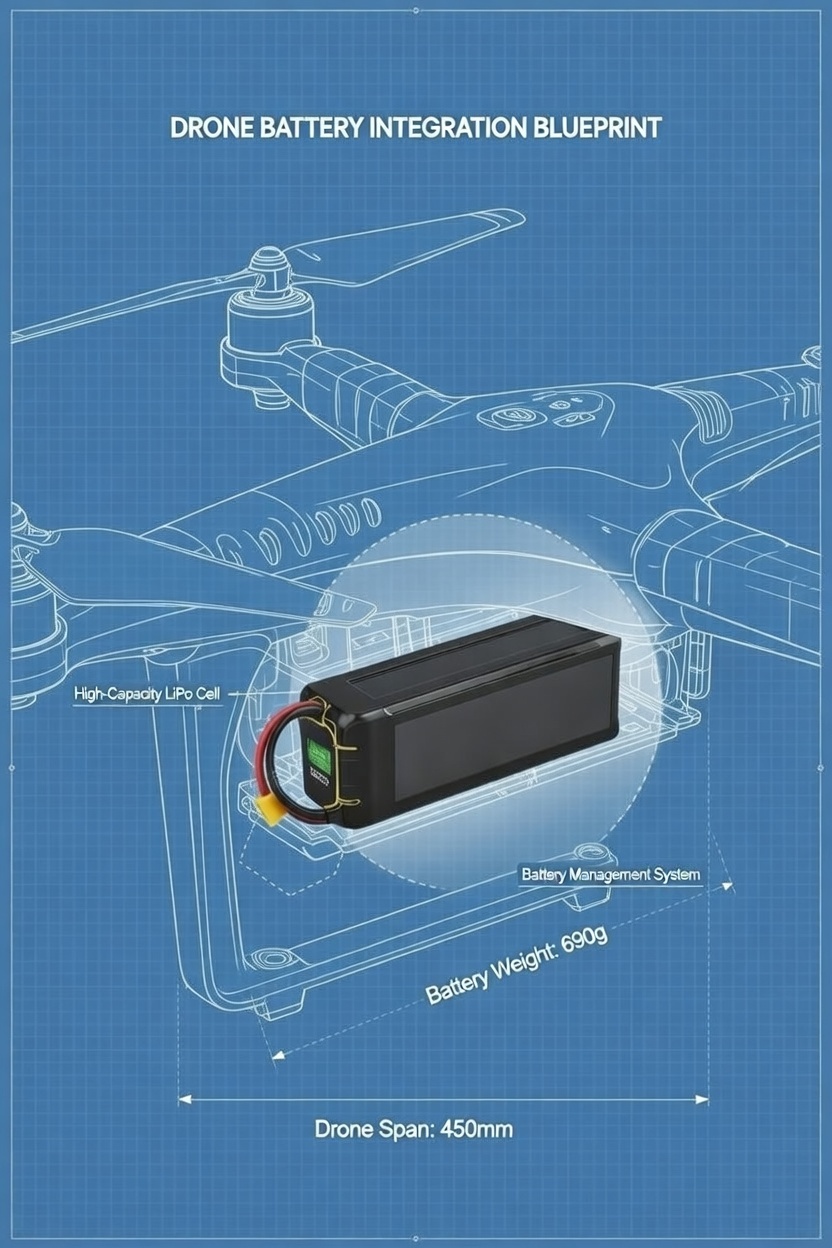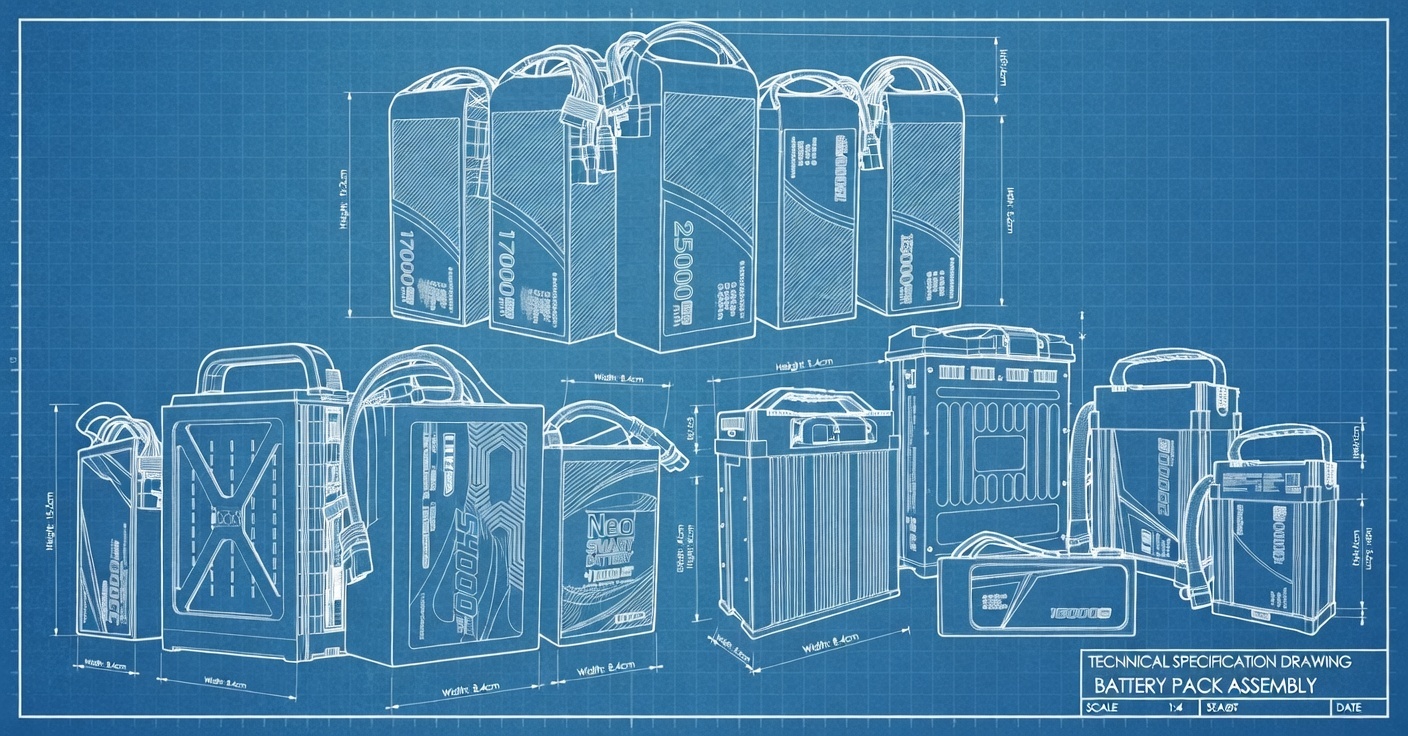
The Role of Anti-Explosion in 16000mAh Drone Battery Technical Support & Predictive Maintenance for High-Altitude Surveillance
In the high-stakes world of industrial unmanned aerial systems (UAS), the difference between mission success and critical failure often hinges on a single component: the battery. For high-altitude surveillance operations, where thin air, extreme temperatures, and prolonged flight times are the norm, relying on standard power solutions is a gamble few professionals can afford to take.
Imagine this: Your drone is soaring at 4,000 meters, conducting vital border patrol or environmental monitoring. Suddenly, the telemetry signal drops. The culprit? Not a mechanical failure, but a catastrophic thermal event in a battery pack pushed beyond its physical limits. This is the nightmare scenario that drives our engineering philosophy at CNS Battery.
This guide is not just another technical datasheet. It is a deep dive into the symbiotic relationship between Anti-Explosion Technology, 16000mAh High-Density Chemistry, and Predictive Maintenance. We will dissect how these elements combine to form the backbone of reliable high-altitude surveillance.
The High-Altitude Paradox: Power vs. Safety
High-altitude surveillance presents a unique engineering paradox. To maintain lift in the thin air found at high elevations, drones require significantly more power. This necessitates batteries with massive energy density—enter the 16000mAh drone battery. However, packing more energy into a confined space increases the risk of thermal runaway, especially when the cooling efficiency of standard airflow is drastically reduced at altitude.
For B2B operators managing fleets for applications like long-endurance mapping or heavy-payload inspection, the stakes are high. A single thermal incident doesn’t just destroy a $2,000 battery; it can result in the total loss of a $20,000+ airframe and critical data payload.
The “Silent Killer” in Drone Logistics
One of the most overlooked aspects of high-altitude operations is the supply chain. Many operators unknowingly purchase batteries that are “ticking time bombs” due to poor quality control in the raw materials. The use of recycled or inconsistently graded lithium polymer cells can lead to internal short circuits, which manifest as swelling and, ultimately, explosion.
The CNS Standard: We utilize only top-tier Lithium Polymer raw materials sourced from Japan and Korea. Our strict single-cell capacity, voltage, resistance, and discharge curve matching process ensures that no “weak cell” is forced to carry the burden of the pack.
Engineering the Fortress: Anti-Explosion Mechanisms Decoded
When we discuss Anti-Explosion Technology in the context of a 16000mAh drone battery, we are not referring to a single feature, but a comprehensive system of defense. For surveillance teams operating in remote or sensitive areas, the battery must be a fortress against failure.
1. The Structural Shield
The physical casing of a battery is its first line of defense. Standard pouch cells, while lightweight, offer minimal resistance to puncture or impact. In our high-altitude solutions, we employ reinforced casings and, in specific semi-solid state variants, designs that can withstand extreme physical stress.
2. The Chemical Advantage
Our proprietary Semi-Solid State Drone Battery technology represents the bleeding edge of safety. By utilizing NMC 811 chemistry (80% Nickel, 10% Manganese, 10% Cobalt) combined with a semi-solid electrolyte, we achieve an energy density of up to 380Wh/kg while simultaneously reducing the volatility inherent in traditional liquid electrolytes. This chemistry is less prone to leakage and offers superior thermal stability, a critical factor when operating in sub-zero high-altitude environments.
3. The Electronic Sentinel (BMS)
The Brain of the operation is the Battery Management System (BMS). In our 16000mAh packs, the BMS does more than just monitor voltage; it acts as a predictive sentinel.
- Overvoltage/Undervoltage Protection: Prevents cells from being charged too high or drained too low, both of which are primary causes of swelling.
- Short-Circuit Protection: Cuts power in microseconds if a short is detected.
- Temperature Sensors: Continuously monitors core temperature, adjusting output to prevent thermal runaway.
The 16000mAh Sweet Spot: Why Capacity Matters for Surveillance
Not all high-capacity batteries are created equal. The 16000mAh specification is not arbitrary; it is the “sweet spot” for heavy-lift and long-endurance surveillance drones. It provides the necessary “fuel” to keep the rotors spinning and the sensors active without adding the prohibitive weight of larger, lower-energy-density packs.
CNS 16000mAh Performance Matrix
| Feature | Specification | Operational Impact |
|---|---|---|
| Configuration | 6S / 22.2V | Standard for industrial heavy-lift platforms |
| Dimensions | 1927760mm | Optimized for aerodynamic integration |
| Weight | 1857g | Balances energy load with payload capacity |
| Discharge Rate | 15C Continuous | Sustained power for high-altitude climb rates |
| Burst Rate | 30C | Instant power for emergency maneuvers |
The “Anti-Spark” Innovation
One of the minor but dangerous risks in drone operation is the spark generated during connection. In volatile environments or when handling the battery in dry, high-altitude conditions, this spark can be a hazard. Our 16000mAh C-6S15C17053 model features an Anti-Spark technology. This innovation ensures that the connection to the drone is seamless and spark-free, eliminating a potential ignition source and protecting the delicate electronics of both the battery and the aircraft.
From Reactive to Predictive: The Future of Technical Support
In the past, technical support for drone batteries was reactive. A pilot would call in after a crash, and the support team would troubleshoot. In the modern era of high-altitude surveillance, this model is obsolete. We have shifted to a Predictive Maintenance model, leveraging data to prevent failure before it occurs.
Real-Time Health Monitoring (SOH)
Our Smart Drone Battery solutions, including the Neo and Pro series, are equipped with Bluetooth connectivity. This allows operators to run a State of Health (SOH) check via a mobile application. Instead of guessing how many cycles are left in a pack, surveillance teams can see exactly how much life remains.
Remote Diagnostics & Proactive Intervention
Our technical support team doesn’t wait for a failure. By analyzing the data logs from the BMS, we can identify patterns indicative of stress—such as consistent voltage sag or temperature spikes—and recommend preventative maintenance.
Case Study: The Arctic Mapping Fleet A client conducting topographic surveys in the Arctic was experiencing premature battery degradation. Our predictive analytics identified that the standard discharge curve was not optimized for sub-zero operation. We remotely adjusted the BMS parameters to pre-heat the cells during the startup sequence, extending the battery life by 30% and preventing potential cold-induced failures.
Predictive Maintenance: A Step-by-Step Guide for Fleet Managers
To maximize the ROI of your 16000mAh drone battery investment, you need a structured maintenance protocol. Here is a workflow we recommend for high-altitude surveillance teams:
Step 1: The Pre-Flight Scan Before every mission, connect the battery to the CNS app. Verify the SOH is above 80%. Check for any cell imbalance. If the app flags a “Weak Cell,” retire that battery immediately.
Step 2: The Post-Flight Cool Down Never stack batteries immediately after a high-altitude sortie. The internal chemistry needs time to stabilize. Implement a “Cool Down Protocol” where batteries rest for 20 minutes in a fireproof container before storage.
Step 3: The Monthly Deep Dive Every 30 cycles, perform a full discharge/recharge cycle while monitoring the BMS logs. Look for:
- Voltage Sag: A drop in voltage under load indicates internal resistance is increasing.
- Temperature Spikes: Any cell exceeding 60°C is a candidate for retirement.
Step 4: The Retirement Plan Do not wait for the battery to fail. Based on our data, a 16000mAh pack used in high-stress surveillance should be retired from primary missions after 150 cycles (or when SOH drops below 70%) and relegated to training or low-risk flights.
Frequently Asked Questions (FAQ)
1. Why is a 16000mAh battery specifically recommended for high-altitude work?
High altitudes require more power to generate lift due to lower air density. A 16000mAh battery provides the necessary energy density to keep the drone airborne without adding the excessive weight of a lower-voltage, higher-physical-size alternative. It is the optimal balance of power and portability.
2. How does the Anti-Explosion technology actually work in practice?
Our technology works on three levels: Structurally, we use reinforced casings; Chemically, we use stable electrolytes and high-grade materials to resist thermal runaway; and Electronically, the BMS cuts power instantly if it detects a short circuit or overheat. It is a multi-layered defense system.
3. What is the expected lifespan of a 16000mAh drone battery under high-altitude conditions?
Under standard conditions, our batteries are rated for over 200 cycles. However, in extreme high-altitude or sub-zero conditions, we recommend planning for a lifespan of 150 cycles to ensure maximum safety and performance margins.
4. Can I customize the BMS settings for my specific surveillance drone model?
Yes. One of the core tenets of our service is customization. We offer 1-on-1 technical support to tailor the BMS parameters—including charge rate, discharge cut-off, and temperature thresholds—to perfectly match your specific drone’s flight characteristics and your operational environment.
Conclusion: Powering Your Mission with Confidence
High-altitude surveillance is not a hobby; it is a profession that demands the absolute best in reliability and safety. Choosing a battery is not merely a purchasing decision; it is a commitment to the integrity of your entire operation.
By understanding the critical role of Anti-Explosion Technology and implementing a rigorous Predictive Maintenance strategy, you transform your power source from a potential liability into your most trusted ally. The 16000mAh drone battery, when engineered with the precision and safety standards championed by CNS, becomes more than just energy storage—it becomes the engine of your success.
Do not leave your high-altitude missions to chance. Partner with a team that understands the unique pressures of your environment.
Contact our experts today for a free, personalized technical assessment. Let us help you build a battery solution that is not just powerful, but truly safe.
Explore More Resources
To further enhance your operational knowledge and ensure your fleet is running at peak efficiency, explore our comprehensive resource library: