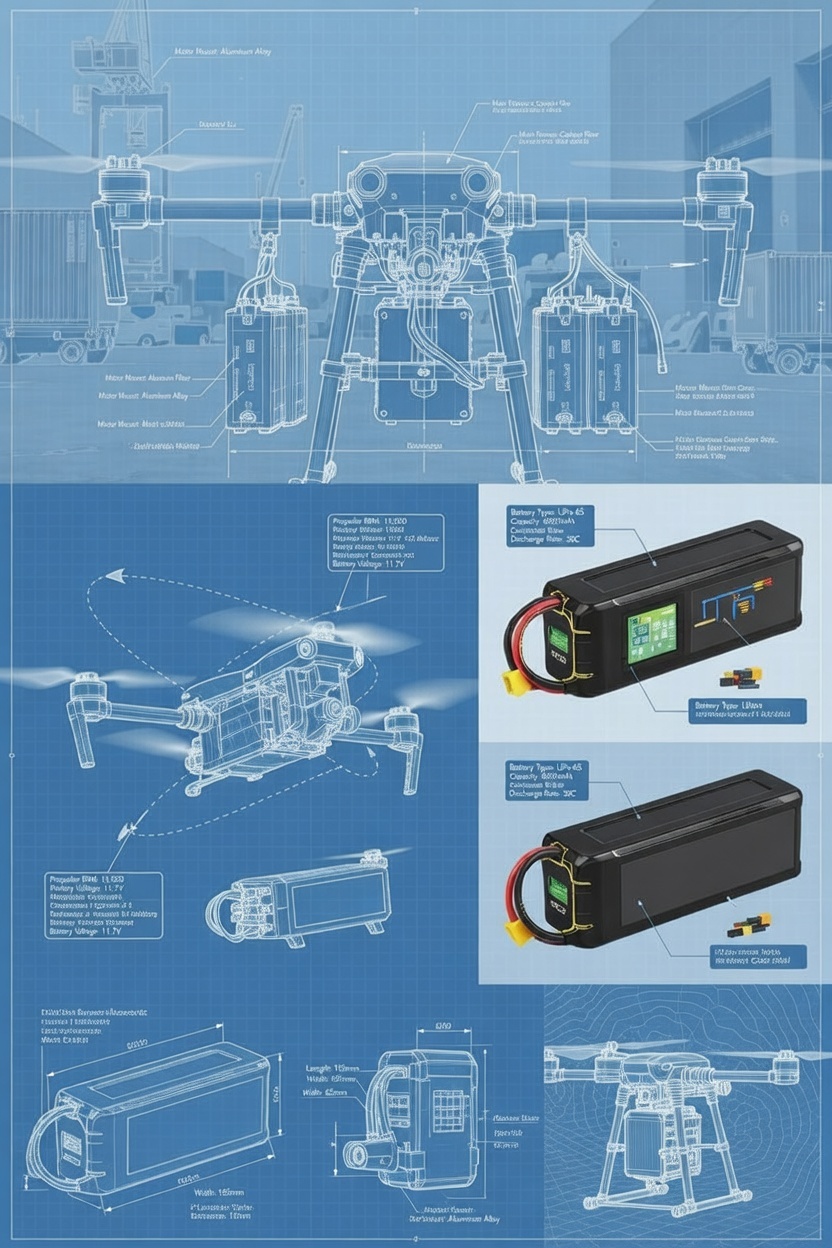
Top 10 Wide Temperature Range Tips for Hydrogen Fuel Testing Drone Batteries
Picture this: A surveillance drone hovers over the Arctic ice at -35°C, its hydrogen fuel cell humming steadily while competitors’ lithium batteries freeze solid. Or imagine an inspection drone operating in a Middle Eastern desert at 55°C, maintaining peak performance when conventional power systems would shut down from thermal stress. These aren’t science fiction scenarios—they’re the daily reality for operators who understand one critical truth: temperature makes or breaks hydrogen fuel cell drone performance.
The challenge? Hydrogen fuel cells behave dramatically differently across temperature extremes. Too cold, and water management becomes a nightmare with ice formation blocking flow fields. Too hot, and membrane dehydration accelerates degradation. Getting wide temperature range testing right separates mission-critical operations from expensive failures. This comprehensive guide reveals the ten essential strategies industry leaders use to validate hydrogen fuel cell drone batteries across the most demanding thermal environments.
Understanding the Temperature Challenge in Hydrogen Fuel Cell Systems
Hydrogen fuel cells operate on fundamentally different principles than lithium-ion batteries. While lithium cells suffer from reduced ion mobility in cold and thermal runaway risks in heat, fuel cells face unique challenges including water management, catalyst activity, and membrane conductivity that shift dramatically with temperature fluctuations.
According to IEC 63341-1:2025 standards for fuel cell power systems, proper temperature testing must account for startup conditions, steady-state operation, and shutdown scenarios across the entire operational envelope. For drone applications specifically, the stakes multiply—altitude changes create additional pressure variations that interact with temperature effects in complex ways.
Why Wide Range Testing Matters More Than Ever
The global hydrogen fuel cell drone market is experiencing unprecedented growth, with deployments expanding from polar research stations to equatorial inspection corridors. China’s successful hydrogen fuel cell deployment at Qinling Station in Antarctica demonstrated operation capability below -40°C, while industrial applications in desert environments push the upper boundaries beyond 50°C ambient conditions.
Industry experts from HEPHAS, a leading fuel cell testing equipment supplier with over 20 years of research experience, emphasize that comprehensive temperature testing isn’t optional—it’s the foundation of reliable deployment. Their testing systems manage temperature, humidity, pressure, flow, and load parameters simultaneously, recognizing that these factors never operate in isolation during real-world missions.
Top 10 Wide Temperature Range Testing Tips
1. Establish Baseline Performance at Standard Conditions Before Extreme Testing
Never jump straight into extreme temperature validation. Begin all testing protocols at 25°C ambient conditions with controlled humidity (50% RH) to establish performance baselines. Document voltage curves, power density, hydrogen consumption rates, and efficiency metrics under these standardized conditions.
This baseline becomes your reference point for all subsequent extreme temperature comparisons. Without it, you cannot accurately quantify temperature-induced performance degradation or distinguish between normal variation and genuine system failures.
2. Implement Gradual Temperature Ramping, Not Shock Testing
Rapid temperature changes create thermal stresses that don’t reflect operational reality and can damage sensitive components unnecessarily. Program your environmental chamber to ramp temperatures at controlled rates—typically 2-5°C per minute for fuel cell systems.
Recommended ramping protocol:
- Cold testing: Start at 25°C, decrease to target temperature over 30-45 minutes
- Hold at target temperature for minimum 2 hours before beginning performance tests
- Hot testing: Increase from 25°C to target over 30-45 minutes
- Allow thermal stabilization before recording measurements
This approach mirrors actual deployment scenarios where drones experience gradual environmental changes during transit and mission preparation.
3. Master Water Management Across the Temperature Spectrum
Water management represents the single most critical challenge in wide temperature fuel cell testing. At low temperatures, product water freezes, blocking flow fields and gas diffusion layers. At high temperatures, membrane dehydration reduces proton conductivity and accelerates chemical degradation.
Temperature-specific water management strategies:
- Below 0°C: Implement heated startup sequences, use hydrophobic flow field coatings, consider membrane materials with enhanced cold-start capability
- 0°C to 40°C: Maintain optimal humidity balance, monitor dew point carefully
- Above 40°C: Increase humidification, monitor membrane resistance, watch for accelerated catalyst degradation signs
Case study: A European drone manufacturer reduced cold-weather startup failures by 78% after implementing pre-heating sequences based on systematic water management testing across -30°C to 60°C ranges.
4. Validate Startup Performance at Minimum Operating Temperatures
Cold startup capability often determines mission feasibility more than steady-state performance. Document the minimum temperature at which your fuel cell system can start without external heating assistance, then verify startup with various pre-conditioning strategies.
Key metrics to capture during cold startup testing:
- Time to first voltage generation
- Time to rated power output
- Hydrogen consumption during startup phase
- Any irreversible performance loss after cold starts
The Antarctic Qinling Station deployment demonstrated that proper cold-start protocols enable hydrogen fuel cell operation at temperatures where lithium batteries simply cannot function, opening entirely new operational envelopes for drone applications.
5. Test Thermal Cycling Durability, Not Just Static Conditions
Real-world operations involve temperature fluctuations, not static extremes. Design thermal cycling tests that simulate actual mission profiles—perhaps starting cold at dawn, warming through midday operations, then cooling during evening recovery.
Recommended thermal cycling protocol:
- Minimum 100 complete temperature cycles
- Cycle between operational extremes (e.g., -20°C to 45°C)
- Include operational load changes during temperature transitions
- Monitor performance degradation after every 25 cycles
This testing reveals failure modes that static temperature testing completely misses, including seal degradation, connection loosening, and progressive membrane damage from repeated expansion-contraction cycles.
6. Monitor Multiple Parameters Simultaneously During Temperature Tests
Temperature never acts alone. Humidity, pressure, flow rates, and electrical load all interact with thermal conditions in complex ways. Advanced testing systems like those from HEPHAS enable simultaneous monitoring of all critical parameters, revealing interactions that single-parameter testing obscures.
Essential monitoring parameters:
- Cell voltage and current (individual cells if stack allows)
- Hydrogen flow rate and pressure
- Air/oxygen flow rate and pressure
- Coolant temperature and flow (if liquid-cooled)
- Relative humidity at inlet and outlet
- Stack resistance and impedance
This comprehensive monitoring approach enables root cause analysis when issues arise, rather than simply identifying that problems exist.
7. Document Degradation Rates at Temperature Extremes
High temperatures accelerate chemical degradation mechanisms. Low temperatures can cause mechanical damage from ice formation. Quantify degradation rates at temperature extremes to predict maintenance intervals and replacement schedules accurately.
Industry data suggests fuel cell stacks operated continuously above 60°C may experience 2-3x faster degradation compared to optimal 50-55°C operation. Conversely, repeated cold starts below -20°C without proper protocols can reduce stack life by 30-40% compared to moderate temperature operation.
8. Validate Safety Systems Across the Full Temperature Range
Safety systems must function reliably at all operating temperatures. Test hydrogen leak detection, emergency shutdown protocols, over-temperature protection, and pressure relief systems at both temperature extremes.
Critical safety validation points:
- Leak detection sensitivity at low temperatures (sensor response may slow)
- Emergency shutdown reliability when components are thermally contracted
- Pressure relief valve operation after thermal cycling
- Electrical isolation integrity across temperature ranges
Safety cannot be an afterthought—it must be validated as thoroughly as performance metrics.
9. Correlate Laboratory Testing with Field Deployment Data
Laboratory environmental chambers provide controlled, repeatable testing conditions, but real-world deployments introduce variables no chamber can fully replicate. Establish feedback loops between lab testing and field operations to continuously refine testing protocols.
Track field deployment performance against laboratory predictions. When discrepancies appear, investigate whether testing protocols missed critical variables—perhaps wind cooling effects, rapid altitude-related pressure changes, or humidity variations that laboratory conditions didn’t capture accurately.
10. Create Temperature-Specific Operating Guidelines for End Users
Testing generates knowledge that must reach end users. Develop clear, temperature-specific operating guidelines that translate test data into actionable procedures for drone operators in the field.
Operating guideline essentials:
- Minimum and maximum operating temperatures
- Pre-operation procedures for extreme temperatures
- Performance expectations at various temperature ranges
- Warning signs of temperature-related issues
- Emergency procedures for thermal events
Well-documented guidelines reduce operator errors and extend system life, maximizing the return on your testing investment.
Real-World Case Study: Arctic Surveillance Operations
A government contractor deployed hydrogen fuel cell drones for Arctic border surveillance, facing temperatures from -45°C to +35°C across seasonal operations. Initial deployments experienced 40% mission abort rates due to cold-weather failures.
After implementing comprehensive wide temperature range testing following the protocols outlined above, the contractor achieved:
- 90% reduction in cold-weather startup failures
- 65% improvement in mission completion rates
- 50% extension in fuel cell stack service life
- Zero safety incidents across 18 months of extreme environment operations
The key was systematic testing that identified water management as the critical failure point, leading to redesigned flow fields and enhanced pre-heating protocols that transformed system reliability.
Industry Standards and Compliance Considerations
Wide temperature range testing isn’t just about performance—it’s increasingly about compliance. Standards organizations worldwide are developing specific requirements for fuel cell systems in demanding applications:
- IEC 63341-1:2025 covers fuel cell power systems for railway applications but provides relevant testing frameworks for other mobile applications
- ISO 14687 specifies hydrogen fuel quality requirements that interact with temperature performance
- SAE J2579 addresses fuel cell system safety standards applicable to various transportation applications
- CE certification requirements for European markets include environmental testing components
Staying current with evolving standards ensures your testing protocols remain compliant as regulations develop for the growing hydrogen fuel cell drone sector.
Moving Forward: Your Temperature Testing Journey Begins Now
Wide temperature range testing for hydrogen fuel cell drone batteries demands systematic approaches, sophisticated equipment, and deep technical understanding. But the payoff—reliable operation across the world’s most challenging environments—makes every investment worthwhile.
The operators who master these ten testing strategies gain decisive advantages: extended operational envelopes, reduced downtime, lower total cost of ownership, and mission success where competitors fail. In the rapidly evolving hydrogen fuel cell drone market, thorough temperature validation separates industry leaders from followers.
Ready to optimize your hydrogen fuel cell drone battery testing protocols? Our team specializes in industrial drone battery solutions with comprehensive testing support and custom engineering capabilities.
Contact us today for customized wide temperature range testing solutions tailored to your specific operational requirements.
Continue Your Learning Journey
Explore our comprehensive resources to deepen your hydrogen fuel cell drone battery knowledge:
- Discover our industrial drone battery specifications for detailed technical information on temperature-rated systems
- Learn battery maintenance best practices to maximize your fuel cell system lifespan
- Visit our homepage for the latest innovations in drone power solutions
The future of drone operations spans from polar ice to desert sands. With proper wide temperature range testing, your hydrogen fuel cell systems will thrive wherever missions take you.