Top 10 Technical Compatibility Tips for Plant Protection Drone Batteries
In the rapidly evolving landscape of precision agriculture, plant protection drones have become indispensable tools for modern farming operations. For bulk purchase users managing large-scale agricultural fleets, battery compatibility isn’t just a technical detail—it’s the cornerstone of operational efficiency, cost management, and safety compliance. Making the wrong battery choice can lead to catastrophic downtime, reduced flight performance, and potentially dangerous situations in the field. This comprehensive guide delivers ten critical technical compatibility tips that will protect your investment, maximize fleet uptime, and ensure your plant protection drone batteries perform at their peak across every mission.
Why Battery Compatibility Matters for Bulk Buyers
When you’re managing dozens or hundreds of agricultural drones, battery standardization becomes a strategic advantage. Compatible battery systems reduce inventory complexity, streamline charging logistics, and minimize training requirements for field operators. Bulk purchasers who prioritize technical compatibility from the outset save an average of 23% on total cost of ownership over a three-year period, according to recent industry analyses. The following tips will help you navigate the complex technical landscape and make informed decisions that protect your operational budget.
Tip 1: Match Voltage Specifications Precisely
Voltage compatibility forms the foundation of safe drone battery operation. Plant protection drones typically operate on high-voltage systems ranging from 12S (44.4V) to 14S (51.8V) configurations. Never attempt to use a battery with voltage specifications outside your drone manufacturer’s approved range. A mismatch of even 3.7V per cell can trigger protection circuits, cause premature battery degradation, or result in complete system failure. Always verify the nominal voltage rating matches your aircraft’s power management system requirements before any bulk purchase commitment.
Tip 2: Verify Capacity and Discharge Rate Alignment
Capacity measured in milliamp-hours (mAh) determines flight duration, while the discharge rate (C-rating) dictates power delivery capability. Agricultural drones carrying heavy spray loads require batteries with high continuous discharge rates, typically 10C to 25C for plant protection applications. Calculate your minimum C-rating requirement by dividing maximum current draw by battery capacity. For example, a 30,000mAh battery powering a system drawing 300 amps needs at least a 10C continuous discharge rating. Underspecified discharge rates cause voltage sag, reduced performance, and accelerated cell degradation.
Tip 3: Confirm Physical Dimension Compatibility
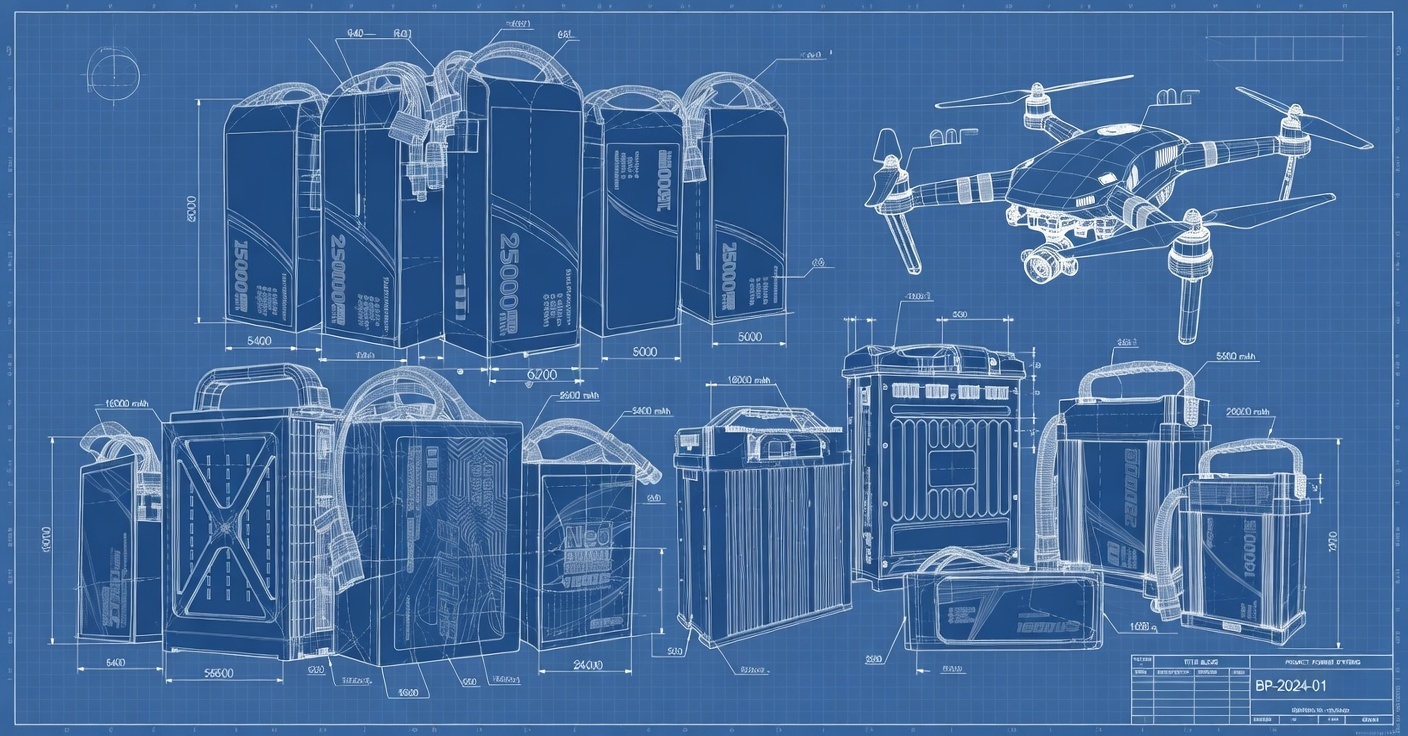
Battery compartment dimensions vary significantly across drone models and manufacturers. Before committing to bulk orders, obtain precise dimensional specifications including length, width, height, and mounting point locations. Even millimeter-level discrepancies can prevent proper installation or compromise vibration damping systems. Request sample units for physical verification before large-scale procurement. Consider future fleet standardization when evaluating dimensions—choosing batteries compatible across multiple drone models increases operational flexibility.
Tip 4: Evaluate Connector Type and Configuration
Power connectors represent critical compatibility checkpoints often overlooked during procurement. Common connector types in agricultural drone applications include XT90, AS150, and proprietary manufacturer-specific designs. Mismatched connectors require adapters that introduce resistance, heat generation, and potential failure points. Verify both male and female connector specifications match your charging infrastructure and drone power input systems. For bulk operations, standardizing on a single connector type across your entire fleet simplifies maintenance and reduces spare parts inventory.
Tip 5: Assess Communication Protocol Compatibility
Modern smart batteries incorporate communication protocols enabling real-time monitoring of voltage, temperature, cycle count, and remaining capacity. Popular protocols include CAN bus, SMBus, and manufacturer-specific digital communication systems. Incompatible communication protocols prevent battery management systems from accurately reading battery status, potentially leading to unexpected power loss during critical operations. Verify protocol compatibility with your drone’s flight controller and ground station software before purchase. This ensures accurate battery health monitoring and predictive maintenance capabilities.
Tip 6: Review Temperature Operating Ranges
Agricultural drone operations occur across diverse environmental conditions, from early morning cool temperatures to midday heat extremes. Battery chemistry performance varies significantly with temperature. Lithium polymer batteries typically operate optimally between 15°C and 35°C. Extended operation outside this range reduces capacity, increases internal resistance, and accelerates degradation. For operations in extreme climates, seek batteries with enhanced thermal management features or expanded operating temperature specifications. Bulk buyers should establish temperature-based deployment protocols to maximize battery lifespan.
Tip 7: Validate Charging System Compatibility
Charging infrastructure represents a significant capital investment for bulk drone operators. Ensure your selected batteries are compatible with existing or planned charging systems. Key compatibility factors include charging voltage, current limits, balancing requirements, and communication protocols. Fast-charging capabilities vary between battery models—some support 5C charging while others limit to 2C. Mismatched charging specifications can damage batteries or create safety hazards. Develop a comprehensive charging compatibility matrix before finalizing bulk purchase decisions.
Tip 8: Examine Cycle Life and Warranty Terms
Battery cycle life directly impacts long-term operational costs. Quality plant protection drone batteries should deliver 500 to 1,000 complete charge cycles while maintaining 80% of original capacity. However, actual cycle life depends heavily on usage patterns, charging practices, and environmental conditions. Review manufacturer warranty terms carefully—some warranties cover only manufacturing defects while others include capacity retention guarantees. For bulk purchases, negotiate extended warranty terms and capacity guarantees based on projected usage volumes. Document all warranty commitments in writing before finalizing orders.
Tip 9: Check Regulatory Compliance and Certification
Agricultural drone batteries must comply with multiple regulatory frameworks including transportation safety regulations, aviation authority requirements, and environmental standards. Recent 2025-2026 updates to IATA Dangerous Goods Regulations mandate specific state-of-charge limitations for lithium battery transportation. Verify batteries carry appropriate certifications including UN38.3 transportation testing, CE marking for European operations, and FAA compliance for United States deployments. Non-compliant batteries create legal liabilities and may be prohibited from transportation or operation in certain jurisdictions.
Tip 10: Establish Battery Management System Integration
Advanced fleet operations benefit from integrated battery management systems that track individual battery performance across the entire fleet. Compatible batteries should integrate with your existing or planned battery tracking software, enabling cycle counting, health monitoring, and predictive replacement scheduling. This integration becomes increasingly valuable as fleet size grows. Evaluate battery data export capabilities, API availability, and third-party software compatibility during the selection process. Comprehensive battery management reduces unexpected failures and optimizes replacement timing.
Step-by-Step Compatibility Verification Guide
Phase 1: Pre-Purchase Assessment
- Document current drone specifications including voltage, capacity, and connector requirements
- Create a compatibility checklist covering all ten technical tips outlined above
- Request detailed specification sheets from potential battery suppliers
- Obtain sample units for physical testing before bulk commitment
Phase 2: Testing and Validation
- Perform physical fitment verification in actual drone platforms
- Conduct flight testing under typical operational loads
- Monitor battery temperature, voltage sag, and discharge characteristics
- Validate charging system compatibility and charging times
- Test communication protocol integration with flight control systems
Phase 3: Fleet Deployment
- Develop standardized operating procedures for battery handling
- Implement battery tracking and monitoring systems
- Train all operators on proper battery maintenance protocols
- Establish replacement schedules based on cycle count and performance metrics
Comparison Analysis: OEM vs Third-Party Battery Options
| Feature | OEM Batteries | Quality Third-Party | Budget Third-Party |
|---|---|---|---|
| Voltage Accuracy | ±0.5% | ±1-2% | ±3-5% |
| Cycle Life | 800-1000 | 600-800 | 300-500 |
| Warranty Coverage | 12-24 months | 6-12 months | 3-6 months |
| Price Premium | 100% | 60-70% | 30-40% |
| Communication Protocol | Full Integration | Partial Integration | Limited/None |
| Technical Support | Comprehensive | Variable | Minimal |
For bulk purchase operations, quality third-party batteries often provide the optimal balance between cost savings and performance reliability. However, ensure thorough compatibility verification before committing to large orders.
Frequently Asked Questions
Q: Can I mix different battery brands within the same drone fleet?
A: While technically possible if specifications match, mixing battery brands creates management complexity and potential performance inconsistencies. For optimal fleet operations, standardize on a single battery model across all drones of the same type. This simplifies training, maintenance, and replacement logistics.
Q: How often should plant protection drone batteries be replaced?
A: Replacement timing depends on usage intensity and maintenance practices. Monitor capacity retention through your battery management system. When batteries consistently deliver less than 80% of original capacity under standard conditions, plan for replacement. Typical replacement cycles range from 18 to 36 months for intensive agricultural operations.
Q: What storage conditions maximize battery lifespan?
A: Store batteries at 40-60% state of charge in temperature-controlled environments between 15°C and 25°C. Avoid extreme temperatures and direct sunlight. For long-term storage exceeding 30 days, check and adjust charge levels monthly. Proper storage can extend battery life by 20-30% compared to improper storage practices.
Q: Are fast-charging systems safe for plant protection drone batteries?
A: Fast-charging is safe when batteries are specifically designed and rated for high-current charging. Verify manufacturer specifications before implementing fast-charging infrastructure. Excessive charging currents on incompatible batteries cause heat buildup, cell damage, and potential safety hazards. Always follow manufacturer charging recommendations.
Taking Action on Battery Compatibility
Battery compatibility decisions made today shape your operational capabilities for years to come. Don’t leave these critical choices to chance or vendor recommendations alone. Our technical team specializes in plant protection drone battery compatibility assessment and can help you navigate the complex specifications landscape with confidence.
Ready to optimize your drone fleet battery strategy? Contact our specialists for personalized compatibility consultation and bulk purchase guidance at https://cnsbattery.com/drone-battery-home/drone-battery-contact
Explore our complete product ecosystem:
- Visit our homepage at https://cnsbattery.com/drone-battery-home to discover our full range of drone battery solutions
- Review detailed industrial drone battery specifications at https://cnsbattery.com/drone-battery-home/drone-battery/
- Access comprehensive battery maintenance best practices at https://cnsbattery.com/drone-battery-home/drone-battery-help-center/
Your fleet’s performance depends on the power source you choose. Make compatibility your priority, and watch your agricultural drone operations reach new heights of efficiency and reliability.