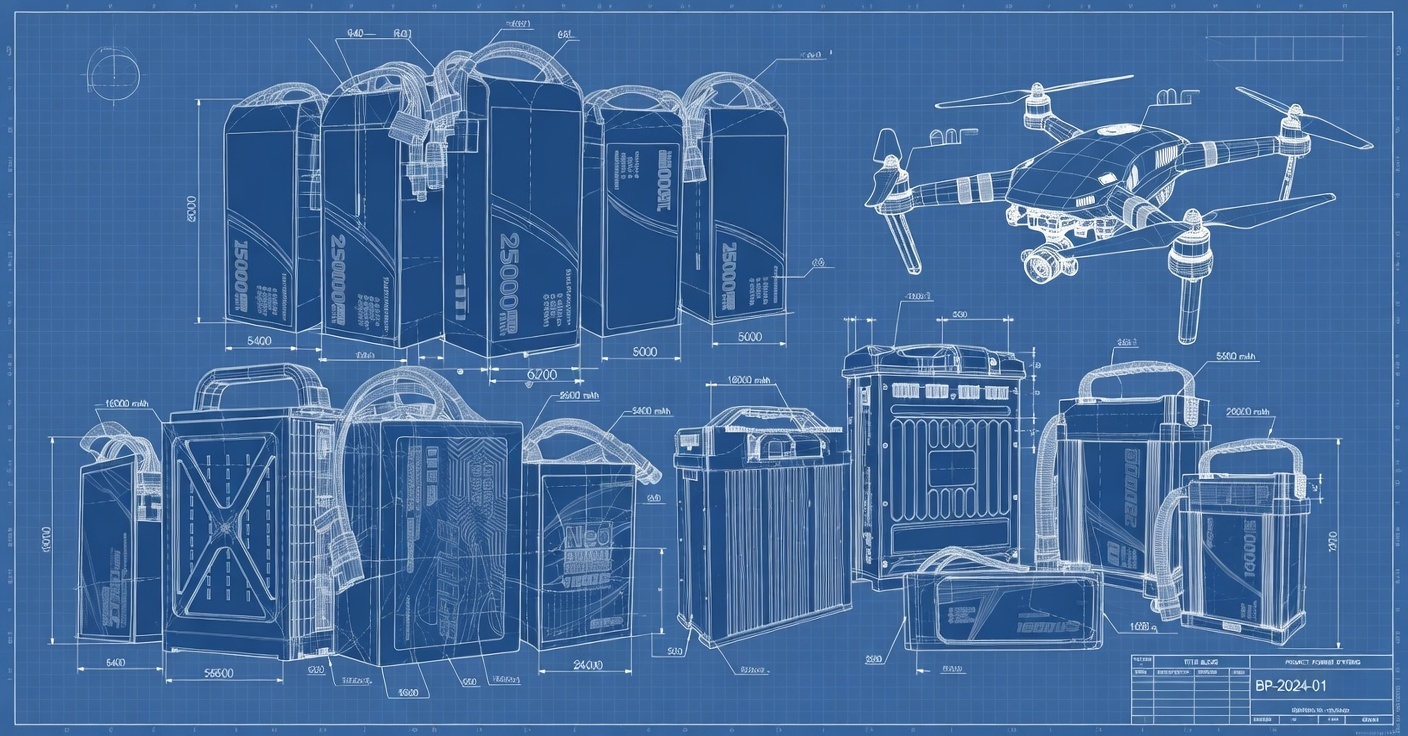
Drone Battery Safety: Essential Regulatory Compliance for Logistics Delivery
The sky is no longer the limit—it’s the highway. As drone logistics transforms from science fiction into daily reality, one critical component powers this revolution: the battery. Yet beneath every successful delivery lies a complex web of safety regulations that can make or break your operation. In 2026, regulatory compliance isn’t optional; it’s the price of admission to the aerial delivery game.
Why Battery Compliance Matters Now More Than Ever
January 1, 2026 marked a watershed moment for drone battery transportation. The International Air Transport Association’s 66th Edition of Dangerous Goods Regulations (IATA DGR) introduced hard limits that fundamentally changed how logistics companies handle lithium-powered drones. Battery charge levels exceeding 30% for cells above 2.7Wh are no longer suggestions—they’re enforceable restrictions with real consequences.
Consider this: a single non-compliant shipment can trigger cascading failures. Your cargo gets rejected at customs. Delivery timelines collapse. Customer trust evaporates. The domino effect of one battery violation can cost far more than implementing proper compliance protocols from day one.
The 2026 Regulatory Landscape: What Changed
Understanding the new rules requires examining three critical dimensions:
Charge State Restrictions
- Pre-2026: Recommended battery charge ≤30%
- Post-2026: Mandatory battery charge ≤30% for cells exceeding 2.7Wh
- Exception: Cells at or below 2.7Wh maintain flexible guidelines
UN Classification Overhaul
The old UN3171 designation for battery-powered vehicles sunset on March 31, 2025. Today’s compliant shipments require:
- UN3556: Lithium-ion powered vehicles
- UN3557: Lithium metal powered vehicles
- UN3558: Sodium-ion powered vehicles
Packaging Performance Standards
Every battery package must withstand 3-meter stacking tests for 24 continuous hours without structural compromise. This isn’t theoretical—regulators are conducting random inspections with teeth.
Step-by-Step Compliance Implementation
Transforming your logistics operation from vulnerable to verified requires systematic action:
Step 1: Battery Inventory Audit
Catalog every battery in your fleet by chemistry type, watt-hour rating, and manufacturing date. Create a digital registry that tracks charge cycles and retirement schedules. This baseline data becomes your compliance foundation.
Step 2: Charge Management Protocol
Implement automated discharge systems that bring batteries to compliant charge levels before storage or transport. Manual discharge introduces human error; automation ensures consistency. Set alerts at 35% to provide buffer before reaching the 30% threshold.
Step 3: Packaging Validation
Source packaging certified to PI 966 standards. Request test certificates from suppliers and maintain them in your compliance documentation. Never assume packaging compliance—verify it independently.
Step 4: Documentation Architecture
Build a digital trail for every shipment including:
- Battery specification sheets
- UN classification declarations
- Packaging test certificates
- Charge level verification records
- Transport handler certifications
Step 5: Staff Certification Program
Every employee handling batteries needs IATA DGR training with annual refreshers. Maintain training records accessible during regulatory audits.
Compliance Comparison: Before vs. After 2026
| Requirement | Pre-2026 Approach | 2026+ Mandatory Standard |
|---|---|---|
| Charge Level | Recommended ≤30% | Enforced ≤30% (>2.7Wh) |
| UN Numbers | UN3171 accepted | UN3556/3557/3558 required |
| Packaging | Basic protection | 3m stack test certified |
| Documentation | Optional details | Complete digital trail |
| Training | Suggested | Mandatory with records |
The contrast reveals a fundamental shift from guidance to governance. Companies clinging to pre-2026 practices face mounting liability exposure.
Pro Tips for Seamless Compliance
Tip 1: Build Buffer Time Into Shipping Schedules
Regulatory inspections add processing time. Schedule shipments 48 hours earlier than previously required to accommodate potential compliance checks without missing delivery windows.
Tip 2: Invest in Smart Battery Management Systems
Modern BMS technology automatically maintains compliant charge states during storage. The upfront investment pays dividends in reduced manual oversight and eliminated compliance violations.
Tip 3: Create Compliance Checkpoints
Establish verification stations at three critical points: pre-storage, pre-transport, and pre-handover. Each checkpoint requires signed confirmation before progression.
Tip 4: Maintain Regulatory Intelligence
Subscribe to IATA updates and join industry compliance forums. Regulations evolve quarterly; staying informed prevents costly surprises.
Tip 5: Document Everything Twice
If it isn’t documented, it didn’t happen. Maintain dual records—digital and physical—for all compliance activities. Redundancy protects against data loss during audits.
Regional Variations You Cannot Ignore
Global logistics demands awareness of jurisdiction-specific requirements:
European Union: The EU Battery Regulation enters substantive enforcement in 2026. Batteries exceeding 2kWh require digital Battery Passports containing chemical composition, carbon footprint, and recycling information. QR codes on battery housings become mandatory by 2027.
United States: FAA Part 107 expansions now include specific battery handling requirements for commercial drone operations. State-level variations add complexity—California and New York maintain stricter standards than federal minimums.
China: Civil Aviation Administration regulations effective May 1, 2026 mandate network-based operational identification for all civil drones. Production through flight operations face comprehensive compliance requirements.
The Cost of Non-Compliance
Violations carry consequences beyond shipment rejection:
- Fines ranging from $10,000 to $500,000 per incident
- Operational license suspensions
- Criminal liability for willful violations
- Insurance coverage voidance
- Reputational damage affecting customer acquisition
One violation can erase years of brand building. The mathematics are clear: compliance investment pales against violation costs.
Building a Compliance Culture
Regulatory adherence transcends checklists—it requires cultural transformation. Leadership must champion compliance as core value rather than operational burden. Reward teams for identifying potential violations before they materialize. Create psychological safety where employees report concerns without fear of retaliation.
Schedule quarterly compliance reviews examining:
- Incident near-misses
- Regulatory update impacts
- Training effectiveness
- Technology upgrade opportunities
Continuous improvement keeps your operation ahead of regulatory curves rather than chasing them.
Your Next Steps Toward Certified Safety
The path from uncertainty to assured compliance begins with expert guidance. Every drone logistics operation faces unique challenges requiring tailored solutions. Generic advice leaves dangerous gaps; specialized support closes them.
Ready to secure your drone battery compliance?
Visit our Contact Page for personalized regulatory consultation. Our specialists understand the intersection of battery technology and logistics compliance.
Explore our complete Industrial Drone Battery Specifications to ensure your equipment meets 2026 standards before deployment.
Discover Battery Maintenance Best Practices that extend battery life while maintaining regulatory compliance throughout operational lifecycles.
Start at our Home Page for comprehensive resources supporting your compliance journey.
Final Insight: Compliance as Competitive Advantage
In 2026’s regulated environment, compliance transforms from cost center to competitive differentiator. Customers increasingly select logistics partners based on safety certifications and regulatory track records. Your compliance posture becomes marketing material—proof of operational excellence that wins contracts.
The companies thriving in drone logistics aren’t those minimizing compliance costs. They’re those maximizing compliance quality, turning regulatory adherence into trust capital that compounds with every successful delivery.
The sky belongs to the prepared. Your battery compliance strategy determines whether you lead the aerial logistics revolution or watch it from the ground. Choose wisely. Act decisively. Fly safely.