Top 10 Technical Compatibility Tips for Plant Protection Drone Batteries
In the high-stakes world of agricultural aviation, the margin for error is razor-thin. A single flight over a valuable crop field represents thousands of dollars in potential yield, not to mention the safety of the ground crew and the integrity of the machinery. Yet, the heart of every plant protection drone is not its spray system or its flight controller, but its power source. Incompatible or poorly matched batteries are the silent architects of catastrophe. The risks are not theoretical; they are visceral. A voltage mismatch can fry an electronic speed controller mid-flight, sending a heavy UAV crashing into irrigation systems. A thermal runaway event caused by improper discharge rates can ignite a fire in the field, destroying equipment and endangering lives. Furthermore, inconsistent power delivery leads to erratic spray patterns, resulting in chemical overuse or under-application, which violates environmental regulations and compromises crop health. Understanding these dangers is the first step toward mitigation. Before you even think about takeoff, you must master the technical compatibility of your power system.
To navigate this complex landscape, we have distilled the critical engineering requirements into ten actionable tips. These points address the root causes of failure and provide clear prevention measures to ensure operational excellence.
Risk Causes and Prevention Measures
- Voltage Mismatch
- Risk Cause: Connecting a battery with a cell count (S-rating) higher than the drone’s power distribution board can handle leads to immediate component failure.
- Prevention: Always verify the nominal voltage and max voltage against the manufacturer’s power module specifications.
- Insufficient Discharge Rate
- Risk Cause: Using a battery with a C-rating too low for the motor’s peak draw causes voltage sag, triggering low-voltage cutoffs during critical maneuvers.
- Prevention: Calculate total max amp draw and select a battery with a continuous discharge rating at least 20% higher.
- BMS Communication Errors
- Risk Cause: Proprietary communication protocols between the Battery Management System and the flight controller may fail if firmware versions are incompatible.
- Prevention: Ensure firmware on both the battery and aircraft is updated to the latest compatible versions before the season starts.
- Connector Overheating
- Risk Cause: High-resistance connectors or mismatched plug types create hotspots that can melt insulation and cause short circuits.
- Prevention: Use high-current rated connectors like XT90 or AS150 specifically designed for agricultural loads, and check for tightness regularly.
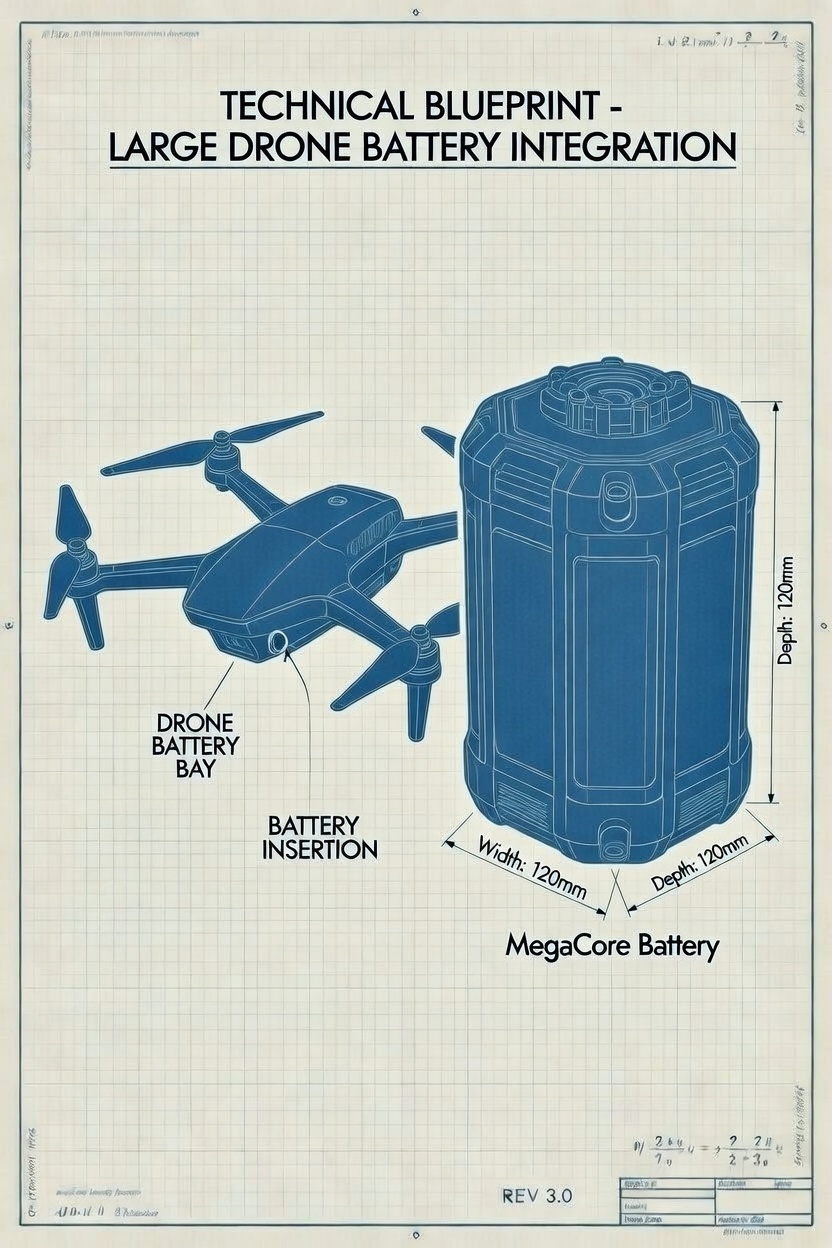
- Physical Dimension Conflicts
- Risk Cause: A battery that is too large may obstruct airflow or shift the center of gravity, leading to instability.
- Prevention: Measure the battery compartment precisely and account for expansion during swelling or thermal changes.
- Temperature Sensitivity
- Risk Cause: Operating LiPo cells outside their optimal temperature range reduces efficiency and can cause permanent chemical damage.
- Prevention: Use batteries with built-in heating elements for cold starts and ensure ventilation for hot weather operations.
- Cell Imbalance
- Risk Cause: Uneven charging across series cells reduces total capacity and increases the risk of over-discharging individual cells.
- Prevention: Utilize smart chargers with balance functionality and monitor cell delta voltage before every flight.
- Weight vs. Capacity Ratio
- Risk Cause: Overly heavy batteries reduce flight time and payload capacity, forcing more frequent landings and reducing field efficiency.
- Prevention: Optimize for energy density rather than raw capacity to maintain the drone’s thrust-to-weight ratio.
- Charging Infrastructure Incompatibility
- Risk Cause: Using chargers that do not support the battery’s chemistry or charging curve can lead to undercharging or dangerous overcharging.
- Prevention: Match charger algorithms strictly to the battery chemistry (e.g., LiHV, LiPo, LiFePO4).
- Vibration and Mechanical Stress
- Risk Cause: Agricultural drones experience high vibration, which can loosen internal tabs and cause intermittent power loss.
- Prevention: Select batteries with robust internal welding and secure mounting systems designed for high-vibration environments.
Engineering Deep Dive: The Science of Compatibility
Achieving true compatibility goes beyond plugging in a connector. It requires an understanding of electrochemical engineering and power electronics. In plant protection drones, the load profile is dynamic. Unlike a camera drone that hovers steadily, an agricultural UAV experiences rapid throttle changes as it navigates wind gusts or adjusts spray flow. This demands a battery with low internal resistance (IR). High IR leads to heat generation, which is the enemy of longevity. According to standard engineering references, a voltage drop of more than 0.1V per cell under load indicates significant degradation or incompatibility.
Furthermore, the Battery Management System (BMS) acts as the brain of the power pack. In professional agricultural setups, the BMS must communicate real-time data such as State of Charge (SoC), State of Health (SoH), and remaining flight time to the ground station. If the communication protocol (such as CAN bus or UART) is not perfectly synchronized with the flight controller, the pilot may receive false low-battery warnings, forcing premature landings, or worse, no warning at all before a power failure. This is why sourcing batteries from manufacturers who prioritize open or well-documented protocols is crucial. You can learn more about the technical specifications required for these systems by visiting https://cnsbattery.com/drone-battery-home/drone-battery/.
Another critical factor is the chemistry selection. While traditional LiPo batteries offer high discharge rates, newer Li-ion hybrid chemistries are gaining traction for their energy density and safety profile. However, mixing chemistries without adjusting charging parameters is a recipe for disaster. Each chemistry has a unique voltage curve. Charging a LiFePO4 pack with a LiPo profile will result in severe undercharging, while the reverse can cause thermal runaway. Engineers must respect the specific voltage ceilings and floors defined by the cell manufacturer.
Prevention also extends to the maintenance lifecycle. Batteries are consumable components. Over time, internal resistance increases, and capacity fades. A battery that was compatible at purchase may become a risk factor after 300 cycles. Regular diagnostic checks are non-negotiable. Implementing a rotation schedule and retiring packs that show significant deviation in cell balance ensures that the weakest link in your fleet does not compromise the entire operation. For detailed guidelines on extending battery life and maintaining safety standards, refer to our comprehensive resources at https://cnsbattery.com/drone-battery-home/drone-battery-help-center/.
The Path Forward
The future of agricultural aviation depends on reliability. As drones carry heavier payloads and fly longer missions, the demand on battery technology intensifies. Compatibility is not just about fitting a battery into a slot; it is about integrating a power system that harmonizes with the drone’s electronics, the environment, and the operational tempo. Ignoring these technical nuances invites failure. Embracing them builds a foundation for success.
Do not leave your harvest to chance. Ensure your power system is engineered for the demands of modern agriculture. If you are unsure about your current setup or need a battery solution tailored to your specific drone model, our team of experts is ready to assist. We specialize in high-performance power solutions that prioritize safety and compatibility.
Reach out to us directly to discuss your requirements and find the perfect match for your fleet. Visit our Contact Page to start the conversation. For more information on our company and broader offerings, you can always return to our Home Page. Equip your drones with the power they deserve and fly with confidence.