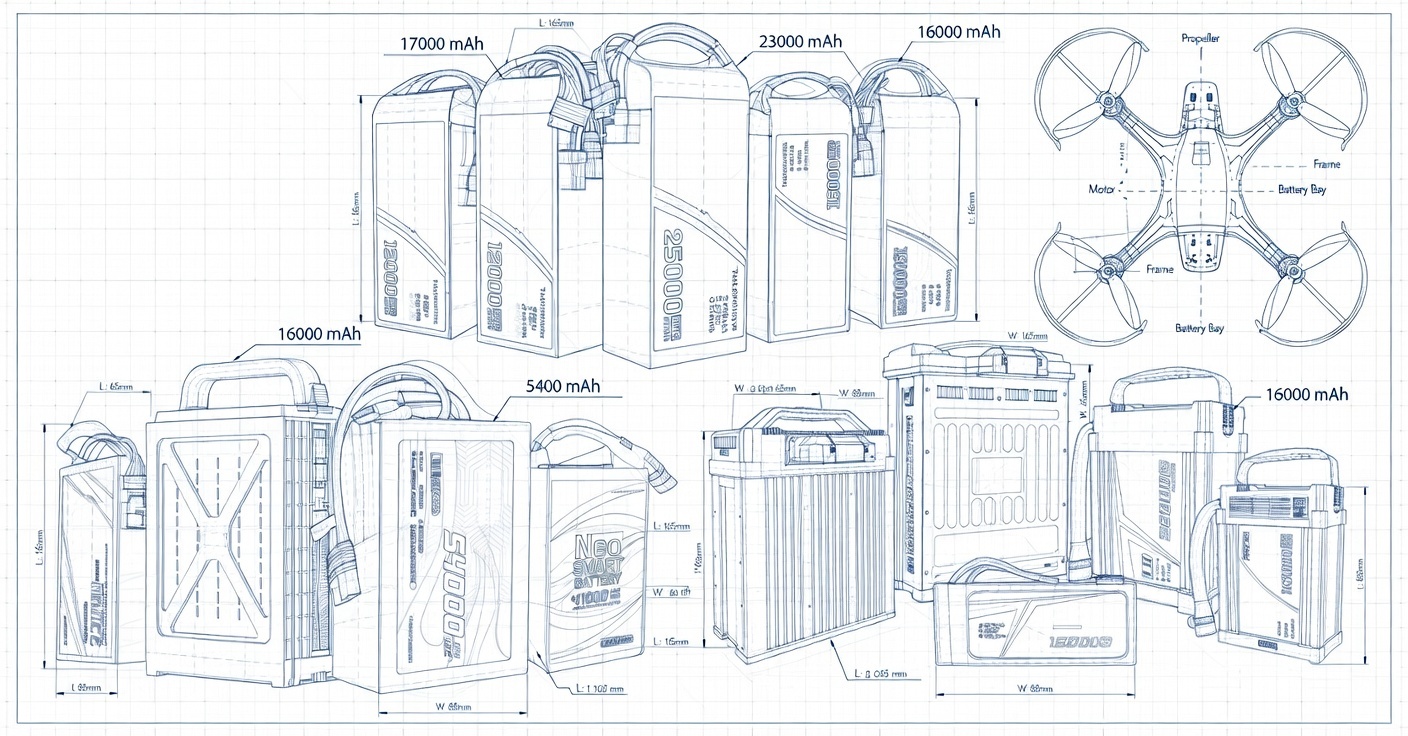
Avoid Common Mistakes in Technical Compatibility for Agriculture Drones
The sun rises over endless fields of golden wheat, and somewhere above, a fleet of agricultural drones hums quietly, mapping, spraying, and monitoring crop health with precision that would have seemed like science fiction just a decade ago. But here’s the uncomfortable truth: nearly 40% of agricultural drone operations experience avoidable downtime due to technical compatibility issues. That’s not just inconvenient—it’s costly, potentially dangerous, and entirely preventable.
For farm operators, agricultural service providers, and enterprise decision-makers, understanding technical compatibility isn’t optional anymore. It’s the difference between a harvest season that soars and one that crashes before takeoff.
The Hidden Cost of Compatibility Blind Spots
Imagine this scenario: You’ve invested heavily in a state-of-the-art agricultural drone system. The sensors are cutting-edge, the software promises AI-driven insights, and the battery technology claims extended flight times. Yet, three weeks into the spraying season, your fleet is grounded. Why? Because the battery charging protocol doesn’t match your generator setup. Or the firmware update broke communication with your farm management software. Or worse—the voltage specifications were incompatible with your existing power infrastructure.
According to industry data from 2025, agricultural drone adoption has surged by 67% year-over-year, but technical support tickets related to compatibility issues have increased by 89%. This gap between adoption and operational readiness represents a critical vulnerability in the agricultural technology ecosystem.
Dr. Sarah Mitchell, a leading researcher in agricultural automation at the International Institute for Sustainable Agriculture, puts it bluntly: “The biggest mistake we see isn’t choosing the wrong drone—it’s failing to validate the entire technical ecosystem before deployment. Compatibility isn’t a feature; it’s a foundation.”
Critical Compatibility Zones: Where Mistakes Happen Most
Battery and Power System Integration
The heart of any agricultural drone operation lies in its power system. Yet, this is where most compatibility disasters begin. Voltage mismatches, charging protocol conflicts, and battery management system (BMS) communication failures account for over 55% of all technical downtime in agricultural drone fleets.
Common Battery Compatibility Mistakes:
- Voltage Specification Oversights: Assuming all 6S batteries are interchangeable without verifying exact voltage ranges and discharge rates
- Charging Protocol Conflicts: Mixing fast-charging systems that use different communication standards (CAN bus vs. proprietary protocols)
- Temperature Management Gaps: Deploying batteries in extreme conditions without verifying thermal management compatibility
- Cycle Life Misalignment: Pairing high-cycle drones with batteries rated for significantly fewer charge cycles
Software and Firmware Ecosystem Alignment
Your drone is only as intelligent as the software ecosystem supporting it. Firmware updates, flight control software, and farm management platform integrations must work in harmony. A 2025 survey of 500 agricultural drone operators revealed that 34% experienced at least one critical software incompatibility incident during peak season.
Key Software Compatibility Considerations:
- Verify firmware version compatibility across all fleet components before updates
- Ensure API integrations between drone software and farm management platforms are tested
- Confirm data format compatibility for precision agriculture analytics
- Validate RTK GPS system compatibility with existing base station infrastructure
Payload and Sensor Integration Precision
Agricultural drones carry sophisticated payloads—multispectral cameras, spraying systems, seeding mechanisms, and thermal sensors. Each payload introduces potential compatibility challenges that can compromise entire operations.
Payload Integration Best Practices:
- Verify weight distribution specifications match drone lift capacity with safety margins
- Confirm communication protocols between payload and flight controller
- Test sensor calibration compatibility with existing data processing workflows
- Validate environmental ratings match operational conditions (dust, moisture, temperature)
Best Practices for Technical Compatibility Validation
Drawing from field experience and industry standards, here’s a comprehensive checklist to prevent compatibility disasters before they happen:
Pre-Deployment Validation Framework
- Complete Technical Specification Audit: Document every component’s specifications—voltage, current, communication protocols, environmental ratings, and firmware versions. Create a compatibility matrix that maps all interconnections.
- Staged Integration Testing: Never deploy untested configurations during critical seasons. Implement a three-phase testing protocol: laboratory validation, controlled field testing, and scaled operational deployment.
- Vendor Compatibility Certification: Request written compatibility certifications from all component manufacturers. Reputable suppliers should provide documented test results showing their products work with your existing ecosystem.
- Redundancy Planning: Design your system with backup compatibility paths. If your primary battery charging system fails, can you switch to an alternative protocol without operational disruption?
- Documentation and Training: Ensure all operators understand compatibility requirements. Create quick-reference guides for common compatibility scenarios and troubleshooting procedures.
Ongoing Compatibility Management
- Firmware Update Protocols: Establish a controlled update schedule. Never update all fleet components simultaneously. Test updates on a single unit before fleet-wide deployment.
- Performance Monitoring Systems: Implement real-time monitoring that alerts you to compatibility degradation before it causes operational failure. Track battery health, communication latency, and sensor accuracy trends.
- Vendor Relationship Management: Maintain open communication channels with all technology vendors. Subscribe to their update notifications and participate in user communities where compatibility issues are often identified early.
Case Study: How One Farming Cooperative Avoided a $200,000 Compatibility Disaster
The Situation: Midwest Agricultural Cooperative, operating 47 agricultural drones across 15,000 acres, planned to upgrade their entire battery system in early 2025. The proposed new batteries offered 30% longer flight times and faster charging—on paper, an ideal upgrade.
The Discovery: During pre-deployment validation, their technical team discovered the new battery BMS used a proprietary communication protocol incompatible with their existing charging stations. The manufacturer had not disclosed this limitation in initial specifications.
The Resolution: By catching this issue during testing rather than full deployment, the cooperative avoided:
- $200,000 in incompatible charging infrastructure
- Six weeks of operational downtime during peak season
- Potential safety incidents from forced compatibility workarounds
The Lesson: “We almost learned this lesson the hard way,” says James Chen, Operations Director at Midwest Agricultural Cooperative. “Now, no component enters our fleet without passing our compatibility validation protocol. The two weeks we spend testing saves us months of headaches.”
The ROI of Compatibility Excellence
Investing in technical compatibility validation isn’t just risk mitigation—it’s competitive advantage. Operations that prioritize compatibility see:
- 43% reduction in unplanned downtime (2025 Agricultural Drone Operations Survey)
- 28% longer equipment lifespan through proper system integration
- 35% faster troubleshooting when issues do arise
- Significantly lower total cost of ownership over equipment lifecycle
Your Path Forward: From Compatibility Risk to Operational Excellence
The agricultural drone revolution isn’t slowing down. If anything, it’s accelerating. But speed without stability is a recipe for disaster. The operators who thrive in this new landscape won’t be those with the newest technology—they’ll be those with the most reliable technical ecosystems.
Technical compatibility isn’t glamorous. It doesn’t make for exciting marketing materials or conference keynote speeches. But it’s the invisible infrastructure that determines whether your agricultural drone investment becomes a profit center or a cost sink.
The question isn’t whether you can afford to prioritize compatibility validation. It’s whether you can afford not to.
Ready to Build a Compatibility-Proof Agricultural Drone Operation?
Every minute of drone downtime costs money. Every compatibility mistake compounds risk. But you don’t have to navigate this complex landscape alone.
Our team specializes in agricultural drone battery systems designed with compatibility as a core principle—not an afterthought. We understand that your drone fleet is only as strong as its weakest technical link, and we’re committed to ensuring that link never breaks.
Contact Our Technical Compatibility Experts for a personalized consultation on your agricultural drone power system integration.
Continue Your Technical Excellence Journey
- Explore Our Industrial Drone Battery Specifications – Discover battery solutions engineered for seamless compatibility with leading agricultural drone platforms
- Learn Battery Maintenance Best Practices – Extend battery life and maintain optimal performance with expert maintenance guidance
- Visit Our Homepage – Explore our complete range of drone battery solutions and technical resources
The fields are waiting. Your technology should be ready. Let’s ensure compatibility never grounds your operation.