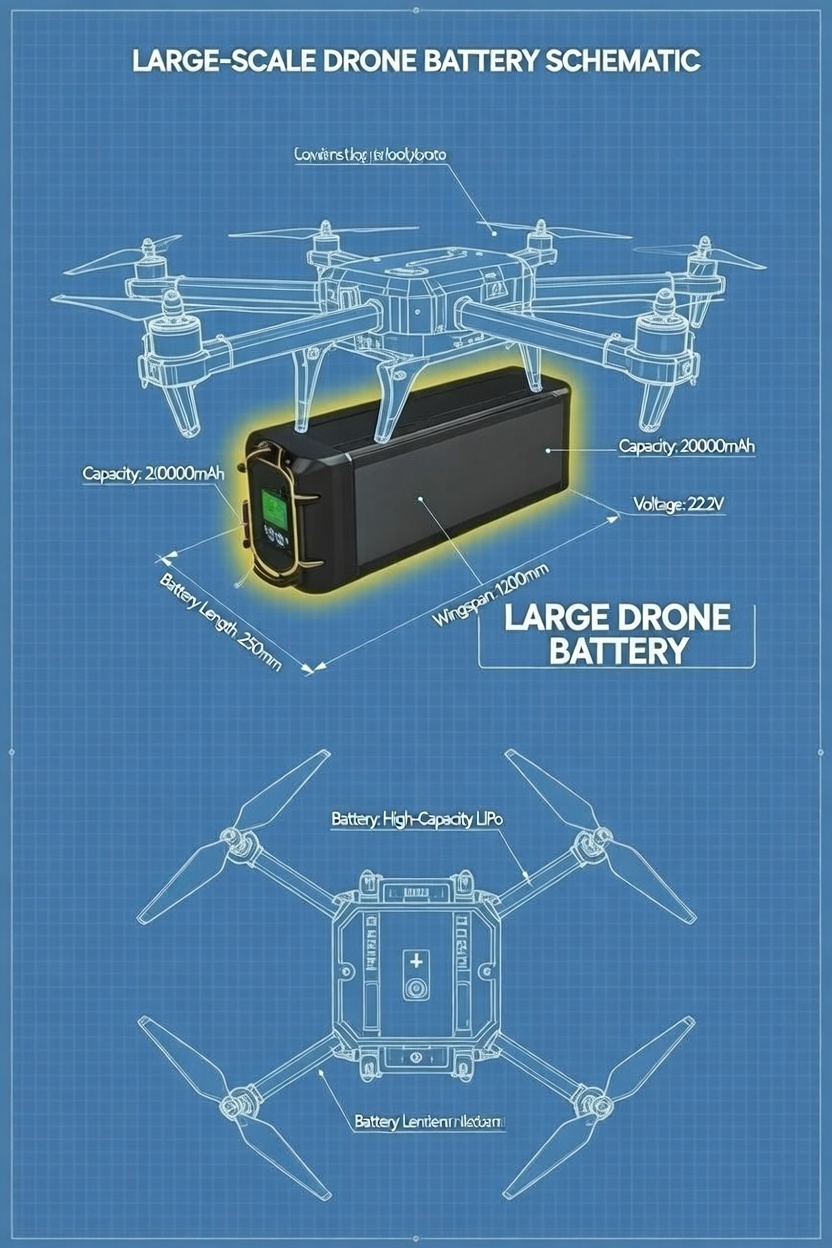
Drone Battery Safety: Essential Supplier Reliability for Construction Mapping
In the high-stakes world of construction mapping, precision is not just a goal; it is a requirement. Surveyors and site managers rely on unmanned aerial vehicles (UAVs) to capture topographical data, monitor progress, and ensure structural integrity. Yet, amidst the focus on camera resolution and flight software, one critical component often remains in the shadows until it fails: the battery. A power failure at 400 feet over an active construction zone is not merely an inconvenience; it is a safety hazard, a data loss event, and a potential liability nightmare. As we navigate through 2026, where regulatory frameworks like the EU Battery Regulation demand stricter compliance, the reliability of your drone battery supplier has become as crucial as the drone itself. This article delves into why supplier reliability is the cornerstone of drone battery safety and how to secure your operations against power-related failures.
The Hidden Risks in Construction Drone Operations
Construction sites are hostile environments for electronics. Dust, vibration, temperature fluctuations, and electromagnetic interference from heavy machinery create a perfect storm for battery degradation. When a battery fails mid-flight, the consequences extend beyond the loss of hardware.
- Safety Hazards: A falling drone can injure personnel or damage expensive equipment below.
- Data Integrity: Interrupted mapping missions result in incomplete datasets, requiring costly re-flights.
- Regulatory Compliance: With 2026 marking a year of intensified global battery safety standards, using non-compliant power sources can lead to fines and operational shutdowns.
The root cause of many in-flight failures is not the drone motor or the GPS module, but the power source. Inferior cells, poor battery management systems (BMS), and lack of quality control from suppliers are the silent killers of operational efficiency.
Vetting Your Supplier: A Step-by-Step Guide
Choosing a battery supplier is not about finding the lowest price; it is about finding a partner who understands the rigorous demands of industrial applications. Here is a systematic approach to vetting potential partners.
1. Verify Certifications and Compliance
In the current regulatory landscape, certifications are non-negotiable. Ensure the supplier adheres to international safety standards such as UN38.3 for transportation, IEC 62133 for safety, and specifically, the emerging Battery Passport requirements for industrial cells. A reliable supplier will openly provide documentation proving their cells meet these rigorous tests.
2. Assess Manufacturing Transparency
Ask about the origin of the battery cells. Are they Grade A cells from reputable manufacturers, or are they recycled B-grade cells? Transparency in the supply chain is a key indicator of reliability. Suppliers who hide their cell sources often cut corners on quality.
3. Evaluate Technical Support and Warranty
A battery is a consumable component, but its lifecycle should be predictable. Does the supplier offer a robust warranty? More importantly, do they provide technical support for integration? For construction mapping, you need a partner who can advise on discharge rates and temperature tolerances specific to your drone model. You can explore more resources about industrial drone battery specifications to understand what technical data you should be requesting from your vendor.
4. Check Track Record in Industrial Sectors
Consumer drone batteries differ significantly from industrial ones. Look for suppliers with a proven track record in construction, agriculture, or public safety. Experience in these sectors means they understand the need for sustained high-current discharge and resistance to environmental stressors.
Battery Chemistry & Performance Comparison
Not all batteries are created equal. Understanding the chemistry is vital for selecting the right power source for construction mapping tasks.
| Feature | LiPo (Lithium Polymer) | Li-ion (Lithium Ion) | Smart Batteries |
|---|---|---|---|
| Energy Density | High | Moderate | Moderate to High |
| Discharge Rate | Very High | Moderate | Managed |
| Safety | Moderate (Prone to swelling) | High (More stable) | Highest (Active Monitoring) |
| Lifespan | 300-500 Cycles | 500-1000 Cycles | 500+ Cycles |
| Best Use Case | Racing, High Speed | Long Endurance | Industrial, Mapping |
For construction mapping, Smart Batteries or high-quality Li-ion packs are generally preferred over traditional LiPo. They offer better stability and often come with integrated BMS that communicate with the drone, providing real-time data on voltage and temperature. This communication is critical for preventing sudden shutdowns. When evaluating options, review the industrial drone battery specifications to match the chemistry with your flight time requirements.
Maintenance & Safety Protocols: Best Practices
Even the best battery will fail if mishandled. Implementing a strict maintenance protocol is essential for safety and longevity.
- Storage Voltage: Never store batteries at 100% or 0% charge. Maintain a storage voltage of approximately 3.8V per cell to prevent chemical degradation.
- Temperature Control: Avoid charging batteries immediately after flight when they are hot. Let them cool to ambient temperature. Similarly, never charge frozen batteries.
- Visual Inspection: Before every flight, check for swelling, punctures, or damaged wires. A swollen battery is a ticking time bomb and should be retired immediately.
- Cycle Tracking: Log the charge cycles for each battery. Industrial batteries should be retired after reaching their rated cycle count, even if they appear to hold a charge.
For a deeper dive into maintaining your power systems, you should understand battery maintenance best practices to ensure your fleet remains airworthy.
The Cost of Cutting Corners
It is tempting to opt for cheaper, generic batteries to reduce operational costs. However, the hidden costs often outweigh the initial savings. A single crash caused by battery failure can cost thousands in equipment repair, data recovery, and potential legal fees. Furthermore, in 2026, regulatory bodies are increasingly holding operators accountable for the safety standards of their components. Using non-compliant batteries can void insurance policies and lead to severe penalties.
Reliability is an investment. A trusted supplier ensures that every cell is matched, every weld is secure, and every pack is tested under load before it leaves the factory. This consistency translates to predictable flight times and peace of mind for your pilots.
Key Insights and Action Plan
To summarize, drone battery safety in construction mapping hinges on three pillars: Supplier Reliability, Technical Suitability, and Rigorous Maintenance.
- Prioritize Compliance: Ensure your batteries meet 2026 global safety standards.
- Choose Quality Over Price: Invest in Grade A cells and robust BMS technology.
- Implement Protocols: Enforce strict storage and inspection routines.
Your drone is only as reliable as its weakest component. Do not let a subpar battery compromise your mission. If you are looking for a partner who understands the critical nature of industrial power solutions, we are here to help. Our team specializes in high-reliability battery systems designed for the demanding environment of construction mapping.
For personalized assistance, specification matching, or to discuss how we can support your fleet’s safety requirements, please contact us. Visit our homepage to learn more about our commitment to quality and safety. Secure your operations today with power you can trust.