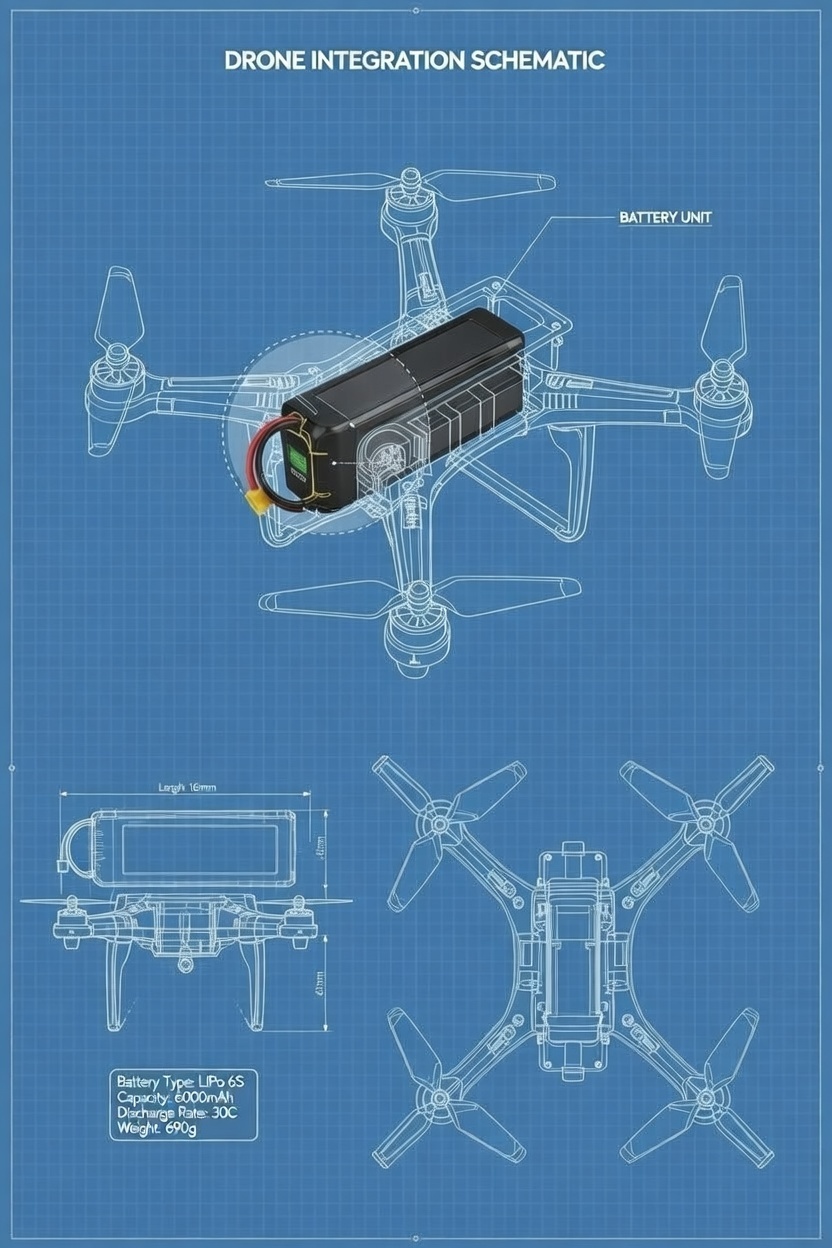
Drone Battery Safety: Essential Battery Life Cycles for Emergency Response
The siren wails. An earthquake has struck. Minutes matter. Your emergency response drone lifts off, but halfway to the disaster zone, the battery warning light flashes red. The aircraft returns home automatically, leaving critical aerial intelligence unavailable when lives hang in the balance. This scenario isn’t fiction—it’s a reality that emergency service teams face when battery lifecycle management falls short.
For first responders, search and rescue operators, and fire departments deploying unmanned aerial systems, understanding drone battery safety and life cycles isn’t optional. It’s mission-critical. Every charge cycle, every storage decision, every temperature exposure writes a chapter in your battery’s story. And when that story ends prematurely during an emergency, the consequences extend far beyond equipment costs.
Understanding Drone Battery Life Cycles in Emergency Operations
Emergency response drones operate under conditions that push batteries to their limits. Unlike recreational pilots who fly in controlled environments, emergency teams face unpredictable weather, extended deployment periods, and high-stakes missions where failure isn’t an option.
The Science Behind Lithium Polymer Battery Degradation
Lithium polymer (LiPo) batteries power most emergency response drones due to their exceptional energy-to-weight ratio and high discharge capabilities. However, these batteries are consumables with finite lifespans. Industry data reveals that while manufacturers typically rate LiPo batteries for 200-300 full charge cycles, improper maintenance can reduce actual lifespan to under 100 cycles—a 50% reduction that dramatically impacts operational readiness.
A full charge cycle represents discharge from 100% to 0%, though partial discharges accumulate proportionally. Emergency operations often demand rapid turnaround between missions, creating conditions where batteries may not fully recover between flights. This accelerated usage pattern requires heightened awareness of degradation indicators.
Key degradation factors include:
- Temperature exposure: Operating outside the 10-30°C storage range accelerates chemical breakdown
- Deep discharge: Regularly draining batteries below 20% capacity causes irreversible damage
- Overcharging: Leaving batteries on chargers beyond full capacity stresses cell chemistry
- Physical stress: Vibration, impact, and pressure compromise internal structures
Critical Battery Safety Standards for First Responders
The regulatory landscape for drone battery safety continues evolving. The International Air Transport Association’s 66th Edition Dangerous Goods Regulations (DGR), effective January 2025, introduced comprehensive updates affecting how emergency services transport and store lithium batteries.
IATA 2025-2026 Compliance Requirements
Emergency response organizations must navigate increasingly stringent transportation requirements. Starting January 1, 2026, lithium batteries exceeding 2.7Wh must be transported at no more than 30% state of charge (SoC). This regulation affects equipment deployment, inter-agency transfers, and disaster response logistics.
Essential compliance elements:
- State of Charge Management: Maintain batteries at 30% SoC or below for air transport after 2026
- Packaging Standards: New UN numbers (UN3556 for lithium-ion powered vehicles) require specific packaging protocols
- Documentation: Updated shipping declarations must reflect current battery conditions and classifications
- Storage Separation: New, defective, and end-of-life batteries require distinct storage areas with fire prevention coordination
FAA and EASA Certification Considerations
The Federal Aviation Administration and European Union Aviation Safety Agency have issued joint statements clarifying that Technical Standard Order (TSO) C179b for rechargeable lithium batteries is insufficient for propulsion battery performance evaluation. Emergency service operators should verify that their drone batteries meet emerging propulsion battery system (PBS) standards rather than relying on outdated certifications.
Real-World Case Study: California Fire Department Battery Failure Analysis
In 2024, a Northern California fire department experienced a critical battery failure during a wildfire reconnaissance mission. Their primary surveillance drone lost power at 400 feet altitude while mapping fire spread patterns. Investigation revealed the battery had completed 380 charge cycles—well beyond the recommended 300-cycle replacement threshold.
Lessons learned from the incident:
- Cycle tracking: The department lacked systematic cycle count monitoring across their battery fleet
- Replacement protocols: No mandatory replacement schedule existed based on cycle counts
- Backup availability: Insufficient spare batteries were available during extended operations
- Temperature management: Batteries were stored in unclimate-controlled vehicles, exposing them to extreme heat
Following this incident, the department implemented comprehensive battery lifecycle management, reducing unexpected failures by 87% over the following year. They established mandatory replacement at 250 cycles for critical emergency equipment, creating a safety buffer before manufacturer-rated limits.
Best Practices for Extending Emergency Drone Battery Lifespan
Maximizing battery life while maintaining safety requires disciplined operational protocols. Emergency response teams should implement systematic approaches that balance mission readiness with equipment longevity.
Storage Voltage Management
Long-term storage represents one of the most critical yet overlooked aspects of battery maintenance. Batteries left at full charge during storage periods experience accelerated degradation due to sustained voltage stress.
Optimal storage protocols:
- Maintain storage voltage at 40-65% capacity (approximately 3.8V per cell)
- For DJI intelligent batteries, this corresponds to the third LED indicator illuminated or flashing
- Check stored batteries monthly and rebalance to storage voltage as needed
- Never store fully charged or fully depleted batteries for extended periods
Temperature Control Strategies
Temperature extremes represent the silent killer of lithium battery performance. Emergency vehicles often experience dramatic temperature swings that compromise battery health.
Temperature management guidelines:
- Store batteries in climate-controlled environments between 10-30°C
- Pre-warm batteries before cold-weather operations using manufacturer-approved heating solutions
- Allow hot batteries to cool before charging—never charge immediately after intensive flights
- Monitor vehicle storage compartments during summer months; interior temperatures can exceed safe limits within hours
Charging Discipline for Emergency Operations
Rapid mission turnaround creates temptation to charge batteries quickly between flights. However, charging discipline directly impacts long-term battery health and safety.
Charging best practices:
- Use only manufacturer-approved chargers designed for your specific battery chemistry
- Remove batteries from chargers immediately upon reaching full capacity
- Avoid overnight charging without supervision or automatic shutoff features
- Allow batteries to rest 15-30 minutes after flight before initiating charging
- Never charge batteries showing physical damage, swelling, or unusual heat generation
Recognizing Battery Failure Warning Signs
Early detection of battery degradation prevents catastrophic failures during critical missions. Emergency operators must train personnel to recognize subtle warning signs before they become safety hazards.
Physical indicators requiring immediate attention:
- Swelling or puffing: Any visible expansion indicates internal gas buildup—remove from service immediately
- Excessive heat: Batteries becoming unusually warm during normal operation suggest internal resistance increases
- Voltage imbalance: Cell voltage variations exceeding 0.1V indicate deteriorating cell health
- Reduced flight time: Noticeable capacity loss compared to baseline performance metrics
Performance warning signs:
- Unexpected low-voltage warnings during normal flight profiles
- Inconsistent power delivery during high-demand maneuvers
- Charging times significantly shorter than original specifications
- Voltage sag under load exceeding manufacturer tolerances
Building a Battery Lifecycle Management System
Emergency response organizations require systematic approaches to battery fleet management. Ad-hoc maintenance creates gaps where failures can occur during critical operations.
Implementation Framework
Step 1: Inventory and Baseline Documentation
Catalog every battery with purchase date, initial cycle count, and intended application. Establish baseline performance metrics for comparison throughout the battery’s life.
Step 2: Cycle Tracking System
Implement digital or manual tracking of charge cycles for each battery. Many intelligent battery systems provide cycle count data through manufacturer apps—leverage these features consistently.
Step 3: Replacement Scheduling
Establish mandatory replacement thresholds below manufacturer maximums. For emergency response equipment, consider replacement at 75-80% of rated cycles to maintain safety margins.
Step 4: Regular Testing Protocols
Conduct quarterly capacity tests under controlled conditions. Document results and compare against baseline to identify accelerating degradation.
Step 5: Disposal Procedures
Develop safe disposal protocols for end-of-life batteries following local hazardous waste regulations. Never dispose of lithium batteries in standard waste streams.
The Cost of Battery Neglect in Emergency Services
Financial considerations extend beyond battery replacement costs. Unexpected failures during emergency operations create cascading expenses including mission delays, equipment damage from emergency landings, and potential liability from compromised response capabilities.
A 2025 analysis of emergency service drone operations revealed that organizations implementing comprehensive battery lifecycle management reduced total cost of ownership by 34% over three years compared to reactive replacement approaches. More significantly, mission success rates improved by 22% when battery-related failures were eliminated through proactive management.
Conclusion: Powering Reliable Emergency Response
Drone battery safety and lifecycle management represent foundational elements of effective emergency response operations. The difference between mission success and failure often comes down to seemingly small decisions about charging, storage, and replacement timing.
Emergency service leaders must recognize that batteries are not simply accessories—they are critical mission systems requiring the same attention as aircraft, sensors, and communication equipment. Investing in comprehensive battery management protocols protects both personnel safety and operational effectiveness.
The regulatory landscape continues evolving, with 2026 bringing stricter transportation requirements and certification standards. Organizations that proactively adapt to these changes position themselves for continued operational excellence while those lagging behind face increasing compliance challenges.
Ready to optimize your emergency response drone battery operations?
Our team specializes in industrial-grade drone battery solutions designed for the demanding requirements of emergency services. From high-cycle-life battery packs to comprehensive fleet management support, we help first responders maintain mission-ready equipment.
Contact us today for customized battery solutions tailored to your emergency response needs.
Explore additional resources:
- Visit our homepage for comprehensive drone battery solutions
- Review our industrial drone battery specifications to find the right power systems for your operations
- Learn battery maintenance best practices through our detailed technical guides
When seconds count and lives depend on your equipment performing flawlessly, battery safety isn’t just best practice—it’s essential infrastructure for emergency response excellence.