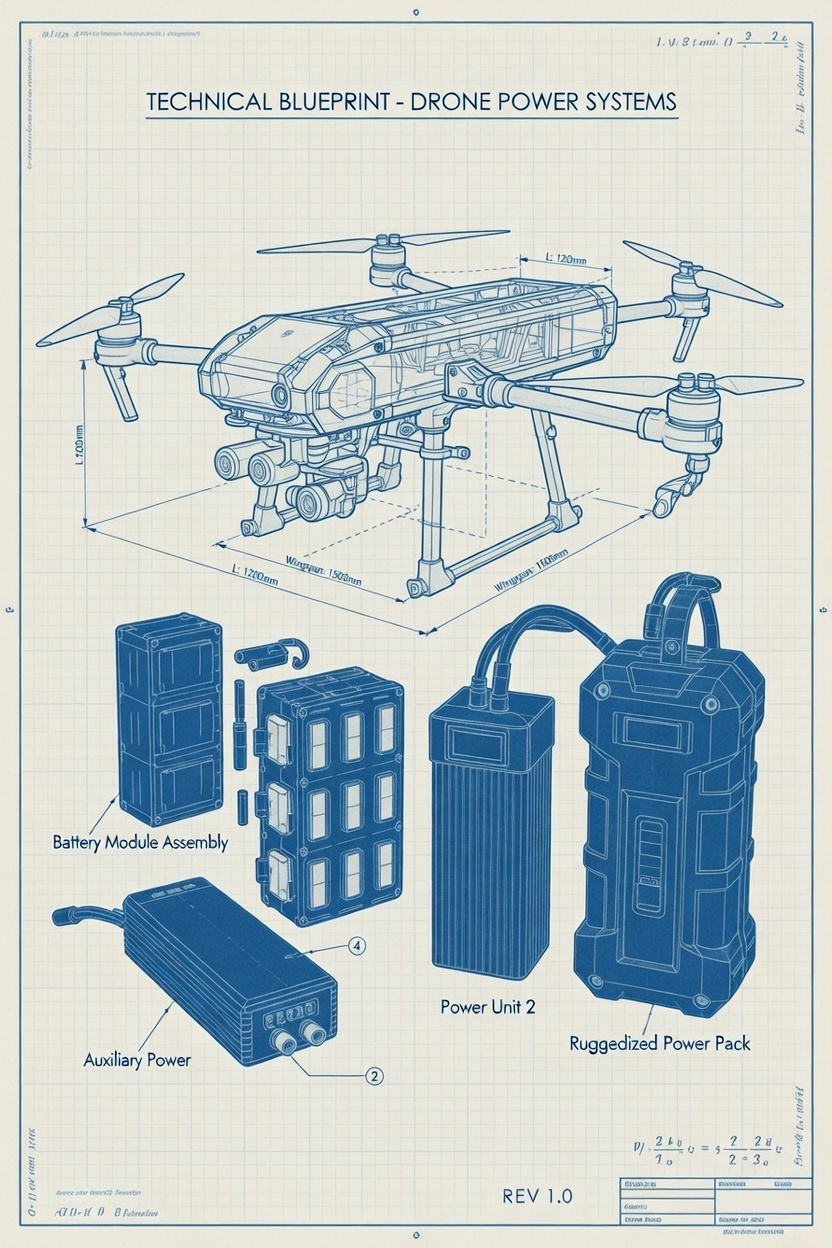

Drone Battery Safety: Essential Battery Life Cycles for Public Safety
In the rapidly evolving world of unmanned aerial vehicles, battery safety stands as the cornerstone of reliable drone operations. For public safety agencies, emergency responders, and commercial operators, understanding battery life cycles isn’t just about maximizing flight time—it’s about ensuring mission-critical reliability when lives depend on it.
Why Battery Life Cycle Management Matters for Public Safety
Public safety drone operations demand unparalleled reliability. Whether conducting search and rescue missions, monitoring disaster zones, or supporting law enforcement operations, battery failure mid-flight can have catastrophic consequences. A well-managed battery life cycle ensures consistent performance, predictable flight times, and reduced risk of unexpected power loss.
The advantages of proper battery life cycle management extend beyond safety. Organizations that implement systematic battery tracking experience up to 40% longer battery lifespan, reduced operational costs, and enhanced mission success rates. This translates to more flight hours per dollar invested and greater confidence in every deployment.
Understanding Drone Battery Life Cycles
A battery life cycle represents one complete charge and discharge sequence. Most lithium-polymer drone batteries maintain optimal performance for 300 to 500 cycles before capacity degradation becomes significant. However, this number varies dramatically based on usage patterns, storage conditions, and maintenance practices.
Key Performance Indicators to Monitor
- Capacity Retention: Track percentage of original capacity remaining
- Internal Resistance: Increasing resistance indicates aging
- Voltage Consistency: Cell imbalance signals potential failure
- Temperature Behavior: Abnormal heating during charge or discharge
- Cycle Count: Total number of charge-discharge sequences
Step-by-Step Battery Life Cycle Management Guide
Step 1: Initial Battery Registration
Upon receiving new batteries, immediately register them in your tracking system. Document the manufacture date, initial capacity, and assign a unique identifier. This baseline data proves invaluable for long-term performance analysis.
Step 2: Establish Charging Protocols
Implement standardized charging procedures across your organization. Always use manufacturer-approved chargers and avoid fast-charging unless operationally necessary. Charge batteries to storage voltage (approximately 50-60% capacity) if they won’t be used within 48 hours.
Step 3: Monitor During Operations
Before each flight, verify battery voltage, temperature, and physical condition. During flight, monitor power consumption rates and establish safe return-to-home thresholds at 30% remaining capacity for public safety operations.
Step 4: Post-Flight Assessment
After each mission, inspect batteries for physical damage, swelling, or excessive heat. Record flight time, capacity used, and any anomalies. Allow batteries to cool before charging or storage.
Step 5: Scheduled Maintenance Testing
Conduct comprehensive capacity testing every 50 cycles. Compare actual performance against baseline specifications. Batteries showing more than 20% capacity degradation should be evaluated for retirement from critical operations.
Real-World Example: Emergency Response Unit Implementation
Consider a municipal fire department that integrated systematic battery management into their drone program. Initially, they experienced three battery-related mission aborts within six months. After implementing comprehensive life cycle tracking, proper storage protocols, and scheduled testing, they achieved eighteen consecutive months without battery-related incidents.
Their success stemmed from three key changes: First, they established a battery rotation system ensuring no single battery exceeded 75% of its rated cycle life in critical operations. Second, they invested in proper storage facilities maintaining optimal temperature and humidity. Third, they trained all operators on recognizing early warning signs of battery degradation.
The results spoke for themselves. Mission success rates improved from 87% to 98%, battery replacement costs decreased by 35%, and operator confidence increased substantially. This case demonstrates that systematic battery management directly translates to operational excellence.
Common Battery Safety Pitfalls and How to Avoid Them
Overlooking Storage Conditions
Many organizations invest in premium batteries but store them improperly. Extreme temperatures accelerate degradation. Store batteries in climate-controlled environments between 15-25°C (59-77°F) with moderate humidity levels.
Ignoring Cell Imbalance
Multi-cell batteries can develop voltage imbalances that compromise safety. Regular balancing during charging prevents dangerous conditions. If cell voltage differences exceed 0.05V, investigate immediately.
Extending Beyond Rated Cycles
Pushing batteries beyond their rated cycle life increases failure risk exponentially. For public safety applications, consider retiring batteries at 80% of rated cycles rather than waiting for complete degradation.
Inconsistent Documentation
Without proper records, identifying problematic batteries becomes nearly impossible. Maintain detailed logs including cycle count, capacity tests, incidents, and retirement dates.
Advanced Monitoring Technologies
Modern battery management systems offer sophisticated monitoring capabilities. Smart batteries with integrated sensors provide real-time data on cell voltage, temperature, and remaining capacity. Some systems even predict remaining useful life based on usage patterns.
For organizations managing multiple batteries, cloud-based tracking platforms enable centralized monitoring across entire fleets. These systems generate alerts when batteries approach end-of-life thresholds or display abnormal behavior patterns.
Building a Culture of Battery Safety
Technology alone cannot ensure battery safety. Organizations must cultivate a culture where every team member understands their role in maintaining battery integrity. This includes:
- Regular training sessions on battery safety protocols
- Clear reporting procedures for battery concerns
- Non-punitive environments encouraging incident reporting
- Leadership commitment to safety over schedule pressures
When battery safety becomes embedded in organizational culture, compliance increases naturally, and potential issues surface before they become emergencies.
The Economic Case for Battery Life Cycle Management
While implementing comprehensive battery management requires upfront investment, the long-term economic benefits prove substantial. Reduced premature battery failures, extended usable lifespan, and minimized mission interruptions generate significant return on investment.
Consider that a single mission failure due to battery issues can cost far more than an entire battery management program. For public safety agencies, the intangible value of successful missions—lives saved, property protected, crimes solved—makes battery safety investment not just economically sound but ethically imperative.
Moving Forward with Confidence
Drone technology continues advancing rapidly, but battery fundamentals remain constant. Organizations that master battery life cycle management position themselves for sustained operational success. The combination of proper protocols, consistent monitoring, and cultural commitment creates an environment where battery-related failures become increasingly rare.
For teams ready to elevate their battery safety standards, comprehensive resources and expert guidance make implementation more accessible than ever. Understanding your specific battery specifications ensures you’re working with accurate baseline data for your particular equipment.
Explore our industrial drone battery specifications to understand the technical foundations supporting safe operations. Additionally, discover battery maintenance best practices that complement your life cycle management program.
When questions arise or specialized support is needed, reaching out to experienced professionals provides clarity and confidence. Contact our team for personalized guidance on implementing battery safety protocols tailored to your operational requirements.
The path to exceptional drone battery safety begins with commitment and continues through consistent practice. Every properly managed battery represents not just protected investment but enhanced capability to serve communities, protect lives, and accomplish missions that matter. In public safety operations, there’s no room for battery-related uncertainty—only the confidence that comes from systematic, professional battery life cycle management.
Visit our homepage to discover comprehensive solutions supporting your drone program’s success and safety objectives.