2024 Drone Battery Trends: Battery Life Cycles for Oil and Gas Pipeline Firms
The oil and gas industry faces unprecedented challenges in maintaining vast pipeline networks that stretch across remote and often hazardous terrains. Traditional inspection methods require significant manpower, extended downtime, and expose workers to dangerous environments. As energy companies transition toward digital transformation, industrial drones have emerged as game-changing tools for pipeline monitoring and inspection. However, the effectiveness of these aerial solutions hinges on one critical component: battery performance and life cycle management.
The Critical Challenge: Battery Limitations in Harsh Environments
Pipeline inspection drones operate under demanding conditions that push battery technology to its limits. Energy sector operators confront several persistent obstacles:
- Extreme Temperature Variations: Pipeline routes traverse arctic tundra, scorching deserts, and humid coastal regions, all affecting battery chemistry and performance
- Extended Flight Requirements: Remote pipeline sections demand longer flight times than consumer drones typically provide
- Frequent Charge Cycles: Daily inspection routines accelerate battery degradation, reducing overall lifespan
- Safety Compliance: Lithium battery transportation and storage regulations continue evolving, requiring careful adherence
According to industry research from the U.S. Energy Information Administration, pipeline infrastructure maintenance represents a multi-billion dollar annual expenditure. Inefficient battery management directly impacts operational costs and inspection quality, making battery life cycle optimization a strategic priority for energy companies.
Understanding Battery Life Cycles in Industrial Applications
Battery life cycle refers to the number of complete charge and discharge sequences a battery can undergo before its capacity diminishes to 80% of original specifications. For oil and gas pipeline inspection drones, understanding this metric proves essential for budget planning and operational reliability.
Key Life Cycle Factors
Charge Cycle Count: Most industrial lithium-polymer batteries deliver between 300-500 full charge cycles under optimal conditions. However, real-world pipeline inspection scenarios often reduce this number due to:
- Partial charging patterns during extended field operations
- Exposure to temperature extremes beyond manufacturer specifications
- High discharge rates required for carrying specialized inspection payloads
Depth of Discharge: Battery longevity correlates directly with discharge depth. Draining batteries to complete depletion before recharging significantly shortens overall lifespan. Industry best practices recommend maintaining charge levels between 20-80% for daily operations.
Storage Conditions: Improper storage between inspection missions accelerates capacity loss. Batteries stored at full charge in hot environments degrade faster than those maintained at 50-60% charge in climate-controlled facilities.
2024-2025 Battery Technology Advancements
The drone battery landscape continues evolving rapidly, with several breakthrough technologies addressing energy sector requirements:
High-Density Lithium-Polymer Solutions
Modern industrial drone batteries feature improved energy density, allowing longer flight times without increasing weight. Recent developments show capacity improvements of 15-20% compared to 2023 specifications, enabling comprehensive pipeline section inspections on single charges.
Smart Battery Management Systems
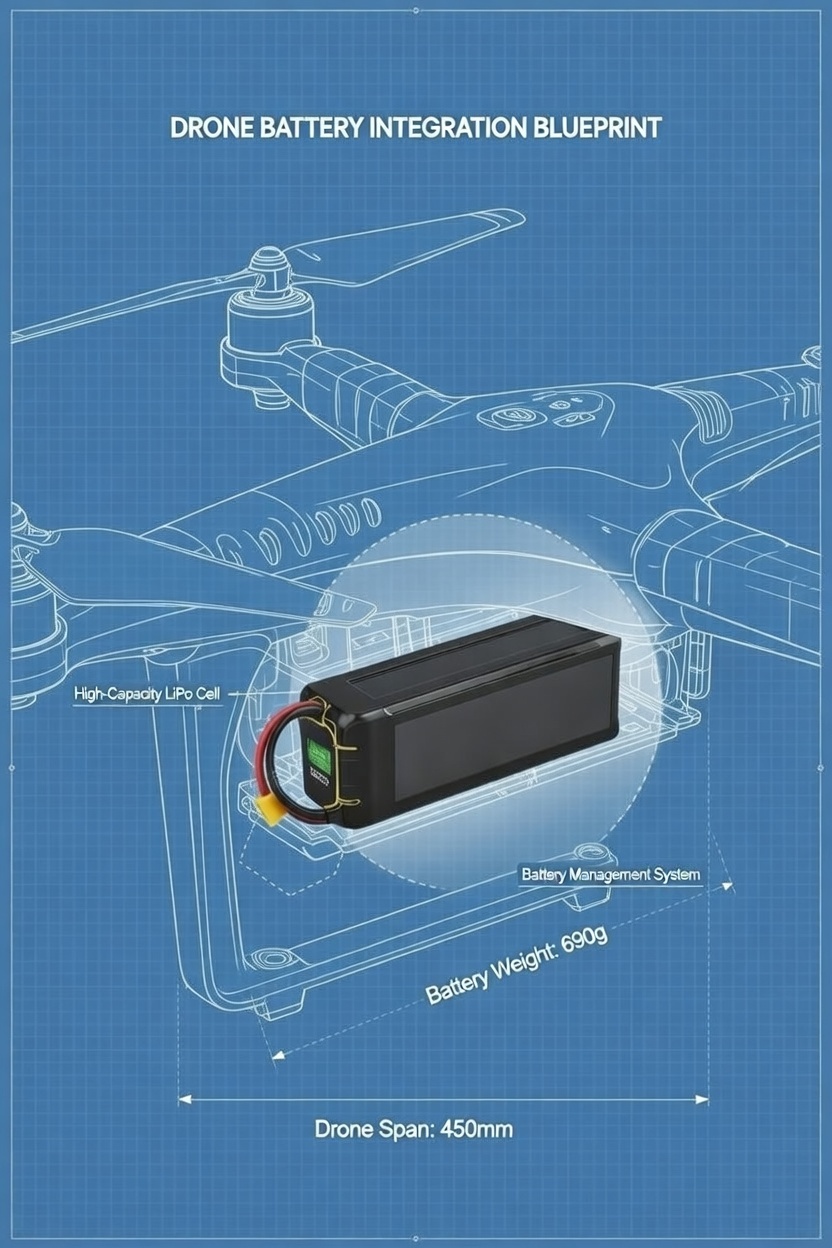
Integrated battery management systems now provide:
- Real-time cell monitoring and balancing
- Predictive maintenance alerts based on usage patterns
- Temperature regulation during charging and discharge
- Communication protocols integrating with drone flight controllers
These intelligent systems help pipeline operators maximize battery investments while maintaining safety standards. According to battery industry summits held in 2025, smart battery technology represents the fastest-growing segment in industrial drone power solutions.
Cold Weather Performance Enhancements
Pipeline networks in northern regions require batteries capable of operating in sub-zero temperatures. New battery chemistries and heating elements maintain performance down to -20°C, expanding operational windows for arctic pipeline inspections.
Best Practices for Extending Battery Life Cycles
Implementing proper battery management protocols delivers measurable returns on investment. Energy companies adopting comprehensive battery care programs report 30-40% extensions in usable battery lifespan.
Charging Protocols
- Use Manufacturer-Approved Chargers: Third-party chargers may not provide proper voltage regulation, damaging battery cells over time
- Avoid Rapid Charging Unless Necessary: Fast charging generates heat that accelerates degradation. Reserve quick-charge capabilities for urgent operational needs
- Monitor Charging Environment: Charge batteries in temperature-controlled spaces between 10-30°C for optimal longevity
Storage Guidelines
- Long-Term Storage: Maintain 50-60% charge levels for batteries stored beyond two weeks
- Climate Control: Store batteries in dry environments with stable temperatures
- Regular Maintenance Cycles: Even unused batteries require periodic charging every 2-3 months to prevent deep discharge damage
Field Operation Tips
- Rotate Battery Sets: Maintain multiple battery sets and rotate usage to prevent individual battery overuse
- Pre-Flight Inspections: Check battery condition before each mission, looking for swelling, damage, or unusual heat generation
- Post-Flight Cooling: Allow batteries to cool before recharging after intensive flight operations
Cost-Benefit Analysis: Quality Batteries vs. Operational Efficiency
Investing in premium industrial drone batteries delivers compelling financial returns for pipeline operators. Consider this example:
Scenario: A mid-sized energy company operates 10 inspection drones covering 500 kilometers of pipeline monthly.
Budget Battery Approach:
- Initial cost: $200 per battery
- Replacement frequency: Every 6 months (150 cycles)
- Annual battery cost per drone: $800
- Total annual cost (10 drones): $8,000
- Downtime for replacements: 40 hours annually
Premium Battery Approach:
- Initial cost: $400 per battery
- Replacement frequency: Every 18 months (450 cycles)
- Annual battery cost per drone: $320
- Total annual cost (10 drones): $3,200
- Downtime for replacements: 13 hours annually
Net Savings: $4,800 annually plus 27 hours of productive inspection time
This analysis demonstrates that higher-quality batteries with extended life cycles provide superior total cost of ownership, even with higher upfront investments.
Regulatory Compliance and Safety Considerations
Battery transportation and handling regulations continue evolving globally. The International Air Transport Association updated lithium battery shipping requirements effective January 2026, mandating state-of-charge limits not exceeding 30% for air transport of batteries over 2.7Wh.
Pipeline operators must maintain compliance with:
- UN Testing Standards: Batteries must pass UN 38.3 testing for transportation safety
- Workplace Safety Regulations: Proper storage facilities prevent fire hazards and protect worker safety
- Environmental Disposal: End-of-life batteries require certified recycling programs to prevent environmental contamination
Actionable Recommendations for Pipeline Operators
Energy companies seeking to optimize drone battery performance should implement these strategic steps:
- Conduct Battery Audit: Assess current battery inventory, age, and performance metrics to identify replacement priorities
- Develop Standard Operating Procedures: Create written protocols for charging, storage, and field battery management
- Invest in Training: Ensure all drone operators understand battery care best practices and safety requirements
- Implement Tracking Systems: Use digital tools to monitor battery cycles, performance trends, and replacement schedules
- Partner with Specialized Suppliers: Work with battery providers experienced in industrial drone applications for energy sector requirements
Moving Forward: Securing Your Pipeline Inspection Future
The convergence of advanced drone technology and improved battery solutions positions oil and gas companies for more efficient, safer pipeline operations. However, realizing these benefits requires deliberate investment in battery life cycle management and operational best practices.
Energy sector leaders recognize that drone inspection programs succeed or fail based on power system reliability. Companies prioritizing battery quality and management protocols gain competitive advantages through reduced downtime, lower operational costs, and more comprehensive inspection coverage.
Ready to optimize your drone battery strategy for pipeline operations?
Explore our comprehensive industrial drone battery specifications designed specifically for energy sector applications. Our team understands the unique challenges facing oil and gas pipeline firms and offers solutions engineered for extended life cycles and harsh environment performance.
Learn about our industrial drone battery specifications
For personalized consultation on battery selection and management strategies, contact our specialists today.
Additional Resources:
- Visit our homepage for complete product information
- Learn battery maintenance best practices to maximize your investment
The future of pipeline inspection depends on reliable power solutions. Take action now to ensure your drone operations deliver maximum value while maintaining the highest safety and performance standards.