5 Key Factors for High-Performance Drone Batteries in Security and Surveillance Firms with Supply Chain Traceability
Introduction
In an era where security and surveillance operations increasingly depend on unmanned aerial vehicles (UAVs), the reliability of drone batteries has become a critical determinant of mission success. Security firms operating in 2026 face unprecedented demands for extended flight times, rapid deployment capabilities, and unwavering operational consistency. However, beyond raw performance metrics, a growing regulatory landscape now mandates complete supply chain traceability for lithium-based power systems. This dual requirement—peak performance coupled with verifiable provenance—creates a complex decision matrix for procurement teams. Understanding the five essential factors that define high-performance drone batteries with full supply chain transparency is no longer optional; it’s a strategic imperative that separates industry leaders from followers.
Factor 1: Energy Density and Flight Time Optimization
The Performance Foundation
Energy density remains the cornerstone of drone battery performance, directly influencing operational range and surveillance duration. Modern lithium polymer (Li-Po) batteries have evolved significantly, with 2026 standards expecting minimum thresholds of 250-280 Wh/kg for professional security applications.
Key Considerations:
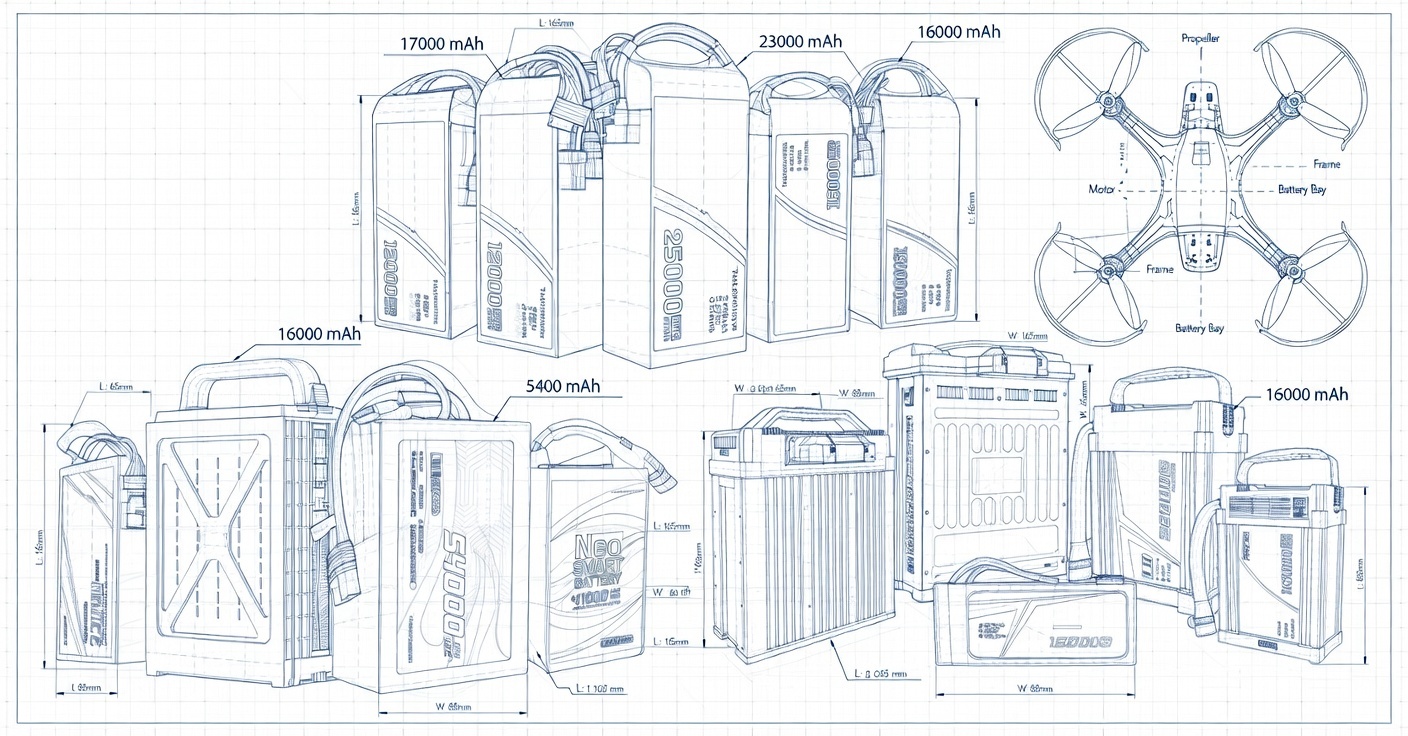
- Capacity Ratings: Look for batteries offering 5000mAh to 22000mAh ranges depending on drone size and payload requirements
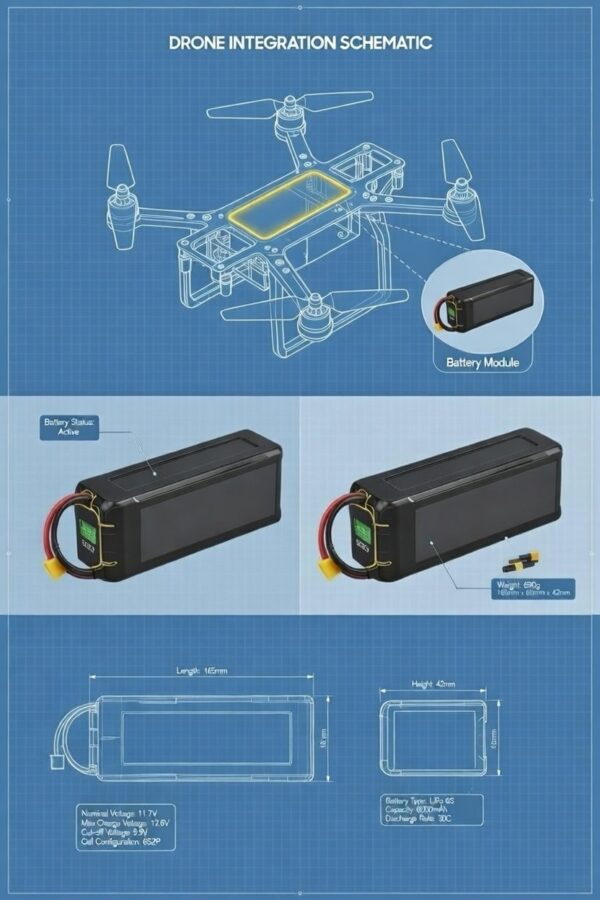
- Voltage Configuration: 4S to 6S configurations provide optimal balance between power delivery and weight
- Discharge Rates: C-ratings of 25C or higher ensure stable power during high-demand maneuvers
Comparison Insight: Standard consumer-grade batteries typically deliver 15-20 minutes of flight time, whereas security-grade optimized cells extend operations to 35-45 minutes under similar conditions. This 125% improvement translates directly to reduced battery swap frequency and enhanced coverage per mission.
Pro Tip: Always request cycle life data at 80% depth of discharge. Batteries maintaining 80% capacity after 500+ cycles offer superior total cost of ownership despite higher initial investment.
Factor 2: Thermal Management and Environmental Resilience
Operating Beyond Comfort Zones
Security drones operate in diverse environments—from freezing warehouse perimeters to scorching industrial facilities. Battery performance degradation under temperature extremes can compromise critical surveillance windows.
Essential Specifications:
- Operating Temperature Range: Minimum -20°C to +60°C for all-weather deployment
- Thermal Runaway Protection: Integrated BMS (Battery Management System) with cell-level monitoring
- Heat Dissipation Design: Aluminum casing or advanced polymer composites for passive cooling
Step-by-Step Evaluation Process:
- Request thermal performance curves from manufacturers
- Verify third-party testing certifications (UN 38.3, IEC 62133)
- Conduct in-field testing under your specific environmental conditions
- Document performance degradation patterns across temperature ranges
Critical Insight: 2026 IATA regulations now mandate that lithium batteries shipped via air cargo must not exceed 30% state of charge (SoC). This affects your inventory management and requires batteries capable of rapid charging protocols to reach operational readiness quickly.
Factor 3: Supply Chain Traceability and Compliance Documentation
The New Regulatory Reality
The EU Battery Regulation (EU 2023/1542) has fundamentally transformed battery procurement requirements. Starting in 2026, industrial batteries require digital battery passports containing complete supply chain information accessible via QR code scanning.
Mandatory Documentation Elements:
- Chemical Composition: Full disclosure of cathode/anode materials and electrolyte formulations
- Carbon Footprint: Lifecycle emissions data from raw material extraction through manufacturing
- Manufacturing Origin: Facility locations, labor compliance certifications, and production dates
- Recycling Pathway: End-of-life recovery procedures and material reclamation rates
Verification Checklist:
✓ Battery passport QR code functionality
✓ Blockchain-verified supply chain records
✓ Conflict mineral compliance (Dodd-Frank Section 1502)
✓ REACH and RoHS substance restrictions adherence
✓ UN 38.3 transportation safety certification
Strategic Advantage: Firms implementing traceable battery systems gain preferential status in government contracts and insurance underwriting. Documentation completeness now factors into risk assessments and liability calculations.
Factor 4: Smart Battery Management Systems (BMS)
Intelligence Embedded in Power
Modern security operations demand more than raw energy storage—they require intelligent power systems that communicate status, predict failures, and integrate with fleet management software.
Advanced BMS Features:
- Real-Time Telemetry: Voltage, current, temperature, and SoC data transmitted to ground control
- Predictive Analytics: AI-driven algorithms forecasting remaining useful life with 95%+ accuracy
- Cell Balancing: Active equalization preventing capacity degradation from cell mismatch
- Authentication Protocols: Encrypted communication preventing counterfeit battery deployment
Implementation Steps:
- Ensure BMS compatibility with your existing drone fleet software
- Verify API availability for custom integration requirements
- Test data transmission reliability across operational distances
- Establish alert thresholds for proactive battery replacement scheduling
Comparative Analysis: Basic BMS systems provide simple voltage monitoring, while advanced systems offer predictive maintenance alerts 50-100 flight cycles before failure. This early warning capability prevents mission-critical failures during active surveillance operations.
Factor 5: Manufacturer Support and Warranty Frameworks
Long-Term Partnership Value
Battery procurement extends far beyond the initial transaction. Security firms require manufacturers committed to long-term support, replacement availability, and continuous product improvement.
Evaluation Criteria:
- Warranty Duration: Minimum 24 months with clear degradation thresholds
- Replacement Timeline: Guaranteed 48-72 hour replacement for critical failures
- Technical Support: Dedicated account management with sub-4-hour response times
- Firmware Updates: Regular BMS improvements delivered throughout product lifecycle
Red Flags to Avoid:
✗ Vague warranty language excluding “normal wear”
✗ No documented replacement battery availability timeline
✗ Limited technical support hours or overseas-only assistance
✗ Absence of product liability insurance documentation
Best Practice: Establish master supply agreements with volume pricing tiers and guaranteed minimum order quantities. This secures supply continuity while optimizing per-unit costs across your fleet expansion plans.
Key Insights and Strategic Recommendations
The convergence of performance requirements and regulatory compliance creates both challenges and opportunities for security and surveillance firms. Organizations that proactively address these five factors position themselves for operational excellence while avoiding costly compliance violations.
Action Priorities for 2026:
- Audit existing battery inventory against new traceability requirements
- Establish supplier qualification protocols including documentation verification
- Implement battery tracking systems integrated with fleet management platforms
- Budget for 15-20% premium on certified traceable batteries as compliance costs
- Develop contingency plans for supply chain disruptions affecting battery availability
Call to Action
Navigating the complex landscape of high-performance drone batteries with complete supply chain traceability requires expert guidance and reliable partnerships. Don’t let battery uncertainty compromise your security operations or expose your organization to compliance risks.
Ready to optimize your drone battery strategy? Our team of power system specialists understands the unique demands of security and surveillance applications. We provide comprehensive consultation on battery selection, compliance documentation, and fleet integration tailored to your operational requirements.
Contact us today to schedule a detailed assessment of your current battery infrastructure and discover how certified high-performance solutions can enhance your mission capabilities while ensuring full regulatory compliance.
Get in touch: https://cnsbattery.com/drone-battery-home/drone-battery-contact
Your security operations deserve power systems that perform flawlessly when it matters most. Make the strategic investment in verified, traceable, high-performance drone batteries—and fly with confidence.