
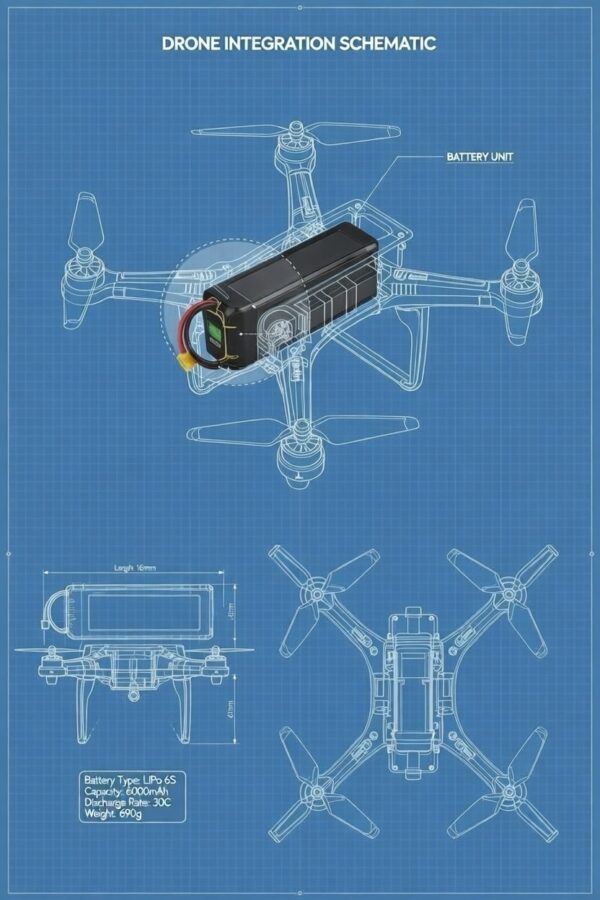
Best Drone Batteries for Drone Manufacturers: Battery Life Cycles Comparison
In the rapidly evolving world of unmanned aerial vehicles, selecting the right power source can make or break your drone manufacturing success. Drone batteries are not just components—they’re the heartbeat of every flight operation. For manufacturers seeking competitive advantage, understanding battery life cycles and performance metrics is essential for delivering superior products to the market.
Why Battery Quality Defines Manufacturing Excellence
The drone industry has witnessed exponential growth, with applications spanning agriculture, surveillance, delivery services, and cinematography. At the core of every successful drone operation lies a fundamental truth: battery performance determines operational capability. High-quality drone batteries offer manufacturers several distinct advantages that directly impact customer satisfaction and brand reputation.
Extended Flight Time: Premium lithium polymer (LiPo) batteries deliver consistent power output, enabling longer mission durations. A battery with 5000mAh capacity can extend flight time by 30-40% compared to standard alternatives, giving your drones a competitive edge in commercial applications.
Enhanced Safety Features: Modern drone batteries incorporate advanced Battery Management Systems (BMS) that monitor temperature, voltage, and current in real-time. This technology prevents overheating, overcharging, and deep discharge—critical factors that reduce warranty claims and protect your brand integrity.
Cost Efficiency Over Time: While premium batteries may carry higher initial costs, their extended cycle life delivers superior long-term value. A battery rated for 1000 charge cycles versus 500 cycles effectively halves your customers’ replacement costs, creating powerful selling points for your manufacturing partners.
Understanding Battery Life Cycle Metrics
Battery life cycle represents the number of complete charge-discharge cycles a battery can undergo before its capacity drops to 80% of original specifications. This metric serves as the gold standard for comparing drone battery longevity across different manufacturers and chemistries.
LiPo Battery Cycle Life Breakdown
Lithium Polymer batteries dominate the drone industry due to their exceptional power-to-weight ratio and discharge capabilities. Here’s how different quality tiers compare:
| Battery Grade | Cycle Life | Capacity Retention | Best Application |
|---|---|---|---|
| Entry Level | 300-400 cycles | 80% at 300 cycles | Hobby drones |
| Commercial Grade | 500-700 cycles | 80% at 500 cycles | Professional photography |
| Industrial Grade | 800-1000+ cycles | 80% at 800+ cycles | Agricultural & delivery |
| Premium Custom | 1000-1500 cycles | 80% at 1000+ cycles | Military & enterprise |
The disparity becomes clear when calculating total flight hours. An industrial-grade battery with 1000 cycles at 25 minutes per flight delivers 416 hours of operation, while entry-level batteries manage only 125-166 hours before replacement becomes necessary.
Factors Influencing Cycle Life
Multiple variables affect how long your drone batteries maintain peak performance:
Depth of Discharge (DOD): Batteries discharged to 20% remaining capacity last significantly longer than those drained to 0%. Implementing smart low-battery return-to-home features preserves cycle life while maintaining operational safety.
Charging Practices: Fast charging generates heat that degrades battery chemistry over time. Optimal charging at 1C rates (charging current equal to capacity) extends lifespan compared to aggressive 3C+ fast charging protocols.
Temperature Management: Operating batteries between 20°C-35°C maximizes cycle life. Extreme cold reduces available capacity temporarily, while excessive heat causes permanent chemical degradation.
Step-by-Step Guide: Selecting Drone Batteries for Manufacturing
Choosing the right battery partner requires systematic evaluation. Follow this comprehensive framework to ensure optimal selection for your manufacturing requirements.
Step 1: Define Performance Requirements
Begin by documenting your drone’s power consumption profile. Calculate average current draw during hover, maximum discharge during aggressive maneuvers, and peak loads during payload operations. For example, a 2kg agricultural drone with spraying equipment might require:
- Continuous discharge: 25A
- Peak discharge: 50A (during climb)
- Capacity: 22000mAh for 20-minute missions
- Voltage: 6S (22.2V nominal)
Step 2: Evaluate Manufacturer Credentials
Not all battery suppliers meet manufacturing standards. Verify these critical qualifications:
- ISO 9001 certification for quality management
- UN 38.3 transportation compliance
- Cell sourcing transparency (Grade A cells only)
- In-house BMS development capabilities
- Warranty terms (minimum 12 months)
Step 3: Request Sample Testing
Before committing to large orders, conduct rigorous testing:
- Capacity Verification: Measure actual capacity against specifications using professional analyzers
- Cycle Testing: Run 50-100 accelerated cycles to project long-term performance
- Thermal Imaging: Monitor heat distribution during high-discharge operations
- Voltage Sag Analysis: Check voltage stability under load conditions
Step 4: Assess Supply Chain Reliability
Manufacturing continuity depends on consistent battery availability. Evaluate:
- Production capacity and lead times
- Raw material sourcing stability
- Quality control consistency across batches
- Technical support responsiveness
Real-World Example: Agricultural Drone Battery Optimization
Consider a manufacturer producing agricultural spraying drones. Their initial battery selection offered 500 cycle life at $180 per unit. After comprehensive evaluation, they switched to premium 1000-cycle batteries at $240 per unit.
Cost Analysis Over 2000 Cycles:
- Original batteries: 4 replacements needed = $720 total
- Premium batteries: 2 replacements needed = $480 total
- Savings: $240 per drone fleet
Beyond direct cost savings, the premium batteries delivered:
- 15% longer flight time per charge
- 40% fewer warranty claims
- Enhanced customer satisfaction scores
- Stronger brand positioning in commercial markets
This example demonstrates how initial investment in quality batteries generates compound returns throughout the product lifecycle.
Emerging Battery Technologies for 2026
The drone battery landscape continues evolving with innovative chemistries promising enhanced performance:
Solid-State Batteries: Offering higher energy density and improved safety profiles, solid-state technology represents the next frontier. While currently cost-prohibitive for mass production, early adoption positions manufacturers as innovation leaders.
LFP (Lithium Iron Phosphate): Though heavier than LiPo, LFP batteries deliver 3000-4000 cycle life with superior thermal stability. Ideal for applications where weight is secondary to longevity and safety.
Smart Battery Integration: IoT-enabled batteries transmit real-time health data to manufacturers, enabling predictive maintenance and reducing unexpected failures in the field.
Making the Strategic Choice
For drone manufacturers, battery selection transcends component procurement—it’s a strategic decision affecting product performance, customer loyalty, and market positioning. The optimal choice balances immediate cost considerations against long-term value creation.
Premium drone batteries with extended cycle life deliver measurable advantages: reduced warranty expenses, enhanced brand reputation, and superior customer retention. When evaluating potential suppliers, prioritize partners who demonstrate commitment to quality, transparency, and continuous innovation.
The drone industry’s trajectory points toward increasingly demanding applications requiring reliable, long-lasting power solutions. Manufacturers who invest in superior battery technology today position themselves to capture tomorrow’s market opportunities.
Ready to elevate your drone manufacturing with premium battery solutions? Our team specializes in custom LiPo battery development for drone manufacturers worldwide. From prototype to production scale, we deliver batteries engineered for maximum cycle life and performance consistency.
Contact us today to discuss your specific requirements: https://cnsbattery.com/drone-battery-home/drone-battery-contact
Partner with experts who understand that every flight begins with the right power foundation. Your drones deserve batteries built for excellence.


