Supply Chain Traceability Solved: Best Practices for Construction Mapping Companies Drone Batteries
In the high-stakes environment of modern construction, precision is not just a goal; it is a requirement. Construction mapping companies rely heavily on unmanned aerial vehicles (UAVs) to survey sites, monitor progress, and generate accurate 3D models. However, the efficiency of these drone operations hinges on a single, often overlooked component: the battery. As we move through 2026, the demand for reliable power sources has never been greater, yet the supply chain surrounding drone batteries remains fraught with opacity. For construction mapping firms, ensuring supply chain traceability is no longer optional—it is a critical operational necessity.
This article addresses the common challenges faced by industry professionals regarding drone battery procurement and management. By diagnosing the root causes of supply chain inefficiencies and offering actionable, list-style solutions, we aim to empower construction mapping companies to secure their operations against compliance risks, safety hazards, and downtime.
Diagnosis: The Hidden Risks in Your Drone Battery Supply Chain
Before implementing solutions, it is essential to understand the specific pain points plaguing the industry. Many construction mapping companies treat drone batteries as consumable commodities, purchasing them based solely on price or availability. This approach ignores the complex lifecycle of lithium-based power systems. Below are the primary issues diagnosed in the current market landscape.
1. Regulatory Non-Compliance and the 2026 Battery Passport
The regulatory environment has shifted dramatically. With the European Union’s Battery Regulation entering its substantive enforcement phase in 2026, the concept of a “Battery Passport” is becoming a global standard. This digital record requires detailed information about chemical composition, manufacturing origin, and carbon footprint. Construction companies operating internationally or using equipment sourced from global suppliers often find themselves non-compliant because their battery suppliers cannot provide this granular data. Lack of traceability here can lead to seized shipments, fines, and project delays.
2. Counterfeit and Substandard Cells
The drone battery market is saturated with third-party manufacturers claiming compatibility with major drone brands. However, without a transparent supply chain, there is no way to verify the quality of the lithium-polymer (LiPo) or lithium-ion (Li-ion) cells inside. Substandard cells may lack proper protection circuits, leading to thermal runaway, fires on construction sites, or sudden power failures during critical mapping missions. The risk is not just financial; it is a safety hazard for personnel on the ground.
3. Lack of Lifecycle Data and Health Monitoring
Traceability is not just about where the battery came from; it is about its history. Construction mapping drones undergo rigorous usage cycles. Without a system to track charge cycles, storage conditions, and performance degradation, companies cannot predict battery failure. This leads to unexpected downtime during surveys. A battery might appear fully charged but fail under load due to internal cell imbalance—a issue that traceability systems could have flagged early.
4. Logistics and Documentation Bottlenecks
Lithium batteries are classified as dangerous goods for transport (UN38.3 certification is mandatory). In a fragmented supply chain, documentation often gets separated from the physical product. When batteries arrive at a construction site or a regional warehouse, missing safety data sheets or test summaries can halt operations. The lack of a unified digital thread from manufacturer to end-user creates administrative friction that slows down deployment.
List-Style Solutions: Best Practices for Traceability
Solving these issues requires a strategic shift from reactive purchasing to proactive supply chain management. The following best practices are designed to enhance visibility, ensure compliance, and maximize the reliability of your drone fleet.
1. Implement Digital Battery Passports
To align with 2026 regulatory standards, construction mapping companies must demand Digital Battery Passports from their suppliers. This technology uses a unique identifier, often a QR code or NFC tag, linked to a secure database.
- Actionable Step: Verify that every battery pack purchased includes a scannable passport containing data on cell chemistry, manufacturing date, and carbon footprint.
- Benefit: Ensures immediate compliance with international regulations like the EU Battery Regulation and simplifies audit processes.
2. Utilize RFID and NFC for Inventory Tracking
Static serial numbers are insufficient for dynamic construction environments. Integrating Radio Frequency Identification (RFID) or Near Field Communication (NFC) tags into battery management systems allows for real-time tracking.
- Actionable Step: Deploy handheld scanners or integrate drone docking stations that automatically log battery usage upon insertion.
- Benefit: Provides a clear chain of custody, reduces loss and theft, and automates the logging of charge cycles for predictive maintenance.
3. Partner with Certified Manufacturers (UN38.3 and ISO)
Traceability begins at the source. Working with manufacturers who adhere to strict international standards ensures that the supply chain is built on a foundation of quality.
- Actionable Step: Require suppliers to provide valid UN38.3 test summaries and ISO 9001 certification documentation before procurement.
- Benefit: Mitigates the risk of counterfeit cells and ensures that batteries can be legally transported across borders without logistical hold-ups.
4. Integrate Real-Time Health Monitoring Systems
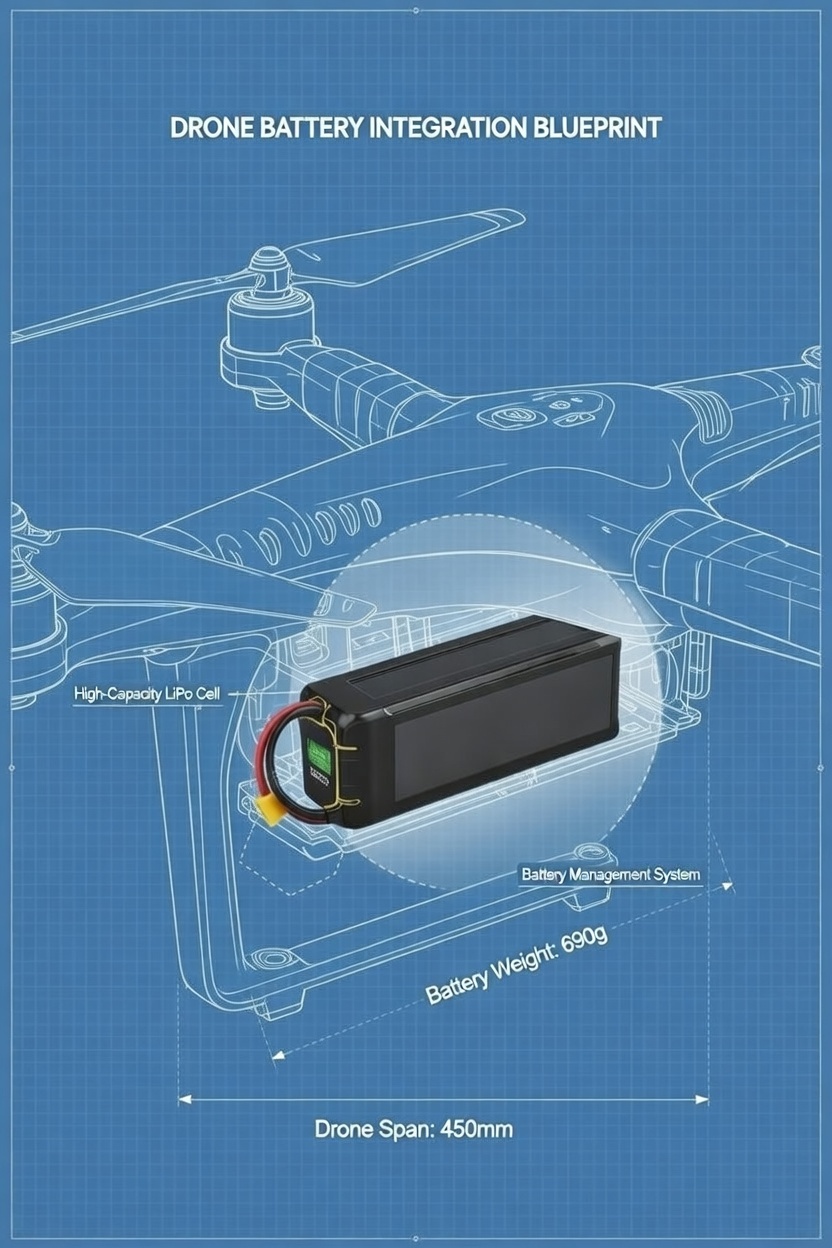
Modern battery management systems (BMS) should communicate data back to a central fleet management platform. Traceability extends to performance data.
- Actionable Step: Choose drone batteries with smart BMS capabilities that report voltage, temperature, and internal resistance in real-time.
- Benefit: Allows mapping companies to retire batteries before they become safety risks, ensuring that every flight mission is powered by verified, healthy equipment.
5. Standardize Reporting Protocols Across the Supply Chain
Data silos are the enemy of traceability. All stakeholders, from the cell manufacturer to the construction site manager, should adhere to standardized reporting formats.
- Actionable Step: Implement a cloud-based supply chain platform where suppliers upload compliance documents and performance data directly to your company’s dashboard.
- Benefit: Creates a single source of truth, reducing administrative errors and ensuring that all compliance documents are instantly accessible during inspections.
The Value of Transparency in Construction Mapping
Adopting these best practices transforms the battery from a simple power source into a data-rich asset. For construction mapping companies, the benefits are multifaceted. Firstly, safety is enhanced. By knowing the exact history and health of every battery, the risk of on-site incidents is significantly reduced. Secondly, operational efficiency improves. Predictive maintenance based on traceable data means fewer aborted missions due to power failure. Finally, regulatory compliance becomes seamless. As governments worldwide tighten restrictions on lithium batteries, having a transparent supply chain ensures business continuity.
In an industry where time is money and accuracy is paramount, the integrity of your power supply chain directly impacts your bottom line. Traceability is not merely about tracking packages; it is about guaranteeing performance, safety, and compliance in every flight hour.
Summary
The challenges surrounding drone battery supply chains are complex, involving regulatory hurdles, safety risks, and logistical inefficiencies. However, these problems are solvable through deliberate action. By diagnosing the issues of non-compliance, counterfeit risks, and data opacity, construction mapping companies can take targeted steps to secure their operations. Implementing Digital Battery Passports, utilizing RFID tracking, partnering with certified manufacturers, integrating health monitoring, and standardizing reporting protocols form the backbone of a robust traceability strategy.
As we navigate the regulatory landscape of 2026 and beyond, the companies that prioritize supply chain transparency will lead the market. They will operate safer sites, maintain higher fleet availability, and avoid the costly pitfalls of non-compliance. The technology exists to solve these problems; the key is implementation.
Ready to Secure Your Drone Fleet’s Power Supply?
Navigating the complexities of battery traceability and compliance requires a partner who understands both the technical and regulatory landscapes. At CNS Battery, we specialize in providing high-performance drone battery solutions tailored for industrial applications, including construction mapping. Our commitment to transparency ensures that every battery comes with the necessary documentation and traceability features to keep your operations running smoothly and compliantly.
Don’t let supply chain opacity ground your fleet. Contact us today to discuss how we can customize a battery solution that meets your specific traceability and performance requirements.
Get in touch for a custom solution: https://cnsbattery.com/drone-battery-home/drone-battery-contact