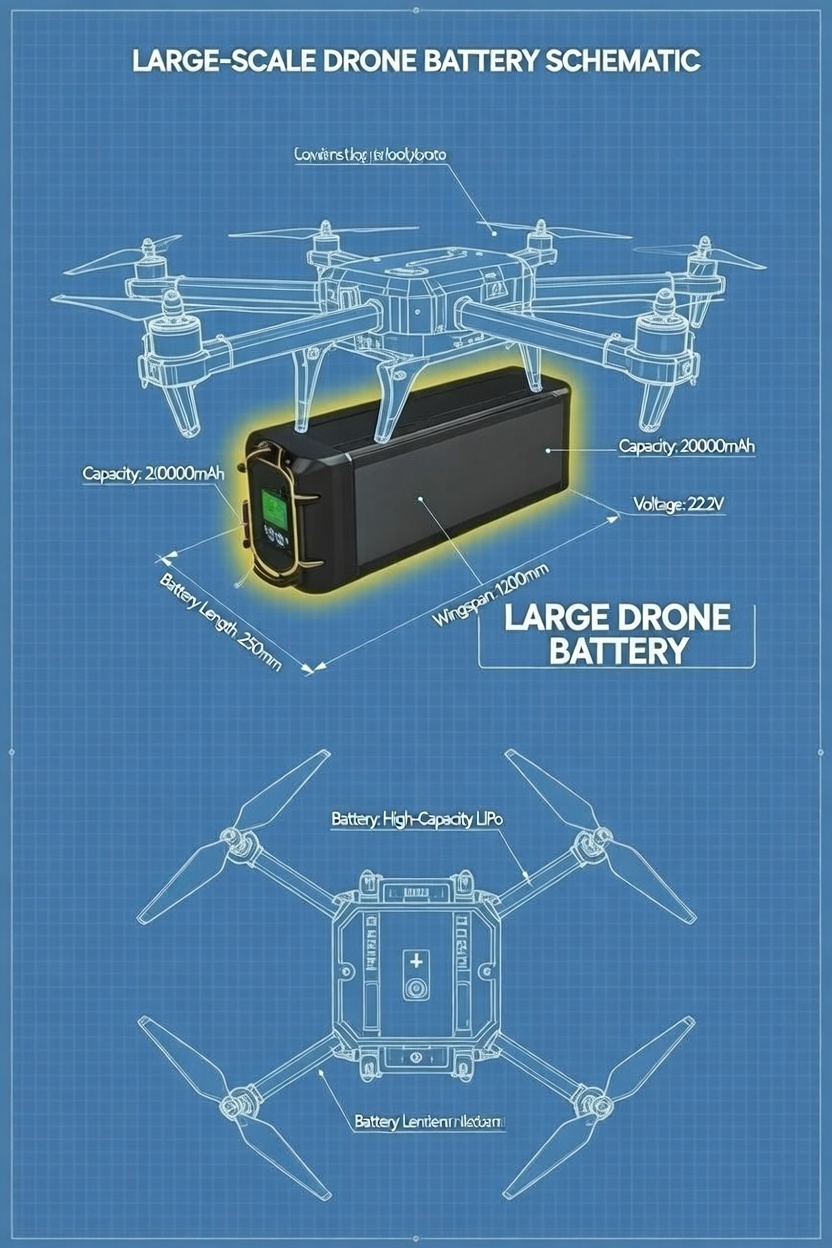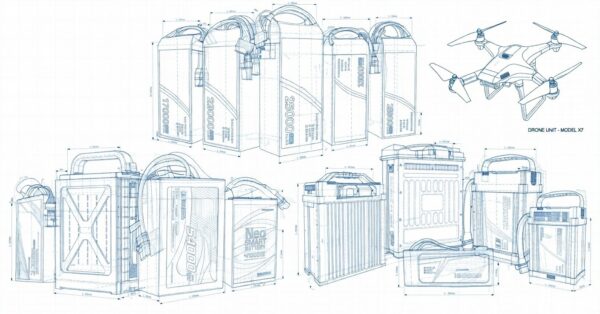
In the high-stakes world of security and surveillance, operational reliability is not just a metric; it is the foundation of trust. Security firms deploying drone fleets for perimeter monitoring, emergency response, and large-scale surveillance face a critical vulnerability that often goes unnoticed until it is too late: battery failure. A drone dropping out of the sky during a critical surveillance mission due to power loss is more than an equipment malfunction; it is a security breach. The risks associated with lithium-ion battery management in professional drone fleets are substantial, ranging from unexpected downtime to catastrophic thermal events. Understanding and mitigating these risks through advanced Battery Management System (BMS) features is essential for maximizing Return on Investment (ROI) and ensuring mission success.
The Hidden Risks in Drone Fleet Operations
For security and surveillance firms, the cost of a drone extends far beyond the initial purchase price. The true cost lies in operational uptime, data integrity, and safety. Without a sophisticated BMS, drone batteries are prone to several failure modes that can cripple a fleet’s effectiveness. The primary risks include sudden voltage drops leading to mid-flight failures, capacity degradation reducing flight time, and thermal runaway posing safety hazards to personnel and property.
These risks are exacerbated by the demanding nature of security operations. Drones are often required to hover for extended periods, operate in extreme weather conditions, and undergo rapid charge-discharge cycles. A standard consumer-grade battery management approach is insufficient for these industrial requirements. The consequences of neglecting proper battery management include increased replacement costs, liability issues from accidents, and compromised surveillance coverage.
Risk Causes and Prevention Measures
To safeguard your drone fleet and optimize ROI, it is crucial to understand the root causes of battery failures and the corresponding preventive strategies enabled by advanced BMS technology.
Risk Causes:
- Cell Imbalance: In a battery pack, individual cells can degrade at different rates. Without active balancing, weaker cells limit the overall capacity and can become unstable during high-load operations.
- Thermal Stress: Security drones often operate in varying temperatures. Excessive heat accelerates chemical degradation, while extreme cold reduces immediate power availability, both leading to premature failure.
- Over-Discharge: Deep discharging damages cell chemistry permanently. In surveillance missions, pilots might push batteries to the limit, risking irreversible capacity loss.
- State of Charge (SOC) Inaccuracy: Inaccurate fuel gauges lead to unexpected power loss. A drone returning home based on faulty data may crash before reaching the landing zone.
- Cycle Degradation: Frequent charging without proper health monitoring reduces the total lifespan of the battery, increasing the total cost of ownership.
Prevention Measures:
- Active Cell Balancing: Implement BMS features that actively redistribute energy between cells during charging and resting states to maintain uniformity.
- Thermal Management Integration: Utilize BMS sensors that monitor temperature in real-time and adjust charging/discharging rates to prevent overheating or freezing.
- Voltage Protection Cutoffs: Configure hard and soft cutoffs within the BMS to prevent over-discharge, preserving cell health even under pilot error.
- Advanced SOC/SOH Algorithms: Deploy BMS solutions that use coulomb counting and impedance tracking to provide accurate State of Charge and State of Health readings.
- Data Logging and Analytics: Use BMS data to track cycle history and predict end-of-life, allowing for proactive replacement scheduling rather than reactive failure management.
Engineering Solutions for Maximum ROI
From an engineering perspective, the BMS is the brain of the battery pack. For security and surveillance firms, selecting a drone battery with a robust BMS is a strategic decision that directly impacts the bottom line. The ROI is realized through extended battery lifespan, reduced downtime, and enhanced safety compliance.
Modern BMS architectures for professional drones incorporate redundant safety layers. For instance, a multi-level protection system might include primary firmware controls backed by independent hardware cutoffs. This ensures that even if the software encounters a bug, the physical circuit prevents catastrophic failure. Furthermore, communication protocols like CAN bus or SMBus allow the drone’s flight controller to receive real-time telemetry from the BMS. This integration enables intelligent flight planning, where the drone automatically adjusts its mission profile based on remaining energy and battery health.
Consider the impact of State of Health (SOH) monitoring. In a fleet of fifty drones, knowing exactly which batteries are nearing the end of their useful life allows managers to rotate assets effectively. Instead of replacing all batteries on a fixed schedule, firms can replace only those that show significant degradation. This predictive maintenance approach reduces capital expenditure significantly over time. Additionally, accurate SOC estimation prevents the “reserve battery” paradox where operators carry more spares than necessary due to lack of trust in the gauge. Optimizing the number of spare batteries required reduces logistical burdens and costs.
Thermal management is another critical engineering feature. High-performance surveillance drones generate significant heat during operation. A BMS that actively manages thermal thresholds can prevent the battery from entering dangerous states. By throttling power output when temperatures rise, the system protects the cells from accelerated aging. This feature is particularly vital for firms operating in diverse climates, from desert perimeters to cold storage facilities. The ability to maintain consistent performance regardless of ambient temperature ensures that surveillance coverage remains uninterrupted.
Strategic Implementation for Security Firms
Implementing these BMS features requires a shift in how security firms view their drone assets. Batteries should be treated as data-generating components rather than disposable consumables. Integrating battery management software with fleet management platforms provides a holistic view of operational readiness. Managers can monitor the health of every battery in the fleet from a central dashboard, receiving alerts when maintenance is required.
Training is also a component of this strategy. Pilots and ground crew should be educated on interpreting BMS data. Understanding the significance of a warning light or a voltage discrepancy empowers the team to make safer decisions in the field. This human-in-the-loop approach, supported by intelligent BMS technology, creates a culture of safety and efficiency.
Moreover, compliance with industry standards is becoming increasingly important. Security firms often operate under strict regulatory frameworks. Using batteries with certified BMS features demonstrates due diligence in risk management. This can be crucial in the event of an incident investigation, showing that the firm employed state-of-the-art safety measures.
Conclusion and Product Exploration
In the competitive landscape of security and surveillance, efficiency and reliability are paramount. Maximizing ROI on your drone fleet is not just about buying cheaper batteries; it is about investing in intelligent power solutions that protect your assets and ensure mission continuity. Advanced BMS features provide the necessary safeguards against the inherent risks of lithium-ion technology, turning potential vulnerabilities into managed variables. By prioritizing cell balancing, thermal management, and accurate state estimation, security firms can extend the life of their fleets, reduce operational costs, and maintain the highest standards of safety.
The technology exists to transform how your fleet manages power. The question is whether your current infrastructure is leveraging these capabilities to their full potential. To explore how advanced battery management solutions can be integrated into your security operations, we invite you to connect with our engineering team. Discover the next generation of drone power systems designed for reliability and performance.
For detailed specifications and custom fleet solutions, please visit our contact page: https://cnsbattery.com/drone-battery-home/drone-battery-contact
Secure your fleet’s future today with intelligent battery management.