
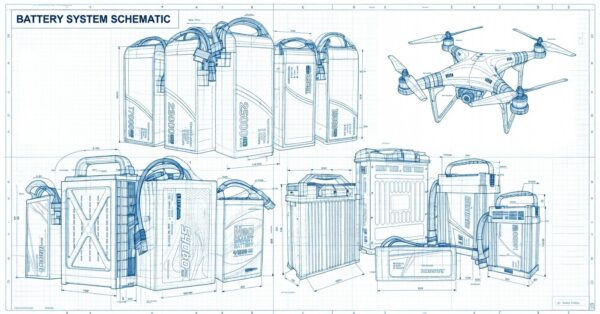
The e-commerce logistics landscape is undergoing a revolutionary transformation. As drone fleet operators scale their delivery networks, the backbone of operational efficiency increasingly depends on one critical component: the drone battery. For bulk procurement decision-makers, understanding what separates high-performance batteries from standard options isn’t just technical curiosity—it’s a strategic imperative that directly impacts bottom-line profitability, fleet uptime, and customer satisfaction.
The Hidden Cost of Battery Failure in Commercial Drone Operations
E-commerce drone fleet operators face unique challenges that ground-based delivery services simply don’t encounter. A single battery failure during peak delivery hours can cascade into missed deadlines, customer complaints, and reputational damage. Industry reports from 2025 indicate that approximately 34% of unplanned drone downtime stems from battery-related issues, including premature degradation, inconsistent performance across temperature ranges, and safety incidents during charging cycles.
Consider a mid-sized logistics company operating 50 delivery drones across urban routes. Each drone completes an average of 12 flights daily. If battery performance drops by just 15% after six months of operation, the company must either reduce payload capacity, increase charging frequency, or replace batteries prematurely. The cumulative cost can exceed $180,000 annually when factoring in replacement expenses, operational delays, and maintenance labor.
Factor 1: Energy Density and Flight Time Optimization
Energy density remains the cornerstone metric for evaluating drone battery performance. Modern lithium polymer (LiPo) batteries for commercial drones typically range from 180 to 260 Wh/kg, with advanced solid-state variants pushing toward 300 Wh/kg in 2025-2026 specifications.
What Bulk Buyers Should Evaluate:
- Wh/kg ratio: Higher energy density translates directly to extended flight time without increasing battery weight
- Voltage stability: Consistent power output throughout discharge cycles ensures predictable flight performance
- Capacity retention: Premium batteries maintain 80%+ of original capacity after 500+ charge cycles
For e-commerce operations requiring 30-45 minute flight windows per delivery route, batteries must deliver reliable performance across hundreds of cycles. Testing protocols should include continuous discharge measurements at various C-rates to verify manufacturer claims under real-world load conditions.
Factor 2: Cycle Life and Long-Term Cost Efficiency
The total cost of ownership for drone batteries extends far beyond the initial purchase price. A battery rated for 300 cycles may appear economical initially, but if it requires replacement every four months, the cumulative expense quickly surpasses a premium option rated for 800+ cycles.
Industry Standard Benchmarks:
- Minimum acceptable: 500 full charge-discharge cycles at 80% capacity retention
- Recommended for fleet operations: 800-1000 cycles with proper maintenance protocols
- Premium tier: 1200+ cycles with advanced battery management systems
Leading fleet operators in North America and Europe now require suppliers to provide cycle life certification based on IEC 62660-2 standards. This ensures batteries meet consistent testing methodologies rather than manufacturer-specific claims that may not reflect actual operating conditions.
Factor 3: Thermal Management and Environmental Resilience
E-commerce drone deliveries operate across diverse environmental conditions—from sub-zero winter mornings to scorching summer afternoons. Battery performance can degrade significantly outside optimal temperature ranges, typically 15°C to 35°C for standard LiPo chemistries.
Critical Performance Indicators:
- Operating temperature range: Quality batteries function reliably between -20°C to 60°C
- Thermal runaway protection: Integrated safety mechanisms prevent catastrophic failures
- Charging temperature tolerance: Fast-charging capabilities without overheating risks
Recent regulatory updates from IATA’s 2025 Dangerous Goods Regulations emphasize stricter transportation requirements for lithium batteries, including state-of-charge limitations during shipping. Fleet operators must ensure their battery suppliers comply with these evolving standards to avoid logistics complications.
Factor 4: Safety Certifications and Regulatory Compliance
The commercial drone industry operates under increasingly stringent safety regulations. Battery certifications aren’t merely bureaucratic checkboxes—they represent verified safety standards that protect your investment, your personnel, and your operational continuity.
Essential Certifications for 2026:
- UN 38.3: Mandatory for lithium battery transportation across all modes
- IEC 62133: International safety standard for portable battery applications
- GB/T 31467-2023: Chinese national standard for lithium-ion battery performance testing
- CE/FCC: Regional compliance for European and North American markets
Bulk purchasers should request complete certification documentation before finalizing orders. Reputable manufacturers maintain comprehensive test records and can provide third-party verification from accredited laboratories. This documentation becomes invaluable during insurance claims, regulatory audits, or incident investigations.
Factor 5: Performance Testing and Quality Assurance Protocols
Perhaps the most overlooked aspect of battery procurement is the verification process itself. Manufacturer specifications represent ideal conditions, but fleet operations demand validation under actual working environments.
Recommended Testing Framework:
| Test Category | Frequency | Key Metrics |
|---|---|---|
| Capacity Verification | Upon receipt | Actual mAh vs. rated capacity |
| Cycle Life Sampling | Quarterly | Capacity retention after 100 cycles |
| Thermal Performance | Seasonal | Performance at temperature extremes |
| Safety Stress Testing | Annually | Overcharge, short-circuit, drop tests |
Forward-thinking operators implement incoming quality control procedures that sample-test 5-10% of each battery shipment. This practice identifies manufacturing inconsistencies before deployment, preventing fleet-wide performance issues that could emerge months later.
Building Strategic Partnerships with Battery Suppliers
For e-commerce drone fleet operators managing hundreds or thousands of batteries, the supplier relationship transcends transactional purchasing. Strategic partnerships offer advantages including priority support, customized testing protocols, and collaborative product development aligned with specific operational requirements.
Value-Added Services to Request:
- Dedicated account management for fleet-scale customers
- Custom battery configuration options for specific drone models
- Predictive replacement scheduling based on usage analytics
- Training programs for maintenance personnel on battery handling best practices
Several major logistics companies have reported 20-30% reduction in battery-related operational costs after transitioning from spot purchasing to structured supplier partnerships with performance-based contracts.
Frequently Asked Questions
Q: How often should drone batteries be replaced in commercial fleet operations?
A: Replacement timing depends on usage intensity and performance thresholds. Most operators replace batteries when capacity drops below 75-80% of original specifications, typically occurring between 500-800 cycles for quality cells. Implementing regular capacity testing allows data-driven replacement decisions rather than calendar-based schedules.
Q: What’s the difference between LiPo and Li-ion batteries for drone applications?
A: Lithium Polymer (LiPo) batteries offer higher discharge rates and flexible form factors, making them ideal for drones requiring burst power during takeoff and maneuvering. Lithium-ion (Li-ion) cells typically provide better energy density and longer cycle life but may have lower maximum discharge rates. The choice depends on specific drone design and operational profiles.
Q: Can I mix batteries from different manufacturers in the same fleet?
A: While technically possible, this practice is not recommended. Variations in internal resistance, capacity, and discharge characteristics can create imbalances during charging and operation. Standardizing on a single qualified supplier ensures consistent performance across your entire fleet and simplifies maintenance protocols.
Q: How do new 2025-2026 transportation regulations affect battery procurement?
A: Updated IATA regulations require lithium batteries to be shipped at no more than 30% state-of-charge for air transport starting January 2026. This affects inventory planning and may require additional charging infrastructure at receiving locations. Ensure your supplier understands and complies with these requirements to avoid delivery delays.
Making the Right Investment for Your Drone Fleet
The decision to invest in high-performance drone batteries represents more than a procurement choice—it’s a strategic commitment to operational excellence. For e-commerce fleet operators, the difference between adequate and exceptional battery performance manifests in delivery reliability, customer satisfaction, and ultimately, competitive advantage.
As the industry matures through 2026 and beyond, operators who prioritize comprehensive battery evaluation criteria will position themselves for sustainable growth. The five factors outlined in this guide provide a framework for informed decision-making that balances immediate operational needs with long-term cost efficiency.
Ready to optimize your drone fleet’s battery performance? Our team specializes in high-performance drone battery solutions for commercial fleet operators. We offer comprehensive testing documentation, bulk pricing structures, and dedicated support for large-scale deployments.
Contact our drone battery specialists today to discuss your specific requirements and receive a customized proposal aligned with your operational goals.


