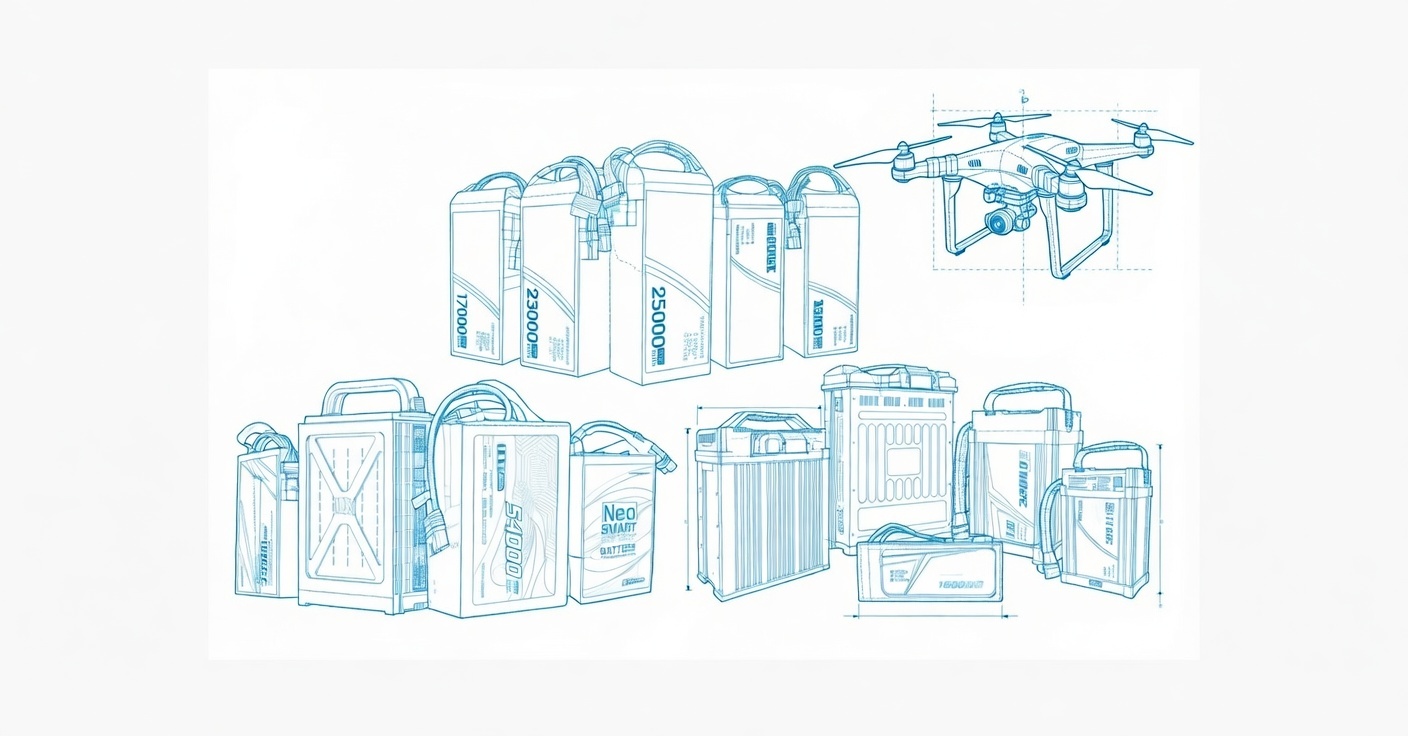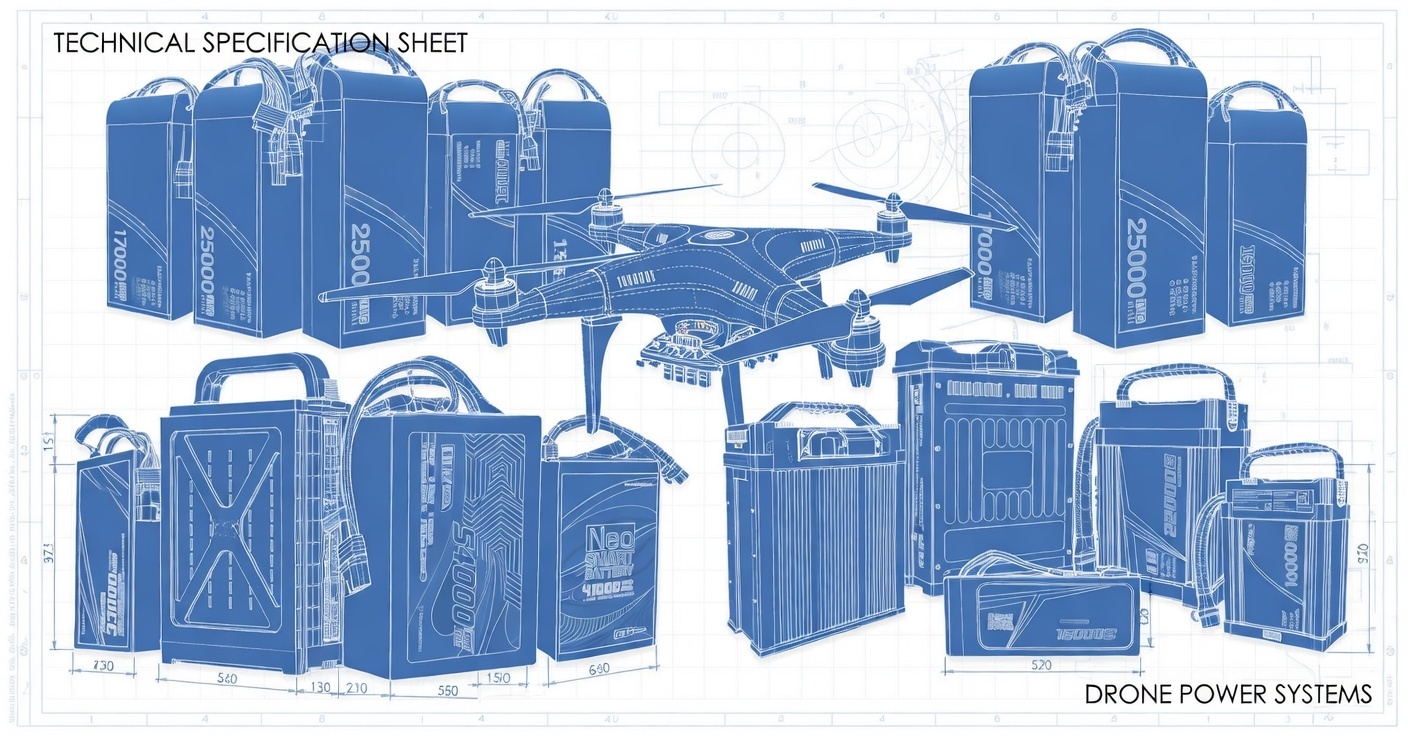
The drone industry is experiencing unprecedented growth, with global civilian drone ownership surpassing 50 million units in 2025. For drone manufacturers, selecting the right battery with an advanced Battery Management System (BMS) has become critical to product success, safety compliance, and customer satisfaction. This comprehensive guide provides expert insights into navigating BMS features when purchasing drone batteries in 2026.
Understanding BMS: The Heart of Drone Battery Safety
A Battery Management System (BMS) serves as the intelligent controller that monitors and manages lithium battery packs. Without proper BMS protection, lithium batteries pose significant safety risks including thermal runaway, overcharging, and premature failure.
Core BMS Functions Every Manufacturer Should Know:
- Cell Voltage Monitoring: Real-time tracking of individual cell voltages to prevent imbalance
- State of Charge (SOC) Estimation: Accurate battery level reporting for flight planning
- State of Health (SOH) Assessment: Long-term battery degradation tracking
- Temperature Management: Continuous thermal monitoring with early warning systems
- Charge/Discharge Control: Regulating power flow to extend cycle life
- Cell Balancing: Ensuring uniform charge distribution across all cells
- Fault Diagnosis: Early detection of potential safety issues
Critical BMS Protection Features for 2026 Drone Applications
Overcharge and Over-Discharge Protection
Modern BMS systems must prevent batteries from exceeding safe voltage thresholds. Overcharge protection typically activates at 4.25V per cell for LiPo batteries, while over-discharge protection triggers around 3.0V per cell. According to industry data from Texas Instruments, advanced BMS chips like the BQ3060 provide comprehensive protection features that extend battery cycle life by up to 40%.
Temperature Monitoring and Thermal Management
With the 2026 Battery Thermal Management Innovation Summit highlighting next-generation thermal solutions, temperature control has become non-negotiable. Quality BMS systems monitor cell temperatures continuously and can:
- Trigger cooling mechanisms when temperatures exceed 45°C
- Reduce discharge rates during high-temperature operations
- Prevent charging below 0°C to avoid lithium plating
- Provide real-time thermal data to flight controllers
Current Protection and Short Circuit Prevention
High-performance drones require BMS systems capable of handling rapid current fluctuations. Look for protection features including:
- Over-current protection with adjustable thresholds
- Short circuit detection with millisecond response times
- Peak current monitoring for burst power demands
- Load compensation for stable voltage estimation during flight maneuvers
Key Considerations When Evaluating BMS for Drone Batteries
Accuracy of SOC Estimation
PX4 Autopilot documentation emphasizes that basic voltage-based SOC estimation can be unreliable under varying loads. Advanced BMS systems employ coulomb counting combined with voltage monitoring and temperature compensation to achieve 95%+ accuracy. This precision prevents unexpected battery depletion mid-flight.
Communication Protocol Compatibility
Modern drone manufacturers need BMS systems that integrate seamlessly with flight controllers. Common communication protocols include:
- UART/Serial: Simple implementation for basic telemetry
- CAN Bus: Robust communication for professional applications
- I2C: Compact solution for smaller drone platforms
- Bluetooth: Wireless monitoring for ground station integration
Certification and Regulatory Compliance
The 2026 global lithium battery regulatory landscape has intensified significantly. The EU Battery Regulation now requires battery passports for industrial batteries, while UN38.3 transportation certification remains mandatory for air shipping. Ensure your BMS supplier provides:
- CE marking documentation
- FCC compliance certificates
- UN38.3 test reports
- RoHS and REACH compliance statements
Common BMS Challenges and Solutions
Challenge 1: Parasitic Drain During Storage
Many manufacturers report batteries losing 40% charge within 4-5 days of storage. This typically results from BMS quiescent current or system leakage. Solutions include:
- Selecting BMS chips with ultra-low sleep mode current (<50μA)
- Implementing hardware disconnect switches for long-term storage
- Configuring automatic hibernation after defined idle periods
Challenge 2: Cell Imbalance in Multi-Cell Packs
Uneven cell aging leads to reduced capacity and safety risks. Advanced BMS systems address this through:
- Passive Balancing: Dissipating excess charge from higher-voltage cells (cost-effective for smaller packs)
- Active Balancing: Transferring energy between cells (ideal for high-capacity professional drones)
- Pre-Charge Balancing: Equalizing cells before main charging begins
Challenge 3: Cold Weather Performance
Drone operations in temperatures below -10°C require specialized BMS features:
- Self-heating capabilities using controlled discharge
- Low-temperature charging inhibition
- Adaptive power delivery based on cell temperature
BMS Selection Checklist for Drone Manufacturers
Before finalizing your drone battery supplier, verify these essential criteria:
✓ Protection Features: Overcharge, over-discharge, over-current, short circuit, temperature
✓ Accuracy: SOC estimation within ±3%, cell voltage measurement within ±5mV
✓ Communication: Compatible protocol with your flight controller architecture
✓ Certifications: UN38.3, CE, FCC, and region-specific compliance
✓ Cycle Life: Minimum 500 cycles at 80% depth of discharge
✓ Warranty: At least 2-year manufacturer warranty with technical support
✓ Scalability: Ability to support future product line expansion
✓ Lead Time: Consistent supply chain with 4-6 week delivery windows
Frequently Asked Questions
Q1: What BMS features are essential for commercial drone applications?
A: Commercial drones require advanced BMS with accurate SOC estimation (±3%), comprehensive protection circuits, CAN bus communication, and temperature monitoring. Additionally, certification for aviation regulations and extended cycle life (800+ cycles) are critical for professional operations.
Q2: How does BMS affect drone flight time?
A: Quality BMS systems optimize energy utilization through precise SOC estimation and cell balancing, potentially extending usable flight time by 10-15%. Poor BMS design can cause premature low-voltage cutoffs, reducing effective capacity by up to 20%.
Q3: What’s the difference between passive and active cell balancing?
A: Passive balancing dissipates excess energy as heat from higher-voltage cells, suitable for packs under 100Wh. Active balancing transfers energy between cells, maintaining efficiency for larger capacity batteries but at higher cost and complexity.
Q4: Can BMS systems prevent thermal runaway?
A: While BMS cannot completely prevent thermal runaway, advanced systems significantly reduce risk through continuous temperature monitoring, current limiting, and early fault detection. Multi-layer protection including mechanical design and cell quality remains essential.
Q5: How often should BMS firmware be updated?
A: Manufacturers should review BMS firmware annually or when performance issues arise. Updates may improve SOC algorithms, add safety features, or address discovered vulnerabilities. Maintain documentation of all firmware versions for traceability.
Building Long-Term Partnerships with BMS Suppliers
Selecting a battery supplier extends beyond technical specifications. Consider these relationship factors:
- Technical Support: Availability of engineering assistance during integration
- Customization: Willingness to modify BMS parameters for specific applications
- Quality Control: ISO 9001 certification and consistent manufacturing processes
- Supply Chain Stability: Diversified component sourcing to prevent disruptions
- Innovation Roadmap: Commitment to advancing BMS technology with industry trends
Take Action: Secure Your Drone Battery Supply Chain Today
The drone battery market is evolving rapidly, with 2026 marking a turning point in regulatory requirements and technology expectations. Manufacturers who prioritize BMS quality now will gain competitive advantages in safety, performance, and customer trust.
Ready to elevate your drone battery procurement strategy? Our team of battery specialists understands the unique challenges drone manufacturers face. We provide comprehensive BMS evaluation, custom integration support, and reliable supply chain solutions tailored to your production needs.
Contact us today to discuss your drone battery requirements and receive a personalized consultation. Visit our dedicated drone battery contact page at https://cnsbattery.com/drone-battery-home/drone-battery-contact to connect with our expert team.
Don’t let inadequate BMS features compromise your drone’s performance or safety. Partner with experienced professionals who understand the critical role of battery management in modern drone applications. Your next breakthrough product deserves the power foundation it requires.
This guide reflects industry best practices and regulatory requirements as of March 2026. Specifications and compliance standards may vary by region and application. Always consult with qualified engineering professionals when integrating battery systems into commercial products.