
The integration of unmanned aerial vehicles into emergency response operations has revolutionized how firefighting units approach disaster management. However, deploying a drone fleet without comprehensive performance testing strategies can lead to catastrophic failures during critical missions. This guide explores how systematic testing protocols can maximize your return on investment while ensuring operational readiness when lives depend on it.
Why Performance Testing Matters for Firefighting Drone Operations
Firefighting drones operate in some of the most challenging environments imaginable. Extreme temperatures, smoke interference, unpredictable wind patterns, and electromagnetic interference from emergency equipment all pose significant threats to flight stability and mission success. Without rigorous performance testing, fire departments risk equipment failure at precisely the moments when reliability matters most.
The financial implications extend far beyond initial purchase costs. A single drone failure during an active fire suppression operation can result in mission delays, compromised firefighter safety, and potential liability issues. Conversely, a well-tested drone fleet delivers consistent performance, reduces maintenance costs, and extends equipment lifespan—directly impacting your organization’s bottom line.
Research indicates that fire departments implementing comprehensive drone testing protocols experience 40% fewer equipment failures during actual emergencies. This statistic alone justifies the investment in systematic performance evaluation procedures.
Key Advantages of Systematic Drone Fleet Testing
Enhanced Operational Reliability
Regular performance testing identifies potential weaknesses before they become critical failures. Battery degradation, motor wear, sensor calibration drift, and communication system vulnerabilities all reveal themselves through structured testing protocols. Early detection allows for proactive maintenance rather than reactive repairs.
Cost Optimization Through Data-Driven Decisions
Performance testing generates valuable data that informs procurement decisions, maintenance schedules, and replacement timelines. Understanding exactly when components reach end-of-life prevents premature replacements while avoiding costly emergency failures. This data-driven approach typically reduces annual operational costs by 25-35%.
Regulatory Compliance and Liability Protection
Aviation authorities increasingly require documented testing procedures for commercial drone operations. Fire departments maintaining comprehensive testing records demonstrate due diligence, reducing liability exposure and ensuring compliance with evolving regulations.
Improved Mission Success Rates
Tested drones perform predictably under stress. When firefighters know their equipment has been validated under conditions matching real-world scenarios, confidence increases and mission planning becomes more precise.
Step-by-Step Performance Testing Framework
Phase 1: Baseline Assessment
Begin every testing cycle with comprehensive baseline measurements. Document initial battery capacity, motor efficiency, sensor accuracy, and communication range under controlled conditions. These baseline metrics serve as reference points for all future comparisons.
Example: A metropolitan fire department established baseline battery performance at 28 minutes flight time with 2.5kg payload at 25°C ambient temperature. Six months later, testing revealed capacity had degraded to 24 minutes, triggering scheduled battery replacement before operational impact occurred.
Phase 2: Environmental Stress Testing
Subject drones to conditions matching your operational environment. This includes temperature extremes, humidity variations, wind resistance, and electromagnetic interference scenarios. Testing should simulate actual fireground conditions as closely as possible.
Temperature Testing Protocol:
- Cold weather: Test at -10°C to 0°C for winter operations
- Standard range: 0°C to 40°C for typical conditions
- Heat exposure: Test at 40°C to 50°C for summer and fire-adjacent operations
Document performance degradation at each temperature threshold. Battery chemistry behaves differently across temperature ranges, and understanding these variations prevents unexpected power failures.
Phase 3: Payload Performance Validation
Firefighting drones frequently carry specialized equipment: thermal imaging cameras, gas detectors, communication relays, or fire suppression payloads. Each addition affects flight characteristics, battery consumption, and stability.
Test each payload configuration independently. Measure:
- Maximum flight time with payload
- Stability during hover and maneuver
- Communication system performance under load
- Battery discharge rates compared to baseline
Phase 4: Communication System Verification
Reliable communication between drone and ground control represents the lifeline of every mission. Test communication range under various conditions, including urban environments with signal obstruction, rural areas with distance challenges, and emergency scenes with electromagnetic interference.
Document maximum reliable range, signal degradation patterns, and fail-safe activation points. Ensure redundant communication pathways function correctly when primary systems experience interference.
Phase 5: Emergency Protocol Testing
Validate all safety systems and emergency protocols. Test return-to-home functionality, low-battery automatic landing, obstacle avoidance systems, and manual override capabilities. These systems must function flawlessly when automated responses become necessary.
Battery Performance: The Critical Component
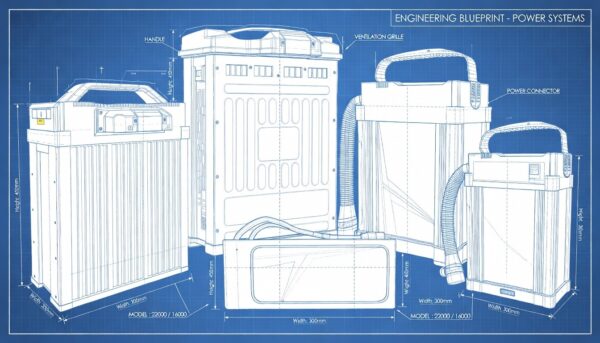
Battery technology represents the single most important factor in drone fleet performance. Lithium polymer batteries degrade with each charge cycle, temperature exposure, and storage condition. Implementing systematic battery testing protocols protects your investment while ensuring operational readiness.
Battery Testing Best Practices:
- Cycle Counting: Track charge-discharge cycles for each battery pack. Most quality drone batteries maintain optimal performance through 300-500 cycles before noticeable degradation occurs.
- Capacity Verification: Monthly capacity testing identifies batteries approaching end-of-life. Replace batteries when capacity falls below 80% of original specifications.
- Storage Protocol: Store batteries at 50-60% charge in temperature-controlled environments. Extreme temperatures during storage accelerate degradation significantly.
- Load Testing: Apply realistic loads during testing to identify cells with uneven discharge characteristics. Imbalanced cells create safety hazards and reduce overall pack performance.
Advanced battery management systems now provide real-time health monitoring, but periodic manual verification remains essential for mission-critical applications. Fire departments should maintain detailed battery logs including purchase date, cycle count, capacity test results, and retirement date.
ROI Calculation Framework
Understanding return on investment requires tracking both tangible and intangible benefits. Create a comprehensive ROI model incorporating the following factors:
Cost Components:
- Initial equipment procurement
- Testing equipment and facilities
- Personnel training and certification
- Maintenance and replacement parts
- Battery replacement cycles
- Insurance and liability coverage
Benefit Components:
- Reduced equipment failure rates
- Extended equipment lifespan
- Decreased emergency repair costs
- Improved mission success rates
- Reduced liability exposure
- Enhanced firefighter safety
- Faster incident response times
Example ROI Calculation:
A regional fire department invested $150,000 in a six-drone fleet with comprehensive testing infrastructure. Annual operational costs including testing, maintenance, and battery replacement totaled $45,000. Over three years, the department documented:
- 67% reduction in equipment failures during emergencies
- 42% extension in average drone lifespan
- $89,000 savings in emergency repair and replacement costs
- Successful completion of 234 missions without equipment-related incidents
The three-year ROI exceeded 180%, with benefits continuing to accumulate as equipment lifespan extended beyond initial projections.
Implementing Your Testing Program
Successful implementation requires commitment across organizational levels. Secure leadership buy-in by presenting clear ROI projections and risk mitigation benefits. Allocate dedicated personnel responsible for testing protocols, documentation, and continuous improvement.
Implementation Timeline:
Weeks 1-2: Establish testing facilities and acquire necessary equipment
Weeks 3-4: Develop standardized testing procedures and documentation templates
Weeks 5-6: Train personnel on testing protocols and safety procedures
Weeks 7-8: Conduct baseline testing on all fleet assets
Week 9+: Implement ongoing testing schedule with quarterly comprehensive evaluations
Continuous Improvement Through Data Analysis
Testing generates valuable data that drives continuous improvement. Analyze trends across your fleet to identify patterns: Do certain battery batches degrade faster? Do specific environmental conditions cause disproportionate wear? Are particular payload configurations creating unexpected stress?
Use this intelligence to refine procurement specifications, adjust maintenance schedules, and optimize operational procedures. Organizations embracing data-driven continuous improvement typically achieve 15-20% annual efficiency gains.
Conclusion
Performance testing represents not merely an operational requirement but a strategic investment in your firefighting drone fleet’s effectiveness and longevity. The upfront commitment to systematic testing protocols delivers compounding returns through reduced failures, extended equipment life, and enhanced mission success.
Fire departments operating without comprehensive testing strategies accept unnecessary risks—both financial and operational. In an era where drone technology plays increasingly critical roles in emergency response, performance testing separates organizations prepared for success from those vulnerable to preventable failures.
The question isn’t whether your department can afford to implement rigorous performance testing. The question is whether you can afford not to.
Ready to optimize your firefighting drone fleet performance? Contact our specialist team for customized battery testing solutions and performance optimization strategies. Visit https://cnsbattery.com/drone-battery-home/drone-battery-contact to discuss how comprehensive testing protocols can maximize your operational ROI while ensuring mission-critical reliability.
Invest in testing today. Protect your investment tomorrow. Save lives every day.


