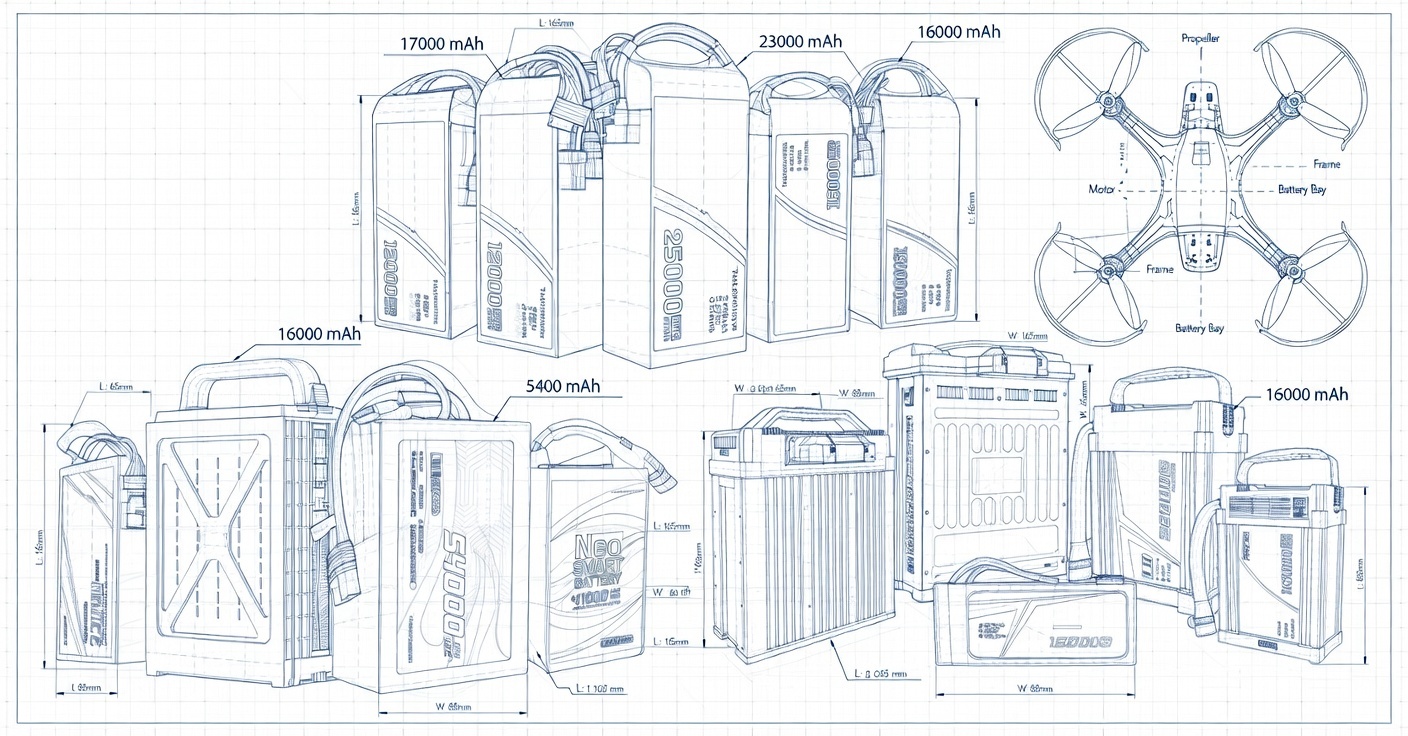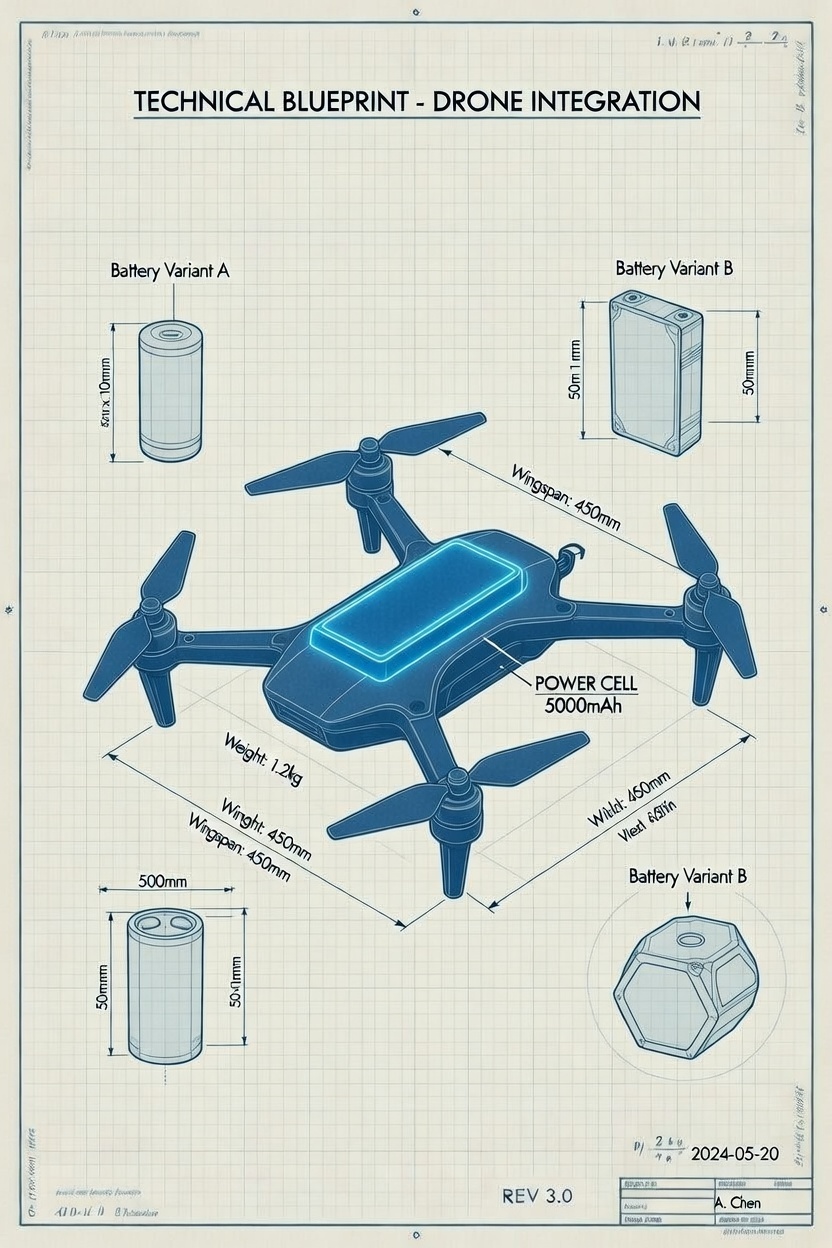
In the rapidly evolving landscape of precision agriculture, drone technology has become indispensable for modern farming operations. Yet, beneath the soaring success of agricultural UAVs lies a critical component that determines operational efficiency, safety, and profitability: the Battery Management System (BMS). For agricultural operators, understanding and optimizing BMS features isn’t just technical knowledge—it’s a competitive advantage that directly impacts bottom-line results.
Why BMS Matters for Agricultural Drone Operations
Agricultural drones operate in demanding environments. From early morning crop spraying missions to extended field mapping sessions, these unmanned aerial vehicles face temperature fluctuations, dust exposure, and continuous discharge cycles. According to industry data from 2025 drone operator certification examinations, battery internal resistance stands as the most critical indicator of battery health status (SOH), surpassing voltage, temperature, and current measurements in long-term reliability assessment.
“The difference between a successful harvest season and costly downtime often comes down to battery management,” notes Dr. James Chen, a UAV systems specialist with over 15 years of agricultural technology experience. “Operators who master BMS optimization see up to 40% longer battery lifespan and 25% fewer unexpected flight interruptions.”
Core BMS Features Every Agricultural Operator Should Know
1. Real-Time Cell Monitoring and Balancing
Modern BMS architecture continuously monitors individual cell voltages within the battery pack. This granular visibility prevents cell imbalance—a common culprit in premature battery failure. For agricultural drones performing repetitive spraying patterns, consistent cell performance ensures predictable flight times and reduces the risk of mid-mission power loss.
2. Thermal Management Protection
Battery thermal management represents one of the most crucial BMS functions. Temperature sensors distributed throughout the battery pack enable the system to maintain optimal operating ranges. Research from battery management system documentation indicates that proper thermal control can extend battery cycle life by 30-50%, particularly important for operators working in extreme climate conditions.
3. State of Charge (SOC) and State of Health (SOH) Estimation
Advanced BMS algorithms calculate both immediate charge availability and long-term battery degradation. This dual-estimation capability allows farm managers to plan missions accurately and schedule battery replacements proactively rather than reactively.
4. Over-Current and Over-Voltage Protection
Agricultural drones often carry variable payloads depending on crop treatment requirements. BMS protection features prevent damage from unexpected current spikes during takeoff or when navigating turbulent air conditions over large fields.
Best Practices for Agricultural Drone Battery Management
Based on 2025 industry standards and operator certification guidelines, here are proven strategies for maximizing BMS performance:
Charging Protocol Optimization
- Maintain 0.5 to 1-hour intervals between charge-discharge cycles during battery testing and regular operations
- Avoid charging batteries immediately after intensive flight sessions; allow 30-minute cooling periods
- Store batteries at 40-60% charge when not in use for extended periods
Temperature Management
- Never operate batteries below 10°C or above 45°C without BMS thermal protection activation
- Implement shaded storage areas for battery packs during hot summer operations
- Use insulated battery cases for early morning winter flights
Monitoring and Maintenance
- Check internal resistance readings monthly to track battery health degradation
- Document cycle counts for each battery pack to predict replacement timelines
- Perform visual inspections for swelling, corrosion, or connector damage before each flight season
Operational Efficiency
- Match battery capacity to mission requirements—avoid consistently draining batteries to 0%
- Rotate multiple battery packs evenly to prevent uneven wear patterns
- Keep firmware updated on both BMS and drone flight controllers for optimal compatibility
Case Study: Midwest Corn Farm Increases Seasonal Coverage by 35%
Green Valley Agricultural Services, operating 12,000 acres across Iowa and Illinois, faced recurring battery failures during peak spraying season in 2024. After implementing comprehensive BMS monitoring protocols, the operation achieved remarkable improvements:
Challenge: Unexpected battery failures caused an average of 3.5 hours of downtime per week during critical treatment windows, resulting in delayed crop protection and reduced yield potential.
Solution: The farm adopted a structured BMS management approach including:
- Installation of cloud-connected BMS monitoring for real-time battery health tracking
- Implementation of standardized charging stations with temperature control
- Staff training on BMS alert interpretation and preventive maintenance
Results: Within one growing season, Green Valley reported:
- 35% increase in daily acreage coverage
- 60% reduction in battery-related flight interruptions
- 28% extension in average battery pack lifespan
- Estimated $47,000 savings in replacement costs and operational downtime
“This transformation wasn’t about buying new equipment—it was about understanding and leveraging the BMS features we already had,” says Sarah Mitchell, Green Valley’s Operations Director. “The data-driven approach to battery management changed how we plan entire seasons.”
Advanced BMS Features for Scaling Operations
As agricultural enterprises expand their drone fleets, sophisticated BMS capabilities become increasingly valuable:
Fleet-Wide Battery Analytics: Cloud-connected BMS systems enable centralized monitoring across multiple drones and locations, providing actionable insights on battery performance patterns.
Predictive Maintenance Alerts: Machine learning algorithms analyze historical BMS data to predict potential failures before they occur, scheduling maintenance during non-critical periods.
Integration with Farm Management Software: Modern BMS platforms can sync with existing agricultural operation systems, correlating battery performance with weather data, crop conditions, and treatment schedules.
Common BMS Mistakes and How to Avoid Them
Even experienced operators fall into traps that compromise battery performance:
Mistake 1: Ignoring Early Warning Signals
BMS systems provide gradual degradation indicators before critical failures. Dismissing minor capacity reductions leads to unexpected operational disruptions.
Mistake 2: Inconsistent Charging Practices
Using different chargers or charging methods across battery packs creates imbalance that BMS cannot fully correct, accelerating overall degradation.
Mistake 3: Neglecting Environmental Factors
Storing batteries in uncontrolled environments exposes them to temperature extremes and humidity that permanently damage cell chemistry, regardless of BMS protection capabilities.
The Future of Agricultural Drone BMS Technology
Looking toward 2026 and beyond, BMS innovation continues accelerating. Emerging features include AI-powered charge optimization that adapts to specific crop treatment patterns, wireless battery health monitoring eliminating physical inspection requirements, and sustainable battery recycling programs integrated with BMS end-of-life detection.
Industry analysts project that agricultural operators implementing advanced BMS strategies will achieve 50% lower cost-per-acre for drone operations compared to those relying on basic battery management approaches.
Conclusion: Transform Battery Management into Competitive Advantage
For agricultural operators, BMS features represent far more than technical specifications—they’re the foundation of reliable, efficient, and profitable drone operations. By implementing best practices for battery monitoring, thermal management, and maintenance protocols, farm businesses can maximize equipment lifespan, minimize downtime, and scale operations confidently.
The data is clear: operators who prioritize BMS optimization achieve measurably better operational outcomes. In an industry where timing determines yield and efficiency drives margins, battery management excellence separates leading agricultural enterprises from the rest.
Ready to optimize your agricultural drone battery performance? Our team of BMS specialists provides customized consultation for farm operations of all sizes. From fleet assessment to implementation roadmaps, we help you unlock the full potential of your drone battery investment.
Contact our experts today for a comprehensive battery management evaluation tailored to your agricultural operation.
Explore more about our drone battery solutions: Drone Battery Home | Technical Specifications | Industry Applications