
Pipeline monitoring operations face some of the most extreme environmental challenges in industrial inspection. From freezing Arctic conditions to scorching desert heat, drones equipped with thermal cameras and sensors must perform reliably regardless of temperature fluctuations. For procurement managers and operations directors at pipeline monitoring firms, selecting the right drone battery with an appropriate wide temperature range isn’t just a technical specification—it’s a critical business decision that impacts operational continuity, safety compliance, and bottom-line profitability.
Why Temperature Range Matters in Pipeline Inspection Operations
Pipeline infrastructure spans thousands of miles across diverse geographical regions. A single monitoring contract might require drone operations in temperatures ranging from -30°C in northern territories to +55°C in equatorial zones. Standard consumer-grade drone batteries typically operate within a narrow 0°C to 40°C range, making them unsuitable for industrial pipeline inspection scenarios.
The Hidden Costs of Battery Failure
When a drone battery fails mid-inspection due to temperature extremes, the consequences extend far beyond equipment replacement. Consider this real-world scenario: A pipeline monitoring company in Alaska lost three consecutive inspection days when their drone batteries couldn’t maintain charge at -25°C. The delay triggered contractual penalties exceeding $15,000, not including the cost of remobilizing the inspection team. Industrial-grade wide temperature range batteries eliminate these risks by ensuring consistent performance across extreme conditions.
Safety and Regulatory Compliance
Pipeline monitoring often occurs in hazardous environments where equipment failure could trigger safety incidents. Regulatory bodies increasingly require documented proof that all equipment meets operational temperature specifications. Batteries rated for wide temperature ranges (-40°C to +60°C or beyond) provide the certification documentation needed for compliance audits and insurance requirements.
Step 1: Assess Your Operational Temperature Requirements
Before evaluating battery specifications, conduct a comprehensive temperature assessment of your operational zones.
Geographic Temperature Mapping
Create a detailed temperature profile for each pipeline segment your firm monitors. Include:
- Historical minimum and maximum temperatures by season
- Expected temperature variations during typical flight windows
- Microclimate considerations (coastal humidity, mountain elevation effects, desert radiative heating)
Example Assessment Framework:
| Pipeline Segment | Winter Low | Summer High | Operational Window |
|---|---|---|---|
| Northern Section | -35°C | +30°C | Year-round |
| Coastal Section | -10°C | +45°C | Year-round |
| Desert Section | -5°C | +58°C | Seasonal |
This assessment becomes your baseline for battery temperature range requirements. Never select batteries based on average temperatures—always design for extreme conditions with a 10-15°C safety margin.
Step 2: Understand Battery Chemistry and Temperature Performance
Not all lithium battery chemistries perform equally across temperature ranges. Understanding the technical differences helps you make informed procurement decisions.
Standard Li-Po vs. Wide Temperature Li-ion
Standard lithium polymer batteries experience significant capacity loss below 0°C. At -20°C, a conventional battery may deliver only 40-50% of its rated capacity. Wide temperature range batteries employ specialized electrolyte formulations and cell engineering to maintain 80%+ capacity even at -40°C.
Key Performance Indicators to Evaluate:
- Discharge Rate at Temperature Extremes: Request test data showing discharge performance at your minimum and maximum operational temperatures
- Charge Temperature Range: Some batteries can discharge at -40°C but require warming to 0°C before charging
- Cycle Life Degradation: Wide temperature batteries should maintain 80% capacity after 500+ cycles even with temperature cycling
Pro Tip: Ask suppliers for third-party test reports rather than relying solely on manufacturer specifications. Independent verification ensures the battery performs as advertised in real-world conditions.
Step 3: Evaluate Integration Compatibility
A battery’s temperature rating means nothing if it doesn’t integrate seamlessly with your drone platform and monitoring equipment.
Physical Compatibility Checklist:
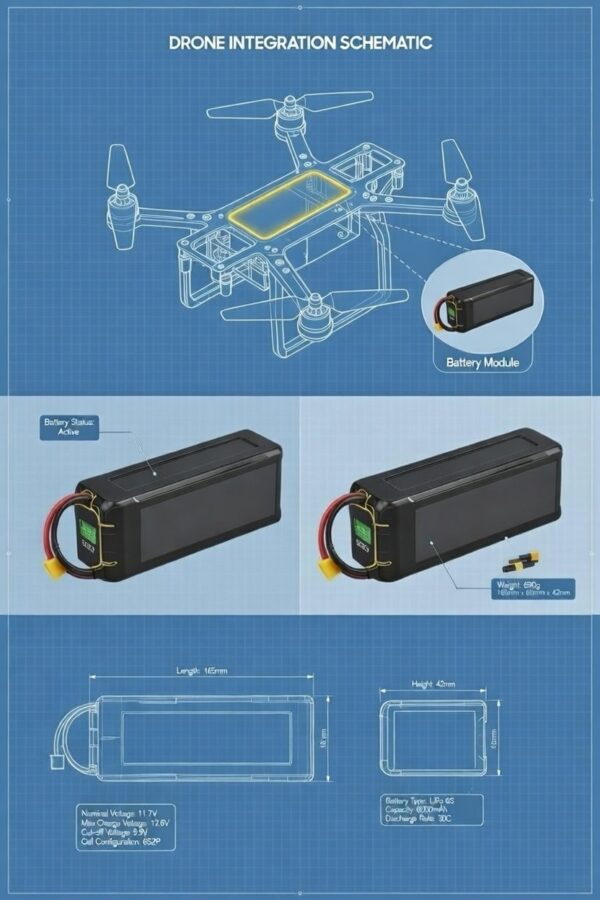
- Voltage and capacity match your drone’s power management system
- Physical dimensions fit existing battery compartments
- Connector types are compatible or adapters are available
- Weight distribution doesn’t affect flight stability
Communication Protocol Verification:
Modern drone batteries include smart BMS (Battery Management System) communication. Verify that:
- Temperature data transmits to your ground control station
- Low-temperature warnings trigger before critical failure points
- Battery health metrics remain accurate across the full temperature range
Example Integration Issue:
A pipeline monitoring firm purchased wide temperature batteries without verifying BMS compatibility. The batteries functioned physically, but temperature warnings never appeared on their control interface. During a -30°C operation, the drone experienced unexpected power loss because operators received no advance warning of reduced capacity.
Step 4: Calculate Total Cost of Ownership
Wide temperature range batteries carry higher upfront costs, but the total cost of ownership often favors premium options for pipeline monitoring applications.
TCO Comparison Framework:
| Cost Factor | Standard Battery | Wide Temp Battery |
|---|---|---|
| Unit Price | $200-400 | $500-800 |
| Replacement Frequency | 6-12 months | 24-36 months |
| Operational Downtime | 5-10 days/year | 0-2 days/year |
| Contract Penalty Risk | High | Minimal |
| 3-Year Total Cost | $2,400+ | $1,600 |
Hidden Savings:
Wide temperature batteries reduce the need for temperature-controlled storage and transport. Standard batteries require heated storage in cold climates and cooled storage in hot environments, adding infrastructure costs that wide temperature options eliminate.
Step 5: Verify Supplier Credentials and Support
The battery market includes numerous suppliers claiming wide temperature capabilities. Rigorous vendor qualification protects your investment.
Supplier Qualification Checklist:
- Certification Documentation: Request UL, UN38.3, and temperature-specific certifications
- Reference Customers: Ask for contacts at similar pipeline monitoring operations
- Warranty Terms: Verify warranty coverage includes temperature-related failures
- Technical Support: Confirm availability of engineering support for integration questions
- Lead Time and Availability: Ensure consistent supply for fleet standardization
Red Flags to Avoid:
- Suppliers unwilling to provide test data
- Vague temperature range specifications (“extended range” without numbers)
- No domestic technical support for international suppliers
- Pricing significantly below market averages (often indicates compromised quality)
Step 6: Implement Field Testing Protocol
Before committing to fleet-wide deployment, conduct structured field testing with candidate batteries.
Testing Protocol Outline:
Week 1-2: Controlled Environment Testing
- Test batteries in temperature chambers at operational extremes
- Document capacity, discharge rates, and charging behavior
- Verify BMS communication accuracy
Week 3-4: Field Pilot Program
- Deploy batteries on non-critical inspection flights
- Monitor performance across actual temperature conditions
- Collect operator feedback on handling and reliability
Week 5-6: Data Analysis and Decision
- Compare test data against supplier specifications
- Calculate actual TCO based on pilot program results
- Make final procurement decision with documented justification
Example Test Metric:
Track “usable flight time” rather than just battery capacity. A battery rated for 30 minutes might deliver only 18 minutes at -30°C. Document actual performance to set realistic operational expectations for your inspection teams.
Step 7: Establish Maintenance and Monitoring Procedures
Wide temperature batteries require specific maintenance protocols to maximize lifespan and performance.
Storage Guidelines:
- Store at 40-60% charge for extended periods
- Maintain storage temperature between 10°C and 25°C when possible
- Avoid leaving batteries at 100% charge in high-temperature environments
Pre-Flight Checks:
- Verify battery temperature before installation
- Check BMS data for any temperature-related warnings
- Document ambient conditions for performance tracking
Post-Flight Procedures:
- Allow batteries to return to moderate temperatures before charging
- Inspect for any physical damage from thermal expansion/contraction
- Log cycle counts and temperature exposure for lifecycle tracking
Making the Final Decision
Selecting wide temperature range drone batteries for pipeline monitoring operations requires balancing technical specifications, operational requirements, and financial considerations. The seven-step checklist provided here transforms a complex procurement decision into a structured, defensible process.
Key Takeaways:
- Never compromise on temperature range specifications—design for extremes with safety margins
- Total cost of ownership favors quality wide temperature batteries despite higher upfront costs
- Field testing validates supplier claims before fleet commitment
- Proper maintenance procedures extend battery life and protect your investment
Pipeline monitoring firms that invest in appropriate wide temperature range batteries gain competitive advantages through operational reliability, reduced downtime, and enhanced safety compliance. In an industry where inspection continuity directly impacts contractual performance and regulatory standing, the right battery selection becomes a strategic differentiator.
Ready to discuss your specific pipeline monitoring battery requirements? Our technical team specializes in wide temperature range solutions for industrial drone applications. Visit our contact page at https://cnsbattery.com/drone-battery-home/drone-battery-contact to connect with battery specialists who understand the unique demands of pipeline inspection operations.
The investment in proper wide temperature range batteries pays dividends through every successful inspection flight, every avoided operational delay, and every satisfied client contract. Make temperature range your first specification, not an afterthought, and build your drone fleet on a foundation of reliable power designed for the extremes your operations demand.


