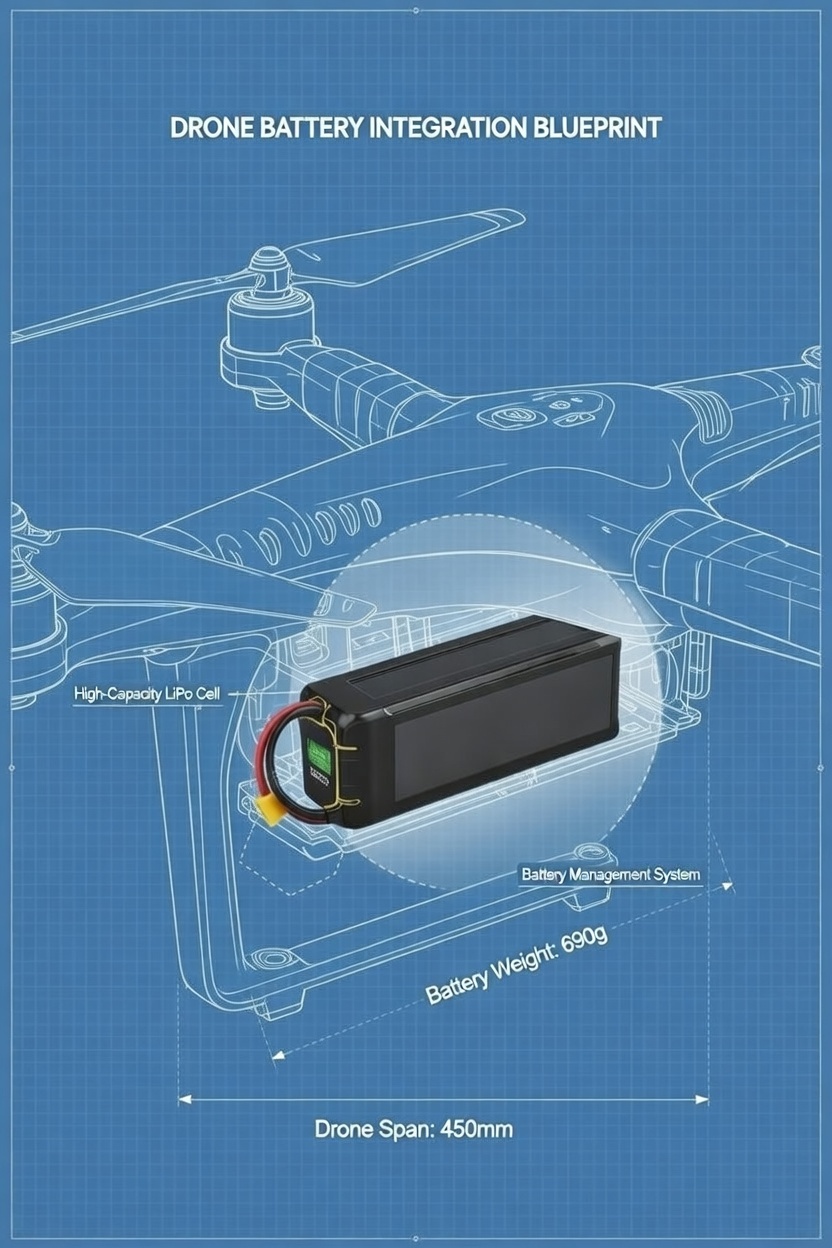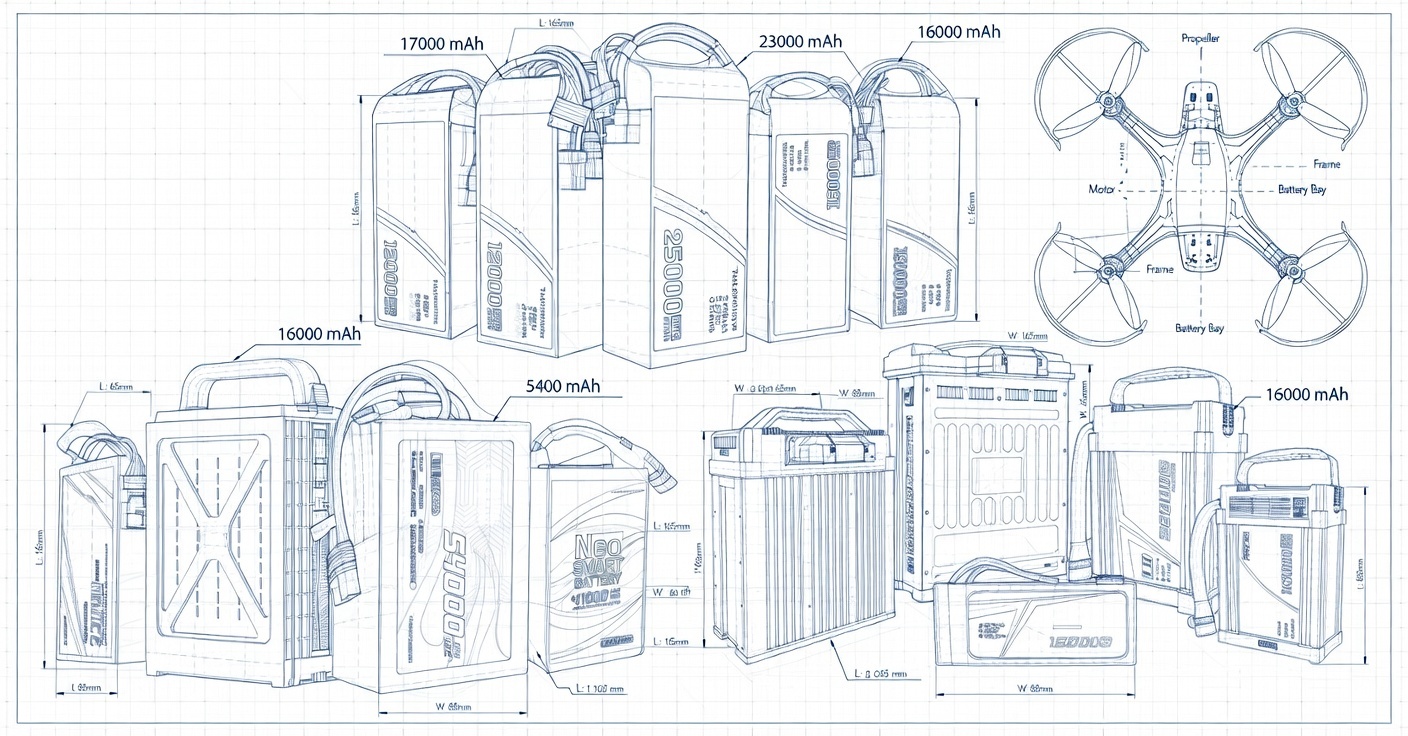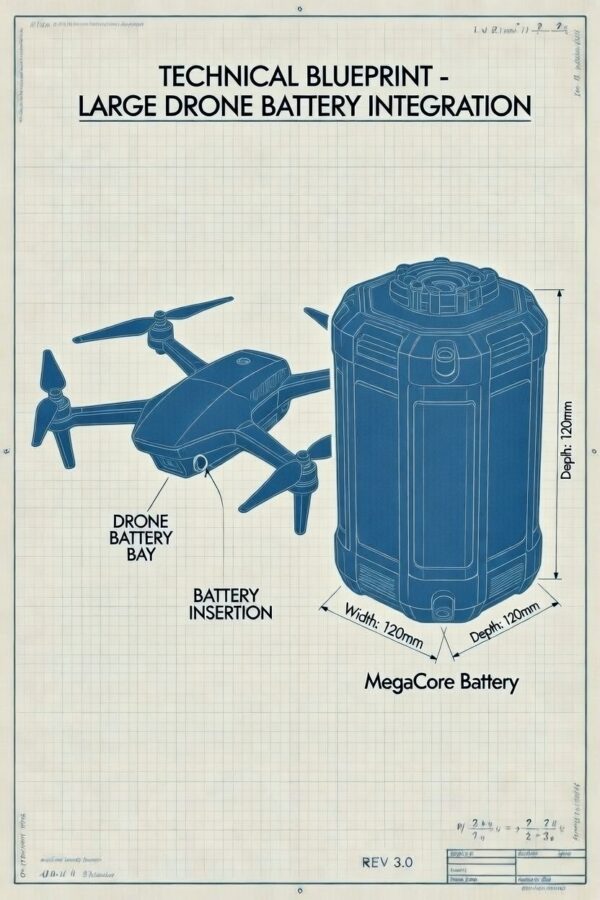
The landscape of aerial infrastructure inspection has shifted dramatically. As we navigate through 2026, drone operators are no longer just pilots; they are data acquisition managers responsible for critical assets like power lines, bridges, and pipelines. The pressure to maximize flight time while carrying heavier payloads—such as high-resolution LiDAR scanners and thermal imaging gimbals—has never been higher. Yet, the core bottleneck remains unchanged: the battery.
For procurement managers and technical directors at infrastructure inspection firms, selecting the right drone battery is a high-stakes decision. The challenge lies in balancing energy density with safety, regulatory compliance, and total cost of ownership. In an era where international transport regulations tighten and environmental standards rise, a simple specification sheet is no longer enough. This guide provides a step-by-step checklist to help you evaluate drone battery energy density effectively, ensuring your fleet remains airborne, compliant, and profitable.
The Core Challenge: Why Energy Density Matters Now More Than Ever
Energy density, measured in watt-hours per kilogram (Wh/kg), dictates how much power a battery can store relative to its weight. In the context of infrastructure inspection, every gram counts. A heavier battery reduces the available payload capacity or shortens the flight time, directly impacting the area you can inspect per sortie.
However, the pursuit of higher energy density introduces complexity. In 2026, the industry is witnessing a divergence between standard Lithium-Polymer (LiPo) chemistries and emerging solid-state technologies. While standard high-discharge LiPo batteries typically hover around 200-250 Wh/kg, new high-nickel formulations are pushing towards 280 Wh/kg. The challenge for buyers is distinguishing between marketing claims and usable capacity under real-world load conditions.
Furthermore, regulatory bodies have tightened restrictions. The International Air Transport Association (IATA) Dangerous Goods Regulations now mandate stricter State of Charge (SoC) limits for shipping lithium batteries. As of 2026, lithium ion cells and batteries must be transported at no more than 30% of their rated capacity. This logistical hurdle means that having a battery with higher usable energy density is not just an operational advantage; it is a logistical necessity to reduce the frequency of shipments and handling risks.
Step 1: Evaluate Gravimetric Energy Density vs. Volumetric Constraints
The first item on your checklist should be a clear comparison of gravimetric energy density. However, do not look at this number in isolation.
- Gravimetric Density (Wh/kg): This determines how heavy the battery will be for a given flight time. For long-span bridge inspections, you want the highest Wh/kg available to minimize takeoff weight.
- Volumetric Density (Wh/L): This is often overlooked. If your drone has a fixed battery compartment, a high Wh/kg battery that is physically too large will not fit.
Actionable Tip: Request the specific density data from the manufacturer. A battery claiming 260 Wh/kg is superior to one at 220 Wh/kg, but only if it fits your chassis without requiring structural modifications that add weight elsewhere.
Step 2: Verify Discharge Rates Under Payload Load
Infrastructure inspection drones do not hover gently; they maneuver against wind shear around tall structures. High energy density means little if the battery cannot sustain the voltage under load.
- Continuous Discharge Rate (C-rating): Ensure the battery supports the continuous draw of your motors plus payload. For heavy inspection drones, a minimum of 5C continuous discharge is recommended.
- Voltage Sag: Ask for test data showing voltage retention under a 70% load. Significant voltage sag can trigger low-voltage warnings prematurely, forcing an abortive landing even when energy remains in the cells.
Example: Consider a scenario where a drone carries a 1.5kg LiDAR unit. A battery with high energy density but poor discharge chemistry might drop from 22.2V to 20V rapidly during a climb, whereas a robust cell maintains 21.5V, extending usable flight time by 15%.
Step 3: Compliance and Safety Protocols (2026 Standards)
Safety is the non-negotiable pillar of battery procurement. With the EU Battery Regulation entering its substantive execution phase in 2026, compliance is global. Industrial batteries now require a “Battery Passport” containing data on chemical composition, carbon footprint, and manufacturing origin.
The Compliance Checklist:
- UN 38.3 Certification: Mandatory for all lithium batteries. Verify the test report is current.
- IATA DGR Alignment: Ensure the battery design facilitates the mandatory ≤30% SoC transport requirement without damaging cell health.
- Smart BMS (Battery Management System): In 2026, a “dumb” battery is a liability. The BMS must communicate real-time health data, cycle counts, and cell balance status to the ground control station.
- Thermal Runaway Protection: Look for cells with inherent chemical stability, such as those using advanced electrolyte additives that resist ignition even under puncture conditions.
Step 4: Cycle Life and Total Cost of Ownership (TCO)
Infrastructure inspection is a volume game. A battery with higher energy density but half the cycle life is a false economy. The market trend in 2026 shows a shift towards deep-cycle lithium solutions that prioritize longevity over peak burst power.
- Cycle Count: Target batteries rated for at least 800 cycles at 80% depth of discharge (DoD).
- Degradation Curve: Ask the supplier for the degradation curve. A quality battery should retain 80% of its original capacity after the rated cycles.
- Warranty Terms: Ensure the warranty covers capacity retention, not just total failure.
Calculation Example:
If Battery A costs $500 and lasts 500 cycles, the cost per cycle is $1.
If Battery B costs $700 but lasts 1000 cycles, the cost per cycle is $0.70.
Despite the higher upfront cost, Battery B offers a 30% reduction in long-term operational expenses.
Step 5: Future-Proofing with Emerging Chemistries
The battery landscape is evolving. Solid-state batteries, which promise energy densities exceeding 400 Wh/kg, are moving from prototype to early commercialization in 2026. While they may not yet be standard for all UAVs, forward-thinking companies should consider compatibility.
- Modular Design: Choose drones and batteries that allow for easy swaps. If a new chemistry becomes available, you want to upgrade the power source without replacing the entire airframe.
- Charging Infrastructure: High-energy-density batteries often require specialized charging protocols. Ensure your field charging stations support the latest fast-charge standards without overheating the packs.
Actionable Recommendations for Buyers
To streamline your procurement process, adopt the following workflow:
- Define Mission Profiles: Categorize your flights (e.g., short-range visual vs. long-range LiDAR). Do not buy a single battery type for all missions.
- Request Sample Testing: Never bulk-order without field testing. Fly the battery in your specific environmental conditions (heat, cold, altitude).
- Audit the Supply Chain: Verify the manufacturer’s compliance with the 2026 EU Battery Regulation and other regional standards. Supply chain transparency is now a legal requirement, not just a best practice.
- Prioritize Data Connectivity: Ensure the battery integrates with your fleet management software. Predictive maintenance based on battery health data can prevent costly in-field failures.
Conclusion: Powering the Future of Inspection
The efficiency of your infrastructure inspection operations hinges on the reliability and performance of your power source. In 2026, energy density is not just a technical specification; it is a strategic asset that influences flight time, payload capacity, regulatory compliance, and profitability. By rigorously applying this checklist, you can mitigate risks and ensure your fleet is equipped to handle the demanding tasks of modern infrastructure monitoring.
Don’t let outdated power solutions ground your potential. It is time to upgrade to batteries that meet the rigorous demands of the next generation of aerial inspection.
Ready to optimize your fleet’s performance?
Explore high-energy density drone battery solutions tailored for professional infrastructure inspection. Contact our specialist team today to discuss your specific requirements and discover how our compliant, high-performance batteries can elevate your operations.
👉 Get in touch here: https://cnsbattery.com/drone-battery-home/drone-battery-contact