
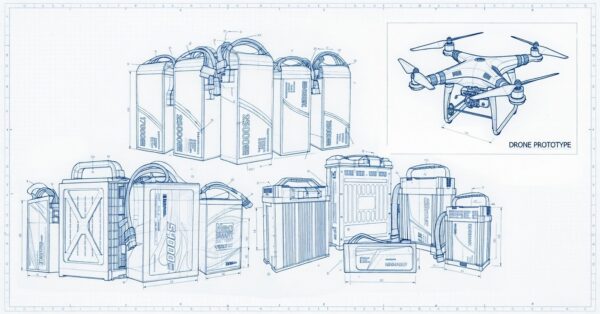
In the chaotic aftermath of natural disasters, every second counts. When infrastructure collapses and roads become impassable, unmanned aerial vehicles (UAVs) emerge as the critical lifeline for search and rescue operations, damage assessment, and supply delivery. However, the effectiveness of these drone fleets hinges on a single, often underestimated component: the battery. In disaster relief scenarios, a battery failure is not merely an operational inconvenience; it is a potential loss of life. The risk of power depletion mid-mission, thermal runaway in extreme weather, or supply chain delays preventing battery replacement can cripple an entire relief effort. Understanding the engineering nuances behind high-performance drone batteries and the reliability of their suppliers is paramount for emergency response teams aiming to maximize operational uptime and safety.
Risk Analysis: Causes and Prevention in Emergency Power Systems
The stakes in disaster relief are uniquely high. Unlike commercial photography or recreational flying, relief drones operate in unpredictable environments characterized by debris, moisture, and temperature extremes. The primary risks associated with drone battery failure in these contexts stem from both technical limitations and logistical vulnerabilities.
Risk Causes:
- Thermal Instability: Extreme cold reduces chemical reaction rates within cells, causing voltage sag and sudden shutdowns. Conversely, high heat can trigger thermal runaway.
- Inconsistent Discharge Rates: High-load maneuvers required for lifting heavy payloads (medical kits, sensors) can exceed the battery’s C-rating, leading to catastrophic voltage drops.
- Supply Chain Fragmentation: Reliance on single-source suppliers can lead to critical shortages during global emergencies when demand spikes.
- BMS Failure: A flawed Battery Management System may fail to balance cells, resulting in reduced cycle life or unexpected power loss.
- Physical Degradation: Exposure to dust, water, and vibration without adequate IP rating protection accelerates internal damage.
Prevention Measures:
- Implement Thermal Management: Utilize batteries with self-heating capabilities for cold environments and robust thermal dissipation designs for hot zones.
- Validate C-Ratings: Ensure continuous discharge rates exceed peak mission load requirements by at least 20% to maintain voltage stability.
- Diversify Supplier Base: Partner with manufacturers who demonstrate supply chain resilience and have multiple production facilities.
- Advanced BMS Integration: Select packs with redundant monitoring systems that provide real-time telemetry on cell health and temperature.
- Rigorous Testing Protocols: Conduct regular cycle testing and environmental stress screening before deploying batteries to the field.
5 Key Factors for High-Performance Drone Batteries
To mitigate these risks, disaster relief teams must evaluate drone batteries based on five critical engineering factors. These criteria ensure that the power system can withstand the rigors of emergency operations while maintaining peak performance.
1. Energy Density and Weight Ratio
In relief operations, payload capacity is often as critical as flight time. High energy density allows drones to carry essential supplies like defibrillators, insulin, or communication relays without sacrificing range. Lithium Polymer (LiPo) and high-nickel Lithium-ion (Li-ion) chemistries currently offer the best balance. Engineering data suggests that cells exceeding 250 Wh/kg are ideal for medium-to-large class relief drones. A heavier battery reduces the payload margin, limiting the utility of the drone in delivering aid. Teams should prioritize cells that maximize watt-hours per gram, ensuring that every gram of battery weight translates into meaningful operational range or payload capacity.
2. Discharge Rate (C-Rating) and Power Delivery
Disaster zones often require rapid ascent and high-torque flight to navigate through unstable air currents caused by fires or storms. The C-rating indicates how quickly a battery can discharge its energy safely. A low C-rating under high load leads to voltage sag, which can trigger low-voltage cutoffs mid-flight. For heavy-lift drones used in supply drops, a continuous discharge rate of 5C to 10C is typically necessary. Burst discharge capabilities should be even higher to handle emergency maneuvers. Engineering references indicate that maintaining voltage stability under load is crucial for motor efficiency; a drop below the nominal voltage threshold can cause ESC (Electronic Speed Controller) failures, leading to crashes in hazardous terrain.
3. Environmental Resilience and Temperature Tolerance
Disaster relief teams operate in the most hostile environments on earth, from freezing earthquake zones to humid flood regions. Standard consumer batteries often fail below 0°C or above 45°C. High-performance relief batteries must feature wide operating temperature ranges, typically from -20°C to 60°C. This resilience is achieved through electrolyte additives and specialized separator materials that maintain ionic conductivity under stress. Furthermore, the battery casing must possess a high Ingress Protection (IP) rating, such as IP67, to resist water and dust intrusion. Without this environmental hardening, internal corrosion can lead to short circuits, posing a fire risk in dry, disaster-stricken areas.
4. BMS Intelligence and Safety Protocols
The Battery Management System (BMS) is the brain of the power pack. In high-stakes missions, a smart BMS is non-negotiable. It must monitor individual cell voltages, temperatures, and current flow in real-time. Advanced BMS units communicate directly with the drone’s flight controller, providing accurate remaining flight time estimates rather than simple voltage readings. This precision prevents unexpected landings in inaccessible areas. Additionally, safety protocols such as over-current protection, short-circuit prevention, and cell balancing are vital. A robust BMS ensures that even if one cell degrades faster than others, the pack remains stable, extending the overall service life of the battery investment.
5. Supplier Reliability and Supply Chain Stability
Perhaps the most overlooked factor is the reliability of the supplier. In a global crisis, manufacturing bottlenecks can halt battery production. A reliable supplier demonstrates supply chain transparency, ensuring access to raw materials like lithium and cobalt even during market shortages. They should offer consistent quality control, verified by certifications such as UN38.3, IEC62133, and ISO9001. Supplier reliability also encompasses after-sales support and warranty fulfillment. Teams need partners who can guarantee delivery timelines and provide technical support for integration. Relying on a supplier with a proven track record in industrial or military applications reduces the risk of receiving substandard cells that could fail during critical missions.
Engineering Solutions and Implementation
Integrating these factors requires a systematic approach. Relief teams should adopt a “battery-as-a-system” mindset. This involves not just purchasing cells, but validating the entire power architecture. Regular cycle testing should be mandated, where batteries are discharged and charged under simulated load conditions to identify early signs of degradation. Thermal imaging can be used during charging to detect hot spots indicative of internal cell damage.
Furthermore, standardization is key. Using a single battery form factor across a fleet simplifies logistics and charging infrastructure. However, this standardization must not come at the cost of performance. Custom battery packs designed specifically for the drone model and mission profile often yield better results than off-the-shelf solutions. Engineering teams should work closely with manufacturers to tailor voltage curves and connector types to minimize power loss and maximize efficiency.
Conclusion and Product Exploration
The efficacy of disaster relief operations in 2026 and beyond will depend heavily on the reliability of the technology supporting them. Drone batteries are not just components; they are the heartbeat of aerial rescue missions. By prioritizing energy density, discharge capability, environmental resilience, BMS intelligence, and supplier reliability, teams can significantly reduce operational risks and save more lives.
Choosing the right power partner is the first step toward mission success. You need a supplier who understands the urgency of your work and the engineering demands of your equipment. For teams seeking high-performance, reliable drone battery solutions tailored for emergency response, it is essential to connect with experts who can provide custom engineering support and guaranteed supply chains.
Explore our specialized drone battery solutions designed for high-stakes environments. Contact our engineering team today to discuss your specific requirements and ensure your fleet is powered by the best.
Contact Us: https://cnsbattery.com/drone-battery-home/drone-battery-contact


