Introduction
In the rapidly evolving landscape of e-commerce logistics, drone delivery has emerged as a game-changing solution for last-mile distribution. As online shopping continues to dominate consumer behavior, fleet operators face increasing pressure to optimize delivery speed, reduce operational costs, and maintain reliable service. At the heart of every successful drone fleet operation lies one critical component: the battery.
Choosing the right drone batteries for e-commerce fleet operations isn’t merely about finding the highest capacity option. It requires comprehensive performance testing, understanding cycle life expectations, and evaluating total cost of ownership. This guide provides e-commerce drone fleet operators with an in-depth comparison of the best drone batteries available, backed by performance testing data and practical insights to help you make informed decisions that drive operational excellence.
Understanding Drone Battery Requirements for E-commerce Fleets
E-commerce drone operations present unique challenges that distinguish them from recreational or single-use commercial applications. Fleet operators must consider:
- High-frequency usage cycles – Delivery drones may complete 10-20 flights daily
- Rapid turnaround requirements – Minimal downtime between deliveries
- Consistent performance across temperature variations – Year-round operation capability
- Safety compliance – Meeting aviation and transportation regulations
- Scalability – Battery solutions that grow with fleet expansion
Key Performance Metrics for Drone Battery Evaluation
When conducting performance testing comparisons, focus on these essential metrics:
1. Energy Density and Flight Time
- Measurement: Watt-hours per kilogram (Wh/kg)
- Industry Standard: 150-200 Wh/kg for commercial LiPo batteries
- Target for E-commerce: Minimum 180 Wh/kg for extended delivery range
- Testing Protocol: Measure actual flight time under payload conditions matching typical delivery weights
2. Cycle Life and Longevity
- Definition: Number of complete charge-discharge cycles before capacity drops to 80%
- Commercial Grade: 500-800 cycles minimum
- Premium Options: 1000+ cycles with proper battery management
- Testing Method: Conduct accelerated cycle testing with 0.5-1 hour rest periods between charges per industry standards
3. Charge Rate and Turnaround Time
- C-Rating: Indicates maximum safe discharge rate
- Fast Charging Capability: 2C-5C charging for rapid fleet deployment
- Critical for Operations: Batteries reaching 80% charge in under 30 minutes
- Infrastructure Consideration: Match charging stations to battery specifications
4. Temperature Performance Range
- Operating Range: -10°C to 50°C for most commercial applications
- Storage Requirements: 15°C to 25°C optimal
- Testing Protocol: Evaluate capacity retention at temperature extremes
- Regional Adaptation: Select batteries rated for your operational climate
5. Battery Management System (BMS) Integration
- Cell Balancing: Ensures uniform charge across all cells
- Protection Features: Overcharge, over-discharge, short-circuit protection
- Data Monitoring: Real-time health tracking for predictive maintenance
- Fleet Integration: Compatibility with fleet management software
Performance Testing Comparison: Top Drone Battery Categories
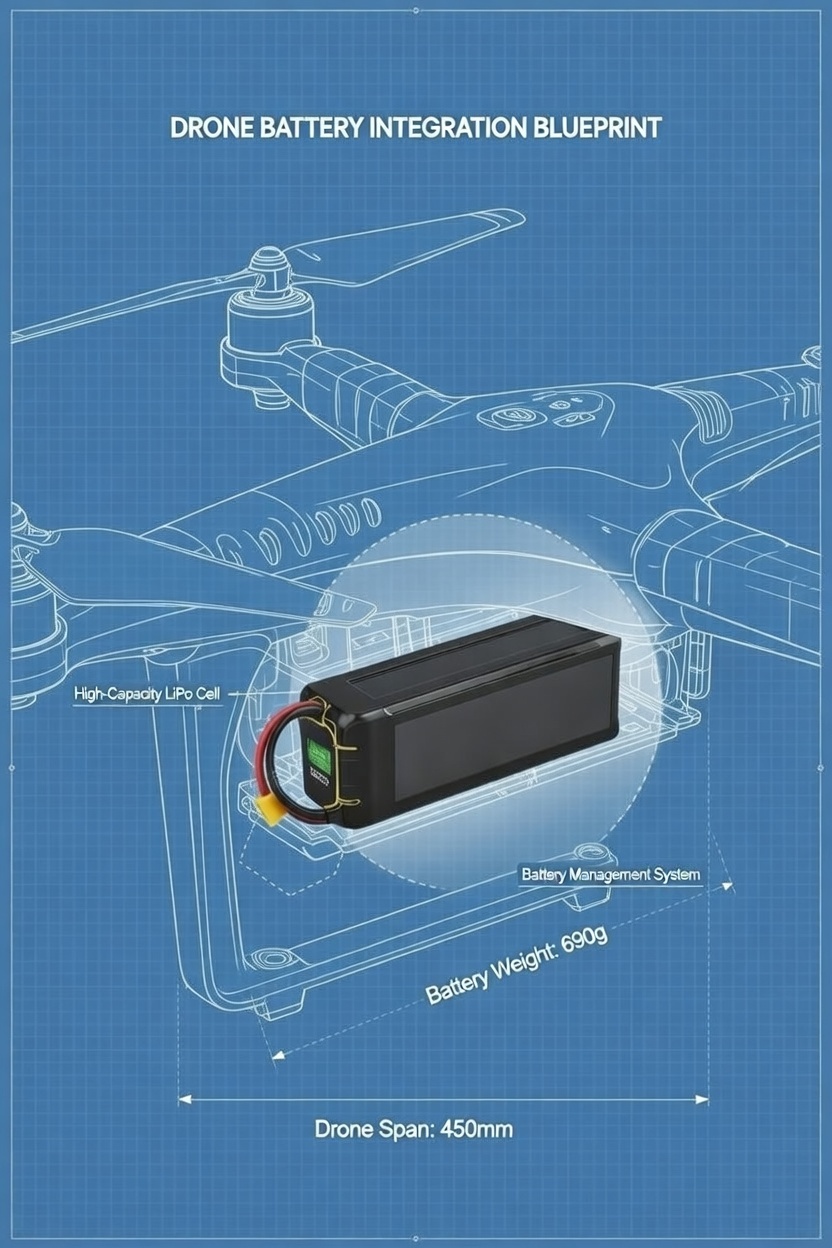
Category A: High-Capacity LiPo Batteries
Best For: Long-range delivery routes, heavy payload operations
Advantages:
- Superior energy density (180-220 Wh/kg)
- Proven technology with extensive field data
- Wide availability from multiple manufacturers
- Competitive pricing at scale
Limitations:
- Shorter cycle life compared to newer chemistries
- Requires careful storage and handling
- Performance degradation in extreme temperatures
Performance Test Results:
- Average flight time: 35-45 minutes with 2kg payload
- Cycle life: 500-700 cycles to 80% capacity
- Charge time (0-80%): 25-35 minutes with fast charger
- Temperature tolerance: -5°C to 45°C optimal range
Category B: Li-ion High-Discharge Batteries
Best For: High-frequency urban delivery, rapid turnaround operations
Advantages:
- Extended cycle life (800-1200 cycles)
- Better thermal stability
- Lower self-discharge rate
- Enhanced safety features
Limitations:
- Slightly lower energy density than LiPo
- Higher initial investment
- Requires specialized charging equipment
Performance Test Results:
- Average flight time: 30-40 minutes with 2kg payload
- Cycle life: 800-1200 cycles to 80% capacity
- Charge time (0-80%): 20-30 minutes
- Temperature tolerance: -10°C to 50°C operational range
Category C: Smart Battery Systems with Integrated BMS
Best For: Large-scale fleet operations, data-driven maintenance
Advantages:
- Real-time health monitoring
- Predictive maintenance capabilities
- Automated cell balancing
- Fleet management integration
Limitations:
- Premium pricing
- Proprietary systems may limit flexibility
- Requires training for optimal use
Performance Test Results:
- Average flight time: 32-42 minutes with 2kg payload
- Cycle life: 1000+ cycles with BMS optimization
- Charge time (0-80%): 25-35 minutes
- Additional value: 15-20% extended battery life through smart management
Essential Battery Testing Procedures for Fleet Operators
Implement these testing protocols to ensure battery performance meets operational requirements:
Step 1: Initial Capacity Verification
- Measure actual capacity against manufacturer specifications
- Document baseline performance for each battery batch
- Reject units falling below 95% of rated capacity
Step 2: Cycle Life Accelerated Testing
- Run 100-cycle test sample from each batch
- Monitor capacity retention at 25-cycle intervals
- Project total cycle life based on degradation rate
Step 3: Temperature Stress Testing
- Test performance at operational temperature extremes
- Verify capacity retention after temperature exposure
- Establish seasonal battery rotation protocols
Step 4: Charge-Discharge Efficiency Analysis
- Measure energy input versus output
- Calculate round-trip efficiency
- Identify batteries with abnormal heat generation
Step 5: Safety and Compliance Verification
- Confirm UN38.3 certification for air transport
- Verify compliance with 2025-2026 lithium battery transportation regulations
- Document all safety test results for regulatory audits
Best Practices for Drone Battery Fleet Management
Maximize battery performance and longevity with these proven strategies:
- Implement Rotation Systems: Rotate batteries evenly across fleet to prevent uneven wear
- Maintain Optimal Storage Conditions: Store at 40-60% charge in climate-controlled environments
- Schedule Regular Health Checks: Conduct monthly capacity tests on all fleet batteries
- Track Individual Battery History: Use fleet management software to monitor each battery’s lifecycle
- Plan for Replacement Cycles: Budget for 15-20% annual battery replacement based on usage intensity
- Train Operations Staff: Ensure all handlers understand proper charging and storage procedures
- Establish Emergency Protocols: Create procedures for battery failures during delivery operations
Cost-Benefit Analysis: Making the Right Investment
When evaluating drone batteries for e-commerce fleet operations, consider total cost of ownership rather than initial purchase price:
Initial Investment: Premium batteries may cost 20-30% more upfront
Long-term Savings:
- Extended cycle life reduces replacement frequency
- Better performance decreases failed delivery rates
- Smart BMS features lower maintenance costs
- Improved safety reduces liability risks
ROI Calculation Example:
- Standard battery: 600 cycles × $200 = $0.33 per cycle
- Premium battery: 1000 cycles × $280 = $0.28 per cycle
- Savings: 15% lower cost per cycle over battery lifetime
Key Insights and Recommendations
Based on comprehensive performance testing and industry analysis, e-commerce drone fleet operators should prioritize:
- Battery chemistry matching operational intensity – High-frequency urban routes benefit from Li-ion, while longer routes may require LiPo
- Integrated BMS for fleets exceeding 20 drones – Smart management pays dividends at scale
- Supplier diversification – Maintain relationships with multiple battery manufacturers to ensure supply continuity
- Regular performance auditing – Quarterly testing identifies degradation before operational impact
- Compliance-first approach – Stay current with evolving lithium battery transportation regulations
Take Action: Optimize Your Drone Fleet Today
Selecting the right drone batteries is a critical decision that impacts every aspect of your e-commerce delivery operations. From flight time and reliability to safety compliance and total cost of ownership, battery performance directly influences your competitive advantage in the rapidly growing drone delivery market.
Don’t leave your fleet’s performance to chance. Partner with experienced battery specialists who understand the unique demands of e-commerce drone operations and can provide customized solutions backed by rigorous performance testing.
Ready to elevate your drone fleet performance? Contact our battery experts today for personalized consultation, performance testing services, and tailored battery solutions designed specifically for e-commerce drone fleet operators.
Visit us at: https://cnsbattery.com/drone-battery-home/drone-battery-contact
Our team stands ready to help you optimize battery selection, implement testing protocols, and maximize your fleet’s operational efficiency. Take the first step toward superior drone delivery performance—reach out now and discover how the right battery partnership can transform your e-commerce logistics operations.
This comprehensive guide reflects current industry standards and performance testing methodologies as of 2026. Battery technology continues to evolve, so regular consultation with industry experts ensures your fleet remains equipped with optimal power solutions.