
In 2026, security patrol operations increasingly rely on unmanned aerial vehicles (UAVs) to monitor critical infrastructure, protect assets, and ensure public safety. However, the heart of every security drone lies in its battery system. Drone battery safety isn’t just about flight time—it’s about preventing catastrophic failures during critical missions. This comprehensive guide explores essential customization options that security professionals must consider when deploying UAVs for patrol operations.
Why Battery Safety Matters for Security Patrol Drones
Security patrol drones operate in high-stakes environments where failure is not an option. According to industry data from 2025, battery-related incidents account for nearly 34% of all UAV operational failures in security applications. When a drone crashes during a surveillance mission, the consequences extend beyond equipment loss—they compromise security coverage and potentially endanger personnel on the ground.
The stakes are even higher in 2026, with new regulations like the revised Public Security Administration Punishments Law treating unauthorized drone operations as serious public safety violations. Proper drone battery customization ensures compliance while maximizing operational reliability.
Essential Customization Options for Security Drone Batteries
1. Capacity and Voltage Configuration
Security patrol missions demand specific flight durations based on coverage area and operational requirements. Custom battery packs should offer:
- Flexible capacity ranges: From 10,000mAh to 72,000mAh depending on drone size and mission duration
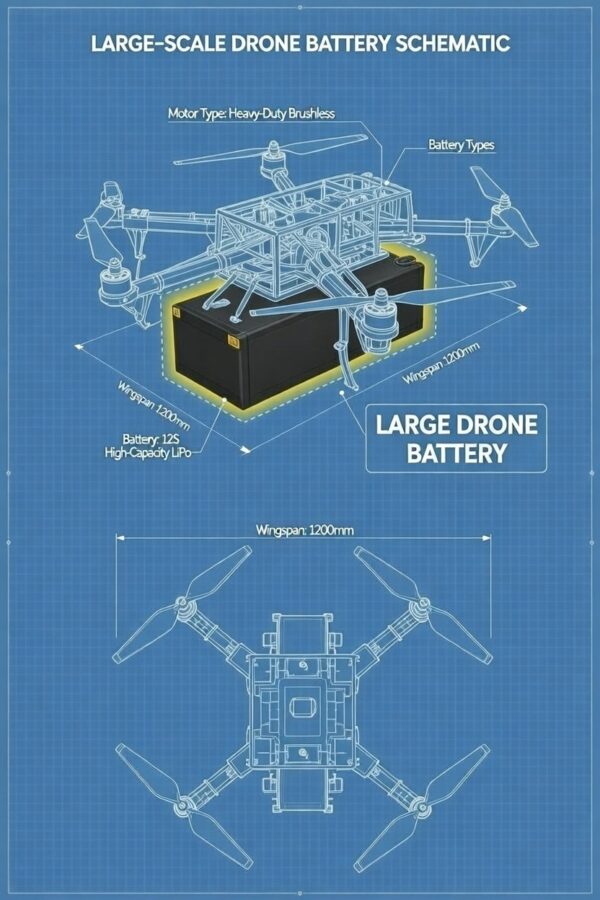
- Voltage configurations: 6S, 12S, 18S, or 24S setups matching your UAV’s power system
- Energy density optimization: Modern solid-state LiPo batteries achieve 310Wh/kg, significantly improving flight time without adding weight
2. Thermal Management Systems
Thermal runaway prevention represents the most critical safety consideration. Custom battery solutions should include:
- Integrated temperature sensors monitoring each cell in real-time
- Active cooling systems for high-temperature environments
- Thermal insulation layers protecting against external heat sources
- Automatic shutdown protocols when temperature thresholds are exceeded
Research shows that proper thermal management reduces battery failure rates by up to 78% in continuous patrol operations.
3. Smart Battery Management Systems (BMS)
Advanced BMS customization provides:
- Cell balancing technology ensuring uniform charge distribution
- Overcharge and over-discharge protection with customizable voltage thresholds
- Return-to-home reserve settings that can be adjusted based on wind conditions and distance
- Real-time telemetry transmitting battery health data to ground control stations
4. Physical Protection and Enclosure
Security drones often operate in challenging environments. Custom battery enclosures should feature:
- Impact-resistant casings meeting military-grade specifications
- Water and dust resistance (IP67 or higher rating)
- Fire containment materials preventing thermal propagation
- Vibration dampening protecting internal components during flight
Battery Safety Best Practices for Security Operations
Implementing these drone battery safety best practices ensures maximum reliability:
Pre-Flight Protocols
- Visual inspection: Check for swelling, damage, or connector wear before every mission
- Voltage verification: Ensure all cells remain within specified voltage ranges (LiPo: 3.7V-4.2V per cell)
- Temperature check: Batteries should be at ambient temperature before deployment
- Charge level confirmation: Maintain 80-90% charge for storage, 100% for active missions
During Operations
- Monitor battery telemetry continuously through ground control software
- Set conservative return-to-home thresholds (minimum 30% reserve for security patrols)
- Avoid rapid discharge cycles that generate excessive heat
- Implement automatic landing protocols when battery reaches critical levels
Post-Flight Maintenance
- Allow batteries to cool before charging (minimum 30 minutes)
- Store at 50-60% charge if not used within 48 hours
- Conduct monthly capacity testing to identify degradation
- Replace batteries showing more than 20% capacity loss
Understanding Thermal Runaway Prevention
Thermal runaway represents the most severe battery safety risk. This uncontrollable chain reaction can occur when:
- Internal short circuits develop from physical damage
- Overcharging pushes cells beyond voltage limits
- External heat sources exceed design specifications
- Manufacturing defects create weak points in cell structure
Detection Methods
Modern security drone batteries incorporate multiple detection systems:
| Detection Type | Response Time | Effectiveness |
|---|---|---|
| Voltage Monitoring | Immediate | High |
| Temperature Sensors | 2-5 seconds | Very High |
| Gas Detection | 10-30 seconds | Medium |
| Pressure Sensors | 5-15 seconds | High |
| Smoke Detection | 30-60 seconds | Last Resort |
Prevention Strategies
- Quality cell selection: Use only certified cells from reputable manufacturers
- Conservative charging protocols: Never exceed manufacturer-specified charge rates
- Environmental controls: Avoid operation in extreme temperatures (-10°C to 45°C optimal range)
- Regular testing: Conduct quarterly safety audits on all battery packs
Compliance and Certification Standards
Security patrol operations must comply with international safety standards:
- UN38.3: Transportation safety testing for lithium batteries
- UL Standards: Fire safety and electrical compliance
- CE Marking: European conformity for electromagnetic compatibility
- KC Certification: Korean safety standards for battery products
- ROHS Compliance: Restriction of hazardous substances
In 2026, regulatory bodies increasingly require documentation proving battery safety certifications for commercial UAV operations. Non-compliance can result in significant fines and operational restrictions.
Cost Considerations for Custom Battery Solutions
While custom drone battery solutions require higher initial investment, the long-term benefits justify the expense:
- Standard battery packs: $200-500 per unit
- Customized safety-enhanced packs: $800-3,000 per unit
- Tethered power systems: $6,800-7,500 for continuous operation setups
The reduced failure rate and extended operational life typically deliver ROI within 12-18 months for security patrol fleets.
Frequently Asked Questions
Q1: How often should security patrol drone batteries be replaced?
A: Professional security operations should replace batteries after 300-500 charge cycles or when capacity drops below 80% of original specifications. For critical missions, consider replacement at 400 cycles regardless of measured capacity.
Q2: Can I use third-party batteries with my security drone?
A: While technically possible, third-party batteries often lack the safety certifications and integration features required for professional security operations. We strongly recommend manufacturer-approved or professionally customized battery solutions.
Q3: What’s the safest way to store drone batteries between missions?
A: Store batteries in fire-resistant containers at 50-60% charge, in climate-controlled environments (15-25°C), away from flammable materials. Never store fully charged or completely depleted batteries for extended periods.
Q4: How do weather conditions affect battery safety?
A: Extreme cold reduces capacity and increases internal resistance, while extreme heat accelerates degradation and increases thermal runaway risk. Custom battery solutions should include environmental compensation features for your specific operating region.
Q5: What should I do if a battery shows signs of swelling?
A: Immediately remove the battery from service, place it in a fire-resistant container, and follow proper disposal protocols. Never attempt to charge or use a swollen battery—it indicates internal damage and significant safety risk.
The Future of Security Drone Battery Technology
Emerging technologies promise even greater safety and performance:
- Solid-state batteries offering improved thermal stability and higher energy density
- AI-powered battery management predicting failures before they occur
- Wireless charging systems enabling automated battery swaps at patrol stations
- Self-healing battery materials repairing minor internal damage automatically
Take Action on Drone Battery Safety Today
Security patrol operations cannot afford battery failures. The difference between a successful mission and a catastrophic incident often comes down to battery customization and safety protocols.
Ready to enhance your security drone fleet’s battery safety? Our team specializes in custom UAV battery solutions designed specifically for security patrol applications. From thermal management systems to smart BMS integration, we provide comprehensive solutions that meet 2026 safety standards.
Contact us today to discuss your specific requirements and receive a customized battery safety assessment for your security patrol operations. Visit our contact page at https://cnsbattery.com/drone-battery-home/drone-battery-contact to schedule a consultation with our battery safety specialists.
Remember: In security patrol operations, battery safety isn’t optional—it’s essential. Invest in proper customization today to protect your missions, your equipment, and your reputation tomorrow.

