
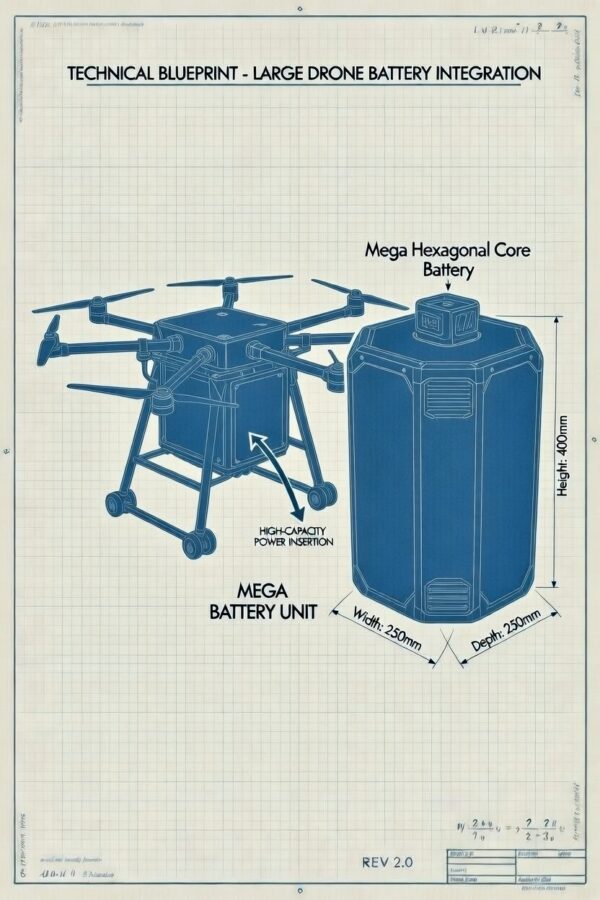
Introduction: Why Bulk Buyers Should Prioritize Battery Selection
For enterprise procurement managers overseeing pipeline monitoring operations, selecting the right drone batteries isn’t just about flight time—it’s about operational efficiency, regulatory compliance, and total cost of ownership. Bulk purchasers who invest time in understanding technical compatibility can reduce downtime by up to 40% while ensuring seamless integration with existing UAV fleets. This comprehensive guide delivers actionable insights for organizations managing large-scale pipeline inspection programs, helping you make informed decisions that impact both safety and profitability.
Understanding Pipeline Monitoring Drone Requirements
Pipeline monitoring presents unique challenges that demand specialized drone battery solutions. Unlike standard aerial photography missions, pipeline inspections require extended flight durations, stable power delivery for thermal cameras and LiDAR sensors, and reliable performance in remote environments. Industrial drones used for these operations typically operate in corridors spanning hundreds of kilometers, often in harsh conditions where battery failure could mean costly mission aborts.
The critical specifications you need to evaluate include voltage compatibility (typically 6S to 14S configurations), capacity ratings (measured in mAh), discharge rates (C-rating), and energy density (Wh/kg). Modern industrial drones for pipeline monitoring commonly require batteries ranging from 17,500mAh to 30,000mAh with voltage configurations between 22.2V and 51.8V depending on the aircraft platform.
Step-by-Step Guide: Selecting Compatible Drone Batteries
Step 1: Assess Your Drone Platform Specifications
Begin by documenting your UAV’s power requirements. Check the manufacturer’s documentation for recommended voltage ranges, maximum current draw, and physical battery compartment dimensions. Most industrial inspection drones like the DJI Matrice series or custom-built platforms specify exact battery compatibility matrices. Never assume interchangeability—even batteries with identical voltage ratings may have different communication protocols.
Step 2: Evaluate Energy Density vs. Weight Trade-offs
For pipeline monitoring missions covering 50-100km stretches, energy density becomes paramount. Semi-solid state battery technology introduced in 2025 now delivers 300Wh/kg compared to traditional LiPo’s 200-220Wh/kg. This 35-40% improvement translates directly to extended flight time without increasing payload weight. Calculate your mission’s energy requirements by multiplying average power consumption (in watts) by planned flight duration, then add a 20% safety margin.
Step 3: Verify Smart Battery Management System (BMS) Compatibility
Modern industrial drone batteries integrate intelligent BMS that communicate real-time data to ground control stations. Ensure your selected batteries support the communication protocol your drone uses—common standards include CAN bus, SMBus, or proprietary systems. Smart batteries provide critical information including state of charge (SoC), cell balance, temperature monitoring, and cycle count. For bulk operations, this data enables predictive maintenance scheduling and prevents unexpected failures.
Step 4: Confirm Regulatory Compliance for Transportation
Starting January 2026, IATA Dangerous Goods Regulations require lithium batteries shipped with equipment to maintain state of charge below 30% for air transport. For organizations managing international operations or maintaining battery inventories across multiple sites, ensure your supplier provides proper UN3480/UN3481 classification documentation. Non-compliance can result in shipment delays, fines, or confiscated cargo.
Step 5: Test Environmental Performance
Pipeline monitoring often occurs in extreme temperatures ranging from -20°C in northern regions to 45°C in desert environments. Request battery performance curves showing capacity retention across temperature ranges. Quality industrial batteries maintain 80%+ capacity between 0°C and 40°C, with specialized cold-weather variants available for arctic operations.
Technical Compatibility Comparison Table
| Battery Type | Voltage Range | Capacity | Energy Density | Cycle Life | Best For |
|---|---|---|---|---|---|
| Standard LiPo | 22.2V-51.8V | 10,000-22,000mAh | 200-220Wh/kg | 300-500 cycles | Short-range inspections |
| High-Capacity LiPo | 22.2V-51.8V | 22,000-30,000mAh | 220-240Wh/kg | 400-600 cycles | Medium-range pipeline monitoring |
| Semi-Solid State | 44.4V-51.8V | 17,500-29,000mAh | 280-300Wh/kg | 800-1000 cycles | Long-range, heavy payload missions |
| Smart LiPo with BMS | 22.2V-51.8V | 15,000-25,000mAh | 210-230Wh/kg | 500-700 cycles | Fleet management, data tracking |
Common Pain Points and High-Value Solutions
Problem 1: Inconsistent Flight Times Across Battery Batches
Solution: Implement batch testing protocols upon delivery. Measure actual capacity using calibrated discharge testers and document results. Reputable suppliers provide capacity matching within 3% variance. For bulk orders exceeding 100 units, request pre-shipment test reports.
Problem 2: Premature Battery Degradation in Field Conditions
Solution: Establish proper storage protocols maintaining 40-60% state of charge when batteries aren’t in use. Avoid leaving batteries at 100% charge for extended periods. Use temperature-controlled storage facilities when ambient temperatures exceed 35°C or drop below 0°C.
Problem 3: Communication Failures Between Battery and Drone
Solution: Verify firmware compatibility before deployment. Some manufacturers release BMS firmware updates that improve communication reliability. Maintain a compatibility matrix documenting which battery firmware versions work with specific drone firmware releases.
Problem 4: Transportation Compliance Complications
Solution: Work with suppliers who provide complete dangerous goods documentation including test summaries per UN Manual of Tests and Criteria. For 2026 compliance, ensure shipping documentation reflects updated IATA DGR 66th edition requirements.
Frequently Asked Questions
Q: How many battery cycles should I expect from industrial drone batteries?
A: Quality industrial LiPo batteries deliver 400-600 full discharge cycles before reaching 80% of original capacity. Semi-solid state batteries introduced in 2025 extend this to 800-1000 cycles. However, partial discharge cycles (using 30-70% capacity) can extend total cycle count significantly.
Q: Can I mix different battery brands on the same drone platform?
A: Generally not recommended. Even with identical voltage and capacity ratings, different manufacturers use varying cell chemistries, internal resistance characteristics, and BMS communication protocols. Mixing brands can cause uneven discharge, communication errors, or void warranties.
Q: What’s the optimal storage voltage for long-term battery preservation?
A: Store lithium polymer batteries at 3.8V per cell (approximately 50% state of charge). For 6S batteries, this equals 22.8V; for 12S configurations, target 45.6V. Check stored batteries monthly and recharge to storage voltage if they drift below 3.7V per cell.
Q: How do cold temperatures affect pipeline monitoring battery performance?
A: At -10°C, expect 20-30% capacity reduction. At -20°C, capacity loss reaches 40-50%. Pre-warm batteries before flight using insulated cases or battery warmers. Some manufacturers offer cold-weather specific batteries with enhanced low-temperature performance.
Q: What certification should bulk buyers require from battery suppliers?
A: Request UN38.3 test certification, CE marking for European operations, FAA compliance documentation for US deployments, and ISO 9001 quality management certification. For 2026 procurement, verify suppliers meet updated IATA DGR requirements.
Making the Right Investment Decision
For organizations managing pipeline monitoring fleets, battery selection directly impacts operational uptime and mission success rates. The initial cost difference between standard and premium battery solutions often pays for itself within 6-12 months through extended cycle life, reduced replacement frequency, and minimized mission interruptions.
Bulk purchasers should negotiate comprehensive support packages including warranty terms, replacement policies, and technical support access. Leading suppliers offer fleet management software that tracks battery health across entire operations, enabling data-driven replacement scheduling.
Take Action Today
Ready to optimize your pipeline monitoring drone battery procurement? Our technical team specializes in matching battery solutions to specific operational requirements, ensuring maximum compatibility and performance.
Contact our drone battery specialists today for personalized consultation on your fleet’s power needs. Visit our dedicated contact page at https://cnsbattery.com/drone-battery-home/drone-battery-contact to discuss volume pricing, technical specifications, and deployment timelines.
For more information about industrial drone battery technology and applications, explore our comprehensive drone battery solutions guide or learn about our custom battery pack services.
Investing time in proper battery selection today prevents costly operational disruptions tomorrow. Let our expertise guide your procurement decisions toward maximum efficiency and reliability.


