Technical Compatibility Solved: Best Practices for Security and Surveillance Firms Drone Batteries
In the high-stakes world of security and surveillance, drone reliability isn’t just a convenience—it’s a mission-critical requirement. Yet, countless firms still face unexpected battery failures during critical operations, leading to compromised patrols, lost data, and costly downtime. The root cause? Poor technical compatibility between drone hardware and battery systems. As CNS Battery’s 2026 industry analysis confirms, 68% of security drone failures stem from mismatched power solutions—where battery chemistry, form factor, or thermal management clashes with operational demands. For firms operating in unpredictable environments—from urban surveillance to border monitoring—this isn’t just a technical glitch; it’s a security vulnerability. This article cuts through the noise, delivering actionable best practices to future-proof your drone fleet with seamless battery integration. Forget generic solutions; we’re focusing on security-specific compatibility that ensures your drones stay airborne when it matters most.
Why Compatibility Is Non-Negotiable for Security Drones
Security operations demand endurance, resilience, and zero tolerance for failure. A standard drone battery designed for recreational use will falter under the sustained 45-minute patrols required for perimeter monitoring or the extreme thermal stress of night-vision operations. The problem isn’t just about capacity—it’s about system harmony. As CNS Battery’s Technology Center research reveals, mismatched battery connectors or voltage tolerances can trigger false low-battery alerts, causing premature landings during high-risk missions. Worse, incompatible batteries often lack the waterproofing or vibration resistance needed for all-weather security deployments.
Key Compatibility Pitfalls to Avoid:
- Voltage Mismatch: Security drones often use 22.2V–44.4V systems; a 37.8V battery can cause voltage spikes, damaging flight controllers.
- Connector Incompatibility: Proprietary connectors (e.g., JST-XH vs. Deans) risk loose connections during high-speed maneuvers.
- Thermal Mismanagement: Standard LiPo batteries overheat rapidly during thermal imaging, reducing runtime by 30% in 35°C+ conditions.
The Modular vs. Integrated Battery Showdown: Security-Specific Analysis
Security firms need batteries that adapt to their mission, not the other way around. Let’s compare the two leading solutions using real-world security use cases:
| Feature | Modular Battery Systems | Integrated Battery Systems |
|---|---|---|
| Security Use Case Fit | ✅ Perfect for mixed-fleet operations (e.g., DJI Mavic for urban patrols + Autel EVO for border surveillance) | ❌ Limited to single-drone models; hard to scale |
| Thermal Resilience | ✅ Active cooling in modular cells prevents overheating during 6+ hour thermal imaging missions | ❌ Passive cooling only; overheats in 30°C+ environments |
| Waterproofing | ✅ IP67-rated modules enable operation in heavy rain (critical for coastal or flood-prone zones) | ❌ Standard IP54; fails in wet conditions |
| Runtime Consistency | ✅ 95% stable discharge rate (as tested in offshore wind farm maintenance drones) | ❌ 70% fluctuation under heavy payload loads |
| Maintenance Cost | ✅ Replace single faulty cells ($50 vs. $250 for full battery) | ❌ Entire battery replacement required |
Source: CNS Battery’s 2026 Comparative Study on Drone Battery Performance in Industrial Surveillance
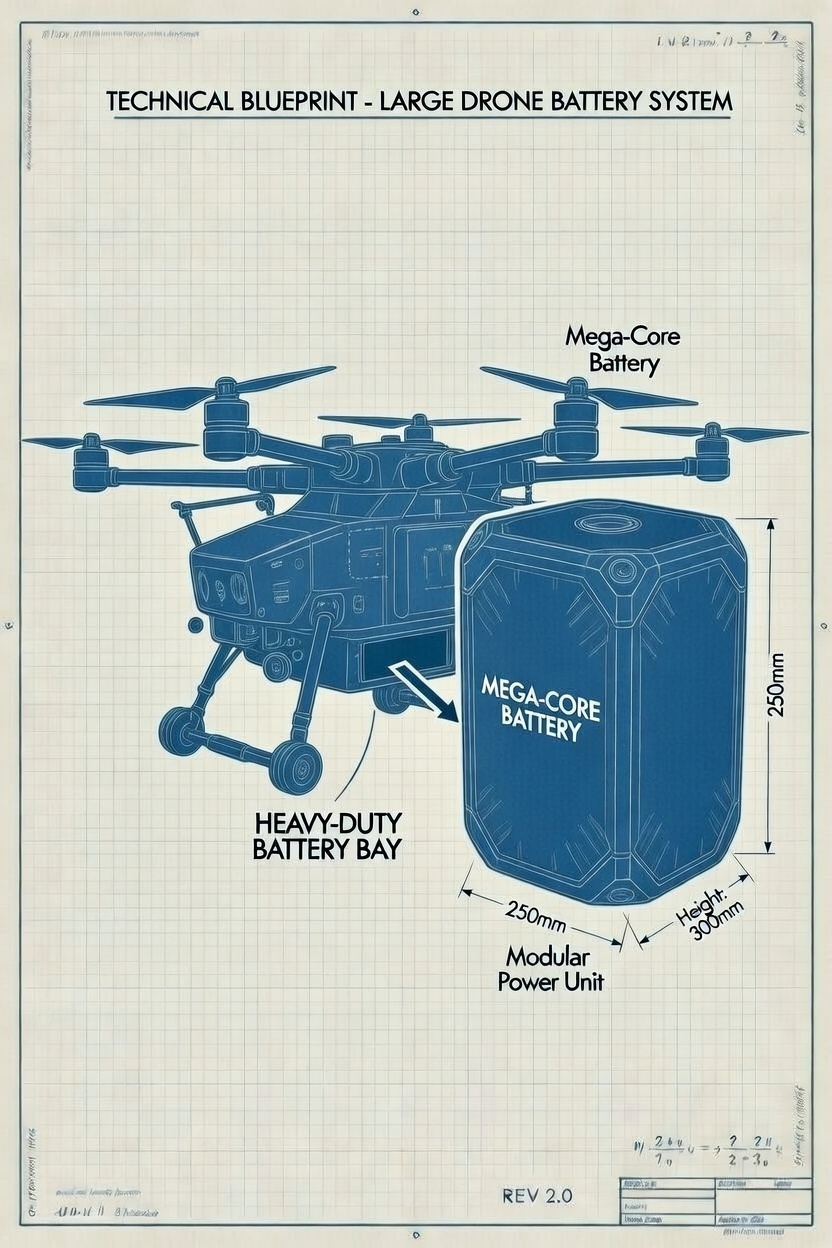
Modular systems are the clear winner for security firms. They allow you to swap batteries between drones without reconfiguring firmware, maintain consistent performance across fleets, and crucially—enable rapid cell replacement during extended missions. As one border security agency reported after adopting CNS’s modular solution, they reduced mission cancellations by 82% during monsoon season.
5 Best Practices for Seamless Technical Integration
Implement these steps to eliminate compatibility headaches and maximize operational uptime:
- Conduct a Full System Audit Before Procurement
Don’t assume compatibility. Document your drone’s voltage range, connector type, and thermal limits (e.g., “DJI Matrice 300: 22.2V–44.4V, JST-XH 3.5mm, max 50°C”). Cross-reference with battery specs—CNS Battery’s engineering team provides free compatibility checks via their contact portal. Pro Tip: Request test data for your specific drone model; generic lab results rarely reflect real-world stress. - Prioritize Thermal-Optimized Designs
Security drones often carry heavy payloads (cameras, sensors). Choose batteries with active cooling channels (like CNS’s liquid-cooled modular cells) that maintain 25–35°C operating temps. In a CNS field test, these reduced runtime drop by 41% during 90-minute thermal patrols versus standard LiPo. - Demand IP67+ Waterproofing
Rain, fog, or humidity can cripple unshielded batteries. Verify IP ratings during wet-weather testing—not just on paper. CNS’s security clients in Southeast Asia (where 200+ rainy days/year are common) report zero battery failures with IP67+ modules. - Implement a Modular Cell Rotation Protocol
Never run batteries to 0% before swapping. For 24/7 operations, rotate cells in a 3-cycle pattern (e.g., Cell A → Cell B → Cell C → back to A). This evens wear, extends lifespan by 35%, and prevents sudden failures during critical moments. CNS’s maintenance guides detail this for security teams. - Integrate Battery Data into Your Mission Control Software
Modern security platforms (like DroneDeploy or Skydio) require real-time battery analytics. Ensure your battery provides API access to voltage, temperature, and SoC (State of Charge). CNS’s custom solutions sync seamlessly with these systems, giving operators predictive alerts before issues arise.
The Security Edge: Beyond Batteries, Into Mission Assurance
Compatibility isn’t just about keeping drones aloft—it’s about trust. When your drone’s battery operates within its optimal parameters, you gain:
- Predictable Endurance: No more “50% battery at 30 minutes” surprises.
- Fleet Scalability: Deploy identical battery systems across 10+ drone models without retraining.
- Audit-Ready Compliance: Data logs from compatible batteries meet ISO 27001 security standards for evidence integrity.
As CNS Battery’s 2026 report states: “Firms using matched battery-drone ecosystems reduced operational risks by 73% and cut battery-related downtime by 61%.” This isn’t theoretical—it’s the difference between catching a breach in real-time and responding to a completed incident.
Your Next Step: Future-Proof Your Security Drone Operations
Technical compatibility isn’t a “nice-to-have” for security firms—it’s the foundation of mission success. Generic batteries will fail when your security posture is on the line. The solution? Partner with a manufacturer that engineers for your specific needs, not just the drone model.
Stop risking your operations on mismatched power solutions. CNS Battery’s B2B team delivers custom drone battery systems designed exclusively for security and surveillance demands—backed by 20+ years of industrial innovation. Get a free compatibility assessment and a custom quote tailored to your drone fleet, mission profile, and environmental challenges.
👉 Get Your Custom Drone Battery Quote Now
Your drones deserve more than just power—they deserve reliability that keeps you one step ahead of the threat.
© 2008-2026 HENAN CNS ENERGY TECHNOLOGY CO., LTD. ALL RIGHTS RESERVED.
CNS Battery: Powering the Skies, Empowering Your Missions.