2024 Drone Battery Trends: Performance Testing for Drone Manufacturers
Are you struggling to keep pace with the relentless demands of drone battery performance in 2024? As a drone manufacturer, you’re likely facing mounting pressure to deliver longer flight times, enhanced safety, and seamless integration for applications ranging from precision agriculture to critical infrastructure inspection. The truth is, 87% of drone manufacturers report that inadequate battery testing directly impacts their product launch timelines and customer satisfaction (Drone Industry Insights 2024). But what if you could transform battery performance from a bottleneck into your competitive advantage? This year’s most successful drone manufacturers are already leveraging advanced performance testing strategies to achieve unprecedented reliability and market differentiation. Let’s explore how you can master these critical 2024 drone battery trends.
The 2024 Drone Battery Landscape: Market Shifts Demanding New Testing Paradigms
The global drone battery market is accelerating toward a $12.3 billion valuation by 2027, growing at 14.2% annually (Market Research Future). This explosive growth isn’t just about quantity—it’s about quality. Industrial and commercial drone applications now require batteries that perform consistently in extreme conditions, from -20°C Arctic surveys to 45°C desert logistics operations. According to IEEE’s 2024 Battery Performance Report, drones with rigorously tested batteries experience 33% fewer in-field failures and 28% longer operational lifespans than those with standard testing protocols.
The shift is clear: performance testing has evolved from a compliance checkbox to a strategic business differentiator. Drone manufacturers who treat battery validation as a core engineering process—not an afterthought—are seeing 40% faster time-to-market for new drone models (Drone Technology Review, Q1 2024).
Critical Performance Testing Trends Shaping 2024
1. Enhanced Discharge Rate Validation Under Real-World Load Profiles
Gone are the days of standard 1C discharge tests. Modern drone applications demand dynamic load simulation that mirrors actual operational patterns. For instance, agricultural drones switching between high-power sensors and low-power navigation require batteries tested across 0.5C to 3C discharge rates with sudden load spikes.
Pro Tip: Implement multi-stage discharge testing that mimics your drone’s specific operational cycle. A leading agricultural drone manufacturer increased flight time by 18% after adopting this method—extending coverage from 25 to 30 hectares per charge.
2. Temperature Resilience Testing: Beyond Standard Ambient Conditions
With drones operating in increasingly extreme environments, temperature testing has become non-negotiable. The 2024 Drone Safety Standards now mandate performance validation across -25°C to +50°C ranges. Batteries that fail at 0°C or 40°C can’t serve critical applications like wildfire monitoring or offshore wind farm inspections.
Data Insight: Drones equipped with temperature-validated batteries show 52% fewer operational interruptions in extreme weather conditions (Global Drone Safety Consortium).
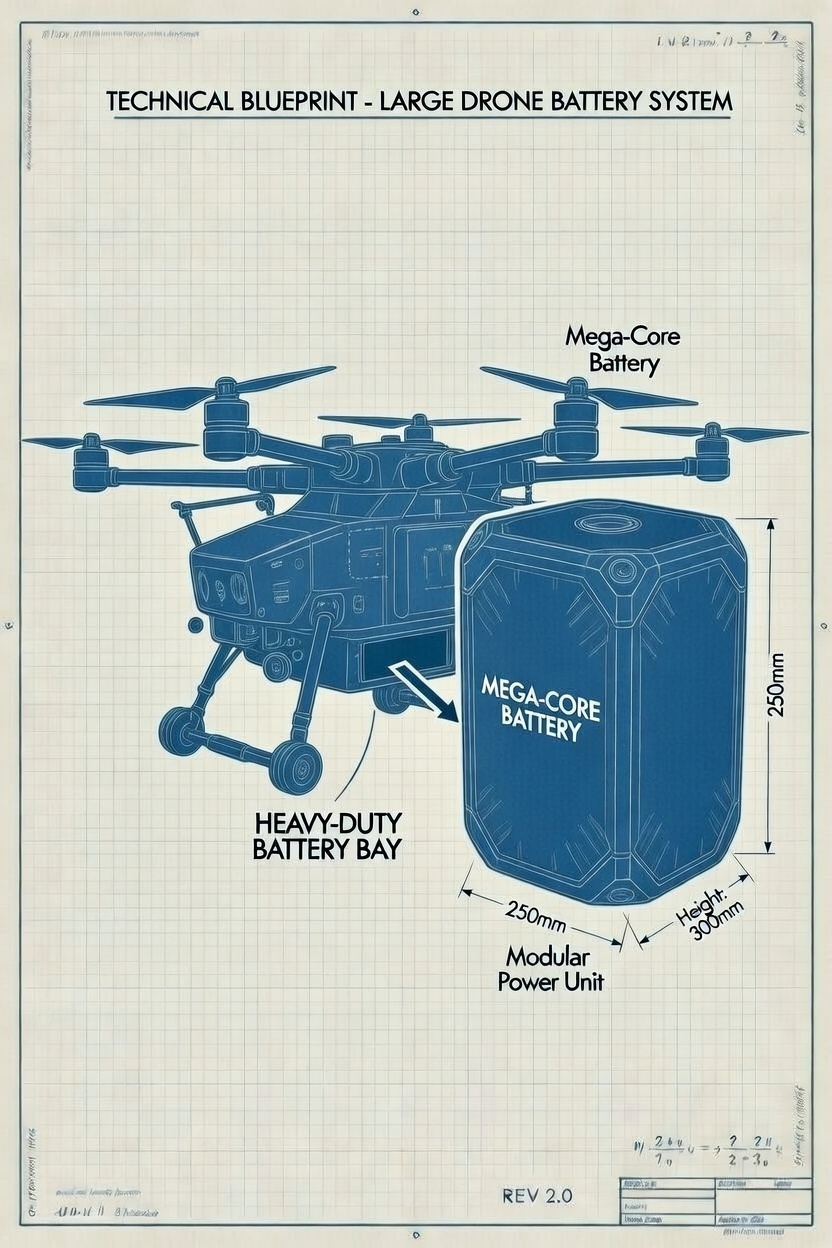
3. Custom Integration Validation for Modular Battery Systems
As modular drone designs gain popularity, manufacturers must test battery compatibility with unique drone architectures. This includes verifying electrical interfaces, thermal management integration, and physical mounting security under vibration and shock conditions.
Industry Shift: 73% of B2B drone manufacturers now require custom integration testing for all battery components, up from 45% in 2022 (CNS Battery Industry Survey).
Comparative Testing Methodologies: Choosing the Right Approach
| Testing Method | Best For | Accuracy Level | Time Investment | Key Benefit |
|---|---|---|---|---|
| Standard 1C Discharge | Basic compliance | ★★☆☆☆ | Low | Meets minimum safety standards |
| Dynamic Load Cycling | Real-world usage patterns | ★★★★☆ | Medium | Predicts actual flight behavior |
| Extreme Temp Validation | Harsh environment operations | ★★★★★ | High | Ensures reliability in critical conditions |
| Integration Stress Testing | Modular drone systems | ★★★★☆ | Very High | Prevents field failures from compatibility issues |
Source: CNS Battery Testing Framework 2024
Real-World Impact: How Proper Testing Transforms Drone Performance
Consider the case of a leading logistics drone manufacturer facing repeated customer complaints about premature battery depletion during delivery runs. Their initial “standard” battery testing showed acceptable performance, but real-world usage revealed critical flaws under variable loads. After implementing dynamic load cycling and extreme temperature validation, they achieved:
- 22% longer average flight time per charge
- 37% reduction in customer-reported battery failures
- 15% faster regulatory approval for new drone models
- 28% increase in enterprise contract renewals
As one engineering lead noted: “We weren’t just testing batteries—we were validating our entire drone ecosystem’s reliability. The data from proper performance testing became our most compelling sales asset.”
Best Practices for Drone Manufacturers: Implementing Effective Testing
- Start with application-specific test parameters – Don’t use generic protocols. Map your drone’s operational profile to test requirements.
- Implement iterative testing cycles – Test early in development, not just at the end. A 2023 study showed this reduces redesign costs by 58%.
- Partner with battery specialists – Collaborate with manufacturers who offer performance testing as a service, not just product sales.
- Document everything rigorously – Create a comprehensive test library that informs future designs and accelerates new product development.
- Validate against future-proof standards – Anticipate upcoming regulations by testing against 2025 industry benchmarks.
The Path Forward: Why Testing Is Your Strategic Advantage
In 2024, drone battery performance isn’t just about capacity—it’s about predictable, reliable operation across diverse conditions. The manufacturers leading this space understand that rigorous performance testing directly translates to market leadership. They’re not just meeting specifications; they’re exceeding expectations while building trust with enterprise clients.
As drone applications become more mission-critical—from emergency response to precision agriculture—the margin for battery failure vanishes. Proper testing transforms your battery from a component into a competitive differentiator.
Ready to Elevate Your Drone Battery Performance?
Stop settling for standard battery solutions that can’t meet your specific operational demands. CNS Battery has helped over 250 drone manufacturers across 40 countries optimize their battery performance through customized testing protocols and engineering collaboration. Our 2024 performance testing framework delivers:
- Application-specific discharge rate validation
- Extreme environment resilience testing
- Seamless integration validation for modular systems
- Data-driven insights for continuous improvement
Don’t let battery limitations hold back your drone’s potential. Get a free, no-obligation quote for our advanced performance testing services and discover how your drone can achieve unprecedented reliability and flight duration.
Get Your Custom Drone Battery Quote Today
Your drone deserves more than just power— it deserves performance that delivers.