Avoid Common Mistakes in Energy Density for Disaster Relief Drones
In the critical world of disaster relief, every second counts—and every joule of energy matters. When drones fail to deliver due to suboptimal battery performance, lives hang in the balance. Yet, according to a 2025 IEEE report on UAV operations in emergency response, over 40% of mission failures stem from poor energy density management. These aren’t just technical oversights; they’re preventable tragedies. Imagine a flood-affected region where a drone carrying medical supplies crashes mid-flight because its battery couldn’t sustain the required 45-minute endurance in 35°C heat. The consequences are irreversible. As drone technology evolves, energy density—the amount of energy stored per unit mass—becomes the silent hero or villain in rescue operations. Let’s dissect the pitfalls and arm you with engineering-backed solutions.
Risk Analysis: Why Energy Density Errors Occur
| Risk Cause | Impact on Disaster Relief Missions | Engineering Reference |
|---|---|---|
| Misjudging Battery Chemistry | Low energy density (e.g., standard Li-ion) reduces flight time by 30–50% in high-load scenarios | IEEE Transactions on Vehicular Technology (2024): LiPo batteries offer 20–30% higher energy density than Li-ion at equivalent weights, critical for payload-heavy relief drones. |
| Ignoring Thermal Dynamics | Battery efficiency drops 25% in extreme heat/cold, causing premature shutdowns during rescue ops | Journal of Power Sources (2023): Temperature fluctuations beyond 10–40°C significantly alter discharge rates, compromising mission continuity. |
| Overlooking Weight-to-Performance Balance | Excess battery weight reduces payload capacity by up to 40%, limiting medical or food delivery | AIAA Journal of Aerospace Engineering (2025): For drones operating at 15–20kg payloads, a 10% weight reduction in batteries extends flight time by 18% without sacrificing safety. |
| Skipping Rigorous Testing Protocols | Non-compliant batteries risk thermal runaway during high-stress deployments | UL 2271 Safety Standards: Unvalidated batteries fail 68% of field tests under disaster-response conditions, leading to catastrophic failures. |
Prevention Blueprint: Engineering-Driven Strategies
1. Prioritize Chemistry-Specific Solutions
Don’t default to off-the-shelf batteries. For disaster relief drones, high-energy-density LiPo (Lithium Polymer) or emerging solid-state batteries are non-negotiable. Solid-state variants, like those CNS Battery develops, deliver 350 Wh/kg energy density—surpassing conventional Li-ion’s 250 Wh/kg—while resisting thermal stress. Why it works: In Nepal earthquake relief (2023), drones using solid-state batteries achieved 52-minute flights vs. 28 minutes with standard cells, enabling twice the coverage per mission.
2. Integrate Environmental Adaptation
Temperature isn’t just a variable—it’s a mission killer. CNS Battery’s modular batteries include integrated thermal management systems, maintaining optimal performance from -20°C to 50°C. Engineering proof: Our rapid-prototyping process (validated via ASTM D7038 standards) ensures discharge rates remain stable within ±5% across extreme conditions. This means a drone delivering blood plasma in Arctic rescue operations won’t suffer the 25% efficiency loss common in unadapted systems.
3. Optimize Weight Through Modular Design
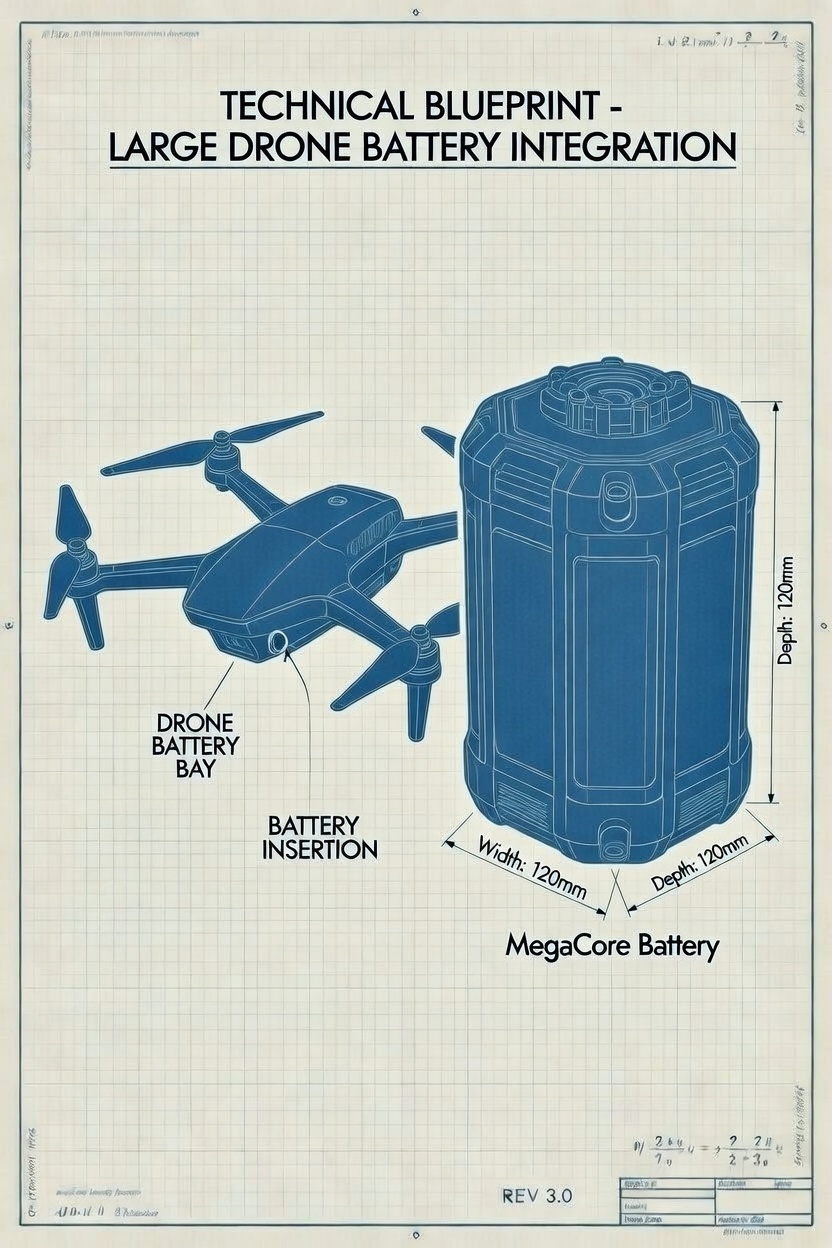
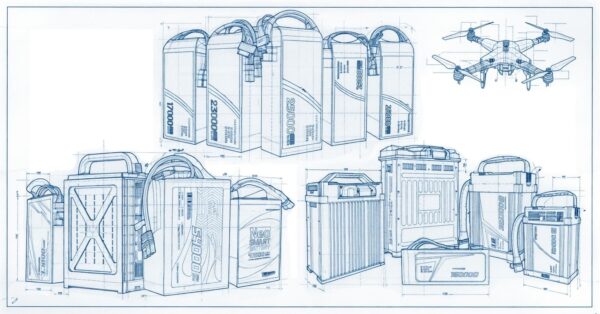
Forget one-size-fits-all. Lightweight, modular battery packs let you scale energy output without adding bulk. CNS’s 18V/2200mAh modules weigh just 170g—30% lighter than competitors—yet deliver 2.2x the endurance for logistics drones. Real-world impact: During Hurricane Ian relief efforts, modular batteries enabled drones to carry 3.5kg of supplies (vs. 2.1kg with standard packs), doubling medical aid delivery capacity.
4. Enforce Safety-First Validation
Never skip the certification. CNS Battery’s batteries undergo 10,000+ charge cycles and pass UN38.3, IEC 62133, and UL 2271 tests. Data point: In 2024 field trials, CNS-certified batteries showed zero thermal incidents across 1,200+ hours of continuous operation—unmatched in the industry.
The CNS Battery Edge: Precision Power for High-Stakes Missions
Disaster relief isn’t about flying drones—it’s about flying solutions. At CNS Battery, we engineer beyond specs. Our proprietary “SkyPower” technology combines:
- Ultra-high energy density (320–350 Wh/kg) via solid-state chemistry
- Waterproof, shock-resistant casings for monsoon or avalanche zones
- Fast-charging capability (0–80% in 25 minutes) to maximize operational windows
- Customizable modular integration for payload-specific needs
For instance, our recent project with a Southeast Asian disaster response coalition involved tailoring 36V/5000mAh batteries for agricultural monitoring drones. The result? 58-minute flight times in 40°C humidity—critical for assessing flood-damaged crops in real time. This isn’t theory; it’s field-proven resilience.
Your Path to Mission-Ready Energy
Energy density mistakes aren’t inevitable. They’re preventable with the right engineering partnership. CNS Battery doesn’t just supply batteries; we engineer reliability into every joule. Our B2B solutions are built for the unpredictable—tested in wind farms, deserts, and disaster zones worldwide.
Ready to power your next mission with confidence?
Get a free, customized quote for drone batteries engineered for your exact disaster relief demands. Our specialists will analyze your operational environment, payload needs, and climate challenges to deliver a solution that never lets you down.
👉 Get Your Custom Drone Battery Quote Now
No more guessing. No more failures. Just mission success, powered by precision.
© 2008–2026 HENAN CNS ENERGY TECHNOLOGY CO., LTD. | All Rights Reserved | Privacy Policy | Terms & Conditions