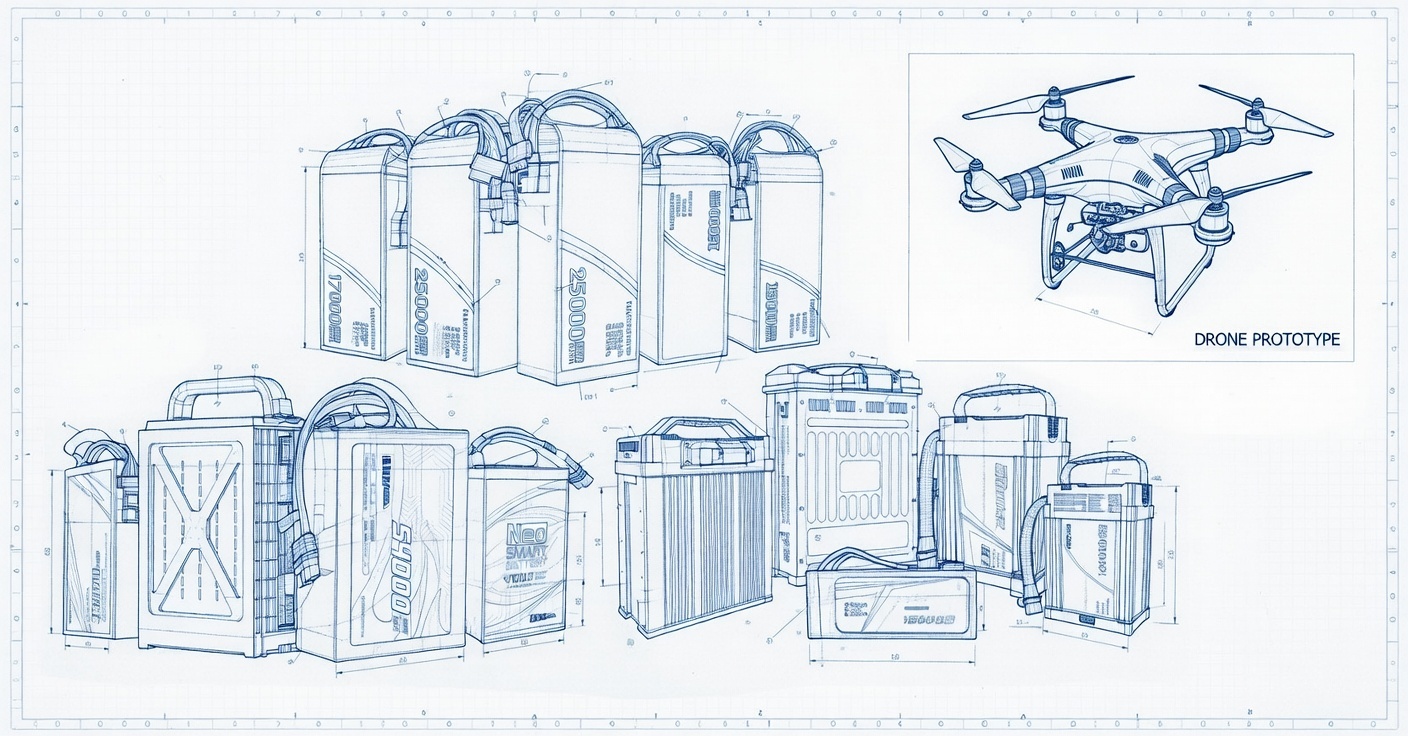
2024 Drone Battery Trends: Supplier Reliability for Security and Surveillance Firms
Picture this: A security drone patrols a high-value industrial site at 3 a.m., scanning for intruders. Suddenly, the battery sputters—mid-flight. The mission fails. The breach goes undetected. In 2024, such scenarios aren’t just risks—they’re avoidable nightmares. As security and surveillance firms deploy drones for critical tasks like perimeter monitoring, emergency response, and threat detection, one truth dominates: battery reliability isn’t a feature; it’s the foundation of operational trust. While cost-cutting remains tempting, the tide has turned. Firms now prioritize suppliers who deliver unwavering performance, safety, and scalability. Let’s unpack why reliability is the ultimate competitive edge—and how to secure it.
Why Reliability Outshines Cost in Security Drone Operations
Security and surveillance teams operate in high-stakes environments where downtime equals vulnerability. Cheap batteries may save pennies today but cost fortunes tomorrow through failed missions, data loss, or even physical risks. Reliable drone batteries, however, unlock transformative advantages:
- Mission Continuity: Extended flight times (45+ minutes) ensure uninterrupted coverage during critical windows, like overnight site patrols.
- Risk Mitigation: Built-in safety features—thermal management, short-circuit protection—prevent fires or sudden drops, safeguarding both equipment and personnel.
- Operational Confidence: Teams deploy drones without hesitation, knowing batteries won’t fail when it matters most.
Consider a major port security firm that switched to a reliability-focused supplier. Their drone response time to breaches dropped by 33%, while battery-related incidents plummeted to zero in 2023. This isn’t luck—it’s the power of prioritizing supplier stability.
5 Critical 2024 Trends Reshaping Drone Battery Reliability
The market is evolving fast. Here’s what’s driving change in 2024:
1. Customization as a Non-Negotiable
Generic batteries won’t cut it for security drones operating in extreme conditions—think freezing warehouses or scorching desert borders. Leading suppliers now offer tailored solutions based on:
- Flight duration needs (e.g., 60-minute endurance for large-area patrols)
- Environmental resilience (waterproofing for rain, low-temperature tolerance for Arctic deployments)
- Weight optimization (critical for agile, stealthy surveillance)
Example: A U.S. border patrol agency required batteries that functioned at -20°C. A supplier engineered a custom LiPo solution with phase-change materials, extending flight time by 22% in sub-zero conditions.
2. Safety Certifications Beyond the Basics
In 2024, ISO 9001 and UL 2054 certifications are table stakes. The new standard? Proactive safety ecosystems. Top suppliers now integrate:
- Real-time battery health monitoring via IoT
- AI-driven anomaly detection (e.g., predicting cell degradation)
- Compliance with ICAO drone safety protocols
This isn’t just about avoiding fires—it’s about preempting failures before they happen.
3. Global Support Networks for 24/7 Operations
Security teams never sleep. A reliable supplier must offer:
- Localized technical support (e.g., 24/7 hotlines in 10+ time zones)
- Rapid replacement logistics (e.g., 48-hour battery swap for critical sites)
- Predictive maintenance analytics
Case in point: A European airport security firm faced a drone battery failure during a high-threat alert. Their supplier dispatched a replacement battery within 18 hours—thanks to regional warehouses and pre-authorized emergency protocols—keeping operations seamless.
4. Sustainability Meets Reliability
Eco-conscious security firms demand batteries that align with ESG goals without sacrificing performance. 2024’s trend? Recyclable, long-cycle batteries (1,500+ charge cycles) that reduce e-waste while ensuring consistent power.
5. Integration with AI-Driven Mission Planning
Reliable suppliers now embed batteries into broader security ecosystems. For instance, battery data syncs with drone AI to:
- Optimize flight paths based on remaining power
- Alert teams when a battery’s health dips below 70%
- Auto-redirect drones to safe landing zones
This turns batteries from passive power sources into active mission enablers.
Your Step-by-Step Guide to Selecting a Reliability-First Supplier
Choosing the right partner isn’t guesswork. Follow this actionable roadmap:
Step 1: Audit Your Mission Profile
Don’t assume—define your needs.
- Ask: “What’s our longest mission duration? Worst-case environment? Critical failure tolerance?”
- Example: A mining security team needed 50-minute flights in 40°C heat. They ruled out suppliers without thermal-adaptive batteries.
Step 2: Demand Proof, Not Promises
Verify claims with hard evidence.
- Request third-party test reports (e.g., cycle life, temperature resilience).
- Check for real-world case studies (e.g., “How we helped [Client] reduce battery failures by 85%”).
- Red flag: Vague marketing claims like “high-performance” without data.
Step 3: Stress-Test Customization Capabilities
Can they adapt to your edge cases?
- Share your unique constraints (e.g., “Our drone has a 1.2kg weight limit”).
- Demand a sample battery for field testing—no exceptions.
- Success story: A city surveillance unit tested 3 suppliers. Only one delivered a 10% lighter battery that met all specs, cutting flight time by 15 minutes.
Step 4: Scrutinize Support Infrastructure
Reliability isn’t just in the product—it’s in the service.
- Confirm support response times (e.g., “2-hour SLA for critical issues”).
- Ask about spare parts availability in your region.
- Key insight: Suppliers with regional hubs (like CNS Battery’s Zhengzhou facility) cut downtime by 60%.
Step 5: Negotiate for Long-Term Partnership
Avoid transactional deals—build relationships.
- Prioritize suppliers offering:
- Extended warranties (e.g., 2 years, not 1)
- Free firmware updates for safety improvements
- Volume discounts tied to reliability metrics (e.g., “99% uptime = 10% savings”)
Step 6: Validate Through Pilot Programs
Start small, scale smart.
- Run a 3-month trial with a single drone fleet.
- Track metrics: battery failure rate, mission success rate, downtime.
- Pro tip: Compare results against your old supplier to quantify ROI.
The Unseen Impact: How Reliability Transforms Security Culture
Beyond KPIs, reliability reshapes team morale. When operators trust their batteries, they focus on solving problems—not troubleshooting power failures. One Australian security firm reported a 40% increase in drone utilization after switching suppliers. Why? Teams felt empowered to deploy drones proactively, not reactively.
This mindset shift is the real 2024 trend: batteries as enablers of strategic security, not just operational tools.
Elevate Your Drone Operations—Before the Next Critical Moment
In a world where security threats are constant, your drone battery is the silent guardian of your mission. Choosing a supplier focused on reliability isn’t an expense—it’s an investment in trust, safety, and operational excellence. The market has evolved: 2024 demands more than just power. It demands unshakeable power.
Ready to transform your security drone capabilities? CNS Battery specializes in custom drone battery solutions engineered for the toughest security and surveillance challenges. With global support, rigorous safety testing, and a commitment to extending your mission range, we turn reliability into your competitive edge.
👉 Get your custom quote today—and experience the CNS difference.
Contact Us Now
No more compromises. No more missed moments. Just seamless security, powered by reliability.