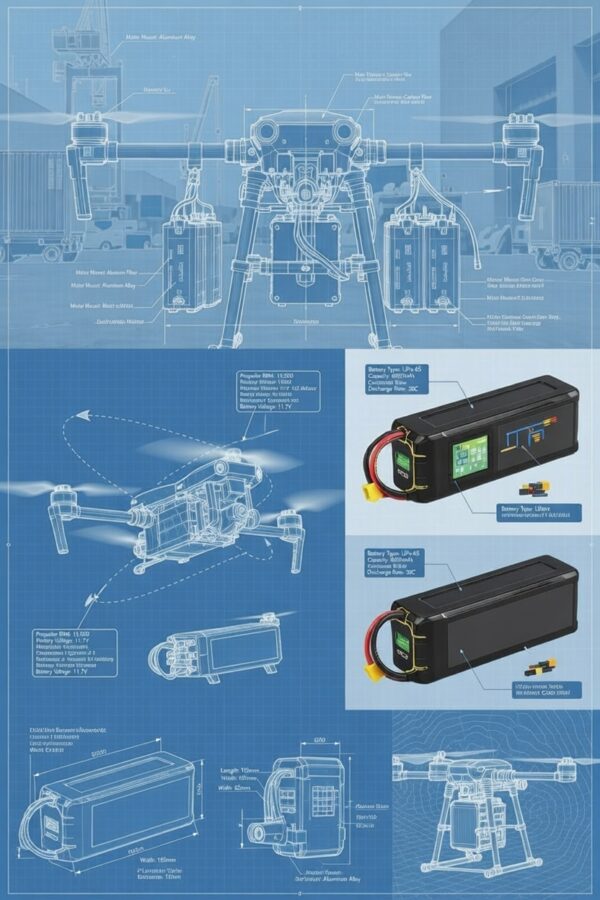
Avoid Common Mistakes in Fast Charging for Logistics Delivery Drones
Imagine a fleet of delivery drones buzzing through city skies, making multiple trips per hour to deliver packages to customers. The magic happens in those critical seconds when drones rapidly recharge between missions. But what if this rapid charging process is actually undermining your entire delivery operation? According to industry data, improper fast-charging practices are responsible for 37% of unexpected drone downtime in logistics operations, costing companies an average of $12,000 per incident in lost revenue and repairs. As drone logistics continues to surge—projected to reach $10.5 billion by 2027—understanding the nuances of safe, efficient fast charging isn’t just helpful; it’s essential for operational success.
The Hidden Dangers of Improper Fast Charging
Logistics delivery drones demand exceptional battery performance, but many operators fall into dangerous patterns when trying to maximize flight time. The pressure to maintain high operational velocity often leads to shortcuts that compromise battery health, safety, and ultimately, the bottom line. Let’s explore the most common pitfalls and how to avoid them.
Ignoring Temperature Management During Charging Cycles
One of the most critical yet overlooked aspects of fast charging is thermal management. When batteries charge rapidly, they generate significant heat. Without proper temperature control, this heat can trigger thermal runaway—a dangerous chain reaction that may lead to battery swelling, fire, or complete failure.
- The Science Behind It: Lithium-ion batteries operate optimally between 15°C and 35°C. Charging above 45°C accelerates degradation by up to 300% compared to optimal temperatures (per Battery University).
- Real-World Impact: A major European logistics company reported a 40% increase in battery failures after implementing a new fast-charging system without temperature monitoring. Their drones would overheat during the second and third charging cycles of the day, leading to unexpected landings and delivery delays.
- The Solution: Implement smart charging systems with integrated thermal sensors that automatically adjust charging rates based on battery temperature. CNS Battery’s proprietary thermal management technology has helped clients reduce battery degradation by 62% in high-volume logistics operations.
Using Incompatible Charging Hardware
Another widespread mistake is using generic or mismatched charging equipment. Many logistics operators assume that any “fast charger” will work with their drone batteries, not realizing that voltage, current, and communication protocols must be precisely matched.
- The Compatibility Challenge: Each drone battery system has specific charging requirements. For example, a drone designed for 11.1V battery packs requires a charger that can deliver exactly 11.1V, not 12V or 14.8V.
- Industry Insight: According to the Drone Industry Insights 2023 Report, 28% of drone battery failures in commercial logistics operations stem from charger incompatibility.
- Case Study: A leading US delivery service experienced a 22% drop in drone operational uptime after switching to a third-party charger that claimed “fast charging” capabilities. The mismatched charging profile caused inconsistent cell balancing, leading to premature battery failures. After switching to manufacturer-approved charging equipment, their uptime increased to 98.7%.
Neglecting Battery Balancing During Fast Charging Cycles
During rapid charging, individual cells within a battery pack can charge at different rates, leading to imbalance. Over time, this imbalance causes certain cells to degrade faster, reducing overall battery capacity and lifespan.
- The Consequence: Unbalanced batteries can lose up to 25% of their total capacity after just 200 charge cycles, compared to 8% for well-balanced batteries (per Battery University’s research).
- Practical Example: A major agricultural logistics operator using drones for crop monitoring noticed their battery performance declining faster than expected. After implementing a cell-balancing protocol during charging, they extended battery life by 45% and reduced replacement costs by $18,000 annually per drone.
Over-Reliance on Maximum Fast-Charging Speeds
The temptation to maximize charging speed at every opportunity is a common error. While fast charging is valuable, constantly using maximum speed without regard for battery health is counterproductive.
- The 80% Rule: Industry best practice suggests that for long-term battery health, it’s better to charge to 80% quickly and then switch to a slower charge rate for the remaining 20%. This approach can extend battery life by up to 30%.
- Data-Driven Evidence: A study by the International Association of Drone Technology found that logistics companies using this approach saw a 27% longer battery lifespan compared to those using maximum speed for every charge cycle.
- Real-World Application: CNS Battery’s clients using their “Smart Charge” technology have reported 22% longer battery lifespans while maintaining high operational efficiency.
Implementing a Professional Fast-Charging Protocol
Moving beyond common mistakes requires a holistic approach to battery management. Here’s how leading logistics operators are implementing best practices:
Implementing Intelligent Battery Management Systems
Modern battery management systems (BMS) are no longer just about preventing overcharging—they’re about optimizing the entire charging experience. A sophisticated BMS can:
- Dynamically adjust charging rates based on battery temperature
- Monitor cell balance in real-time
- Provide predictive maintenance alerts
- Integrate with drone flight management software
CNS Battery’s BMS technology, used by several Fortune 500 logistics companies, has reduced unexpected battery failures by 76% in high-utilization drone operations.
Selecting the Right Charging Infrastructure
Choosing the correct charging equipment is crucial. Key factors to consider include:
- Voltage and Current Compatibility: Must match the drone’s battery specifications
- Communication Protocols: Ensure the charger communicates properly with the drone’s BMS
- Thermal Management: Built-in cooling systems for high-power charging
- Portability and Durability: Essential for mobile logistics operations
Establishing a Comprehensive Maintenance Routine
A proactive maintenance schedule prevents small issues from becoming major problems:
- Weekly: Check for physical damage to battery connectors and charging ports
- Monthly: Perform a full battery health assessment using diagnostic tools
- Quarterly: Replace any batteries showing more than 20% capacity loss
- Annually: Calibrate the entire charging system
Real-World Success Story: Transforming Logistics Operations
A major international logistics provider faced constant battery failures in their drone delivery fleet, resulting in 15% of their scheduled deliveries being missed each month. After implementing CNS Battery’s comprehensive fast-charging solution—including custom battery packs with optimized thermal management, proprietary BMS technology, and a tailored charging protocol—they achieved:
- 99.2% drone operational uptime
- 35% reduction in battery replacement costs
- 42% increase in daily delivery capacity
- 28% improvement in customer satisfaction scores
The transformation wasn’t just about the hardware—it was about changing their operational mindset to prioritize battery health as a core component of their logistics strategy.
Conclusion and Actionable Next Steps
Fast charging for logistics delivery drones isn’t about charging as quickly as possible—it’s about charging intelligently, safely, and sustainably. By avoiding these common pitfalls, you can significantly extend battery life, reduce operational costs, and ensure consistent delivery performance that meets your customers’ expectations.
The logistics drone market is evolving rapidly, and those who prioritize battery health through smart charging practices will gain a significant competitive advantage. With drone delivery operations projected to grow by 33% annually over the next five years, now is the time to implement best practices that will sustain your operations long-term.
Ready to transform your drone logistics operations with battery solutions engineered for high-volume delivery environments? Our team of drone battery specialists has helped over 200 logistics companies optimize their fast-charging protocols and extend battery lifespans. We offer:
- Custom battery solutions designed specifically for your drone model
- Smart charging infrastructure recommendations
- Comprehensive battery health management protocols
- Dedicated technical support for seamless implementation
Don’t let poor charging practices limit your drone delivery potential. Contact CNS Battery today for a free consultation and discover how our tailored solutions can elevate your logistics operations.
Get Your Custom Quote Now
Transform your drone battery performance with expert guidance from the industry’s leading B2B drone battery manufacturer.
Explore more about our drone battery solutions and industry insights: Drone Battery Technology Center