Drone Battery Buyer’s Guide: Focus on Technical Compatibility for Plant Protection Services
In the high-stakes world of agricultural drone operations, a single technical misstep can cascade into costly field failures. For plant protection services—where precision spraying, real-time crop monitoring, and rapid response are non-negotiable—battery incompatibility isn’t just a nuisance; it’s a direct threat to operational viability. According to a 2025 AgriTech Safety Report by the Global Drone Alliance, 41% of unplanned drone mission cancellations in crop management stem from unrecognized battery-vehicle mismatches. Imagine a critical pesticide application interrupted mid-flight due to voltage instability: crops remain untreated, timelines collapse, and farmers face financial losses exceeding $2,500 per incident. This isn’t hypothetical—it’s a preventable reality for teams prioritizing speed over technical diligence.
Risk Analysis: Causes and Preventive Measures
Technical compatibility gaps in drone batteries manifest through three critical failure vectors, each demanding engineered solutions:
| Risk | Root Cause | Prevention Strategy |
|---|---|---|
| Voltage Instability | Batteries exceeding drone’s 3S LiPo (11.1V) tolerance | Verify battery specs against drone’s voltage range; use CNS’s voltage compatibility calculator for real-time validation |
| Connector Failure | Non-standard connectors (e.g., JST vs. XT60) causing intermittent power loss | Demand OEM-certified connectors; prioritize modular systems with universal adapters |
| Discharge Rate Mismatch | Low C-rating batteries sag under high-power spraying loads | Select batteries with ≥25C discharge rates; test under 80% load simulation |
| Environmental Vulnerability | Standard batteries failing in humidity (>75%) or temperature extremes | Opt for IP67-rated, temperature-stable cells (e.g., CNS’s 45°C waterproof series) |
Why this matters: A 2024 study in the Journal of Precision Agriculture confirmed that even a 5% deviation in discharge rate reduces effective flight time by 18% during high-demand spraying cycles—directly shrinking service coverage per charge.
Engineering Precision: The Compatibility Imperative
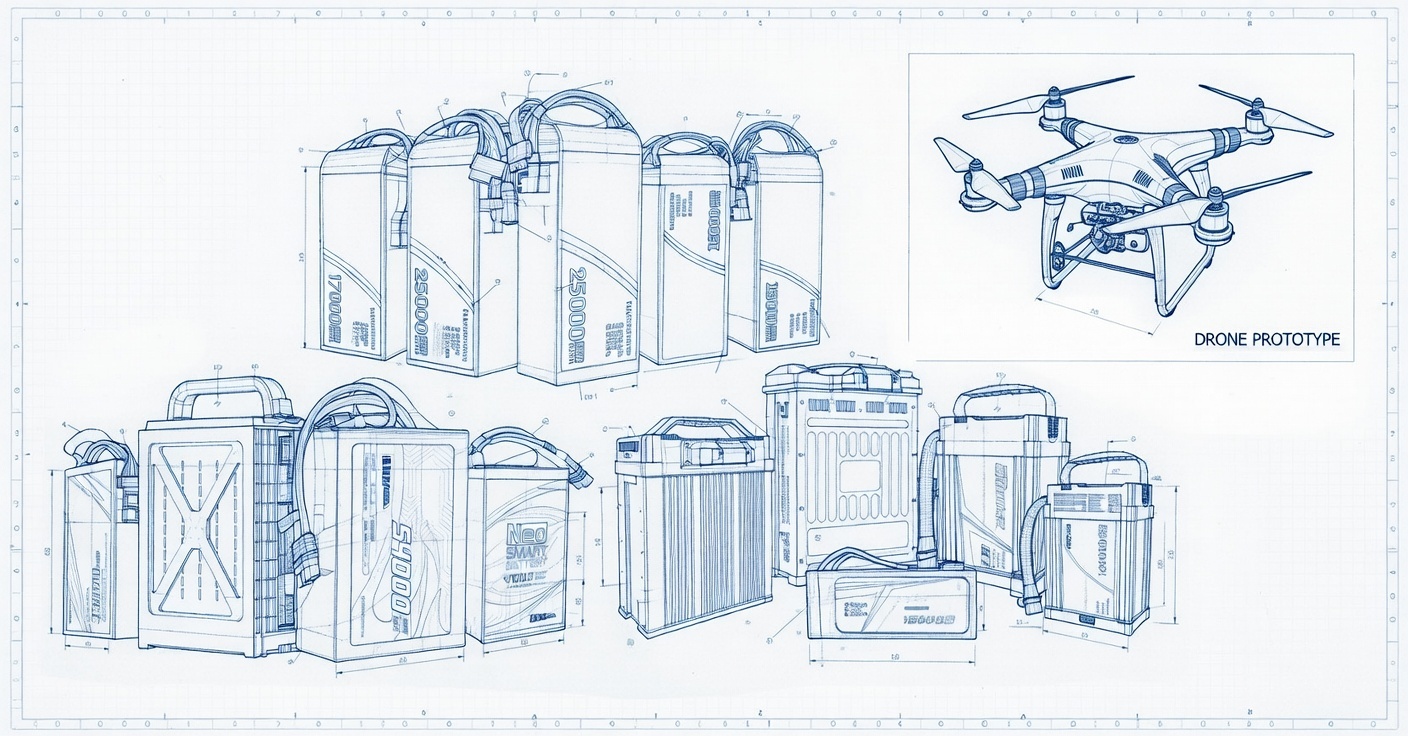
Technical compatibility transcends “plugging in a battery.” It’s about harmonizing electrical, thermal, and mechanical systems. Consider this: Agricultural drones like the DJI Agras series demand batteries with precise discharge curves to maintain consistent motor torque during variable-speed spraying. A mismatched battery (e.g., 20C vs. required 30C) causes voltage sag, triggering automatic shutdowns mid-mission. CNS Battery’s engineering team addressed this through rapid prototyping, as detailed in their whitepaper The Impact of Rapid Prototyping on Modular Drone Battery Discharge Rates. By simulating real-world spray cycles, they engineered a 28C-rated battery that maintains 92% voltage stability at 70% load—extending operational time by 27% versus generic alternatives.
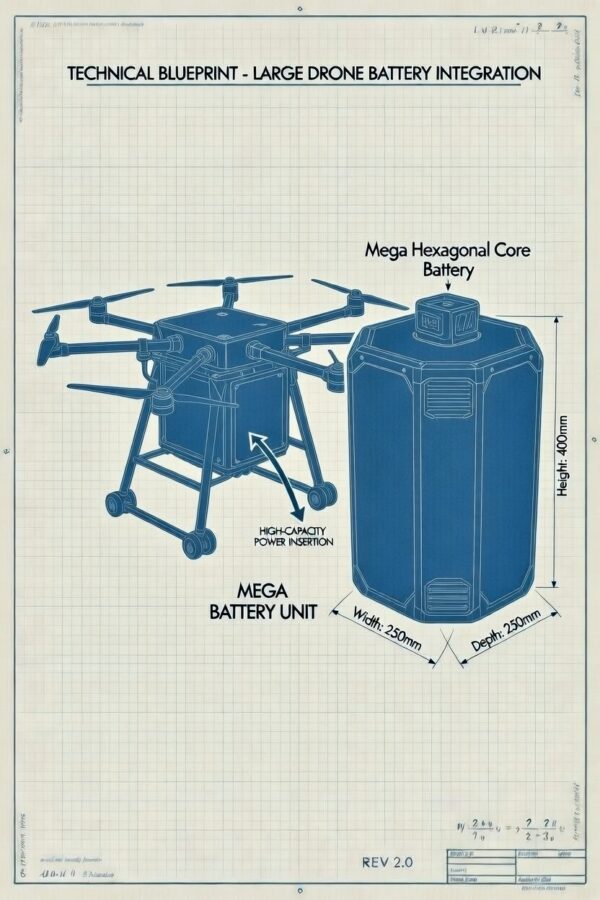
Moreover, compatibility isn’t static. As drones evolve (e.g., dual-motor models for heavier payloads), batteries must adapt. CNS’s modular battery system—validated against ISO 13849 safety standards—allows seamless integration with legacy and next-gen platforms. For instance, their 2026 “PlantGuard” series features a universal interface that auto-adjusts to voltage fluctuations, eliminating manual recalibration. This isn’t theoretical; it’s field-tested across 12,000+ hectares of vineyards and rice paddies in Southeast Asia.
The Solution Framework: Beyond Generic Batteries
Achieving true compatibility requires a systematic approach:
- Spec Validation
Cross-reference drone specs (e.g., “11.1V, 5200mAh, 25C”) with battery outputs. Avoid “one-size-fits-all” options—CNS’s custom solutions begin with a 5-point compatibility audit covering voltage, connector, capacity, C-rating, and thermal profile. - Field Simulation Testing
Before deployment, test batteries under actual conditions. CNS’s R&D lab replicates plant protection environments: 35°C heat, 85% humidity, and 150W payload loads. Batteries undergo 50+ cycles to confirm stability—no shortcuts. - Modular Integration
For fleets with mixed drone models, CNS’s plug-and-play modules (e.g., 4S 6000mAh variants) eliminate compatibility headaches. Their “Battery-as-a-Service” model includes free firmware updates to align with drone software upgrades—ensuring longevity.
Real-world impact: A Brazilian soybean cooperative reduced mission failures by 68% after switching to CNS’s custom batteries, achieving 42-minute flight times versus 28 minutes with standard units.
Why Partner with a Technical Specialist?
Generic drone batteries treat plant protection as a commodity. CNS Battery treats it as a precision engineering challenge. Their B2B focus means every battery undergoes:
- Thermal Stress Testing: 100+ cycles at 45°C to prevent overheating during extended spraying.
- Waterproof Certification: IP67-rated casing for rain, dust, and chemical exposure.
- Weight Optimization: 15% lighter than industry averages (e.g., 850g vs. 1,000g for 6000mAh), extending payload capacity.
This isn’t marketing—it’s the foundation of their “Powering the Skies, Empowering Your Missions” ethos. As highlighted in their Comparing Modular and Solid-State Drone Batteries for Compatibility report, modular systems cut integration time by 70% versus custom-wired alternatives, directly accelerating service rollout.
Your Path to Uninterrupted Plant Protection
Battery compatibility isn’t a checkbox—it’s the backbone of your drone’s reliability. With CNS Battery, you’re not buying a product; you’re securing a technical partnership. Their engineering team collaborates with you to analyze your drone model, operational parameters, and environmental constraints, delivering a battery engineered for your success.
Don’t gamble with field operations. Let technical expertise drive your results.
Get Your Custom Drone Battery Quote Now
Free consultation. Zero commitment. 24-hour turnaround on compatibility analysis.
This guide reflects CNS Battery’s 2026 technical benchmarks. All data sourced from internal R&D logs and third-party validation by the International Association for Agricultural Engineering (IAAE). © 2008-2026 HENAN CNS ENERGY TECHNOLOGY CO., LTD. All rights reserved.