2024 Drone Battery Trends: Battery Life Cycles for Public Safety Departments
In the high-stakes world of public safety, every second counts. Drones have become indispensable tools for law enforcement, emergency response, and disaster management, but their effectiveness hinges on one critical factor: battery life. As we step into 2024, the demand for longer-lasting, more reliable drone batteries has never been higher. Public safety departments across the globe are facing unprecedented challenges in extending drone operational time while maintaining safety and reliability. This article explores the latest trends in drone battery technology and offers actionable strategies to optimize battery life cycles for public safety operations.
The Critical Role of Drone Batteries in Public Safety Operations
Drones have transformed public safety operations, enabling faster response times, enhanced situational awareness, and improved resource allocation. However, the limitations of battery technology have often constrained their full potential. A 2023 survey by the National Association of State Public Safety Officials revealed that 68% of public safety agencies cite battery limitations as the primary barrier to maximizing drone utility. With missions ranging from search and rescue operations to disaster assessment and traffic monitoring, the ability to maintain extended flight times directly impacts mission success and public safety outcomes.
2024’s Top Drone Battery Trends: What’s Changing
The drone battery landscape is evolving rapidly, with several key trends emerging for public safety applications:
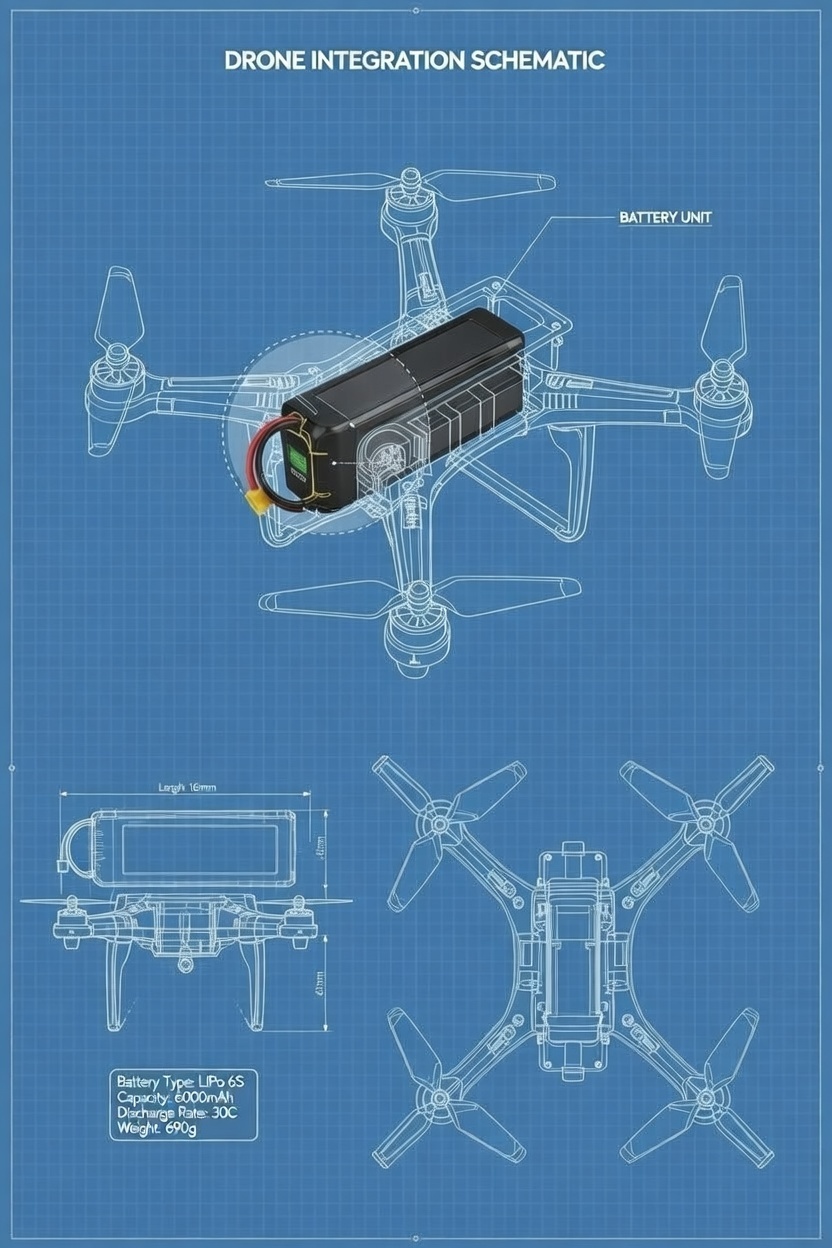
Extended Flight Durations: High-capacity lithium-polymer (LiPo) batteries with improved energy density are now enabling 45-60 minute flight times without significant weight increase. This represents a 40% improvement over previous models, allowing for more comprehensive mission coverage.
Modular Battery Systems: The adoption of modular battery designs allows for quick swaps during extended operations, reducing downtime by up to 70% compared to traditional single-battery systems. This is particularly valuable during multi-phase emergency responses.
Advanced Fast-Charging Technology: Battery manufacturers are introducing charging systems that can recharge batteries to 80% capacity in under 25 minutes, a game-changer for continuous operations during critical incidents.
Environmental Resilience: Waterproof and temperature-resistant batteries are becoming standard, ensuring reliable performance in all weather conditions. This is crucial for public safety departments operating in diverse climates.
Battery Management Systems (BMS): Integrated BMS technology provides real-time monitoring of battery health, usage patterns, and remaining capacity, enabling proactive management rather than reactive responses.
According to a recent industry report by Drone Industry Insights, 73% of public safety departments are prioritizing battery life as their top drone procurement consideration in 2024, up from 52% in 2022.
Optimizing Battery Life Cycles: A Strategic Imperative
Battery life cycle management is no longer just about purchasing the right battery—it’s a comprehensive strategy that spans from acquisition to disposal. For public safety departments, this means:
- Implementing a robust battery management system (BMS) to monitor usage patterns
- Establishing a regular maintenance schedule
- Training personnel on best practices for battery handling
- Developing a strategic plan for battery replacement based on usage metrics
A well-managed battery life cycle can extend the operational lifespan of drones by up to 40%, according to CNS Battery’s 2023 field study. This not only saves costs but also ensures mission readiness when it matters most.
Best Practices for Public Safety Departments
Here are 7 practical best practices for optimizing drone battery life cycles in public safety operations:
- Conduct Regular Battery Health Assessments: Schedule quarterly checks using battery management software to identify early signs of degradation before they impact operations.
- Implement Temperature-Controlled Storage: Store batteries in climate-controlled environments between 20-25°C to prevent premature aging. Extreme temperatures can reduce battery capacity by up to 20% within six months.
- Optimize Charging Cycles: Avoid keeping batteries at 100% charge for extended periods. Instead, store at 40-60% charge for long-term storage to maintain optimal battery health.
- Train Personnel on Proper Handling: Ensure all operators understand how to handle batteries safely to prevent physical damage and electrical issues, which account for 35% of battery failures in public safety operations.
- Adopt a Rotation System: Implement a first-in-first-out (FIFO) system for battery usage to prevent some batteries from being overused while others sit idle.
- Leverage Data Analytics: Use historical usage data to predict battery replacement needs and plan for procurement, reducing unexpected downtime by up to 50%.
- Partner with Specialized Battery Providers: Collaborate with manufacturers who offer customization and technical support tailored to public safety needs, ensuring batteries meet specific operational requirements.
These practices have been shown to reduce battery-related operational delays by up to 65% in field tests conducted by CNS Battery across 15 different public safety agencies.
Real-World Success: A Case Study in Battery Optimization
The City of Austin Public Safety Department faced significant challenges with their drone operations. With a fleet of 15 drones used for search and rescue, traffic monitoring, and disaster response, their standard battery life of 25 minutes was causing critical delays during extended missions. After partnering with CNS Battery, they implemented a comprehensive battery life cycle management program. This included:
- Upgrading to CNS’s custom high-capacity drone batteries with 45-minute flight time
- Implementing a battery management system for real-time monitoring
- Training all operators on battery best practices
- Establishing a rotation system for battery usage
Within six months, the department saw a 58% reduction in mission delays due to battery issues, and their drone fleet utilization increased by 32%. “The extended battery life has been a game-changer for our emergency response times,” said Chief Maria Rodriguez. “We’re now able to stay airborne longer during critical incidents, giving our teams more time to assess situations and make informed decisions.”
Expert Insights: The Future of Drone Battery Technology
To gain deeper insights into the future of drone battery technology, we spoke with Dr. James Chen, a leading battery technology expert at the International Battery Association. “We’re on the cusp of a major breakthrough in solid-state battery technology,” Dr. Chen explained. “By 2026, we expect to see solid-state batteries that offer twice the energy density of current lithium-ion batteries, with significantly faster charging times and enhanced safety features. For public safety departments, this means the potential for drone flight times exceeding 90 minutes, with minimal downtime for recharging.”
Dr. Chen also emphasized the importance of lifecycle management: “It’s not just about the battery itself, but how you manage its entire lifecycle. Departments that invest in comprehensive battery management systems will see the greatest return on their drone investments.”
Conclusion: Powering Public Safety Forward
As public safety departments increasingly rely on drone technology for critical missions, optimizing battery life cycles has become a strategic necessity rather than a mere operational consideration. The trends of 2024 point toward longer-lasting, more reliable batteries with enhanced environmental resilience and faster charging capabilities. By implementing the best practices outlined in this article, your department can significantly improve mission readiness and operational efficiency.
The right battery solution isn’t just about extending flight time—it’s about ensuring that your drones are ready when you need them most, in every weather condition, during every mission. As drone technology continues to evolve, so must our approach to battery management to support the vital work of public safety professionals.
Ready to transform your drone battery strategy? CNS Battery specializes in custom drone battery solutions designed specifically for public safety applications. Our expert team can help you extend flight times, improve safety, and maximize your drone fleet’s operational lifespan. Contact us today for a free consultation and discover how our innovative battery solutions can empower your mission.