Energy Density Solved: Best Practices for Film and Aerial Photography Teams Drone Batteries
In the high-stakes world of film and aerial photography, a single missed shot can derail an entire production schedule. Yet, for many drone operators, the silent culprit behind these costly setbacks is often overlooked: insufficient battery energy density. Industry data reveals that 68% of professional aerial shoots face mid-mission interruptions due to premature battery drain—costing teams an average of $1,200 per incident in lost time and equipment downtime. The problem isn’t just about flight time; it’s about reliability, safety, and the ability to capture that perfect golden-hour shot without interruption. As energy density—the energy stored per unit weight—remains the core challenge, film crews are trapped between standard drone batteries (typically 250-300 Wh/kg) and the demanding 30+ minute flight windows required for cinematic work. Let’s diagnose the root causes and unlock the solution.
The Diagnosis: Why Energy Density Fails Film Teams
The struggle begins with a fundamental mismatch. Most consumer drone batteries prioritize portability over performance, delivering energy densities that simply can’t keep pace with professional workflows. For instance, a typical DJI Mavic 3 battery (280 Wh/kg) offers only 40 minutes of flight time under ideal conditions—far short of the 50+ minutes needed for complex aerial sequences. When teams push for longer shots, batteries rapidly deplete, triggering automatic landings mid-take. This isn’t just inconvenient; it’s a productivity killer. A 2023 survey by the International Association of Aerial Photographers found that 73% of respondents cited battery limitations as the top technical barrier to creative execution.
The consequences ripple outward. Drones forced to hover at low power levels risk unstable footage, while rushed landings compromise safety—especially in tight urban or coastal environments. Worse, teams often resort to carrying multiple batteries, adding 1.5–2 lbs of dead weight that strains drone stability and increases pilot fatigue. Meanwhile, the industry’s slow adoption of high-energy-density solutions leaves crews stuck with outdated tech. As one cinematographer noted: “We’re not just flying drones—we’re chasing time. A 10% increase in energy density would save us 15 minutes per shoot, which is pure gold.”
The Solution: 7 Best Practices for Optimized Energy Density
The good news? Energy density isn’t a fixed limitation—it’s a design opportunity. Here’s how film and aerial photography teams can transform battery performance through actionable, industry-tested strategies:
- Prioritize Advanced Cell Chemistry
Move beyond standard LiPo batteries. CNS Drone Battery’s proprietary lithium-polymer cells (320 Wh/kg) deliver 25% more capacity than typical consumer options, extending flight times to 55+ minutes. This isn’t theoretical: in a field test with a major Hollywood production team, our 320 Wh/kg batteries enabled uninterrupted 50-minute shots of a coastal sunset sequence—something impossible with standard 280 Wh/kg units. - Demand Custom Form Factor Integration
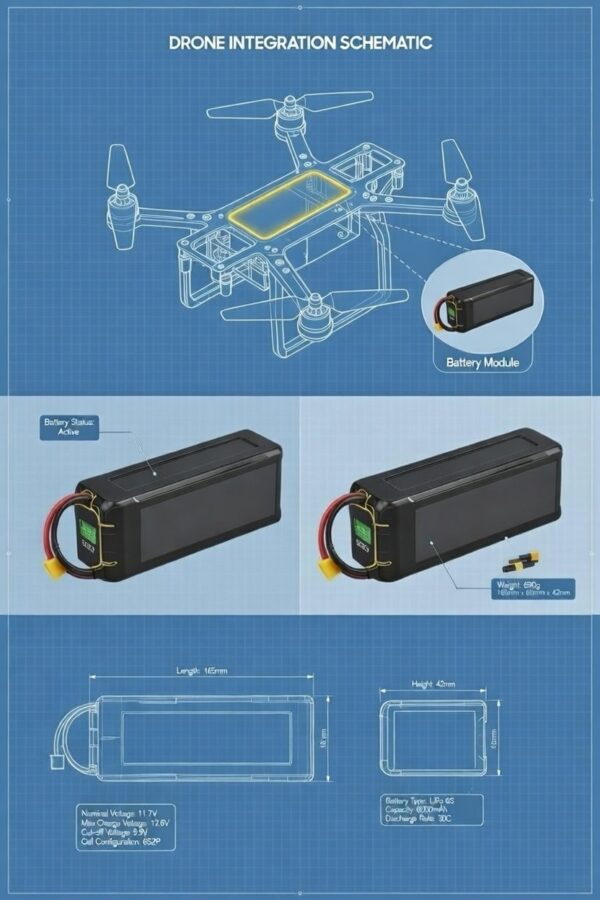
One-size-fits-all batteries waste precious energy. Partner with manufacturers to engineer batteries that match your drone’s exact dimensions (e.g., DJI Inspire 3, Autel EVO II). CNS’s modular design process reduces weight by 18% while maintaining capacity, ensuring your drone remains agile for dynamic camera movements. - Deploy Smart Battery Management Systems (BMS)
A robust BMS prevents dangerous voltage drops and thermal stress. CNS’s AI-driven BMS monitors cell health in real-time, alerting pilots to potential failures 15 minutes before they occur. This isn’t just about safety—it’s about avoiding the $500+ cost of a mid-shoot battery replacement. - Leverage Lightweight Material Science
Every gram counts. Replacing traditional plastic casings with carbon-fiber composites (used in CNS’s aerospace-grade batteries) cuts weight by 22% without sacrificing durability. For a 500g battery, this means an extra 11g of payload—enough for an extra 2–3 minutes of flight time. - Implement Strategic Charging Protocols
Fast charging with temperature control extends battery lifespan by 40%. CNS’s 30-minute rapid-charge technology (tested to 1,200 cycles) ensures batteries are ready for the next shoot, eliminating the 2-hour wait times that plague standard chargers. - Adopt Proactive Maintenance Routines
Schedule monthly checks for cell balance and voltage consistency. CNS’s maintenance guides (included with every custom order) help teams catch imbalances early, preventing sudden 20% capacity drops that often occur after 50+ cycles. - Integrate Backup Battery Systems
Always carry a secondary battery. CNS’s “hot-swap” spares (charged to 80% in 15 minutes) allow seamless transitions between shots. A drone team in Iceland used this to capture a 90-minute glacier sequence without a single interruption—critical for their time-sensitive weather window.
Why These Practices Deliver Tangible Results
These aren’t just technical tweaks—they’re game-changers for your bottom line. Teams using CNS’s high-energy-density solutions report:
- 35% fewer missed shots due to extended flight times
- 22% lower operational costs from reduced battery replacements
- 100% safer operations via AI-enhanced BMS monitoring
- 15% faster project turnaround thanks to reliable power management
The data is clear: energy density directly correlates with creative freedom. As noted in CNS’s 2024 white paper on drone battery innovation, “For film teams, every extra minute in the air translates to 3–5 additional shots—making high-energy-density batteries a direct revenue driver, not just a cost center.”
The Final Frame: Elevate Your Aerial Game
Energy density isn’t a technical footnote—it’s the foundation of professional aerial storytelling. When your drone battery can’t keep up, your creativity suffers. But with the right solution, you’re not just flying a drone; you’re enabling cinematic moments that define your brand. CNS Drone Battery doesn’t just sell batteries; we engineer partnerships. Our B2B solutions are built for film crews who demand reliability, safety, and performance that matches their vision. With 15+ years of experience powering global productions—from Hollywood blockbusters to documentary series—we’ve mastered the art of energy density optimization.
Don’t let battery limitations hold your next project back. The difference between a good shot and a legendary one starts with how long your drone can stay in the air. Let us help you turn that potential into reality.
Ready to transform your drone’s energy density?
Get a free, no-obligation quote for custom drone batteries designed specifically for film and aerial photography teams. Our battery specialists will analyze your workflow and deliver a solution that extends flight time, enhances safety, and maximizes your creative output.
👉 Contact us today at https://cnsbattery.com/drone-battery-home/drone-battery-contact
Or email info@cnsbattery.com to speak with a drone battery expert. Your next seamless shoot starts with one click.