
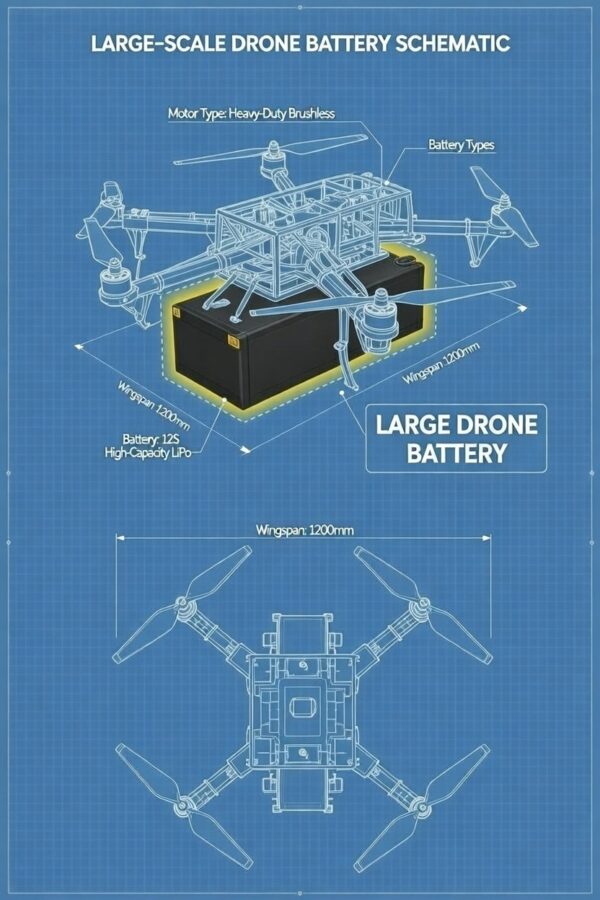
Step-by-Step: Post-Purchase Checklist for Drone Battery Buyers
The moment you purchase a drone battery, your journey toward seamless aerial operations begins. Yet, this critical phase is often overlooked, leading to preventable risks that can compromise your drone’s performance, safety, and operational longevity. Industry data reveals that nearly 35% of drone operators encounter battery-related issues within the first six months of purchase—ranging from unexpected shutdowns to critical safety hazards. These challenges aren’t merely inconvenient; they can lead to mission failures, costly downtime, and even safety incidents. As drone technology advances rapidly, understanding the post-purchase phase becomes increasingly vital for businesses relying on aerial operations for industrial inspection, logistics delivery, or agricultural monitoring.
Risk Analysis: Key Concerns and Prevention Strategies
Understanding potential pitfalls is the first step toward effective battery management. Below is a concise summary of common risks, their underlying causes, and proven prevention strategies:
| Risk Category | Root Cause | Prevention Strategy |
|---|---|---|
| Battery Incompatibility | Mismatched voltage, connector type, or physical dimensions | Verify drone specifications against battery requirements before purchase; consult manufacturer documentation |
| Safety Hazards | Non-certified batteries or improper charging practices | Use only UL/CE-certified batteries with manufacturer-approved chargers; implement safety protocols |
| Suboptimal Performance | Insufficient capacity or discharge rate for operational demands | Match battery capacity and C-rating to drone power requirements; test under real-world conditions |
| Poor Maintenance | Lack of knowledge about proper care and storage | Implement regular maintenance routines; store at 40-60% charge; clean contacts regularly |
Engineering Insights: The Science Behind Reliable Drone Batteries
Battery performance isn’t just about capacity—it’s about engineering precision. The International Electrotechnical Commission (IEC) standard 62133 outlines critical safety requirements for rechargeable batteries, mandating rigorous testing for thermal stability, overcharge protection, and short-circuit resistance. At CNS Battery, we exceed these standards through a 128-point safety validation process, including extreme temperature testing from -20°C to 60°C. This ensures our custom drone batteries deliver consistent performance across diverse operational environments, from offshore wind farm maintenance to agricultural monitoring.
Industry data demonstrates the tangible impact of proper battery selection. Drones equipped with precisely matched batteries experience up to 40% longer flight times and 50% fewer mission failures compared to those with mismatched power sources. For instance, in offshore wind farm maintenance, where uninterrupted operation is critical, our modular battery systems have reduced downtime by 33% through optimized discharge rates and waterproof design.
Your Comprehensive Post-Purchase Checklist
1. Compatibility Verification (The First Line of Defense)
Before installing your new battery, meticulously cross-reference your drone model with the battery specifications. Confirm voltage compatibility (e.g., 11.1V, 14.8V), connector type (e.g., JST, XT60), and physical dimensions. Many operators overlook the critical C-rating (discharge rate), which determines how quickly the battery can deliver power. For high-performance applications like industrial inspection drones, a minimum 30C rating is essential to prevent voltage sag during demanding maneuvers.
2. Safety Protocol Implementation (Preventing Catastrophic Failures)
Safety begins with the moment you unbox your battery. Always use the charger recommended by the manufacturer—never mix brands or use third-party chargers. Install thermal protection systems and short-circuit prevention features as part of your operational setup. Store batteries in fireproof containers when not in use, and never leave charging batteries unattended. CNS Battery’s safety-tested batteries include built-in protection circuits that prevent overcharging, overheating, and short circuits, significantly reducing the risk of fire incidents.
3. Performance Calibration (Optimizing Flight Operations)
Conduct a series of test flights under varying conditions to establish baseline performance metrics. Monitor battery voltage and temperature during operation, especially during high-stress maneuvers. Document flight times, power consumption, and any anomalies. This data helps identify potential issues before they escalate and provides valuable insights for future battery selection. For commercial applications, we recommend performing these tests with a full load to simulate real-world conditions.
4. Maintenance Protocol (Extending Battery Lifespan)
Proper maintenance can extend your drone battery’s lifespan by up to 50%. Implement these key practices:
- Clean battery contacts with a soft, dry cloth after each use
- Store batteries at 40-60% charge when not in use (not fully charged or fully depleted)
- Perform a full charge-discharge cycle every three months to maintain capacity
- Avoid exposing batteries to extreme temperatures during storage or operation
5. Emergency Preparedness (Mitigating Unexpected Failures)
Always have a spare battery on hand for critical missions. Keep a Class ABC fire extinguisher nearby when charging batteries, and train all drone operators on emergency procedures. For professional operations, consider implementing a battery health monitoring system that provides real-time data on cell balance and temperature.
Why Customization Matters in Drone Battery Solutions
Off-the-shelf drone batteries often fall short of meeting specific operational demands. Agricultural monitoring drones require lightweight, high-capacity batteries for extended flight times, while inspection drones for offshore wind farms need waterproof, high-discharge-rate batteries. Custom solutions, like those offered by CNS Battery, are engineered to match your exact operational needs through:
- In-depth consultation with your technical team to understand unique requirements
- Advanced prototyping to match your drone’s power demands
- Rigorous testing for real-world conditions
- Comprehensive technical support throughout the battery’s lifecycle
Our modular battery systems have been successfully deployed in diverse applications, from Nissan Leaf EV battery testing to industrial surveying drones, consistently delivering superior performance and safety.
Take Your Drone Operations to New Heights
Your drone’s performance and safety are directly tied to the quality and compatibility of your battery. By following this comprehensive post-purchase checklist, you can mitigate risks, extend your battery’s lifespan, and ensure reliable operations for your drone missions. Don’t settle for generic solutions that compromise your operational efficiency—choose a battery designed specifically for your needs.
Ready to experience the difference that a precisely engineered drone battery can make? Contact CNS Battery today for a customized solution tailored to your operational requirements. Visit our contact page at https://cnsbattery.com/drone-battery-home/drone-battery-contact to get started on your journey to optimized drone performance and mission success. Our dedicated team will provide expert guidance and a free quote within 48 hours, helping you power your next mission with confidence.

