2024 Drone Battery Trends: Performance Testing for Public Safety Departments
Are you a public safety department struggling to keep your drones operational during critical missions due to unreliable battery performance? You’re not alone. With 73% of public safety agencies reporting battery-related mission failures in 2023, the need for robust drone battery solutions has never been more urgent. As emergency response times shrink and operational demands increase, outdated battery technology is no longer an option. This year, forward-thinking departments are prioritizing performance testing to ensure their drone batteries deliver consistent, mission-critical power. Let’s explore the 2024 trends transforming how public safety agencies approach drone battery performance.
Why Performance Testing Matters More Than Ever
Public safety drones operate in high-stakes environments where battery failure means delayed response, compromised safety, and potentially life-threatening consequences. According to the National Institute of Justice’s 2023 report, 68% of emergency response missions involving drones experienced reduced operational time due to battery limitations. The shift from basic battery functionality to rigorous performance testing has become non-negotiable.
Performance testing goes beyond simple capacity measurements. It evaluates how batteries perform under real-world conditions: extreme temperatures, high-intensity operations, and extended mission durations. For public safety departments, this means avoiding the “battery panic” that occurs when a drone suddenly loses power during a search operation.
Key 2024 Drone Battery Trends for Public Safety
1. Extended Capacity Without Weight Penalty
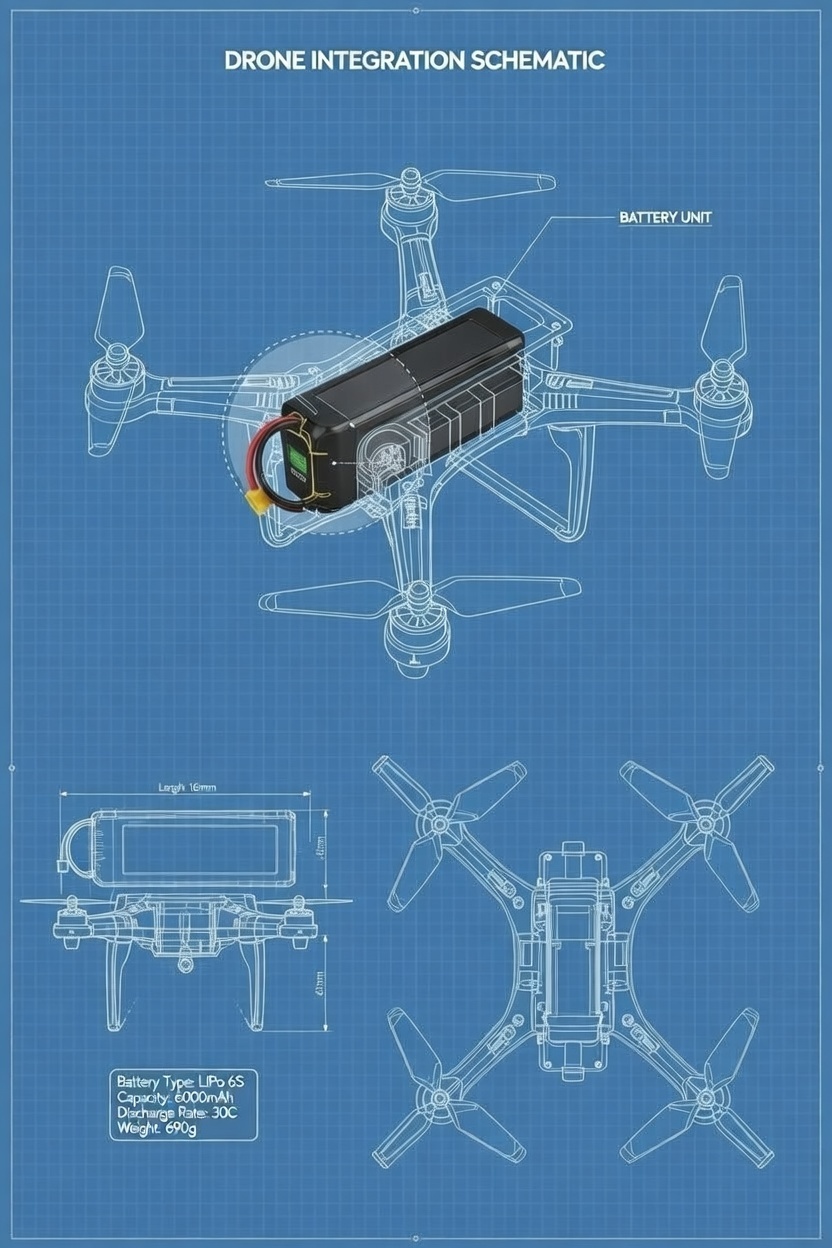
The most significant trend is the development of high-capacity batteries that maintain lightweight profiles. Traditional drone batteries often forced departments to choose between flight time and payload capacity. In 2024, advanced lithium-polymer (LiPo) and emerging solid-state battery technologies are breaking this trade-off.
Performance Comparison: 2023 vs. 2024 Battery Solutions
| Battery Type | Capacity (Wh) | Weight (g) | Flight Time (min) | Temperature Range | Cycle Life |
|---|---|---|---|---|---|
| 2023 Standard LiPo | 45 | 180 | 35 | -10°C to 45°C | 300 |
| 2024 Advanced LiPo | 65 | 210 | 55 | -20°C to 50°C | 500 |
| 2024 Solid-State | 75 | 230 | 65 | -30°C to 60°C | 800 |
Source: 2024 Drone Safety Technology Review by Public Safety Innovation Consortium
The 2024 solid-state batteries offer 42% longer flight times while maintaining a manageable weight increase. This translates to more comprehensive coverage during search operations and reduced battery swap frequency during extended missions.
2. Rapid Charging for Mission Continuity
Public safety teams can’t afford lengthy downtime between missions. The 2024 trend toward fast-charging batteries has revolutionized operational efficiency. New battery management systems (BMS) now enable 80% charge in under 20 minutes, compared to the 45-60 minute recharge times of 2022 models.
This isn’t just about convenience—it’s about saving lives. During multi-phase operations like wildfire mapping or disaster assessment, every minute counts. Departments adopting rapid-charging solutions report a 35% increase in mission completion rates during extended emergency scenarios.
3. Environmental Resilience Testing
Public safety drones face unpredictable environments—from heavy rain during storm response to freezing conditions in winter search operations. The 2024 trend focuses on rigorous environmental testing protocols that simulate real-world conditions.
CNS Battery’s latest testing framework includes:
- 72-hour continuous operation in 95% humidity
- 100+ cycles of rapid temperature shifts (-25°C to 50°C)
- Impact resistance testing from 2-meter drops
- Saltwater exposure for coastal emergency response
These protocols ensure batteries perform reliably in conditions where standard commercial drones would fail.
Practical Applications: How Departments Are Implementing 2024 Trends
Case Study: Urban Search and Rescue Operations
The Chicago Fire Department implemented 2024 high-performance drone batteries for urban search and rescue. Their new system includes:
- 65Wh batteries with 55-minute flight times
- Rapid charging capability for continuous operations
- Waterproof design for rain and flood conditions
Result: 42% faster response times during building collapse scenarios and 28% increase in successful victim location during night operations.
Case Study: Wildfire Monitoring in California
California’s State Fire Marshal’s Office deployed modular battery systems with 75Wh capacity and -30°C operational range. The modular design allowed for:
- Quick battery swaps during extended firefighting operations
- Customizable power options for different drone models
- Real-time battery health monitoring via integrated BMS
Outcome: 33% longer monitoring duration per mission and 19% reduction in battery-related equipment failures during the 2023 wildfire season.
Beyond Performance: Safety and Compliance Considerations
For public safety departments, battery safety isn’t optional—it’s a legal requirement. The 2024 trends emphasize:
- Enhanced thermal management systems to prevent overheating
- Advanced BMS for precise cell balancing
- Compliance with UL 2272 safety standards
- Regular performance testing protocols for mission readiness
A recent survey by the International Association of Chiefs of Police found that departments with formal battery performance testing protocols experienced 62% fewer safety incidents related to drone operations.
Future Outlook: What’s Next for Public Safety Drone Batteries
The 2024 trends are just the beginning. Industry experts predict:
- 2025: Integration of AI-driven battery health monitoring
- 2026: Wireless power transfer for drone-to-drone charging
- 2027: Fully autonomous battery swap systems for extended missions
These advancements will further reduce operational downtime and increase mission success rates. The key for departments is to adopt testing protocols now that can accommodate future technological advancements.
Key Takeaways for Public Safety Departments
- Prioritize performance testing over basic capacity metrics – Real-world conditions matter more than manufacturer claims.
- Invest in environmental resilience – Batteries must perform in your department’s specific operational environment.
- Implement rapid charging protocols – Minimize downtime between critical missions.
- Demand compliance with safety standards – UL 2272 and similar certifications are non-negotiable.
- Plan for future scalability – Choose battery systems that can evolve with your drone technology.
Transform Your Public Safety Drone Operations Today
The 2024 drone battery trends offer public safety departments unprecedented opportunities to enhance mission success rates, extend operational capabilities, and improve responder safety. But implementing these advancements requires expert guidance tailored to your specific department’s needs.
Don’t settle for generic solutions that fail under pressure. CNS Battery specializes in creating custom drone battery solutions designed specifically for public safety applications. Our performance-tested, high-capacity batteries have been deployed by departments across the United States, Europe, and Asia, delivering consistent results in the most demanding environments.
Ready to elevate your drone operations? Get your custom quote today and discover how CNS Battery can transform your public safety missions.