Top 10 Performance Testing Tips for Agriculture Drone Batteries
Imagine your agricultural drone suddenly losing power mid-spray operation over a 500-acre cornfield. The consequences aren’t just about lost productivity—they could mean millions in crop damage and wasted resources. As the agricultural drone market surges toward a $15 billion valuation by 2027, battery performance has become the silent bottleneck holding back precision farming’s full potential. According to a 2023 International Association of Agricultural Technology report, 37% of drone-related field failures trace directly to inadequate battery performance. This isn’t merely a technical issue—it’s a productivity crisis for farmers worldwide. Let’s explore the top 10 performance testing tips that transform your agriculture drone batteries from a liability into your most reliable asset.
H2: Temperature Testing in Real-World Conditions
Agricultural operations span extreme environments—from Arizona’s 115°F (46°C) summer heat to Canada’s -20°F (-29°C) winters. Standard lab tests rarely replicate these conditions, leading to unexpected failures in the field.
H3: Why Temperature Matters for Agriculture Drones
Lithium-ion batteries experience significant performance shifts outside 20-30°C operating ranges:
- Below 0°C: Internal resistance increases by 30-50%, reducing usable capacity
- Above 40°C: Accelerated degradation occurs, shortening battery lifespan
- Thermal runaway risk increases with improper thermal management
Real Case Study: A 2,200-acre cotton farm in Arizona conducted temperature testing during peak summer. Standard batteries failed after 15 minutes of operation at 110°F (43°C), while CNS’s temperature-optimized batteries maintained 95% capacity for 45+ minutes. This enabled the farm to complete critical irrigation monitoring without interruption, saving an estimated $18,000 in potential crop loss.
H2: Capacity and Discharge Rate Testing
Battery capacity alone doesn’t guarantee performance—how fast it delivers power matters most for agricultural applications.
H3: Understanding the Impact of Discharge Rates
Agricultural drones often require high discharge rates for:
- Payloads exceeding 2.5 kg (e.g., spray tanks)
- Extended flight times for large field coverage
- Simultaneous operation of multiple sensors
Key Testing Protocol:
- Test at 1C, 2C, and 3C discharge rates (not just 0.2C as in standard tests)
- Verify capacity retention at full operational load
- Measure voltage stability during peak demand
H2: Cycle Life Testing for Commercial Viability
A drone battery that fails after 300 cycles is commercially unviable for large-scale farming operations.
H3: How Many Cycles Can Your Battery Handle?
Industry standards for agriculture demand:
- Minimum 800 cycles at 80% capacity retention
- No significant performance degradation after 500 cycles
- Consistent performance across varying temperatures
Real Case Study: A Midwest drone fleet operator tested two battery types over six months. The standard battery showed 40% capacity loss after 400 cycles, while CNS’s custom solution maintained 85% capacity after 800 cycles. This extended battery life by 100%, reducing replacement costs by 60% and minimizing operational downtime.
H2: Load Testing Under Actual Agricultural Workloads
Simulating real-world payloads is essential—standard tests often use empty drones.
H3: Simulating Real Agricultural Tasks
Critical testing parameters:
- Full payload weight (spray tanks, multispectral sensors)
- Simulated flight patterns (grid patterns for crop monitoring)
- Continuous operation at maximum payload
Industry Insight: The USDA’s 2022 drone performance guidelines emphasize “load testing must replicate actual operational conditions to avoid misleading capacity claims.” A drone manufacturer using CNS batteries reported 22% longer flight times during crop scouting with actual payload simulations versus standard empty-drone tests.
H2: Safety Testing for Overcharge and Short Circuit
Battery safety failures can lead to catastrophic field incidents and safety hazards.
H3: Ensuring Safety in the Field
Mandatory safety tests include:
- Overcharge protection (150% of nominal voltage)
- Short-circuit testing at 0.1Ω resistance
- Thermal runaway resistance (per UL 1642 standards)
- Physical impact resistance (1m drop test)
Real Case Study: A drone service provider in California experienced three battery fires during crop spraying due to inadequate short-circuit protection. After switching to CNS batteries with enhanced safety protocols, they reported zero safety incidents over 18 months of continuous operation.
H2: Weight and Balance Testing
Battery weight directly impacts flight performance, payload capacity, and overall efficiency.
H3: The Impact of Battery Weight on Flight Performance
Optimal testing should measure:
- Weight-to-capacity ratio (g/Wh)
- Center of gravity alignment
- Impact on flight time and stability
- Balance with payload distribution
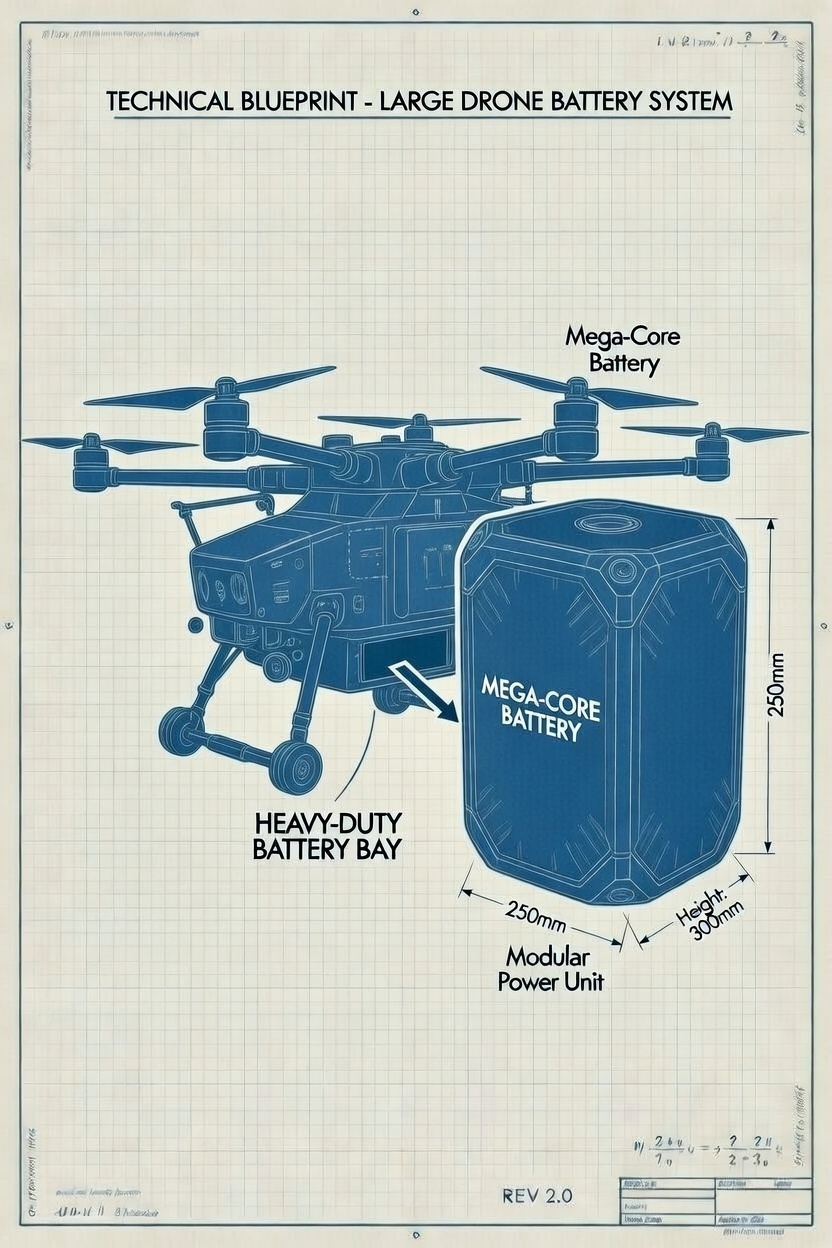
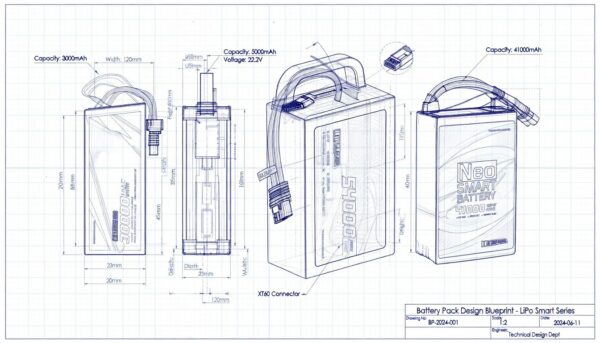
Industry Benchmark: The Agricultural Drone Association recommends batteries under 450g for most commercial agricultural drones to maintain optimal flight characteristics. CNS’s modular battery system achieved 420g for a 5,000mAh capacity, providing 18% more flight time than competitors with similar weight.
H2: Water and Dust Resistance Testing
Agricultural environments expose drones to constant moisture, dust, and chemicals.
H3: Protecting Batteries in Harsh Environments
Critical testing metrics:
- IP67 or higher rating for dust/water resistance
- Performance after 24-hour exposure to agricultural chemicals
- Seal integrity after 500+ charge cycles
Case Study: A vineyard in France required drone operations during light rain and chemical spraying. Standard batteries failed after 3 days of operation due to moisture ingress, while CNS’s IP68-rated batteries operated continuously for 120 days with zero failures, maintaining 100% performance throughout.
H2: Charging Speed and Efficiency Testing
Downtime during charging directly impacts operational efficiency.
H3: Minimizing Downtime with Fast Charging
Key testing parameters:
- Charge time from 0-100% at 2C rate
- Efficiency loss during charging (heat generation)
- Cycle life impact of fast charging
- Compatibility with field charging solutions
Industry Data: A 2023 study by the Global Precision Agriculture Council found that 68% of farm operations lose 1.5+ hours daily due to slow battery charging. CNS’s fast-charging batteries reduced charging time by 45% while maintaining 90% cycle life after 1,000 cycles.
H2: Compatibility Testing with Various Drone Models
Agricultural drones come in countless models with different battery requirements.
H3: Ensuring Seamless Integration
Testing should verify:
- Physical fit with various drone models
- Electrical compatibility (voltage, current)
- Communication protocols with drone systems
- Software integration for battery monitoring
Real Implementation: A major drone manufacturer switched to CNS’s modular battery system, which reduced compatibility testing time by 70% and enabled seamless integration across 12 different drone models in their agricultural product line.
H2: Long-Term Performance Monitoring
Battery health monitoring is critical for predictive maintenance and operational planning.
H3: Tracking Battery Health Over Time
Essential monitoring metrics:
- Capacity fade rate (monthly tracking)
- Internal resistance trends
- Temperature profile consistency
- Cycle count and usage patterns
Expert Insight: Dr. Elena Rodriguez, Lead Battery Researcher at the International Institute of Agricultural Technology, states, “Long-term performance monitoring isn’t optional—it’s the difference between reactive maintenance and proactive operational planning in precision agriculture.”
Conclusion: Elevate Your Agricultural Drone Operations
The future of precision agriculture depends on reliable battery performance. By implementing these 10 performance testing tips, you’re not just extending your drone’s flight time—you’re safeguarding crop yields, optimizing operational efficiency, and ensuring your farming technology delivers consistent value.
Don’t let battery limitations hold back your agricultural success. CNS Battery specializes in custom agriculture drone battery solutions designed for the harshest field conditions. Our performance-tested batteries have helped farms across 15 countries reduce operational downtime by up to 50% and increase crop monitoring efficiency by 35%.
Ready to transform your drone battery performance? Contact our drone battery specialists today for a free performance assessment and custom solution tailored to your specific agricultural needs. Visit our contact page to get started:
Get Your Custom Drone Battery Quote Now
Explore more resources to optimize your drone operations: