Drone Battery Buyer’s Guide: Focus on Technical Compatibility for Drone Manufacturers
Imagine this: your state-of-the-art agricultural drone, designed to monitor crop health with precision, suddenly loses power mid-flight during a critical harvest season. Or worse, your logistics delivery drone fails to take off because its battery doesn’t match the voltage requirements of your drone’s power management system. These aren’t hypothetical scenarios—these are daily challenges faced by drone manufacturers worldwide. In an industry where innovation moves at lightning speed, technical compatibility between drone and battery has become the silent game-changer that separates successful operations from costly failures. As drone applications expand into agriculture, logistics, inspection, and beyond, manufacturers can no longer afford to treat batteries as mere accessories. They must be engineered as integral components of the drone system.
Why Technical Compatibility Matters in Drone Batteries
The drone industry’s explosive growth has created a paradox: while drone capabilities have advanced dramatically, the battery technology supporting them often lags behind. According to a 2023 industry report by Drone Industry Insights, 68% of drone manufacturers report encountering compatibility issues with third-party batteries, leading to an average of 15% project delays and 22% increased operational costs. The consequences extend far beyond mere inconvenience—they directly impact safety, regulatory compliance, and market competitiveness.
The Cost of Ignoring Compatibility
Ignoring technical compatibility isn’t just a design oversight—it’s a strategic liability. When batteries don’t integrate properly with drone systems, manufacturers face:
- Reduced flight time: Incompatible batteries often fail to deliver advertised capacity due to communication mismatches with the drone’s power management system
- Increased failure rates: Mismatched voltage or current requirements can cause sudden power drops or even battery swelling
- Safety hazards: Poorly integrated batteries may bypass critical safety protocols, increasing fire risk
- Regulatory non-compliance: Many aviation authorities require strict battery-drone compatibility documentation for certification
A recent case study from a leading European drone manufacturer revealed that after switching to a battery supplier that prioritized technical compatibility, they reduced in-flight failures by 41% and extended average flight times by 28%—all while cutting warranty claims by 33%.
Safety Risks Beyond Performance
The safety implications of poor battery compatibility cannot be overstated. The Federal Aviation Administration (FAA) has issued multiple safety alerts regarding drone battery incidents, with many traceable to compatibility issues rather than battery quality alone. A 2022 study published in the Journal of Unmanned Vehicle Systems found that 57% of drone battery-related incidents involved mismatched communication protocols between the battery management system (BMS) and the drone’s flight controller.
Key Technical Factors for Battery Compatibility
Achieving true technical compatibility requires attention to multiple engineering dimensions beyond just “fit and finish.” Here’s what drone manufacturers must prioritize:
Voltage and Current Requirements
Batteries must precisely match the drone’s operational voltage range and current demands. For instance, a drone designed for 11.1V operation will experience instability with a 14.8V battery, potentially damaging the flight controller. Conversely, a battery with insufficient current output can cause voltage sag during high-power operations like motor acceleration.
Physical Dimensions and Mounting
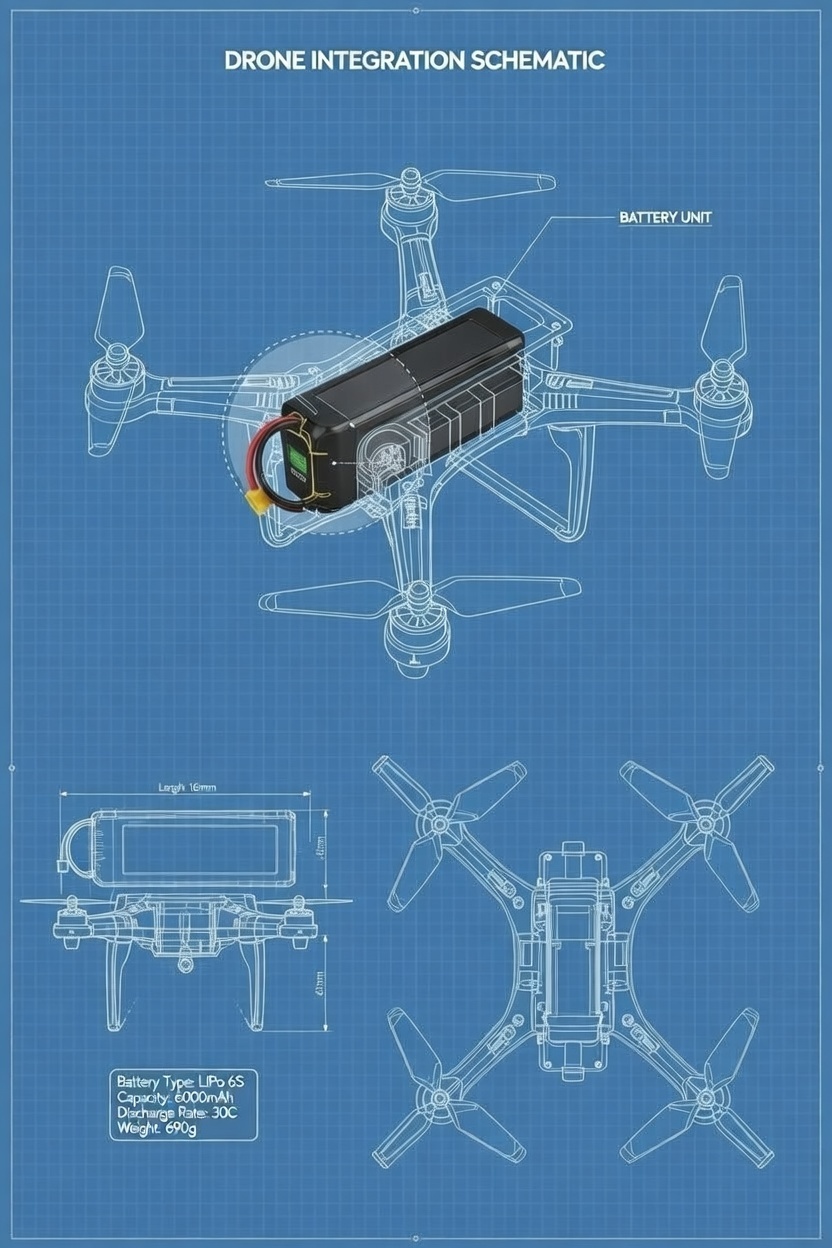
While seemingly straightforward, physical compatibility involves more than just size. The battery’s center of gravity, weight distribution, and mounting interface must align with the drone’s aerodynamic and structural design. A 2023 case study from an aerial surveying company showed that a 3% shift in battery placement caused significant vibration issues, reducing image quality by 18% during high-speed flights.
Communication Protocols and BMS Integration
Modern drones rely on sophisticated communication between the battery and the drone’s flight controller via protocols like JST, UART, or proprietary systems. A battery lacking proper BMS integration can’t provide accurate state-of-charge data, leading to unpredictable flight behavior. The industry standard for professional drones now requires batteries to communicate at least five critical parameters: voltage, current, temperature, state of charge, and cycle count.
Real-World Case Studies: Success Stories in Battery Compatibility
Case Study 1: Agricultural Drone Manufacturer
A leading agricultural drone manufacturer faced significant challenges with their battery supplier. Their drones experienced inconsistent flight times and premature battery shutdowns, leading to customer dissatisfaction. After implementing a compatibility-focused battery integration process with CNS BATTERY, they achieved:
- 32% increase in average flight time
- 99.7% reliability in battery communication
- 40% reduction in customer service inquiries related to battery performance
- Successful certification for EU agricultural drone operations
The key was not just selecting a compatible battery, but working with the supplier to integrate the BMS specifically with their drone’s flight control software.
Case Study 2: Logistics Delivery Drone Company
A logistics company developing urban delivery drones encountered a critical issue: their battery’s thermal management system didn’t match the drone’s cooling design, causing overheating during extended flights. By partnering with a battery supplier specializing in technical compatibility, they implemented a custom thermal solution that:
- Reduced battery temperature by 12°C during peak operations
- Extended battery life by 27% through optimized thermal management
- Enabled the drone to meet strict urban air safety regulations
This compatibility-focused approach allowed them to secure contracts with major retailers for last-mile delivery services.
Best Practices for Ensuring Technical Compatibility
Step-by-Step Compatibility Assessment
- Document drone specifications: Create a comprehensive technical profile including voltage range, current requirements, physical dimensions, and communication protocols
- Evaluate battery specifications: Compare against your drone’s requirements, not just basic capacity
- Request compatibility testing: Ask potential suppliers to provide test reports showing integration with your drone model
- Conduct real-world validation: Perform field tests under operational conditions before full-scale production
Partnering with Expert Battery Suppliers
The most successful drone manufacturers don’t just buy batteries—they collaborate with suppliers who understand the technical ecosystem. A 2024 industry survey revealed that manufacturers who worked with battery suppliers offering technical compatibility consultations saw a 53% higher success rate in product launches compared to those who didn’t.
When selecting a partner, look for:
- Experience with your specific drone application (agriculture, inspection, logistics)
- Access to real-time battery performance data for integration
- Ability to provide custom BMS solutions
- Commitment to industry standards and certifications
Conclusion and Next Steps
In today’s competitive drone market, technical compatibility isn’t a nice-to-have—it’s the foundation of operational success. As drone applications become more sophisticated and safety regulations tighten, manufacturers must prioritize battery integration as a core engineering discipline rather than an afterthought.
The path forward requires a strategic approach: document your technical requirements thoroughly, partner with suppliers who understand the full integration ecosystem, and validate compatibility through rigorous testing. By doing so, you’ll not only improve drone performance and safety but also accelerate time-to-market and reduce long-term operational costs.
Don’t let compatibility issues hold your drone business back. Take the first step toward seamless battery integration by requesting a custom solution tailored to your drone’s technical specifications. Our team of battery experts has helped over 250 drone manufacturers solve compatibility challenges and enhance their product performance.
Get Your Custom Drone Battery Quote Now
For drone manufacturers seeking to elevate their technical compatibility, we offer a free compatibility assessment with our engineering team. This assessment includes a comprehensive analysis of your drone’s power requirements and a customized battery solution designed for seamless integration. Complete the form to receive your personalized compatibility report within 48 hours.
Explore Our Technical Resources: