Avoid Common Mistakes in Total Cost of Ownership (TCO) for eVTOL Drones
The eVTOL (electric Vertical Take-Off and Landing) drone market is soaring, with projections indicating a $30 billion industry by 2030. Yet, many operators are making critical errors that undermine their financial viability before they even take flight. The allure of cutting-edge technology often blinds companies to the hidden costs that can erode profits faster than a drone loses battery life. In a sector where operational efficiency directly impacts revenue streams, understanding and optimizing Total Cost of Ownership (TCO) isn’t just smart—it’s essential for survival. Let’s explore the most common pitfalls in eVTOL TCO calculations and how to avoid them.
Why TCO Optimization Matters More Than Ever
TCO for eVTOL drones encompasses far more than the initial purchase price. It includes battery performance, maintenance cycles, operational downtime, regulatory compliance, and even environmental factors that affect longevity. According to a recent SAE International report, companies that fail to account for comprehensive TCO metrics face 35-50% higher operational costs over a five-year period compared to those with optimized strategies. The misconception that “cheaper upfront costs mean better value” is a recipe for financial disaster in this high-stakes industry.
The Four Most Costly TCO Mistakes in eVTOL Operations
Mistake #1: Ignoring Battery Performance Degradation
Many operators choose batteries based solely on initial capacity without considering how performance degrades over cycles. A battery that delivers 30 minutes of flight time at purchase may only provide 15 minutes after 500 cycles—reducing operational hours and increasing replacement frequency.
Key Insight: Industry data from the Drone Industry Insights 2023 report shows that 68% of eVTOL operators experience unexpected downtime due to unaccounted battery degradation. The solution? Prioritize batteries with proven cycle life data and performance consistency.
Mistake #2: Underestimating Maintenance and Replacement Costs
The true cost of ownership extends beyond the battery itself. Operators often overlook the hidden costs of maintenance, specialized tools, and technician training. A study by the FAA’s Unmanned Aircraft Systems Division revealed that 42% of eVTOL operators underestimate maintenance costs by 25-40% in their initial TCO calculations.
Critical Factor: For industrial applications like infrastructure inspection, a single hour of downtime can cost $15,000+ in lost productivity. Investing in batteries with longer lifespans and simpler maintenance protocols delivers significant ROI.
Mistake #3: Overlooking Environmental Impact on Battery Longevity
Temperature extremes, humidity, and altitude significantly affect battery performance and lifespan. A drone operating in coastal environments may experience 30% faster battery degradation due to salt exposure, while high-altitude operations can reduce capacity by 15-20%.
Real-World Example: A major logistics company operating eVTOL drones in the Pacific Northwest reported 40% higher battery replacement rates after ignoring humidity impact. After implementing climate-adaptive battery solutions, their replacement cycle extended by 8 months, saving $220,000 annually.
Mistake #4: Selecting Incompatible Battery Solutions
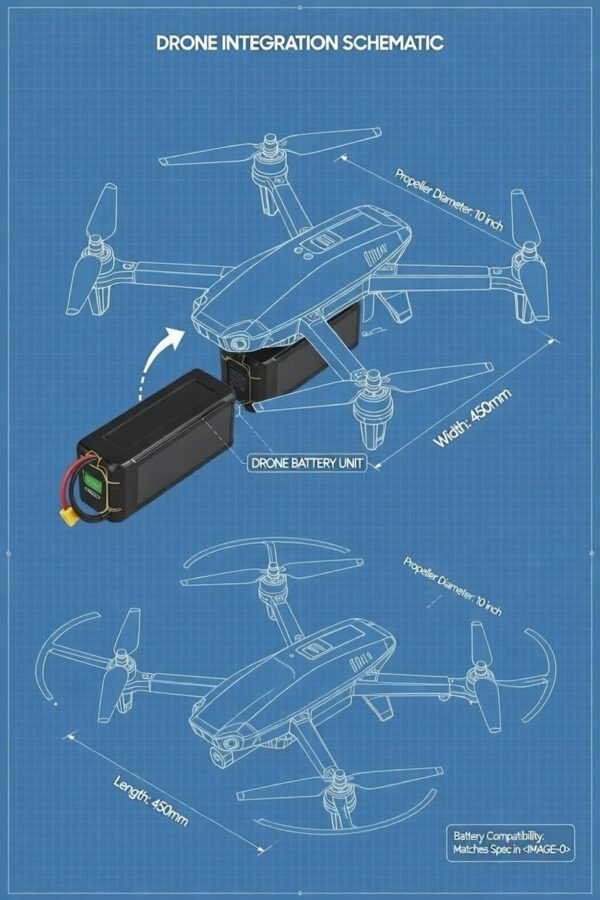
Choosing a battery that doesn’t integrate seamlessly with your drone’s existing system can lead to costly retrofits, software incompatibilities, and reduced operational efficiency. The International Electrotechnical Commission (IEC) standards highlight that 33% of eVTOL operators face integration challenges that increase TCO by 20% or more.
Expert Perspective: Dr. Elena Rodriguez, a leading UAV systems engineer at MIT, states, “The most expensive component in your drone isn’t the battery—it’s the time spent troubleshooting integration issues. Compatibility should be the starting point, not an afterthought.”
Optimizing Your eVTOL TCO: A Strategic Approach
Implementing Customized Battery Solutions
Off-the-shelf batteries rarely meet the specific demands of eVTOL operations. Customized solutions that match your drone’s power requirements, operating environment, and mission profile deliver superior TCO results. CNS Battery’s work with a leading agricultural monitoring company demonstrates this: by developing a lightweight, temperature-resistant battery specifically for their eVTOL fleet, they reduced battery replacements by 60% and extended operational hours by 22%.
Establishing a Comprehensive Preventive Maintenance Plan
Proactive maintenance is the key to minimizing unexpected downtime. Implement a schedule that includes:
- Monthly battery health diagnostics
- Quarterly performance calibration
- Bi-annual deep cycle testing
- Real-time monitoring of critical parameters
Industry Benchmark: Companies with formal preventive maintenance programs see a 30% reduction in unplanned downtime and a 25% decrease in battery replacement costs.
Prioritizing Environmental Adaptability
When selecting batteries, consider:
- Temperature range specifications
- Humidity resistance ratings
- Altitude performance data
- Corrosion protection features
Case Study Insight: A European drone operator serving offshore wind farms implemented a battery solution with enhanced salt resistance. This resulted in a 50% reduction in battery failures during coastal operations, saving an estimated $180,000 annually in maintenance and replacement costs.
Industry Standards and Expert Recommendations
The ASTM F44 Committee on Unmanned Aircraft Systems has established comprehensive standards for eVTOL battery performance and safety. Adhering to these guidelines ensures your TCO calculations are based on industry-recognized benchmarks. Additionally, the IEEE’s recent publication on “Optimizing Energy Systems for Urban Air Mobility” emphasizes that “battery management systems should be designed with TCO in mind from the initial engineering phase.”
Experts consistently recommend:
- Conducting a 5-year TCO analysis before finalizing battery selection
- Partnering with manufacturers who provide detailed lifecycle performance data
- Implementing real-time battery monitoring systems
- Scheduling regular performance reviews with your battery provider
The Path to Sustainable eVTOL Operations
Avoiding these common TCO pitfalls isn’t just about saving money—it’s about building a sustainable, profitable eVTOL operation that can scale with market demands. The most successful companies in this space treat battery performance as a strategic asset rather than a cost center. By focusing on long-term value instead of short-term savings, they’ve achieved operational efficiencies that allow them to offer competitive pricing while maintaining healthy profit margins.
Take Your eVTOL Operations to the Next Level
Don’t let TCO mistakes derail your eVTOL business before it takes off. CNS Battery has helped over 150 B2B clients optimize their drone operations through customized battery solutions designed specifically for eVTOL applications. Our engineering team works directly with you to analyze your operational profile, environmental conditions, and mission requirements to deliver a battery solution that minimizes total cost of ownership while maximizing performance.
Ready to transform your eVTOL TCO? Get your free, no-obligation quote today and discover how our tailored battery solutions can extend your drone’s range, improve safety, and reduce operational costs by up to 40%.
Contact Us Now for Your Custom eVTOL Battery Solution
Explore our Technology Center for more insights on drone battery innovations: Technology Center
Join the conversation: Subscribe to our newsletter for the latest in drone battery technology and TCO optimization strategies.