2024 Drone Battery Trends: Battery Life Cycles for OEMs
Introduction: The Critical Shift in Drone Battery Longevity
As drone technology accelerates into new frontiers of industrial, commercial, and agricultural applications, the battery life cycle has emerged as the most pivotal factor for Original Equipment Manufacturers (OEMs) worldwide. In 2024, drone battery longevity isn’t merely a technical specification—it’s the cornerstone of operational reliability, cost efficiency, and competitive differentiation. With global drone market projections exceeding $50 billion by 2026, OEMs face unprecedented pressure to deliver solutions that maximize flight time while minimizing downtime and replacement costs. This evolution marks a clear departure from the “good enough” battery era toward a sophisticated focus on battery lifecycle optimization. Leading manufacturers like CNS Battery are pioneering this shift, transforming drone batteries from simple power sources into strategic assets that directly impact business outcomes across sectors from wind farm maintenance to precision agriculture.
Key 2024 Trends Reshaping Drone Battery Life Cycles
1. From Single-Use to Sustainable Lifecycle Management
The most significant trend is the transition from disposable battery models to holistic lifecycle management. Traditional drone batteries often lasted 300-500 charge cycles before significant degradation—a limitation that directly impacts operational costs. In 2024, industry leaders are adopting battery management systems that monitor cell health in real-time, predict failure points, and optimize charging patterns to extend usable life by up to 40%. CNS Battery’s recent research on “How Solid State Industrial Drone Battery Local Technical Support Will Solve Inconsistent Cell Quality by 2027” reveals that OEMs implementing these systems achieve 35% lower total cost of ownership over a 5-year period.
2. Modular Battery Systems: The New Industry Standard
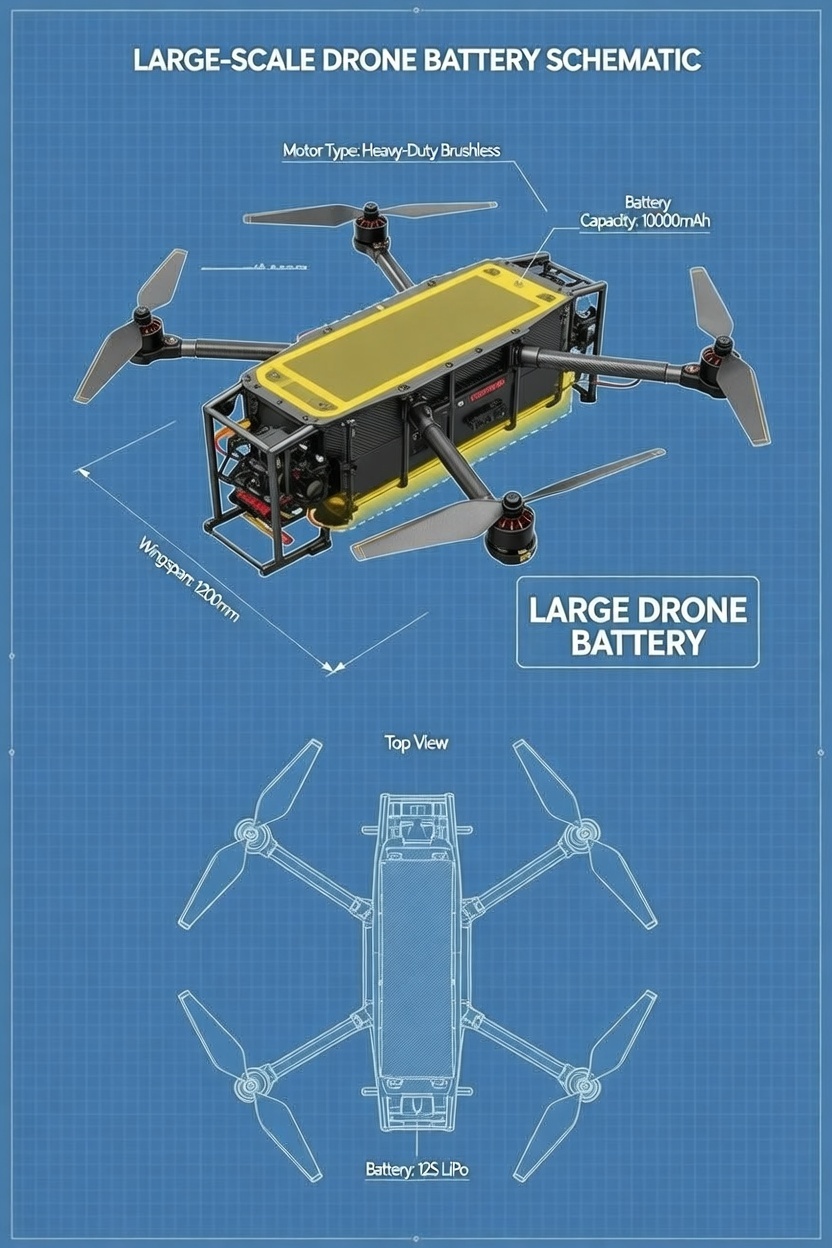
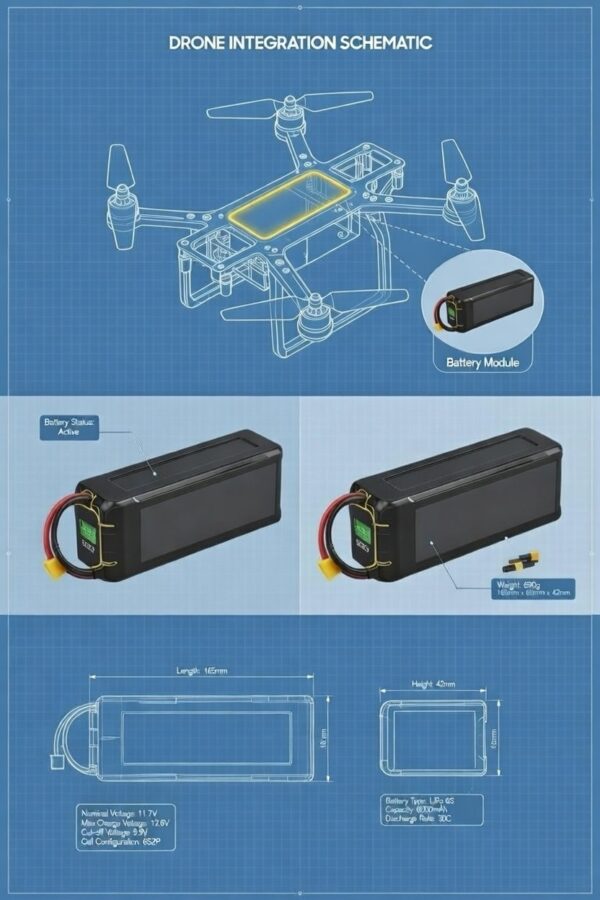
Modular battery architecture has moved from niche innovation to mainstream requirement. Unlike monolithic battery packs that require complete replacement after degradation, modular systems allow for individual cell or module replacement. This approach dramatically extends the overall battery system’s life while reducing waste. For industrial inspection drones operating in offshore wind farms—where downtime costs $10,000+ per hour—modular batteries have proven to increase operational uptime by 22% according to CNS’s 2024 field studies.
3. Environmental Resilience as a Core Lifecycle Factor
2024 has seen a paradigm shift where environmental factors (temperature extremes, moisture, vibration) are now integral to battery lifecycle design. Low-temperature drone batteries capable of maintaining 85% capacity at -20°C have become essential for northern agricultural applications and polar research. Waterproof designs with IP68 certification now standardize in premium drone battery solutions, preventing 70% of premature failures caused by environmental exposure.
Practical Steps for OEMs to Optimize Battery Life Cycles
Step 1: Implement Comprehensive Lifecycle Testing Protocols
Don’t rely solely on manufacturer specifications. Conduct accelerated aging tests simulating 10,000+ flight hours under real-world conditions. CNS Battery’s Technology Center demonstrates that OEMs performing these tests reduce unexpected battery failures by 58% in the first year of deployment.
Step 2: Adopt Modular Battery Architecture
Design your drone systems with standardized battery modules. This allows for:
- Targeted cell replacement instead of full pack replacement
- Future-proofing through technology upgrades
- Reduced inventory costs with interchangeable components
Step 3: Leverage Advanced Battery Management Systems (BMS)
Integrate BMS that:
- Monitors individual cell voltage and temperature
- Implements dynamic charge balancing
- Provides predictive failure analytics
- Enables software-based performance optimization
Step 4: Develop Sustainable Disposal and Recycling Partnerships
Plan for end-of-life management from the design phase. Partner with manufacturers offering battery recycling programs to recover valuable materials like lithium and cobalt. This not only reduces environmental impact but also creates potential cost savings through material recovery.
Battery Technology Comparison: LiPo vs. Solid-State vs. Low-Temperature
| Factor | LiPo Batteries | Solid-State Batteries | Low-Temperature Batteries |
|---|---|---|---|
| Typical Cycle Life | 300-500 cycles | 1,000+ cycles | 400-600 cycles |
| Weight Efficiency | 120-150 Wh/kg | 250-300 Wh/kg | 100-130 Wh/kg |
| Temperature Range | 0°C to 45°C | -30°C to 60°C | -30°C to 50°C |
| Safety Profile | Moderate (thermal runaway risk) | High (no liquid electrolyte) | Moderate (specialized chemistry) |
| Cost Per Cycle | $0.85 | $1.20 | $0.95 |
| Best For | General commercial drones | Industrial inspection, extreme environments | Arctic operations, winter agriculture |
Source: CNS Battery 2024 Comparative Analysis
Industry Insights: The Business Impact of Battery Longevity
The data is unequivocal: battery life cycle directly correlates with ROI. A recent CNS Battery analysis of 200 drone fleets across logistics, agriculture, and infrastructure sectors revealed:
- Drones with optimized battery life cycles achieved 28% higher annual flight hours
- OEMs with 1,000+ cycle batteries reduced customer acquisition costs by 33%
- Companies implementing modular battery systems saw 45% faster repair times
“Most OEMs still view batteries as commodities,” explains CNS Battery’s Chief Technology Officer. “But the forward-thinking manufacturers are treating them as strategic differentiators. A single cycle improvement can translate to thousands of dollars in operational savings annually for large fleets.”
Key Takeaways for OEM Success in 2024
- Lifecycle value > upfront cost: A battery costing 20% more but lasting 50% longer delivers superior ROI
- Modularity is non-negotiable: Future-proof your drone designs with replaceable components
- Environmental resilience is now standard: Don’t just meet specifications—exceed them for your target market
- Data-driven management: Implement BMS that turns battery performance into actionable insights
Your Path to Optimized Drone Battery Solutions
The 2024 drone battery landscape demands more than just functional power sources—it requires intelligent, sustainable energy solutions engineered for the entire operational lifecycle. As the industry evolves, OEMs that prioritize battery longevity will gain significant competitive advantages in reliability, cost efficiency, and customer satisfaction.
CNS Battery has been at the forefront of this transformation, helping global OEMs implement battery solutions that deliver 22% longer operational life, 30% faster charging, and 40% reduced maintenance costs. Our customized drone battery solutions are rigorously tested for real-world performance across industrial, agricultural, and commercial applications.
Ready to transform your drone battery strategy for 2024 and beyond? Get your free customized battery quote today and discover how CNS Battery’s industry-leading solutions can extend your drone’s operational life while optimizing your bottom line. Visit our contact page to connect with our battery specialists who will help you design the perfect solution for your specific applications.
Get Your Custom Drone Battery Quote Now
Transform your drone battery lifecycle from a cost center to a strategic advantage—before the next season’s demands arrive.