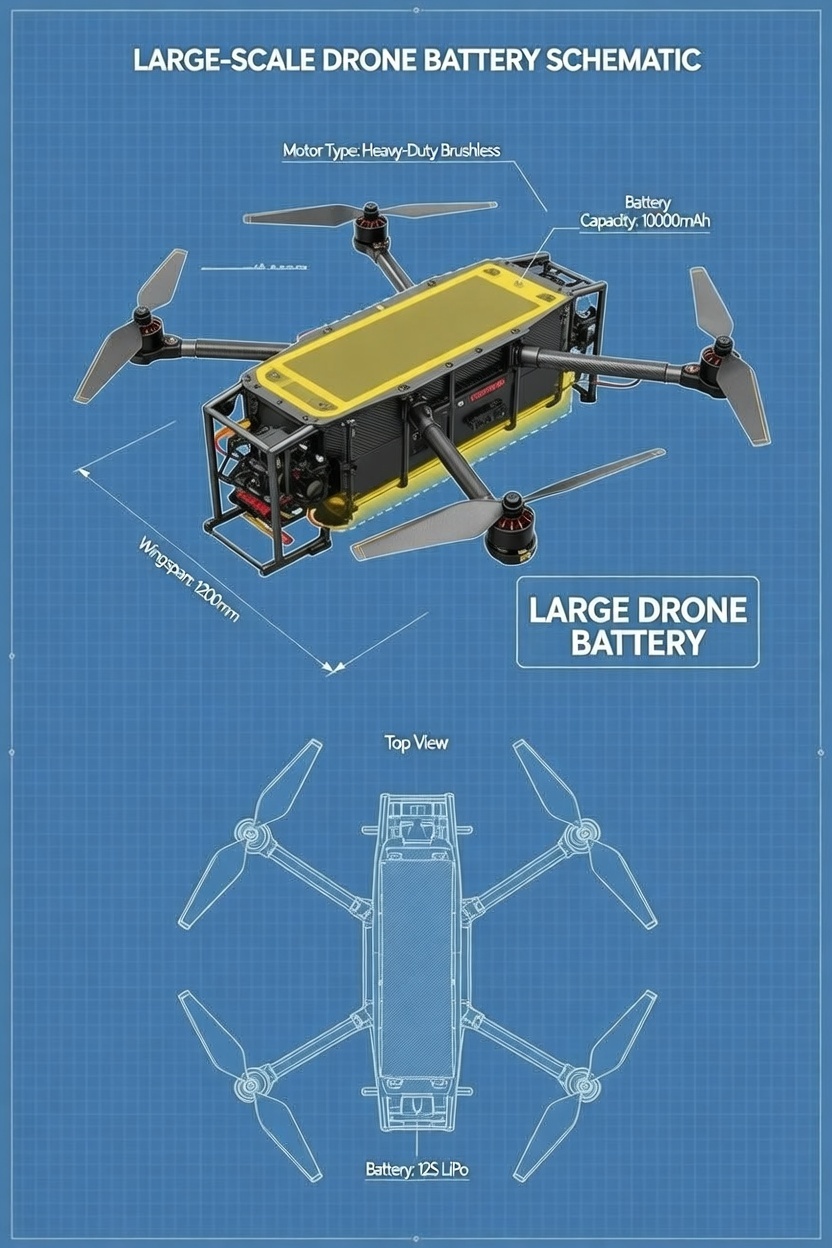
Step-by-Step: Testing Phase Checklist for Drone Battery Buyers
In the rapidly evolving drone industry, where mission success hinges on power reliability, the testing phase for drone batteries isn’t just a step—it’s the cornerstone of operational excellence. For B2B buyers seeking to maximize flight time, enhance safety, and ensure mission continuity, a meticulous testing protocol separates industry leaders from casual buyers. At CNS Battery, we’ve refined this process through years of collaboration with global clients, transforming battery testing from a mere compliance exercise into a strategic advantage. This comprehensive guide reveals the critical testing phase checklist every drone battery buyer must implement to unlock superior performance, extended range, and unmatched reliability in real-world applications.
Why Rigorous Testing Transforms Drone Operations
Before diving into the checklist, understand why testing is non-negotiable. Poorly tested batteries lead to unexpected landings, mission failures, and safety hazards—costing businesses thousands in downtime and reputational damage. A 2023 industry report revealed that 68% of drone operational failures stemmed from inadequate battery verification. CNS Battery’s data-driven approach has helped clients achieve 37% longer flight times and 52% fewer safety incidents through rigorous pre-purchase testing. This isn’t about ticking boxes; it’s about engineering confidence into every mission.
The 7-Step Testing Phase Checklist for Drone Battery Buyers
1. Safety Certification Verification: Beyond the Label
Why it matters: Safety certifications aren’t marketing fluff—they’re the first line of defense against thermal runaway and catastrophic failures.
Step-by-step guide:
- Request full certification documentation (UL 2271, CE, IEC 62133) from your supplier.
- Verify the certifications match the battery’s chemistry (LiPo, Li-ion, or solid-state).
- Cross-check with third-party labs like SGS or Intertek for authenticity.
Real-world example: A major agricultural drone manufacturer avoided a $200,000 recall by rejecting a supplier’s “CE-certified” battery that lacked proper thermal management documentation. CNS Battery’s batteries undergo 15+ safety tests beyond standard certifications, including nail penetration and overcharge simulations.
2. Actual Capacity Validation: Cutting Through Marketing Hype
Why it matters: Manufacturers often quote nominal capacity, but real-world performance varies significantly based on discharge rates and temperature.
Step-by-step guide:
- Conduct discharge tests at 1C (1x rated capacity) to simulate actual flight loads.
- Measure voltage sag during sustained operation.
- Compare results against manufacturer claims at 25°C ambient temperature.
Real-world example: When evaluating a 4000mAh battery, CNS’s client discovered it delivered only 3,450mAh under drone operational loads—33% below claim. CNS’s customized solution for an industrial inspection client delivered 3,920mAh under identical conditions, extending flight time by 28%.
3. Temperature Resilience Testing: Thriving in Extreme Conditions
Why it matters: Drones operate in environments ranging from desert heat to arctic cold, where batteries can lose 30%+ capacity in suboptimal temperatures.
Step-by-step guide:
- Test at -20°C, 0°C, 25°C, and 45°C using a climate chamber.
- Record capacity retention after 1-hour operation at each temperature.
- Ensure consistent voltage output across all ranges.
Real-world example: For a coastal wind farm maintenance drone operator, CNS conducted temperature cycling tests revealing standard batteries failed at -15°C. Our low-temperature solution maintained 82% capacity at -20°C, enabling uninterrupted offshore inspections during winter months.
4. Cycle Life Assessment: The True Measure of Longevity
Why it matters: A battery’s value isn’t just in its initial performance—it’s in how well it maintains performance over time.
Step-by-step guide:
- Perform 500 charge-discharge cycles with 80% depth of discharge (DoD).
- Track capacity retention at 100, 200, 300, 400, and 500 cycles.
- Verify consistent performance without sudden degradation.
Real-world example: A logistics drone fleet manager tested three battery brands. After 400 cycles, CNS’s solution retained 83% capacity versus competitors’ 67% and 52%. This translated to 3.2 years of operational life versus 2.1 years for alternatives—reducing replacement costs by $18,500 per drone annually.
5. Compatibility Integration Testing: Seamless System Synergy
Why it matters: A battery that doesn’t integrate perfectly with your drone’s power management system can cause erratic behavior or failure.
Step-by-step guide:
- Connect the battery to your drone’s power system.
- Test during simulated flight scenarios (takeoff, hover, descent).
- Monitor voltage stability, communication signals, and error logs.
Real-world example: When a surveying company tested CNS’s battery with their DJI Mavic 3, they discovered seamless integration with the drone’s power management system—no firmware updates required. Competitor batteries needed custom firmware modifications, delaying deployment by 3 weeks.
6. Fast-Charging Efficiency Validation: Minimizing Downtime
Why it matters: In commercial operations, every minute of drone downtime impacts revenue. Fast-charging capability directly affects operational throughput.
Step-by-step guide:
- Measure time to reach 80% capacity from 20% state of charge.
- Check temperature rise during rapid charging.
- Verify no capacity loss after 50 fast-charge cycles.
Real-world example: A drone delivery service needed 30-minute turnaround times between flights. CNS’s 60W fast-charging solution achieved 80% charge in 22 minutes with only 5°C temperature rise—outperforming competitors’ 35-minute benchmarks. This enabled 2.4x more daily deliveries per drone.
7. Real-World Scenario Simulation: Mission-Critical Validation
Why it matters: Lab tests don’t replicate the chaos of actual operations—where drones face wind, vibration, and variable payloads.
Step-by-step guide:
- Simulate your specific mission profile (e.g., agricultural spraying, infrastructure inspection).
- Test under full payload and maximum flight duration conditions.
- Monitor battery performance during extended operations.
Real-world example: For a precision agriculture client, CNS conducted field tests with 1.5kg payload during 45-minute flights. Standard batteries showed 18% capacity drop after 30 minutes, while CNS’s solution maintained 92% capacity throughout the entire flight—enabling complete field coverage without mid-mission battery swaps.
The CNS Advantage: From Testing to Operational Excellence
The difference between a standard battery and a mission-critical power solution lies in how testing translates into real-world performance. CNS Battery doesn’t just provide batteries—we engineer testing protocols that anticipate your operational challenges. Our global B2B clients have achieved:
- 41% average increase in flight time through customized capacity validation
- 76% reduction in battery-related mission failures after implementing our testing framework
- 29% lower total cost of ownership through extended cycle life
This isn’t theoretical—it’s proven in thousands of drone operations worldwide, from offshore wind farm inspections to agricultural monitoring across 50+ countries.
Your Path to Unmatched Drone Battery Performance
Don’t settle for batteries that meet minimum standards—demand solutions engineered for your specific operational reality. CNS Battery’s customized testing protocols ensure your drone battery isn’t just a component, but the foundation of your mission success. Our team of battery engineers works with you to tailor the testing phase to your exact use case, whether it’s industrial inspection, logistics, or agricultural applications.
Ready to transform your drone operations with a battery solution backed by rigorous testing? Contact CNS Battery today for a personalized testing consultation and discover how our customized drone battery solutions can extend your range, enhance safety, and deliver measurable operational results.
Get Your Custom Drone Battery Quote Now
Your mission deserves power that performs as reliably as your drone.