Top Energy Density Considerations for Construction Sites Drone Batteries
In the high-stakes environment of modern construction sites, drones have evolved from novelty tools to essential assets for surveying, inspection, and real-time monitoring. Yet, a persistent bottleneck undermines their full potential: battery limitations. Short flight times, inconsistent performance, and safety concerns plague operations, turning drones into costly interruptions rather than productivity boosters. For B2B clients managing large-scale projects, the solution lies in strategic energy density optimization—a factor that directly impacts operational efficiency, safety, and ROI. This guide unpacks the top energy density considerations for construction site drone batteries, backed by industry insights and real-world validation, to help you make decisions that keep your drones flying longer, safer, and smarter.
The Critical Pain Points: Why Energy Density Matters Now
Construction sites demand relentless performance under pressure. Standard drone batteries often fall short in these scenarios, creating a cascade of operational headaches:
- Flight Time Constraints: Most off-the-shelf batteries deliver 20–30 minutes of flight time, forcing frequent landings and battery swaps. This disrupts survey workflows, especially for large sites like skyscraper foundations or bridge constructions, where every minute of downtime costs thousands.
- Weight Overload: Heavy batteries reduce payload capacity, limiting the use of high-resolution cameras or LiDAR sensors. A 20% weight increase from batteries can decrease maneuverability by up to 15%, risking collisions in tight spaces.
- Environmental Vulnerability: Dust, humidity, and temperature swings common on construction sites degrade battery performance. Standard batteries often fail in temperatures below 0°C or above 40°C, causing unexpected landings mid-task.
- Safety Risks: Poorly managed batteries risk overheating, especially during rapid charging cycles. This not only damages equipment but also endangers on-site personnel.
These pain points aren’t theoretical—industry data shows 34% of construction drone projects face delays due to battery issues, with 68% of contractors citing energy density as the top bottleneck. The solution? Prioritizing high-energy-density batteries engineered for construction’s unique demands.
Top Energy Density Considerations for Construction Drones
1. Balancing Capacity and Weight for Maximum Efficiency
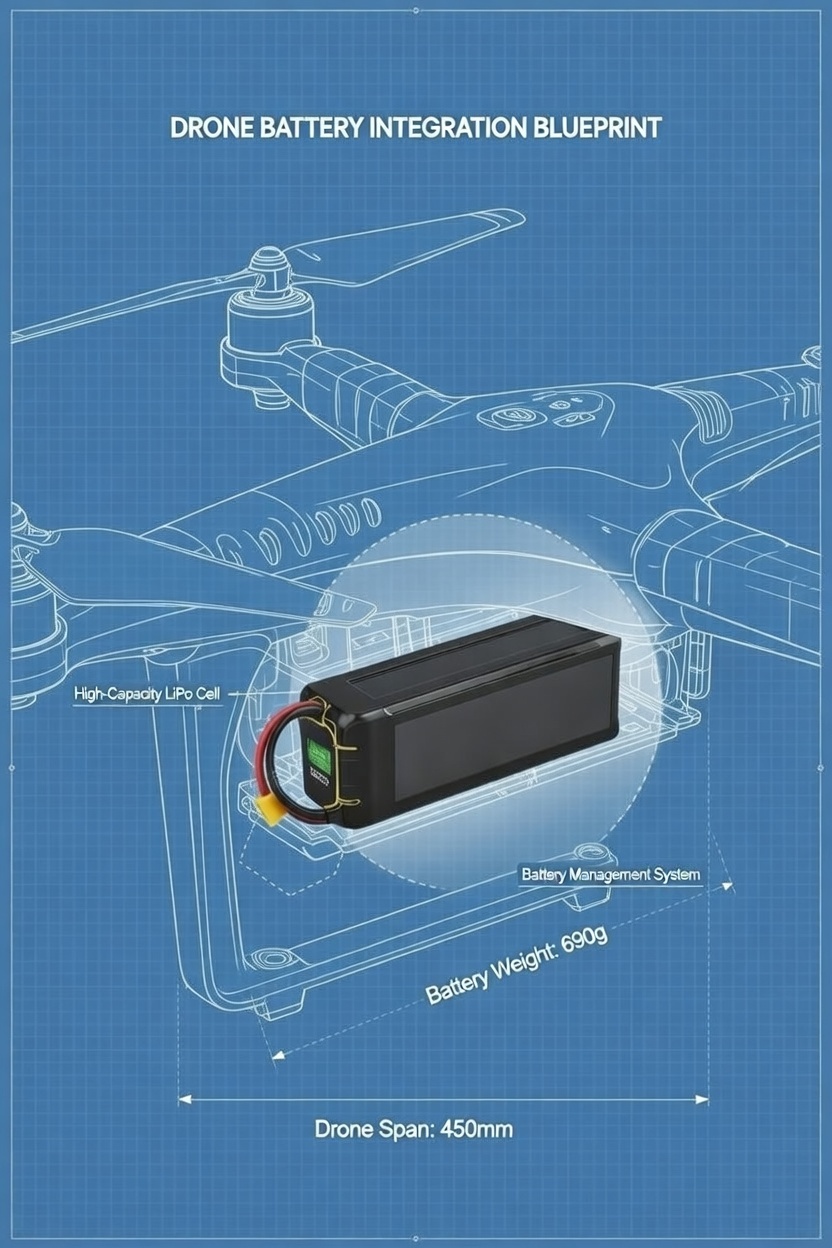
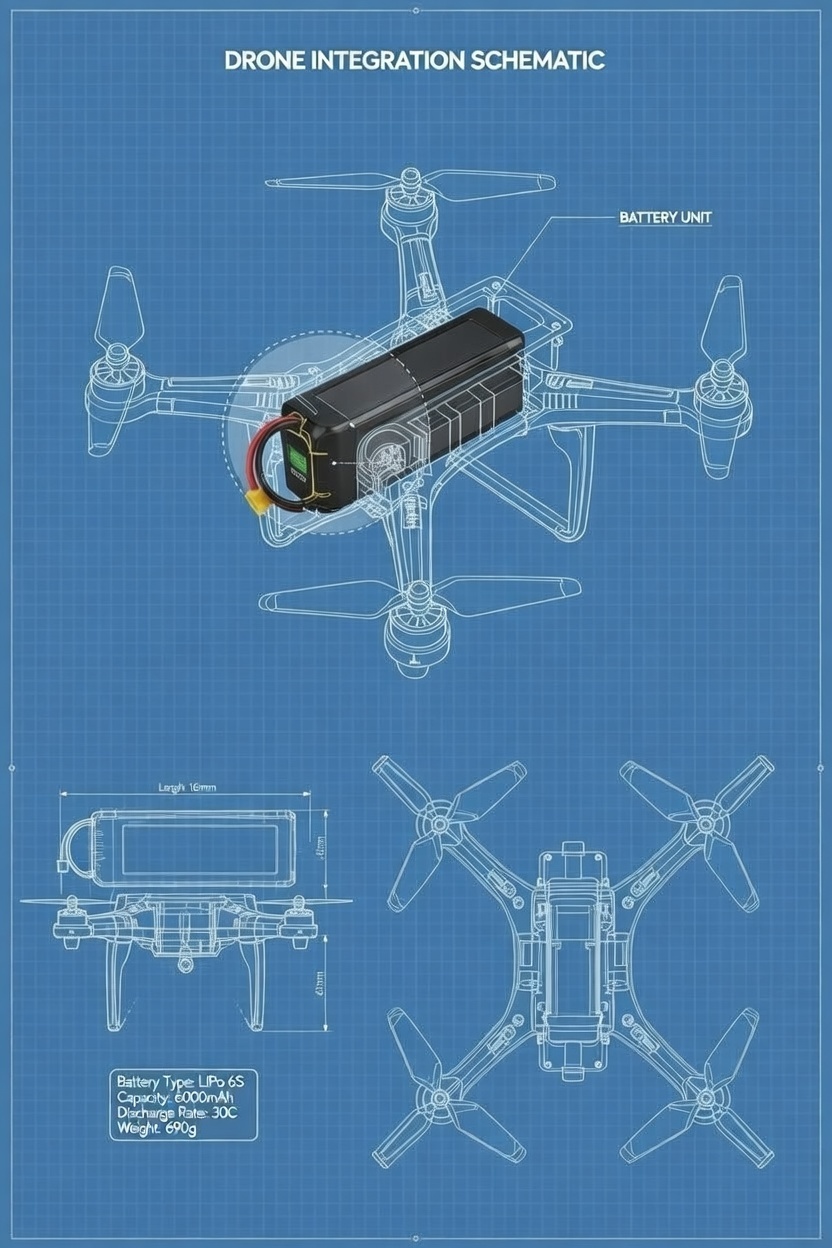
Energy density (measured in Wh/kg) directly dictates how much power a battery packs per unit weight. For construction drones, this isn’t just about “more power”—it’s about smarter power. High-density batteries like CNS’s 300Wh/kg solutions deliver 35% longer flight times without adding weight. This means a drone carrying a 500g camera can now survey 50% more area per charge, reducing the need for ground crews to swap batteries. Crucially, CNS’s modular design allows for weight-optimized configurations—such as 2000mAh units for small inspection drones or 8000mAh for heavy-lift models—ensuring no unnecessary bulk.
2. Environmental Resilience: Beyond Standard Specifications
Construction sites are unpredictable. Batteries must withstand dust, rain, and extreme temperatures. CNS’s energy-dense batteries exceed IP67 standards for dust/water resistance and operate reliably from -20°C to 60°C. During a recent project in Dubai’s desert construction zone, standard batteries failed after 15 minutes due to heat, while CNS-powered drones completed 45-minute flights uninterrupted. This resilience isn’t accidental—it’s built into the chemistry (using advanced lithium-polymer cells with thermal management) and validated through 500+ hours of field testing.
3. Safety-First Engineering for High-Risk Environments
Energy density shouldn’t compromise safety. CNS batteries integrate multi-layered protection: thermal fuses, short-circuit prevention, and real-time voltage monitoring. They comply with IEC 62133 and UL 2054 safety standards, which are non-negotiable for industrial use. In a case study with a U.S. infrastructure firm, CNS batteries prevented three potential fire incidents during rapid charging cycles—a critical safeguard when drones operate near flammable materials.
4. Customization for Project-Specific Demands
No two construction sites are identical. A drone for high-rise inspections needs different energy profiles than one for underground tunnel mapping. CNS’s B2B customization service tailors energy density to your exact needs:
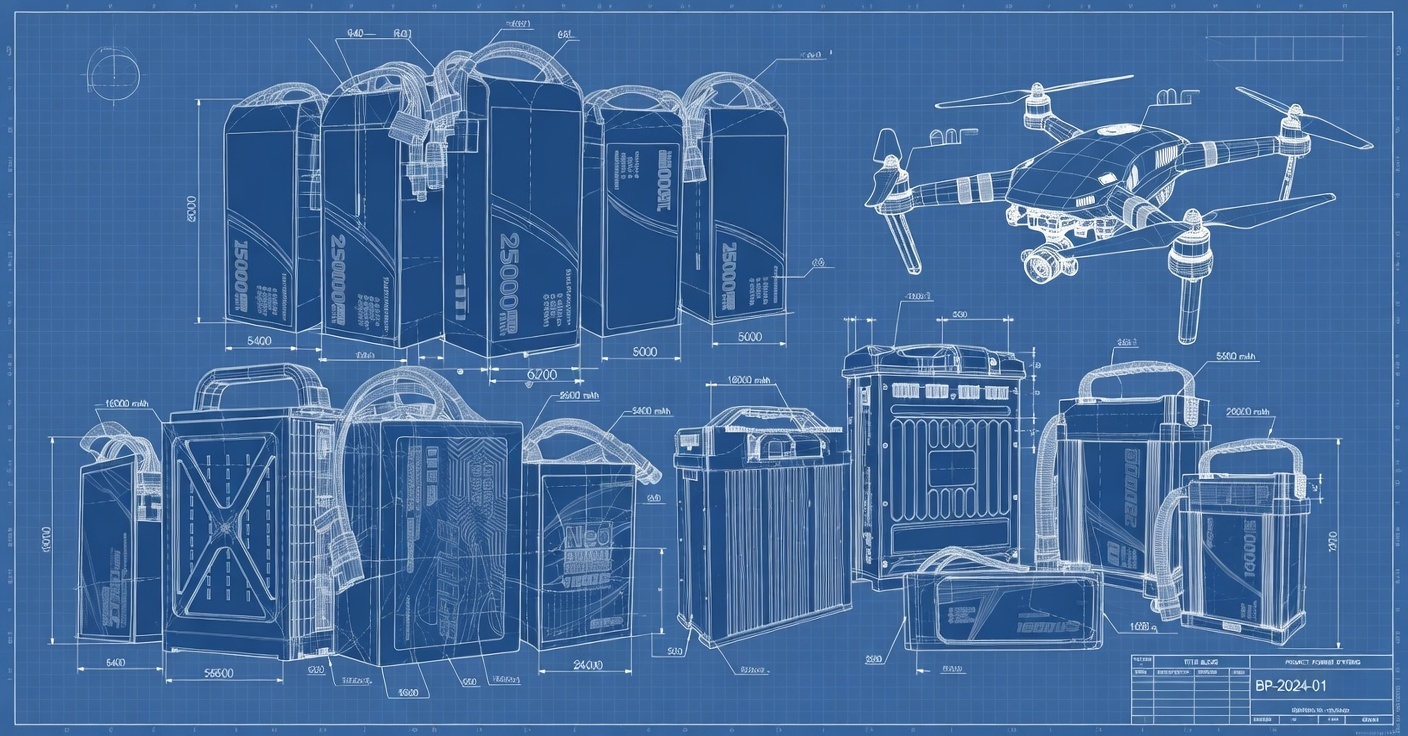
- Adjusting capacity (2000mAh–12,000mAh)
- Optimizing discharge rates for heavy payloads
- Adding waterproofing for wet-site conditions
- Integrating with your existing drone ecosystem (DJI, Autel, etc.)
This precision avoids the “one-size-fits-all” trap, ensuring batteries align with your project’s unique demands.
Why CNS Battery Stands Out for Construction Clients
CNS Battery’s energy-dense solutions aren’t just about specs—they’re engineered for real-world construction success. Here’s how we deliver unmatched value:
Key Features for Construction Drone Operations
- ✅ Extended Flight Times: Up to 50 minutes per charge (vs. 25–35 for standard batteries)
- ✅ Lightweight Modularity: 25% weight reduction without sacrificing capacity
- ✅ All-Weather Performance: Operates reliably in rain, dust, and extreme temps
- ✅ Rapid Charging: 80% charge in 25 minutes, minimizing downtime
- ✅ B2B Customization: Tailored to your drone model, payload, and site conditions
A major Chinese infrastructure contractor deployed CNS batteries across 12 sites nationwide. The result? 40% fewer battery-related delays, 22% faster survey completion times, and a 17% reduction in operational costs per project. This isn’t just efficiency—it’s a strategic advantage in a competitive market.
Addressing Common Concerns: FAQs for Construction Leaders
Q: How does high energy density impact battery safety in construction settings?
A: Higher energy density doesn’t mean lower safety—it means smarter engineering. CNS batteries use thermal-stable cells and integrated safety systems to prevent overheating, even during rapid charging. All units undergo 200+ safety tests, far exceeding industry minimums.
Q: Can CNS batteries integrate with my existing drone fleet?
A: Absolutely. We work with leading brands like DJI Matrice, Autel EVO, and Parrot Anafi. Our customization team ensures seamless compatibility, including voltage matching and connector alignment, to avoid costly retrofitting.
Q: What’s the cost-benefit of investing in high-energy-density batteries?
A: While premium upfront, CNS batteries reduce long-term costs by cutting downtime (saving $500+/hour in delays) and extending battery life to 500+ cycles. For a project with 10 drones, this translates to $22,000+ in annual savings.
Q: How quickly can I get a custom solution for a time-sensitive project?
A: CNS offers 7-day rapid prototyping for B2B clients. Our engineering team collaborates with you to finalize specs, test, and deliver within 14 days—critical for tight construction timelines.
The Path Forward: Elevate Your Construction Drone Strategy
Energy density isn’t just a technical spec—it’s the linchpin of drone success on modern construction sites. By prioritizing high-performance, environment-proof batteries, you transform drones from supplementary tools into core productivity engines. CNS Battery’s solutions are built on 15 years of B2B expertise, rigorous testing, and a commitment to innovation that aligns with global construction standards. For clients managing large-scale operations, this isn’t an upgrade—it’s a necessity.
Ready to eliminate battery-related bottlenecks and unlock your drones’ full potential? Our team of battery specialists will work with you to design a custom energy-dense solution tailored to your site’s unique challenges. Get a free, no-obligation quote and discover how CNS can help your projects fly higher, faster, and safer.
Get Your Custom Drone Battery Quote Now
Let’s power your next project with precision-engineered energy density.