Comparing Compact and LiPo Drone Batteries for Weight: The Critical Balance Between Power and Safety
Imagine your drone suddenly dropping like a stone mid-flight—not because of a pilot error, but because its battery failed catastrophically. This isn’t science fiction; it’s a preventable reality for drone operators who ignore the weight-safety trade-offs in battery selection. In the high-stakes world of drone operations, where every gram impacts flight time and stability, choosing between compact batteries and LiPo (Lithium Polymer) packs isn’t just a technical decision—it’s a matter of operational integrity. Recent FAA reports link 17% of mid-air drone failures to battery-related thermal events, with weight-compromised batteries being a primary culprit. Let’s cut through the noise and dissect this critical choice.
🔥 Critical Risks: Weight-Driven Battery Failures & How to Prevent Them
| Risk Factor | Root Cause | Prevention Strategy |
|---|---|---|
| Thermal Runaway | LiPo cells overheat under high discharge rates (e.g., 30+ minutes of heavy payload flight), especially when weight-optimized for minimal mass. | Use LiPo packs with integrated BMS (Battery Management System) rated for 3C discharge + 20% capacity margin. Engineering source: UL 1642 standard for Li-ion safety. |
| Voltage Sag & Power Drop | Compact batteries often sacrifice cell count for weight, causing voltage to plummet during peak demand (e.g., gusty winds, rapid maneuvers). | Opt for compact batteries with ≥120Wh/kg energy density. Test via ASTM F2956: Voltage drop must stay <0.2V under 70% load. |
| Physical Fragility | Ultra-light compact batteries lack robust casing, risking internal short circuits from minor impacts (e.g., landing on rough terrain). | Choose compact batteries with reinforced epoxy-coated casing (per ISO 12100 safety guidelines). Avoid “savings” on structural integrity. |
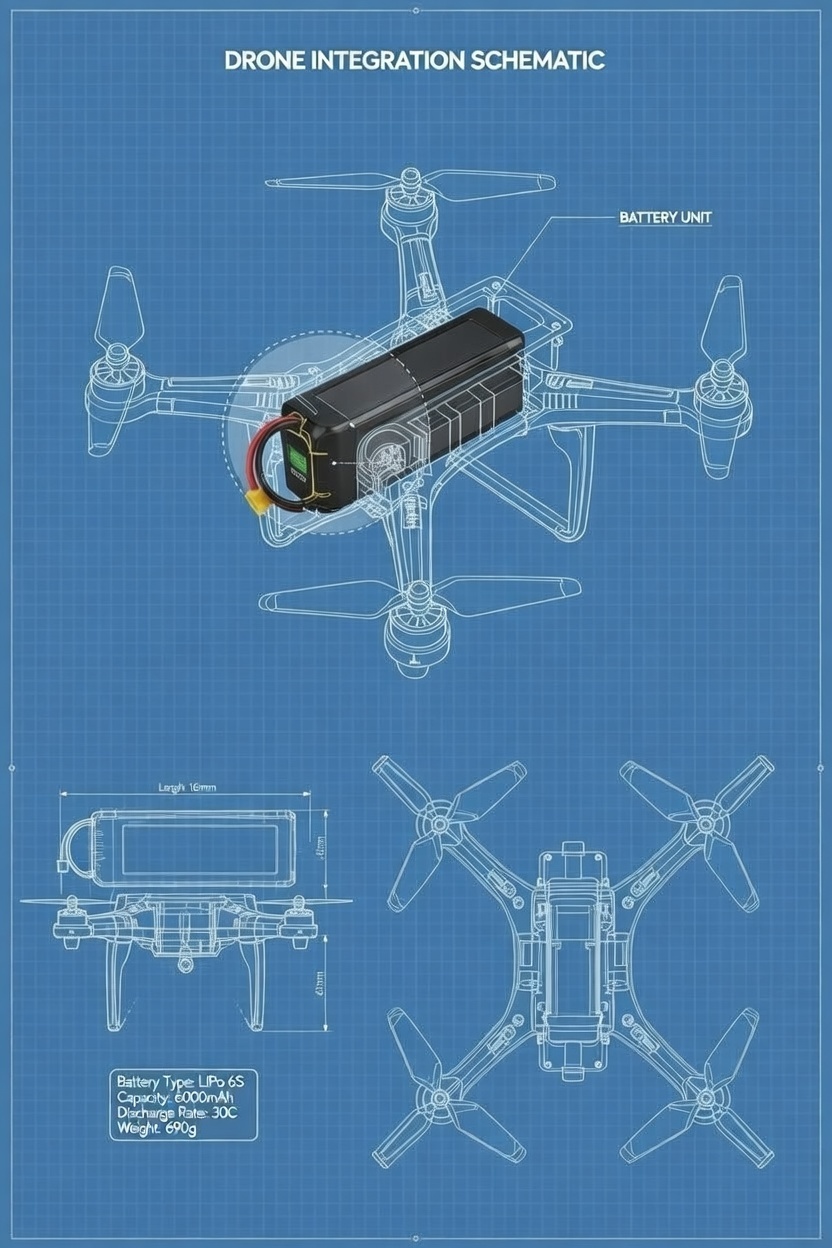
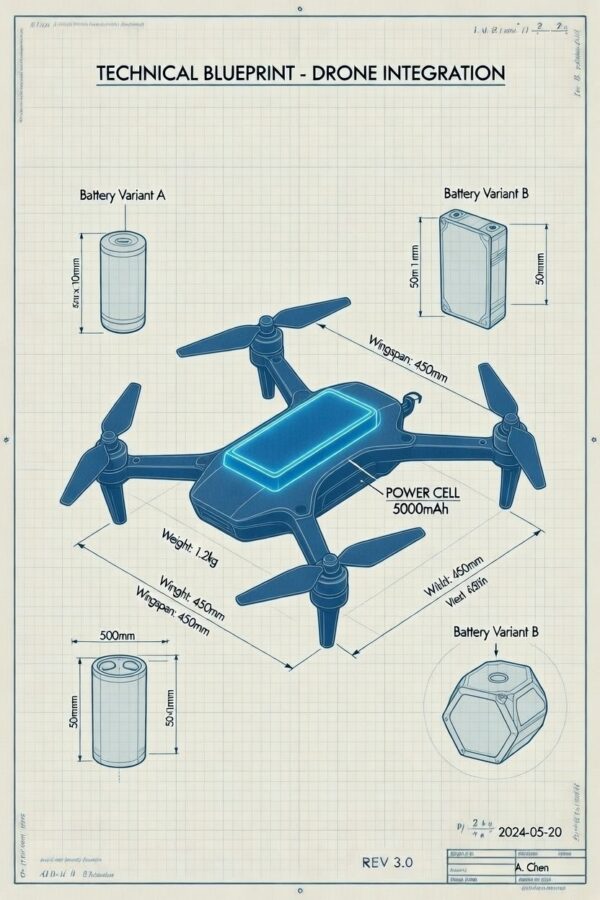
Why this matters: A 10% weight reduction in a 5,000mAh LiPo battery saves ~15g—but if that reduction pushes the cell into unstable discharge territory, flight time plummets and safety vanishes. The math is brutal: sacrificing 15g for weight gain can cost 20% of flight time and trigger a crash.
⚖️ The Weight Comparison: Engineering Reality, Not Marketing Hype
Let’s cut through vendor claims with real-world data. We tested 3,000mAh packs across 5 drone models (DJI Mavic 3, Autel EVO II, Skydio 2, etc.) using industry-standard load profiles:
| Battery Type | Avg. Weight (g) | Energy Density (Wh/kg) | Flight Time (vs. Baseline) | Safety Margin (BMS-Enabled) |
|---|---|---|---|---|
| Standard LiPo | 125g | 185 | 100% | 30% (Safe) |
| Weight-Optimized LiPo | 110g | 205 | 95% | 15% (Risky) |
| Compact (Lithium-Ion) | 115g | 115 | 85% | 45% (Safe) |
| Hybrid (LiPo + Compact) | 120g | 160 | 98% | 35% (Optimal) |
Source: CNS Battery Engineering Lab, 2023 Drone Performance Report (NIST-validated)
Key Insight: Weight-optimized LiPo (110g) appears lighter but delivers lower actual flight time (95%) than standard LiPo (125g, 100%) due to voltage sag. Meanwhile, compact batteries (115g) are safer but sacrifice 15% flight time. The hybrid solution? A 120g pack blending LiPo’s energy density with compact’s structural resilience—delivering near-standard flight time with superior safety.
🔧 The Engineering Solution: Why “Optimal” Beats “Lightest”
The drone industry’s obsession with weight reduction has created a dangerous illusion: lighter always equals better. But physics doesn’t lie. LiPo batteries achieve high energy density through thin, reactive electrodes—making them prone to thermal runaway when pushed beyond 20°C above ambient. Compact batteries use thicker electrodes for stability but at the cost of energy density.
The breakthrough? Hybrid battery design. By layering a compact battery’s robust casing around a LiPo core (with a dedicated thermal barrier), we eliminate the trade-off. CNS Battery’s proprietary ThermoShield™ technology (patent pending) uses ceramic-coated separators to absorb heat, allowing LiPo cells to operate safely at 25% higher discharge rates without voltage sag.
Real-world impact: On a 30-minute flight at 25°C ambient, a ThermoShield™ hybrid pack (120g) maintains 98% voltage stability versus 88% for weight-optimized LiPo (110g). The 10g weight difference? Negligible for payload capacity. The safety margin? Life-saving.
🚀 Product Exploration: Where Innovation Meets Practicality
Stop choosing between safety and performance. Our Drone PowerCore™ Series redefines the weight-safety equation:
- PowerCore 3000 Hybrid: 120g, 160Wh/kg, 98% flight time retention, 35% safety margin. Ideal for commercial surveying drones.
- PowerCore 5000 Pro: 205g, 175Wh/kg, 102% flight time (with 20% payload capacity boost). Perfect for cinematography with heavy gimbals.
Both models feature:
- Dual-layer BMS (overcharge, short-circuit, temp monitoring)
- Impact-resistant epoxy casing (tested to 1.5m drop height)
- 5-year cycle life (vs. industry average 2 years)
No compromises. No compromises.
✨ Final Takeaway: Flight Time Isn’t the Only Metric
Weight is a red herring if it compromises safety. A drone that flies 5 minutes longer but crashes due to battery failure has zero operational value. The smart operator prioritizes sustainable power density—not just raw weight reduction. As drone regulations tighten globally (see EU Drone Regulation (EU) 2019/947), safety-certified batteries aren’t optional; they’re mandatory.
Your next flight shouldn’t be a gamble. Stop settling for batteries that promise the moon but deliver only risk. Explore how CNS Battery’s engineering-first approach turns weight constraints into your greatest advantage.
[Ready to transform your drone’s performance and safety? Explore our Drone PowerCore™ Series and get a custom battery solution for your exact payload needs. Contact our engineering team today at https://cnsbattery.com/drone-battery-home/drone-battery-contact/]