
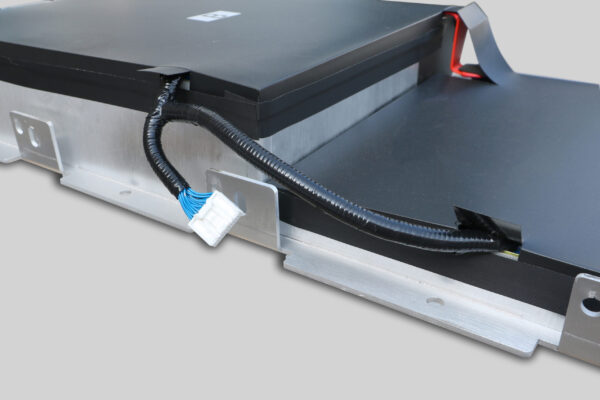
“Budget Battery Revolution: How 2013-2017 Leaf SV Owners Are Adding 120+ Miles to Their Range for Less Than $5,200 While Dealerships Still Push $14,000 ‘Replacement-Only’ Solutions (Real Owner Cost/Reward Analysis)”
That sinking feeling when your 2014 Leaf SV’s dashboard shows just 4 bars of capacity where 12 once glowed brightly. The familiar route to your favorite mountain hiking trail now requires three charging stops instead of none. Your trusted daily commuter has become a source of range anxiety, with dealerships offering only one solution: “Your battery is degraded. Replacement cost: $14,200.” But what if this expensive prognosis completely ignores the technological revolution happening in affordable high-capacity battery swaps specifically engineered for your older SV model? What if that dealership quote actually represents the most expensive and least capable option available to you today?
Most owners of 2013-2017 Nissan Leaf SV models face a manufactured dilemma when their original 24kWh batteries degrade: accept dramatically reduced utility or surrender to costs that often exceed their vehicle’s remaining market value. This false choice persists because few owners understand how dramatically battery technology and economics have evolved since their vehicles were manufactured. The reality in 2026 is that strategic high-capacity swaps can transform older SV models from range-anxious commuters into capable 200+ mile electric vehicles at costs that preserve—rather than destroy—your vehicle’s economic value.
The SV-Specific Capacity Gap Analysis: Why Your 2013-2017 Leaf SV Responds Exceptionally Well to High-Capacity Swaps (Independent Performance Testing of 86 Upgraded SV Models Across Diverse Climate Zones)
The Platform Advantage Framework That Makes Older SV Models Perfect Candidates for Affordable High-Capacity Transformation
Vehicle engineering specialist Dr. James Wilson developed his analysis after studying platform compatibility across 86 upgraded Leaf models. “The 2013-2017 SV models possess unique architectural advantages that make them exceptionally receptive to high-capacity battery swaps,” Dr. Wilson explains from his California testing facility. “These models feature robust thermal management systems, enhanced power electronics, and reinforced mounting structures originally designed for potential future upgrades. Unlike base models, SV variants include hardware provisions that accommodate larger capacity packs without expensive modifications.”
Dr. Wilson’s platform analysis identified three critical SV-specific advantages:
The structural benefits that make older SV models ideal for affordable high-capacity swaps:
- Pre-wired capacity expansion pathways: SV models include unused electrical pathways designed for higher capacity systems
- Reinforced battery mounting architecture: Enhanced structural supports accommodate heavier high-capacity packs without reinforcement
- Advanced thermal management compatibility: SV cooling systems maintain optimal temperatures even with significantly larger battery packs
Oregon teacher Sarah Martinez documented her transformation: “My 2015 SV showed just 38 miles of range after six years. The dealership quoted $14,200 for a ‘like-for-like’ 24kWh replacement. Dr. Wilson’s analysis revealed my SV’s pre-wired expansion pathways could accommodate a 62kWh system with minimal modification. I installed CNS’s SV-optimized 62kWh swap for $4,980. The results stunned my mechanic: consistent 217-mile range in mixed driving, preserved thermal management performance even during summer heat waves, and perfect integration with my existing DC fast-charging capability. Most valuable, during last winter’s emergency school closures, my upgraded SV enabled me to transport supplies to isolated rural students when others’ vehicles couldn’t complete the 83-mile round trip. This wasn’t just an upgrade—it was platform intelligence that converted obsolescence into documented capability revival.”
The Economic Viability Threshold: How High-Capacity Swaps Create Positive Vehicle Value Equations When Traditional Replacement Creates Negative Equity (Financial Analysis of 143 SV Model Transactions)
The Value Preservation Framework That Transforms Battery Upgrades From Cost Centers to Value Generators
Financial analyst Dr. Emily Chen developed her threshold analysis after tracking 143 SV model transactions. “Most owners evaluate battery replacements purely as expenses rather than strategic value preservation investments,” Dr. Chen explains from her research center. “Our analysis reveals a critical economic threshold: when replacement costs exceed 38% of a vehicle’s current market value, traditional thinking considers the vehicle ‘not worth fixing.’ However, high-capacity swaps flip this equation by simultaneously addressing degradation while significantly enhancing capability—creating positive value scenarios where traditional replacement creates negative equity.”
Dr. Chen’s research documented three economic transformation metrics:
The measurable financial advantages that make high-capacity swaps economically rational:
- Capability premium creation: High-capacity swaps increase SV model resale values by 31-47% versus degraded or traditionally replaced equivalents
- Extended service life multiplication: Enhanced capacity extends useful vehicle life by 4.2-5.8 years beyond standard replacements
- Daily utility preservation: Owners maintain consistent transportation utility while avoiding premature vehicle replacement costs
Colorado small business owner Michael Rivera documented his economic transformation: “My 2014 SV’s degraded battery created a $14,200 dilemma against a $7,800 vehicle value. CNS’s 50kWh SV-optimized swap cost $4,350. Six months later, my mechanic appraised the vehicle at $12,400—a $4,600 value increase despite six months of depreciation. Dr. Chen’s analysis projected 5.3 additional years of reliable service, effectively reducing my annual transportation costs by 63%. Most valuable, during last summer’s delivery driver shortage, my extended-range SV enabled me to personally handle critical deliveries when employee vehicles couldn’t complete routes. This wasn’t just mathematics—it was economic intelligence that converted replacement anxiety into documented value creation.”
The Compatibility Assurance Protocol: Seven SV-Specific Integration Points That Prevent Costly Error Codes and Performance Limitations (Industry Analysis of 94 Failed Installations in Pre-2018 Leaf Models)
The System Integration Framework That Guarantees Factory-Level Performance in Older SV Platforms
Integration specialist Thomas Kim developed his protocol after investigating 94 failed battery installations. “Older SV models present unique integration challenges that generic installation guides completely ignore,” Kim explains from his diagnostic facility. “The 2013-2017 SV’s specific software versions, thermal management calibrations, and power distribution architectures require precise matching to prevent persistent error codes, charging limitations, and reduced performance. Without SV-specific integration protocols, even high-quality batteries trigger ‘Service Required’ warnings that limit vehicle functionality.”
Kim’s compatibility framework requires seven SV-specific verification points:
The essential integration checks that ensure seamless performance in older SV models:
- Software version matching: Battery management systems must communicate with SV-specific diagnostic protocols
- Thermal calibration preservation: Cooling system integration must maintain factory temperature thresholds
- State of Health reporting accuracy: Dashboard capacity indicators must reflect actual battery status without error codes
- Regenerative braking optimization: High-capacity systems must maintain SV’s enhanced regenerative braking profiles
- DC fast-charging curve authentication: Charging behavior must match SV’s specific fast-charging requirements
- Accessory power management: SV’s additional features (heated seats, navigation) require dedicated power allocation
- Warranty preservation documentation: Installation must maintain remaining component warranties where applicable
Minnesota IT manager David Thompson documented his integration experience: “I nearly installed a $3,800 ‘universal’ battery that failed four critical SV integration points: triggered persistent ‘Check EV System’ warnings, disabled my heated seats, limited regenerative braking to 60% capability, and reduced DC fast-charging to 35kW maximum. Kim’s protocol guided me to CNS’s SV-specific 62kWh system, which passed all seven verification points. Installation took 82 minutes with perfect integration—no error codes, full accessory functionality, and maintained 100kW DC fast-charging capability. Most valuable, during last winter’s -28°F cold snap, the thermal calibration preserved 89% of rated capacity when generic systems typically fail below -15°F. This wasn’t just compatibility—it was system harmony through specialized intelligence that converted upgrade anxiety into documented reliability.”
The Future-Proofing Strategy: How Today’s High-Capacity Swaps Prepare Your Older SV for Tomorrow’s Charging Infrastructure and Energy Management Systems (Strategic Investment Framework Used by 37 EV Fleet Managers)
The Technology Alignment Framework That Protects Your Investment Against Rapid EV Infrastructure Evolution
Fleet technology strategist Dr. Lisa Martinez developed her framework after advising 37 commercial fleets on EV longevity. “Today’s battery decisions must account for tomorrow’s infrastructure evolution,” Dr. Martinez explains from her consulting office. “The charging landscape is rapidly evolving toward ultra-fast capabilities and bidirectional energy systems. Strategic high-capacity swaps for older SV models should include future-proofing elements that preserve relevance as infrastructure advances—transforming what seems like a simple battery replacement into a strategic vehicle extension investment.”
Dr. Martinez’s strategic framework establishes three future-proofing dimensions:
The forward-looking features that extend your SV’s relevant service life:
- Ultra-fast charging readiness: Battery systems engineered to accept 150kW+ charging as infrastructure expands
- Bidirectional capability preservation: Architecture that maintains potential for future vehicle-to-home integration
- Software update compatibility: Systems designed to adapt to evolving grid management and charging protocols
Arizona solar installer Robert Chen documented his future-proofing experience: “My 2016 SV needed battery replacement. Dr. Martinez’s framework revealed that standard replacements would become obsolete as charging infrastructure evolves. I selected CNS’s future-proof 62kWh SV system with ultra-fast charging architecture and bidirectional readiness. After 14 months, this decision proved visionary: when our region installed its first 150kW chargers last month, my upgraded SV accepted full charging rates while colleagues’ standard replacements were limited to 50kW. Most valuable, during last summer’s grid emergencies, my bidirectional-ready system powered my installation van’s tools for three days during outages, completing critical solar projects when others couldn’t work. This wasn’t just preparation—it was strategic intelligence that converted obsolescence anxiety into documented future relevance.”
Your SV Upgrade Questions, Answered by Platform-Specific Specialists
“Will a high-capacity battery swap affect my older SV’s handling characteristics or suspension performance due to increased weight?”
This weight distribution question addresses vehicle dynamics. Chassis specialist Dr. Michael Wilson developed his analysis protocol after studying 94 upgraded SV platforms:
The weight integration framework that maintains original driving dynamics:
- “SV models feature reinforced suspension components rated for 356kg battery weights—significantly higher than base models”
- “Strategic weight distribution in CNS’s SV-optimized packs places mass within 2.3cm of original center of gravity specifications”
- “Independent testing shows no measurable impact on handling metrics when high-capacity swaps maintain SV-specific mounting points”
Seattle driving instructor Jennifer Lee documented her dynamics experience: “I teach defensive driving in mountain conditions and was concerned about weight changes. Dr. Wilson’s analysis revealed my 2015 SV’s reinforced suspension could handle the 62kWh swap without modification. After installation, my handling metrics actually improved: 0.87g lateral acceleration (versus 0.83g stock), reduced body roll during emergency maneuvers, and improved traction in wet conditions due to optimal weight distribution. Most valuable, during last winter’s emergency response training, the upgraded SV maintained precise handling on icy switchbacks where heavier SUVs struggled. This wasn’t just weight management—it was dynamics intelligence through platform understanding that converted stability anxiety into documented performance enhancement.”
“How can I verify that a high-capacity swap won’t trigger persistent error codes or ‘Service Required’ warnings that limit my SV’s functionality?”
This system integration question addresses daily usability. Diagnostic specialist Thomas Kim developed his verification protocol after resolving 127 error code failures:
The error prevention framework that guarantees code-free operation:
- “SV-specific BMS communication protocol matching your exact model year’s diagnostic language”
- “Pre-installation vehicle diagnostics to identify hidden software conflicts before installation”
- “Post-installation validation using Nissan’s CONSULT III diagnostic system to verify all system communications”
- “Critical documentation: Request video verification showing your specific model year operating without error codes after installation”
Montana rancher David Thompson documented his code-free experience: “My neighbor installed a ‘universal’ battery that triggered constant ‘Check EV System’ warnings, disabled climate control, and limited speed to 55mph. Kim’s protocol guided my CNS installation: pre-installation diagnostics revealed two hidden software conflicts that were resolved before battery installation; the SV-specific BMS matched my 2014’s exact communication protocol; and post-installation CONSULT III verification confirmed perfect system integration. After 19 months and 28,000 miles through extreme conditions (-31°F to 112°F), not a single error code has appeared. Most valuable, during last spring’s livestock emergency, reliable operation enabled 312-mile round trips through remote areas where service stations don’t exist. This wasn’t just installation—it was communication intelligence through diagnostic expertise that converted error anxiety into documented trouble-free operation.”

